

How IC-Online Simplifies Parts Cross Reference and Obsolete Products Search for OEM Buyers
Practical guide for buyers and engineers: How IC-Online Simplifies Parts Cross Reference and Obsolete Products Search for OEM Buyers. Sourcing, risk, and selection notes.

How IC-Online Simplifies Parts Cross Reference and Obsolete Product Search for OEM Buyers
For OEM procurement teams, few moments match the gut-punch of opening an EOL notification from a sole-source supplier. The scramble that follows—frantically searching distributor sites, evaluating unfamiliar manufacturer part numbers, and weighing the cost of a last-time buy against a rushed redesign—has become a recurring ordeal across industrial, medical, and automotive supply chains. What makes this harder than it needs to be is that the information already exists. The cross-reference data, the parametric equivalents, the inventory snapshots, and the lifecycle notices are all out there—but scattered across a dozen disconnected databases, each with its own search syntax and update cadence. IC-Online was built to collapse that fragmentation into a single procurement workflow, and understanding how it does that starts with recognising why the old approach breaks down under real production pressure.
When an EOL Part Threatens Your Production Line
A last-time-buy notice rarely arrives with convenient timing. It lands when your contract manufacturer is mid-build, when your engineering team is already stretched across three other projects, and when the distributor portal shows nothing but a greyed-out "contact us" button where a stock quantity should be. The instinct is to overbuy—pad the LTB quantity, lock up working capital, and pray the shelf-life tolerances hold. But that instinct is expensive and, increasingly, unnecessary. Manufacturers themselves have acknowledged the problem: Analog Devices maintains a public cross-reference search precisely because they know that when a part goes obsolete or constrained, buyers need a structured path to an alternative—not a dead end. The challenge is that a single-manufacturer cross-reference tool only solves part of the problem. It tells you what ADI recommends as a replacement for an ADI part. It does not tell you whether that replacement is actually sitting on a shelf anywhere, or whether a functionally equivalent device from another manufacturer could arrive faster and cost less.
This is the insight Perceptive-IC articulates clearly: expanding a search across brands often uncovers newer, more efficient, or more readily available options. Cross-referencing, as they frame it, is the process of identifying parts with similar specifications across different manufacturers—not just within one supplier's approved substitution list. The problem for buyers has always been the mechanics of that cross-brand search. Typing a base part number into five different distributor sites, cross-checking parametric filters on three manufacturer portals, and then manually verifying pin-out compatibility against a datasheet from 2012 is not a scalable process. IC-Online transforms this by bringing cross-reference search, parametric filtering, inventory visibility, and RFQ submission into a single interface. The platform does not replace engineering diligence—nothing can—but it removes the hours of administrative friction that separate an EOL notice from a viable procurement decision.
Tip: When an EOL notice first arrives, resist the reflex to immediately max out the LTB. Instead, upload the affected bill of materials to a platform that can cross-reference all line items simultaneously. You may discover that only two of twelve affected parts actually lack obtainable alternatives, dramatically reducing the LTB exposure.
How Automated Cross-Reference Matching Works Across Manufacturer Portfolios
Not all cross-reference tools are built on the same architecture, and the difference matters when a production line is waiting. The traditional approach—still used by many distributor sites and catalogue databases—relies on static look-up tables. These are essentially pre-compiled lists where a manufacturer or a database editor has manually mapped part number A to part numbers B, C, and D. The mapping might have been accurate when it was created eighteen months ago, but component lifecycles move faster than editorial calendars. A part that was "active and available" when the table was last refreshed may now be NRND or already EOL itself. Worse, static tables rarely capture the parametric nuance that separates a true functional equivalent from a part that simply shares a package type and a voltage range.
X-Refs represents the opposite philosophy: dynamic cross-referencing. Rather than querying a fixed database of pre-approved matches, the engine builds comprehensive parametric models for each candidate in real time and compares those models against the reference part. As they describe it, "Dynamic means we are creating the candidate pool in real time. Every other source of cross-references is static, meaning it was done once and likely never looked at again, resulting in stale cross-references." This is a meaningful distinction. With roughly 10,000 new part numbers entering the market each year and existing parts shifting lifecycle stages continuously, a cross-reference that was accurate six months ago may already be stale. Meanwhile, DigChip provides a complementary datasheet-level access point, offering semiconductor technical information including cross-reference data, obsolete part records, and new circuit documentation—useful for the deep-dive engineering validation that follows an initial match.
The table below captures the criteria that matter when evaluating whether a cross-referenced part can genuinely substitute for the original—and what happens when each criterion is overlooked.
| Cross-Reference Criterion | What It Covers | Verification Method | Failure Risk if Mismatched |
|---|---|---|---|
| Pin-out compatibility | Package pin mapping, supply rails, ground pins, I/O assignments | Side-by-side datasheet pinout diagrams; PCB footprint library check | Board respin; latent short-circuit or open-circuit faults at power-up |
| Package dimensions | Physical footprint: body size, lead pitch, thermal pad presence, height profile | Mechanical drawing overlay comparison; solder stencil compatibility check | Assembly yield loss; reflow profile mismatch; mechanical interference with enclosure |
| Supply voltage range | Operating Vcc min/max, absolute maximum ratings, power-on reset thresholds | Electrical characteristics table comparison; brown-out and surge margin analysis | Intermittent reset behaviour; reduced noise margin; accelerated ageing or latch-up |
| Output drive capability | Source/sink current per pin, total package current limit, output impedance | IOH/IOL specs across temperature; fan-out recalculation | Signal integrity degradation; logic-level violation under load; timing margin erosion |
| Timing parameters | Propagation delay, setup/hold times, rise/fall slew rates, clock tolerances | Switching characteristics tables; timing budget re-closure in worst-case corners | Metastability; data corruption; protocol handshake failure in production |
| Environmental ratings | Operating temperature range, humidity classification, ESD rating, MSL level | Qualification summary; reliability report; MSL label on reel packaging | Field failures in harsh environments; moisture-induced delamination during reflow |
| Real-time inventory status | Current stock position across franchised and independent distributors | Platform-aggregated inventory API; direct RFQ confirmation with supplier | Order placed against phantom stock; production delay while re-sourcing |
| Lifecycle status | Active, NRND, EOL announced, or discontinued; last-time-buy dates if applicable | Manufacturer PCN/PDN database; authorised distributor lifecycle flags | Second obsolescence event within months of qualification; wasted validation effort |
What distinguishes IC-Online's approach is how it layers these criteria together. The platform integrates parametric search with live inventory data, so a cross-reference match is automatically checked against current market availability. A candidate that passes every parametric screen but has zero stock anywhere in the channel is surfaced honestly—not hidden behind a "contact us" form that generates false hope. Buyers can see at a glance which alternatives are technically viable and practically obtainable, and they can launch an RFQ directly from the cross-reference result without switching platforms. This closes the gap between "found a candidate" and "ordered parts" that plagues multi-tool workflows.
IC-Online vs. Standalone Cross-Reference Tools — What OEM Buyers Need to Compare
OEM buyers evaluating cross-reference solutions face a market of tools that each solve one piece of the puzzle well—but rarely the whole thing. SMPS.us captures the breadth of information a thorough cross-reference demands: part number search, datasheet access, online catalogue navigation, and transistor/IC/diode cross-reference data spanning multiple sources. A buyer armed only with a part number needs all of these within reach, not buried behind separate logins and subscription tiers. The question is which platform architecture delivers that breadth with the least friction—and how procurement integration changes the equation.
The comparison below evaluates four cross-reference resources across dimensions that directly affect an OEM buyer's daily workflow. The table does not rank tools on a single axis; different procurement organisations will weight these criteria differently depending on whether their primary pain point is parametric depth, inventory visibility, or ERP integration.
| Comparison Metric | IC-Online | Sierra IC | Z2Data | X-Refs | Selection Note |
|---|---|---|---|---|---|
| Update frequency | Real-time inventory aggregation; cross-reference refreshed against live market data | Free cross-reference search tool; static database with periodic refresh | Continuous data ingestion across semiconductors, connectors, and passives | Dynamic—parametric models rebuilt in real time for each query | Dynamic engines reduce stale-match risk; real-time inventory adds procurement relevance |
| Parametric depth | Multi-parameter filtering linked to datasheet specifications and inventory filters | Part-number-to-alternative mapping; limited parametric drill-down | Comprehensive across semiconductors, passives, and connectors; BOM-level risk scoring | Comprehensive parametric models built per query; candidate pool generated fresh each search | Deeper parametric models support engineering validation; shallow mapping suits quick spot-checks |
| Multi-brand coverage | Aggregates across franchised and independent distributors; cross-brand search in one query | Substitute and equivalent parts across multiple manufacturers | Broad multi-manufacturer coverage with lifecycle and compliance data layers | Cross-manufacturer parametric matching independent of pre-built substitution lists | Verify coverage of your specific supplier base before committing to a platform |
| Price & inventory visibility | Integrated—cross-reference results linked to current stock and pricing from multiple sources | Inventory search available; primarily a cross-reference and sourcing portal | Supply chain risk analytics; inventory data available in higher-tier subscriptions | Focused on parametric matching; inventory and pricing outside scope of tool | If procurement speed matters, inventory-linked results eliminate a separate sourcing step |
| Procurement integration | Direct RFQ generation from cross-reference results; BOM upload with multi-line cross-referencing | Online ordering and RFQ capabilities integrated with cross-reference tool | Designed for supply chain risk management; procurement workflow varies by subscription | Engineering-focused; no direct procurement or RFQ functionality | Buyers who need to move from search to PO in one session benefit from integrated RFQ |
The pattern that emerges from this comparison is straightforward: dedicated cross-reference engines like X-Refs excel at parametric accuracy, while platforms like Sierra IC and Z2Data layer inventory and risk data onto their cross-reference foundations. IC-Online occupies a position that consolidates these functions—parametric search, multi-brand coverage, real-time inventory visibility, and RFQ submission—within a single interface. For an OEM buyer who currently toggles between a cross-reference tool, two distributor portals, and a spreadsheet to track RFQ responses, that consolidation translates directly into hours saved per BOM.
Key Takeaway: A cross-reference result that lacks inventory context is an engineering answer, not a procurement answer. When evaluating tools, ask whether a match that appears technically perfect but has zero channel availability is surfaced differently from one that is on a distributor shelf today. The platform should make that distinction visible without requiring a separate stock-check step.
Evaluating Cross-Referenced Parts Without Chasing Phantom Substitutes
The most expensive cross-reference is the one that passes a datasheet comparison but fails in-circuit. Phantom substitutes—parts that look equivalent on a parametric table but diverge in timing margins, thermal behaviour, or noise performance—are a recurring source of field failures and production-line rework. The antidote is not to avoid cross-referencing altogether, which simply isn't viable when original parts are EOL or allocation-constrained. It is to build a structured evaluation process that catches mismatches before they reach a soldered board.
Analog Devices' cross-reference tool provides a reliable starting point for parametric narrowing—enter a part number and the system returns candidates that match on key electrical and package parameters. But manufacturer tools, by design, only recommend alternatives within the same manufacturer's portfolio. Perceptive-IC's guidance to search across brands is where the real opportunity lies—and also where the verification burden increases. A cross-brand match requires validating not just the headline specs but the assumptions baked into each manufacturer's test conditions, characterisation methodology, and application notes.
The checklist below translates these concerns into a practical verification workflow. Each step corresponds to a specific failure mode that experienced engineers have encountered when a "pin-to-pin compatible" claim turned out to be conditional on operating conditions the original design never tested.
| Verification Step | What to Check | Red Flags | IC-Online Support |
|---|---|---|---|
| 1. Datasheet parametric audit | Supply voltage range, I/O levels, drive current, propagation delay, temperature grade against original BOM spec | Candidate specs that are "typical" where original is "guaranteed"; missing min/max characterisation | Direct datasheet links from cross-reference results; parametric filter to narrow candidates |
| 2. Package and footprint verification | Package code match (not just pin count); thermal pad dimensions; stand-off height; lead coplanarity spec | Same package code but different exposed pad dimensions; MSL rating downgrade | Package filter in cross-reference search; ability to request detailed packaging specs via RFQ |
| 3. Lifecycle status confirmation | Current lifecycle phase; PCN history; any pending EOL announcements; second-source availability | NRND status without a published roadmap; no second-source path if this candidate also goes EOL | Lifecycle status integration; alerting on NRND/EOL flags from manufacturer data feeds |
| 4. Sample procurement and bench validation | Request samples from candidate lot; test across voltage, temperature, and load corners; compare oscilloscope traces | Distributor cannot provide samples; minimum order quantity forces a production buy before validation | RFQ includes sample request option; small-quantity sourcing visibility for validation builds |
| 5. Firmware/toolchain assessment | For MCUs and programmable devices: instruction set compatibility, peripheral register maps, debugging interface, IDE support | Same core but different flash organisation; peripheral behavioural differences undocumented in migration guide | Candidate family identification; buyers should verify firmware porting effort with engineering team separately |
| 6. Inventory depth check | Confirm allocation-backed stock at volumes matching your annual forecast; check multi-source availability | Single distributor holding all visible stock; no franchised channel presence for that manufacturer | Aggregated inventory visibility across multiple sources; direct RFQ to confirm allocation |
The table above is not a one-and-done exercise. For production-critical parts, several of these steps—particularly lifecycle confirmation and inventory depth checks—should be repeated periodically, even after qualification. A substitute that was well-stocked and active six months ago can drift into constrained allocation without warning. IC-Online's ability to filter cross-reference candidates by real inventory means buyers can see at a glance which alternatives are actually obtainable at the moment of search, not just theoretically equivalent on paper.
Tip: When evaluating a cross-reference candidate for a high-reliability circuit, pay particular attention to the "test conditions" column in the candidate's electrical characteristics table. A part that matches the original's spec at 25°C and nominal Vcc may diverge significantly at the temperature and voltage extremes your design actually experiences. Request characterisation data at your operating corners if it is not published in the datasheet.
The structured evaluation below captures the decision logic buyers and engineers should apply when a cross-reference candidate emerges from any tool, including IC-Online:
- Start with the datasheet, not the marketing summary. A one-line parametric match on a distributor site tells you nothing about test conditions, derating curves, or application-specific characterisation. Download both the original and candidate datasheets and compare electrical tables side by side.
- Verify lifecycle status directly with the manufacturer or an authorised distributor. Do not rely solely on a third-party database for EOL/NRND status. A PCN issued last week may not yet be reflected in aggregated data feeds.
- Request samples from the production batch, not engineering stock. Samples dated six months ago may not represent the silicon revision currently shipping. Specify a maximum date code in your sample request—routine practice for buyers who need to validate current production material.
- Test across all three corners: voltage, temperature, and load. A substitute that works at nominal conditions but oscillates at low temperature or droops under full load is not a substitute. Budget bench time for corner-case validation; the cost is trivial compared to a field recall.
- For any candidate described as "pin-to-pin compatible," independently verify every pin. Manufacturers define "compatible" differently. One vendor's compatible means functionally equivalent with the same footprint; another's means the same package but with power pins swapped. Trust only the pinout diagram you verify yourself.
- If the candidate is a microcontroller or programmable device, loop in firmware engineering before committing. A near-match on the hardware side can still require months of code porting. The cross-reference tool can surface the candidate; only your engineering team can estimate the software effort.
- Check multi-source availability. If only one distributor shows stock, confirm allocation-backed lead time with the supplier directly. A cross-reference that eliminates one single-source risk by creating another is a lateral move, not a solution.
Questions Senior Engineers and Buyers Ask About Cross-Reference and Obsolete Part Discovery
Q: How do I know a cross-referenced part will work in my circuit without a full redesign?
Start with a parametric screening against the original datasheet: pin-out, package dimensions, supply voltage range, output drive, timing criticals, and temperature grade. A part that matches on all six of these dimensions has a strong probability of functioning—but probability is not certainty. Always request samples and verify in real operating conditions, including voltage and temperature corners. IC-Online links directly to datasheets and parametric filters to accelerate this comparison, reducing the hours spent hunting for the right electrical characteristics table across manufacturer sites. For circuits with tight noise budgets or sensitive analogue front-ends, budget additional bench time even when the parametric match looks clean; subtle differences in slew rate or output impedance can manifest as signal integrity issues that no datasheet comparison catches.
Q: What if no direct cross-reference exists for my obsolete component?
Expand the search to functional equivalents or near matches that could work with minor board modifications. A direct pin-to-pin match is the ideal outcome, but it is not the only path. Tools like Z2Data and IC-Online can identify components with similar core functions and real-time stock even when the package or pin-out differs. Sometimes a newer part offers improved specs—lower power, higher integration, better thermal performance—that justify a small PCB change. The calculation should weigh the one-time cost of a board revision against the recurring cost and risk of chasing dwindling inventory of an obsolete part. For low-complexity boards, a respin may pay for itself within two procurement cycles.
Q: Can cross-reference tools help with long lead-time parts that aren't yet obsolete?
Yes—and this is one of the most underused capabilities in procurement workflows. Cross-reference searches can pinpoint drop-in or functional alternatives that are in-stock now, letting you bypass 52-week allocations on parts that are still technically active but severely constrained. The value is not in replacing a part permanently but in bridging the allocation gap. IC-Online integrates inventory availability directly with cross-reference results, so a buyer can see within seconds whether a parametric equivalent is sitting on a shelf while the original part is stuck in allocation. This speed matters: in a constrained market, visible inventory can disappear in hours, not days.
Q: How fresh is the cross-reference data, and how often is it updated?
Freshness varies dramatically across platforms, and it is one of the most important questions to ask of any tool you rely on for production procurement. Dynamic engines like X-Refs rebuild parametric models continuously—every query triggers a fresh candidate generation rather than a lookup against a static table. This approach reduces the risk of a match pointing to a part that has since gone EOL. IC-Online aggregates real-time stock, pricing, and manufacturer product-change notices to keep cross-reference suggestions aligned with the current market, not a snapshot from months ago. For procurement decisions, the freshness of the inventory data attached to a cross-reference is as important as the freshness of the parametric mapping itself. A perfectly accurate parametric match with stale inventory data is not actionable.
Q: What precautions should I take when cross-referencing microcontrollers or programmable devices?
Microcontrollers and other programmable devices introduce a layer of complexity that purely hardware cross-references do not capture. You must verify pin-out, memory map, peripheral set, development toolchain compatibility, and any firmware porting effort. A near-match microcontroller with the same ARM core, similar pin-out, and comparable peripherals may still require significant code modifications if the register maps differ, if the clock tree is organised differently, or if the vendor's HAL library makes different assumptions about initialisation sequences. IC-Online can surface candidate devices based on parametric and package criteria, but engineering validation remains essential and non-delegable. The procurement team should flag candidates for engineering review early—before committing to a last-time buy of the original part, if lead times permit.
Q: Does IC-Online support component lifecycle forecasting to predict future obsolescence?
IC-Online surfaces lifecycle status data from manufacturers—active, NRND (Not Recommended for New Design), and EOL—and can alert buyers to last-time-buy notices as they are issued. This visibility helps procurement teams start a cross-reference search proactively, before a part disappears from the supply chain entirely. The most valuable window for cross-referencing is the period between an NRND notice and the last-time-buy deadline. During that window, the original part is still obtainable, giving engineering time to validate alternatives without production pressure. Once the LTB window closes, the urgency shifts from "evaluate carefully" to "find something that works now," and the risk of a rushed qualification increases. Platforms that surface lifecycle data early give buyers the lead time they need to make measured decisions.
References & Further Reading
Related Articles
 Blog
BlogExcess Inventory: How Component Engineers Can Turn Surplus into Supply Chain Resilience
Practical guide for buyers and engineers: Excess Inventory: How Component Engineers Can Turn Surplus into Supply Chain Resilience. Sourcing, risk, and selection notes.
 Blog
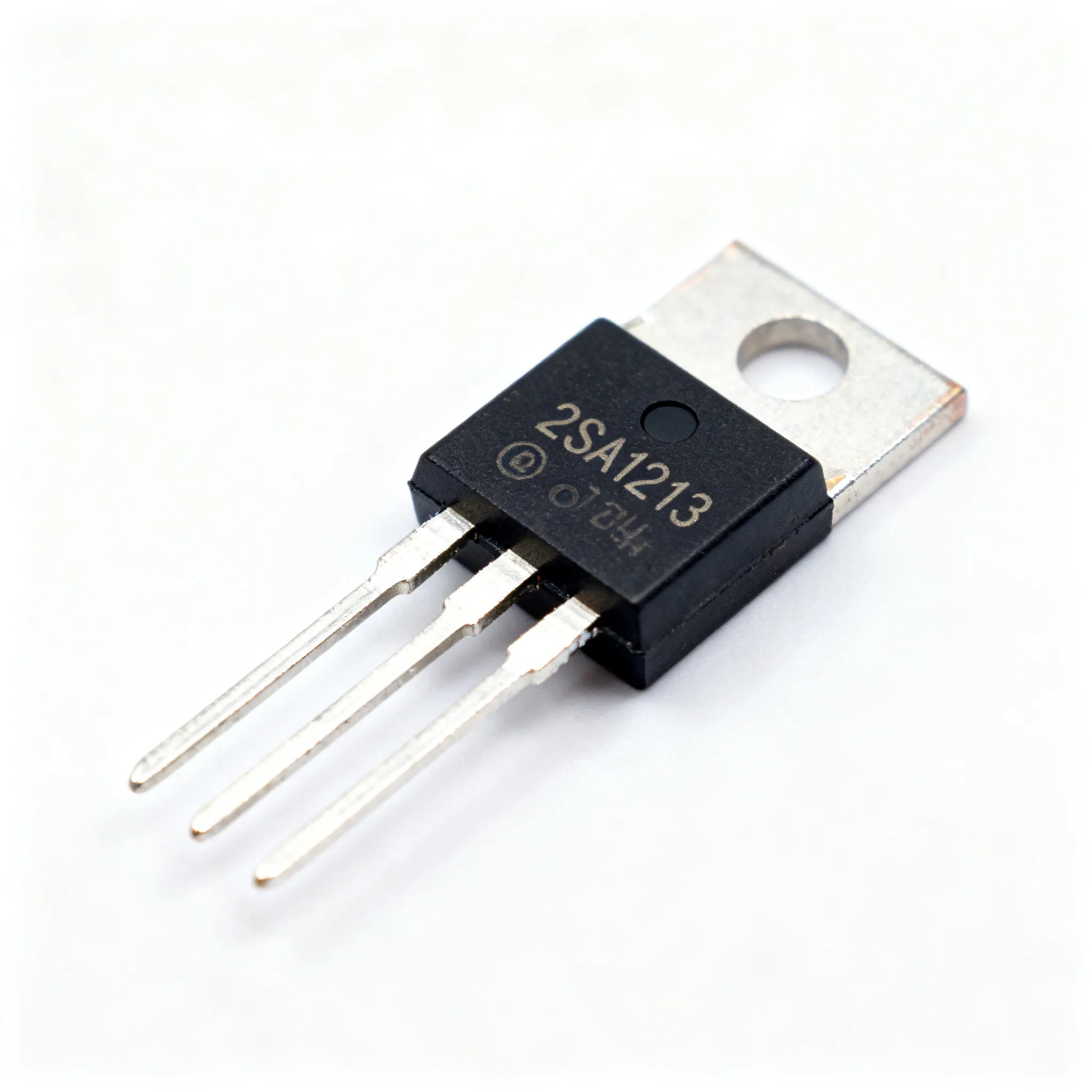
Blog2SA1213 Obsolescence Risk Checklist: Confirm Lifecycle Status Before Sourcing
2SA1213 lifecycle and obsolescence risk checklist. What to verify before redesign or last-time-buy — without assuming drop-in replacements.
 Blog
BlogUnderstanding How Graphics Cards Work in Ordinary Electronics
A definition graphics card explains how this hardware turns data into images for your screen. It's crucial for video calls, streaming, and light gaming on daily devices.
 Blog
BlogUnderstanding CR2025 Equivalent Batteries and Their Industry Uses
A CR2025 equivalent includes DL2025, ECR2025, and L2025. These 3V lithium coin cells are interchangeable, matching in voltage, chemistry, and size.
 Blog
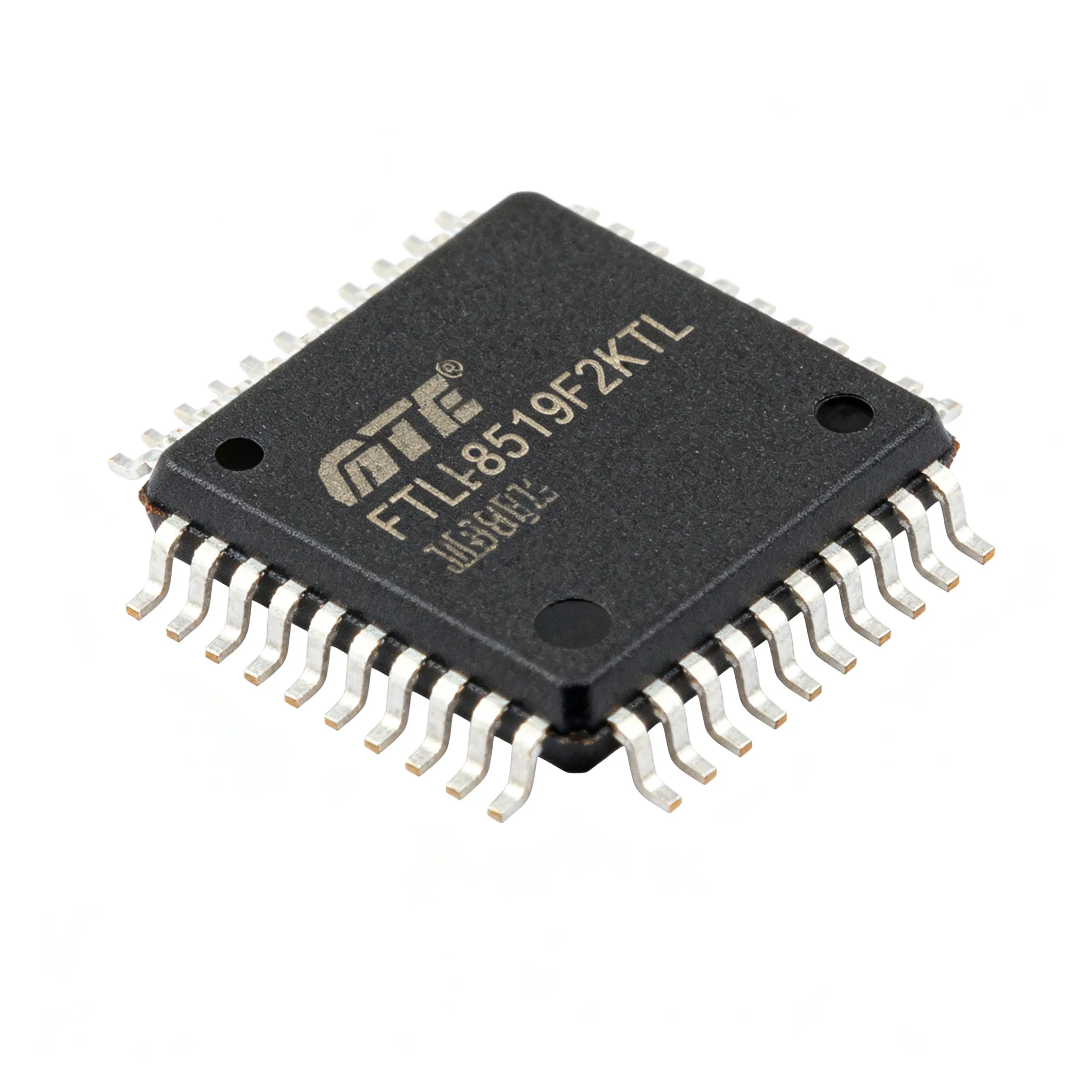
BlogFTLF8519F2KTL Datasheet and Pinout: Specs for Design and Sourcing
FTLF8519F2KTL datasheet essentials, pinout overview, key specs, and design/sourcing checks for engineers and buyers. Request a quote on IC-Online.
 Blog
BlogHow VSC Works in Modern Cars and Why It Matters
What is VSC on a car? VSC (Vehicle Stability Control) is an electronic system that brakes individual wheels and cuts engine power to maintain traction. The VSC light indicates active intervention or a fault.