How to Prepare for the 2026 Passive Component Shortage: MLCC Lead Times, Supply Chain Risks, and Design Mitigation Strategies
Practical guide for buyers and engineers: How to Prepare for the 2026 Passive Component Shortage: MLCC Lead Times, Supply Chain Risks, and Design Mitigation Strategies. Sourcing, risk, and selection notes.
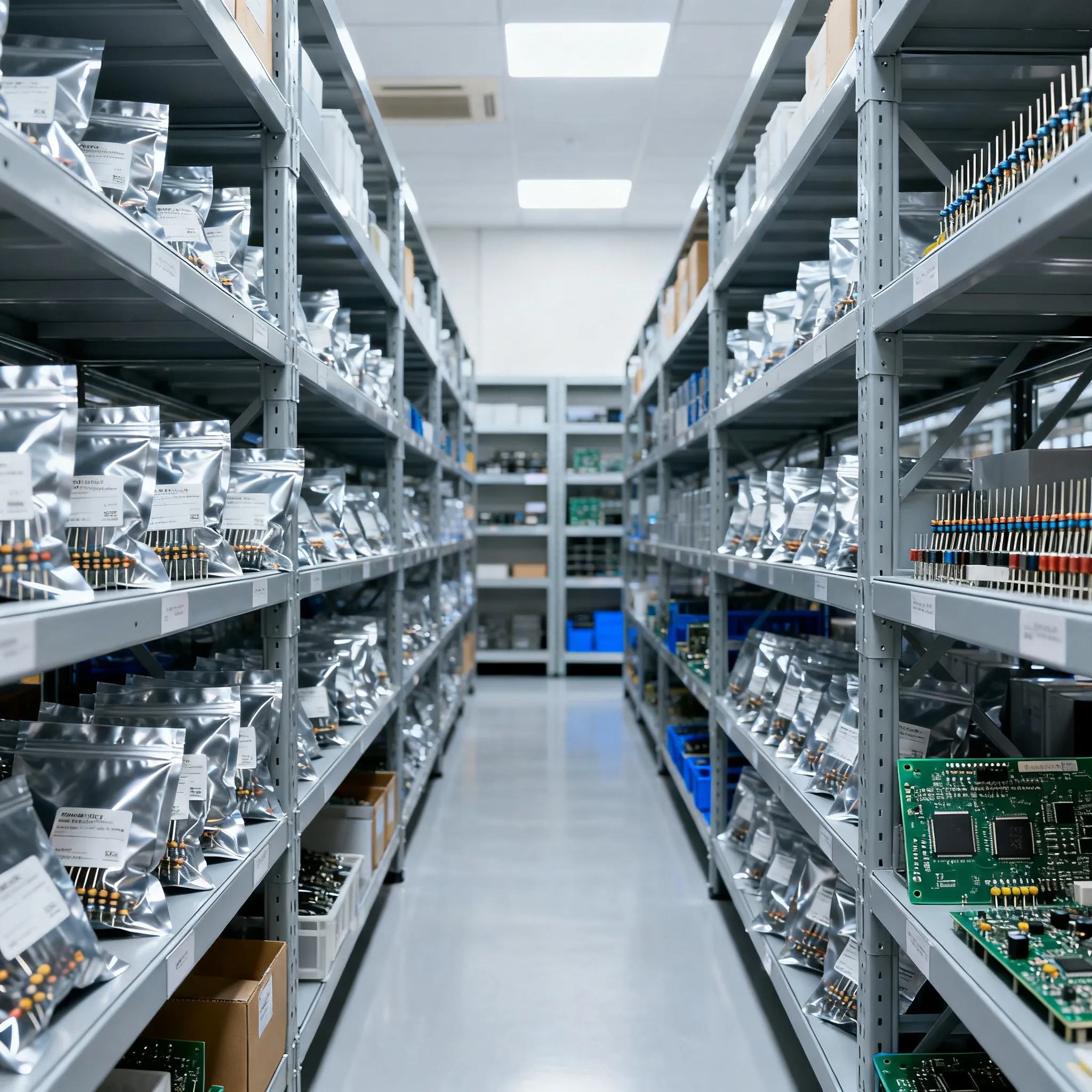
How to Prepare for the 2026 Passive Component Shortage: MLCC Lead Times, Supply Chain Risks, and Design Mitigation Strategies
The 2026 passive component landscape is not a rerun of the 2018 shortage. A fresh convergence of demand, chronic fab capacity inertia, and raw material inflation is reshaping MLCC availability before many BOMs are even finalized. For engineers and procurement buyers, the window to act is now—before allocation windows close and design spins become unavoidable. The following sections map the supply dynamics, practical substitution paths, and systematic de-risking actions that you can implement today, without waiting for a distributor to declare a line on allocation.
Three Demand Vectors That Are Converging on MLCC Supply in 2026
Previous MLCC shortages were largely driven by a single dominant demand spike—mobile handset builds in 2018, or automotive electrification in 2020–2021. The 2026 cycle is different because three high-volume demand vectors are pulling simultaneously on the same base of ceramic dielectric, electrode metals, and multilayer fab capacity. As 773 GROUP notes, this convergence of AI server infrastructure, electric vehicle platforms, and renewable energy systems has no historical precedent [1]. Every GPU accelerator board, every DC-DC converter in an EV, and every solar inverter relies on thousands of MLCCs—and the supply side cannot respond quickly.
The structural lag is the core problem. Passive component fabs operate on long capital-expansion cycles. New MLCC and ferrite production lines require 12 to 24 months from investment decision to volume output, as detailed by NextPCB [2]. This means that even if manufacturers commit to new capacity today, relief won’t arrive until late 2027 at the earliest. In the meantime, rising prices for silver, aluminium, and copper are adding 10–15% to average passive component costs, according to eeNews Europe [3].
Table 1: Key Drivers of the 2026 MLCC Supply Crunch
| Driver | Mechanism | Procurement Impact |
|---|---|---|
| AI server & hyperscale builds | GPU boards and accelerator cards consume thousands of high-capacitance MLCCs per unit; multi-year supply agreements lock out spot buyers | Premium high-C parts (≥1 µF, small case) are over-allocated; confirm availability via RFQ before design freeze |
| Electric vehicle platform ramp | EV power electronics require high-voltage, high-temperature MLCCs in volumes that compete with automotive and industrial demand | X7R/X8R ratings in 0805–1210 sizes face allocation pressure; verify supply with authorized distributors |
| Renewable energy & grid storage | Inverters and energy storage systems pull large quantities of power capacitors and high-C MLCCs | Longer lead times for bulk MLCC values; require allocation-backed lead time confirmation |
| Fab capacity expansion lag | 12–24 month cycle for new MLCC lines; no quick supply response to demand spikes | Capacity remains tight through 2026; treat all MLCC lines as allocation-sensitive |
| Raw material inflation | Silver, aluminum, copper price increases raise electrode and termination costs | 10–15% average cost increase on passives; factor into BOM cost projections |
These forces are not temporary. They are baked into the 2026 supply-demand equation. For buyers, the message is clear: treat every MLCC line as allocation-sensitive and confirm allocation-backed lead times with your supplier before committing to a production schedule. Relying on spot market availability is a high-risk strategy.
How MLCC Lead Times Are Stretching: Capacitance, Case Size, and Fab Capacity Lags
The mechanics of MLCC supply constraints are rooted in the interplay between multilayer ceramic process technology and the economics of fab loading. High-capacitance MLCCs—particularly 1 µF and 10 µF values in 0402 and 0603 case sizes—are fabricated using advanced stacking and thin-layer dielectric techniques that require the most sophisticated production lines. These same lines are in highest demand from AI hardware customers. Samsung Electro-Mechanics, for example, has prioritized premium high-capacitance MLCCs for AI customers under multi-year supply agreements, effectively reducing the capacity available for standard-volume buyers [1].
Even standard-value MLCCs in larger case sizes are not immune. The 12–24-month capacity expansion timeline means that all fabs run near maximum utilization with little flexibility to reallocate capacity from one product line to another. Industry structure data from the MLCC case size standards guide [4] underscores that the most common EIA sizes—0201, 0402, 0603, 0805, and 1206—are produced on a limited set of high-volume lines. When demand surges, the entire portfolio feels the effect.
Table 2: MLCC Case Size Risk Assessment for 2026
| EIA Case Size | Typical Capacitance Range | Lead Time Outlook (Allocation-Sensitive) | Allocation Risk Level |
|---|---|---|---|
| 0201 | 0.1 µF – 1 µF | Extended; confirm allocation-backed lead time via RFQ | High |
| 0402 | 1 µF – 10 µF (X7R) | Stretched; heavily allocated to AI/consumer | Very High |
| 0603 | 1 µF – 22 µF | Allocation-dependent; verify with distributor | High |
| 0805 | 1 µF – 47 µF | Moderate extension; treat as allocation-sensitive | Medium |
| 1206 | 10 µF – 100 µF | Moderate; larger sizes less constrained | Low–Medium |
| 1210 | 10 µF – 100 µF | Moderate; confirm availability with authorized source | Low |
Tip: Even if a case size is rated “Low” risk today, sudden demand from a single large OEM can shift allocation quickly. For any MLCC you cannot afford to lose, request a written allocation commitment from your distributor and update your BOM risk register quarterly.
The fab capacity lag is not a temporary blip. NextPCB’s analysis of passive component supply cycles [2] emphasizes that the structural nature of ceramic capacitor manufacturing means lead times extend faster than they recover. A design that relies on a single 0402 10 µF X7R MLCC without a qualified alternate is a supply chain bet that may not pay off in 2026.
Who Is Most Affected by the 2026 MLCC Tightening
Not all industry segments are equally exposed. Procurement teams that understand their own vulnerability profile can prioritize mitigation efforts where they matter most. The table below maps the typical exposure by application segment.
| Segment | Effect of MLCC Tightening | Notes / Recommended Action |
|---|---|---|
| AI accelerator & GPU board designers | Direct competition for premium high-C MLCCs; multi-year agreements dominate | Secure allocation early; pre-qualify alternates to avoid design lock-in |
| Automotive Tier-1 & EV OEMs | High-voltage, high-temperature MLCCs under pressure; AEC-Q200 qualification limits second-source flexibility | Initiate alternate qualification now; verify supplier capacity roadmaps |
| Industrial & renewable energy | Bulk MLCCs and power capacitors face extended lead times; cost increases from raw materials | Audit BOM for single-source parts; explore polymer hybrid alternatives |
| Consumer & mid-volume OEMs | Low priority in allocation hierarchy; spot market suckers risk counterfeits | Use authorized distributor part locators; build safety stock for critical values |
No segment is insulated. The question is how quickly you can move from a reactive stance to a proactive, design-and-procurement-integrated approach.
MLCC Alternatives: Case Size, Dielectric, and Capacitor Technology Trade-offs When Allocation Bites
When your preferred MLCC sits on a 30-week lead time, you have options—but each carries electrical, reliability, and cost trade-offs. The key is to evaluate candidates before the shortage forces a rushed board spin. The substitution guide from Utmel [5] and engineering best practices outline four practical fallback strategies. Note that tantalum and polymer capacitors are also flagged as higher-risk categories in 2026, according to Fusion Worldwide [6], so they are not a universal escape hatch.
Table 3: MLCC Fallback Strategies: Trade-offs When Preferred Parts Are Unavailable
| Fallback Strategy | When to Use | Key Trade-off |
|---|---|---|
| Up-size case size (e.g., 0805 instead of 0603) | PCB layout allows larger pad dimensions; high-speed decoupling ESL not critical | Increased parasitic inductance may degrade PDN performance; requires board layout verification |
| Switch dielectric (X5R vs. X7R) | Operating temperature ≤85°C; DC bias characteristics acceptable after derating analysis | Narrower temperature range; capacitance loss under DC bias may differ—verify with datasheet curves |
| Substitute tantalum or polymer capacitor | Bulk capacitance needs; space constraints prevent MLCC up-size; ESR not a limiting factor | Tantalum and polymer also under supply pressure; verify alternate source availability and fuse requirements |
| Redesign around alternate MLCC value | Original value completely unavailable; design not yet frozen | May require BOM re-qualification, EMI re-testing, and firmware changes; high engineering cost |
Each of these strategies requires a careful evaluation of the candidate part. Never assume a larger footprint MLCC is a drop-in replacement. Verify package dimensions, pad compatibility, and equivalent series inductance (ESL) effects on power integrity. X5R can be an acceptable substitute for X7R in many decoupling applications, but you must confirm that your operating environment stays below 85°C and that the DC bias derating curves are comparable. Polymer capacitors offer low ESR, but their lead times are also extending, and they may require different assembly profiles. As always, request qualification samples and test the candidate in your circuit before committing to an alternate BOM.
From BOM Audit to Multi-Sourcing: Practical Steps to De-Risk MLCC Supply in 2026
Waiting for a shortage to materialize before taking action is a recipe for line-down situations. The following steps integrate design and procurement into a single, systematic de-risking workflow that you can start this quarter.
- Perform a systematic MLCC BOM audit. Classify every MLCC line by usage quantity, number of approved sources, current lead time outlook, and circuit criticality. Best PCBs recommends this classification as the foundation for a risk-based inventory strategy [7]. Flag any part with a single approved source during design review.
- Pre-qualify at least one alternate for every high-risk MLCC before design freeze. NextPCB’s guidance [2] emphasizes that the most effective mitigation is baked into the PCB layout. Work with your EMS partner to design flexible footprints that can accommodate alternate case sizes or dielectrics without a board spin.
- Provide forward-looking demand visibility to authorized distributors. Avnet Abacus notes that even a small uptick in Asian orders can disproportionately accelerate shortages in Western markets [8]. Place long scheduled orders as early as possible and share a non-cancellable forecast to secure allocation.
- Use authorized part locator tools to verify real-time inventory and avoid grey market risks. Part Locator’s global inventory search [9] can help you find authorized stock for hard-to-find MLCC values. Always confirm traceability and request a certificate of conformance before accepting parts from non-franchised sources.
- Negotiate allocation-backed supply agreements for critical MLCCs. For mid-sized OEMs, securing a multi-year commitment may be challenging, but focusing on a narrow set of five to ten high-risk MLCC values and providing a rolling forecast improves your chances. Ask distributors for written confirmation of allocation and lead times, not verbal promises.
- Integrate BOM risk scoring into your RFQ process. When you upload a BOM for quotation on IC-Online, include a column that flags MLCC lines with single-source exposure, allocation risk, or extended lead times. This allows the procurement team to prioritize supplier outreach and secure critical parts before the rest of the BOM is finalized.
These steps are not one-time actions. They form a continuous improvement cycle: audit, qualify, commit, monitor, and repeat. The companies that navigate 2026 with the fewest disruptions will be those that treated passive component supply as a design constraint, not an afterthought.
MLCC Shortage 2026: Critical Questions from Engineering and Procurement
Q: What MLCC case sizes and capacitance values are at highest risk of shortage in 2026?
Small case sizes (0402, 0603) with high capacitance (1 µF, 10 µF) and X7R dielectric are under severe allocation because they are heavily used in AI accelerators and mobile devices. 0805 and larger sizes are relatively less constrained but still face extended lead times. Always confirm allocation-backed lead time and source status via RFQ with your authorized distributor.
Q: Can I simply substitute a larger MLCC footprint if my 0402 part is unavailable?
Yes, in many cases an 0603 or 0805 with the same capacitance and voltage rating can be evaluated as a candidate. However, you must verify that your PCB layout can accommodate the larger pad dimensions and that the equivalent series inductance (ESL) of the larger part does not compromise high-speed decoupling performance. Validate the substitution with a signal integrity and power integrity review before committing to an alternate BOM.
Q: Is it safe to switch from X7R to X5R dielectric for decoupling applications?
X5R offers similar capacitance stability over a narrower temperature range (–55°C to +85°C vs. +125°C for X7R). If your operating environment does not exceed 85°C, X5R is often an acceptable substitute, but you must check DC bias derating characteristics, which can differ between dielectric types. Request the manufacturer’s DC bias curve for the candidate X5R part and compare it to the original X7R at your working voltage.
Q: How much inventory buffer should I hold for critical MLCC lines?
Aim for enough stock to cover 8–12 weeks of production consumption for single-sourced or high-risk MLCCs, plus safety stock for lead-time variability. For multi-sourced parts, 4–6 weeks may suffice, but coordinate with your EMS to avoid tying up excessive working capital. The exact buffer depends on your lead time confirmation from the supplier and the cost of a line-down event.
Q: Are multi-year supply agreements with MLCC manufacturers feasible for mid-sized OEMs?
They are challenging but not impossible. Focus on a narrow set of critical MLCC values and commit to a non-cancellable forecast. Some manufacturers, like Samsung Electro-Mechanics, have prioritized high-volume AI customers, but mid-sized OEMs can negotiate allocation through authorized distributors with long-term orders. Be prepared to demonstrate a stable demand profile and accept longer lead times as part of the agreement.
Q: What early warning signals should I monitor to anticipate lead time extensions?
Watch for sudden increases in tantalum capacitor lead times (a historical precursor), rising raw material prices for precious metals, and announcements of fab capacity additions being delayed. Also monitor distributor inventory levels for commonly used MLCC values—if they drop below two weeks of supply, it’s a red flag. Regularly check allocation status reports from your authorized distributors and set up alerts for any changes in lead time guidance.
References & Further Reading
- The 2026 Passive Components Crunch: Why MLCC and Capacitor Lead Times — 773 GROUP LLC
- Passive Component Shortage 2026: MLCC Lead Times, Supply Chain Risk and Design Mitigation — NextPCB
- AI drives MLCC shortage — eeNews Europe
- MLCC Case Sizes Standards Explained — Passive Components Blog
- MLCC Substitution Guide: What to Do When Your Capacitor Is on a 30-Week Lead Time — Utmel
- Passive Components Supply Risk in 2026: MLCC, Resistors, and What's Running Short — Fusion Worldwide
- MLCC Shortage 2026: Price Increases and PCBA BOM Risks — BestPCBs
- The Global MLCC Shortage: What Are Your Options? — Avnet Abacus
- Part Locator: MLCC Passive Component Shortage 2026
Conclusion
The 2026 passive component shortage is not a hypothetical scenario—it is the logical outcome of structural fab inertia colliding with three simultaneous demand surges. Engineers and buyers who treat MLCCs as a default commodity will find themselves scrambling. The countermeasure is a disciplined blend of BOM auditing, alternate qualification, early allocation commitment, and design flexibility. Don’t wait for a distributor to flag a part as allocation-only. Start your risk assessment now, and when you’re ready to secure pricing and delivery for your full bill of materials, request a quote or upload your BOM directly through IC-Online. Their mixed-BOM RFQ process with flexible MOQ can help you lock in allocation for critical passives while you still have negotiation leverage.