IRF540N: A 2026 Market Outlook and Essential Buying Guide for Electronics Engineers
IRF540N: A 2026 Market Outlook and Essential Buying Guide for Electronics Engineers table { border-collapse: collapse; width: 100%; } th, td {
Introduction
In the rapidly evolving landscape of electronics engineering, staying abreast of component specifications and market trends is crucial. The IRF540N MOSFET is a highly regarded component in the world of power electronics, renowned for its versatility and efficiency. As we look towards 2026, understanding the role of such components in an industry projected to reach $595.2 billion in revenue is more important than ever. This article provides a comprehensive guide to the IRF540N, offering insights into its specifications, applications, and where the market is heading.
Technical Overview
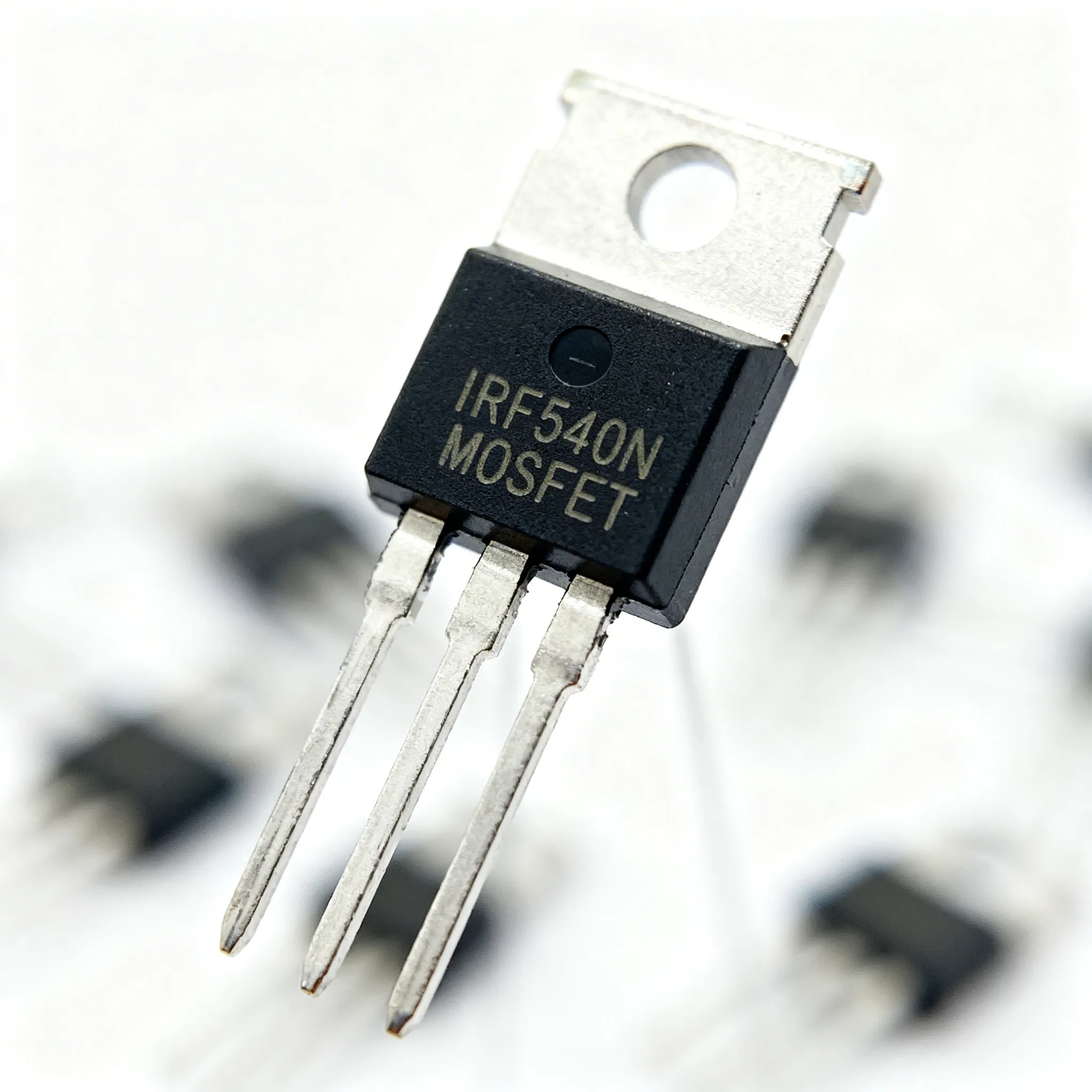
The IRF540N is an N-channel MOSFET designed for high-speed switching applications. It is part of the HEXFET® Power MOSFET family, known for their robust performance and efficiency. The component operates with a maximum drain-source voltage (VDS) of 100V and a continuous drain current (ID) of 33A, making it suitable for both industrial and consumer electronics. Its low on-state resistance (RDS(on)) minimizes power loss, ensuring efficient power management. MOSFETs like the IRF540N are integral in applications ranging from power supplies to motor controllers, where they contribute to the optimization of power usage and thermal management. Understanding these core principles is essential for engineers looking to leverage the full potential of this component in their designs.
Detailed Specifications
Table 1: Electrical Specifications
| Parameter | Value | Units | Notes |
|---|---|---|---|
| Drain-Source Voltage (VDS) | 100 | V | Maximum |
| Continuous Drain Current (ID) | 33 | A | At 25°C |
| Gate-Source Voltage (VGS) | ±20 | V | Maximum |
| On-State Resistance (RDS(on)) | 44 | mΩ | At VGS = 10V |
| Threshold Voltage (VGS(th)) | 2.0 - 4.0 | V | Typical |
| Total Gate Charge (Qg) | 71 | nC | |
| Input Capacitance (Ciss) | 1350 | pF | At VDS = 25V |
| Output Capacitance (Coss) | 370 | pF | |
| Reverse Transfer Capacitance (Crss) | 110 | pF | |
| Maximum Power Dissipation (PD) | 150 | W | At 25°C |
Table 2: Thermal & Mechanical Specs
| Parameter | Value | Units | Notes |
|---|---|---|---|
| Junction-to-Case Thermal Resistance (RθJC) | 0.83 | °C/W | |
| Junction-to-Ambient Thermal Resistance (RθJA) | 62.5 | °C/W | |
| Maximum Junction Temperature (TJ) | 175 | °C | |
| Operating Temperature Range | -55 to 175 | °C | |
| Package Type | TO-220 | - | |
| Mounting Style | Through Hole | - | |
| Lead-Free Status | Compliant | - | RoHS |
| Weight | 2.0 | g | Typical |
Table 3: Application Comparison
| Application | Benefits | Considerations |
|---|---|---|
| Switch Mode Power Supplies (SMPS) | High efficiency, fast switching | Ensure adequate heat dissipation |
| Motor Drives | High current handling, robustness | Consider gate drive requirements |
| DC-DC Converters | Low RDS(on), compact package | Manage thermal performance |
| Audio Amplifiers | Low distortion, high power output | Design for linearity |
| Battery Management Systems | Reliable switching, low power loss | Optimize for efficiency |
The tables above provide a comprehensive view of the IRF540N's electrical, thermal, and application-specific characteristics. Understanding these details is crucial for selecting the right component for your design needs. The electrical specifications highlight its suitability for high-power applications, while the thermal and mechanical specs ensure reliability under various operating conditions. The application comparison table helps engineers determine where the IRF540N can be most effectively utilized, considering both its advantages and design considerations.
Design Considerations
When integrating the IRF540N into a design, several key factors must be considered to ensure optimal performance. First and foremost, thermal management is crucial. Given the component's power dissipation capabilities, adequate heat sinking or cooling mechanisms should be implemented to prevent thermal overload. The TO-220 package facilitates effective heat dissipation, but designers must ensure that the junction-to-case and junction-to-ambient thermal resistances are within acceptable limits.
Gate drive voltage is another critical aspect. The IRF540N requires a gate-source voltage of around 10V for full enhancement. Designers should ensure that the gate drive circuitry can supply this voltage level to minimize on-state resistance and power loss. Additionally, the gate drive circuit should be capable of providing sufficient current to charge the gate capacitance quickly, enabling fast switching speeds.
The choice of application circuit also influences the design considerations. For example, in SMPS applications, the IRF540N's fast switching capabilities can be leveraged to improve efficiency. However, designers should also consider the impact of parasitic inductance and capacitance, which can affect switching performance and lead to electromagnetic interference (EMI). Proper layout techniques and the use of snubber circuits can help mitigate these issues.
Finally, the environmental conditions in which the component will operate must be considered. The IRF540N can operate over a wide temperature range, but extreme conditions may necessitate additional protective measures. Ensuring compliance with relevant standards and regulations, such as RoHS, is also essential for environmentally responsible design.
Step-by-Step Guide
Implementing the IRF540N in a project involves several key steps. Here's a step-by-step guide to assist engineers in integrating this component effectively:
- Identify the Application: Determine the specific application for which the IRF540N is suited, such as a power supply or motor drive. This will guide the subsequent design decisions.
- Calculate Power Requirements: Assess the power requirements of your application, including voltage and current levels. Ensure that the IRF540N's specifications align with these requirements.
- Design the Gate Drive Circuit: Develop a gate drive circuit capable of providing the necessary gate-source voltage and current. Consider using a gate driver IC for improved performance.
- Implement Thermal Management: Design a heat dissipation strategy, such as using a heat sink or fan, to manage the component's thermal load effectively.
- Prototype and Test: Build a prototype of your circuit and perform thorough testing. Pay attention to switching performance, thermal behavior, and efficiency.
- Optimize Layout: Refine the PCB layout to minimize parasitic effects and improve EMI performance. Ensure that the power and ground traces are adequately sized.
- Conduct Reliability Testing: Subject your design to reliability testing under various operating conditions to ensure robust performance over time.
- Finalize Design and Documentation: Once testing is complete, finalize the design and prepare detailed documentation, including schematics and BOMs, for production.
Common Issues & Solutions
While the IRF540N is a robust component, engineers may encounter several common issues during its application. Here are some problems and potential solutions:
- Overheating: This can occur if the thermal management strategy is inadequate. Ensure that heat sinks are properly sized and that airflow is optimized.
- Poor Switching Performance: If the gate drive circuit is insufficient, switching times may be longer than desired. Use a dedicated gate driver IC to improve performance.
- EMI Issues: Parasitic inductance and capacitance can lead to EMI problems. Use proper PCB layout techniques and consider adding snubber circuits to reduce EMI.
- Gate Voltage Spikes: Voltage spikes on the gate can lead to gate oxide breakdown. Implement clamping diodes or TVS diodes to protect the gate.
- Component Mismatch: Ensure that the IRF540N is compatible with other components in the circuit. Check voltage and current ratings to prevent mismatch issues.
Applications & Use Cases
The versatility of the IRF540N MOSFET makes it suitable for a wide range of applications. In switch mode power supplies (SMPS), it offers high efficiency and fast switching, which are critical for reducing power loss and improving performance. In motor drives, its high current handling and robustness make it ideal for controlling motors in industrial and automotive applications. Additionally, the IRF540N is used in DC-DC converters, where its low on-state resistance contributes to compact and efficient power management solutions.
Audio amplifiers benefit from the IRF540N's low distortion and high power output capabilities, making it a popular choice for high-fidelity audio systems. In battery management systems, its reliable switching and low power loss ensure efficient battery charging and discharging processes. These diverse use cases highlight the IRF540N's adaptability across various industries.
Selection & Sourcing Guide
Selecting and sourcing the IRF540N requires careful consideration of supplier reliability and availability. Engineers can explore authorized distributors such as IC Online for competitive pricing and fast delivery. It's essential to verify the component's authenticity and compliance with industry standards. Additionally, leveraging platforms like DigiKey Electronics for comprehensive datasheets and parametric searches can aid in making informed decisions.
FAQ
- What is the maximum current rating of the IRF540N?
The maximum continuous drain current is 33A at 25°C. - Can the IRF540N be used in audio amplifier circuits?
Yes, it offers low distortion and high power output, making it suitable for audio applications. - What is the significance of RDS(on) in the IRF540N?
RDS(on) is the on-state resistance, and a lower value indicates higher efficiency and lower power loss. - How do I ensure proper thermal management for the IRF540N?
Implement heat sinks or cooling mechanisms to maintain junction temperatures within safe limits. - What precautions should be taken to prevent gate voltage spikes?
Use clamping diodes or TVS diodes to protect the gate from voltage spikes. - Is the IRF540N RoHS compliant?
Yes, it is lead-free and complies with RoHS standards. - What type of package does the IRF540N use?
It is available in a TO-220 package. - Can the IRF540N be used in battery management systems?
Yes, its reliable switching and low power loss make it suitable for these applications. - Where can I find the IRF540N datasheet?
Datasheets can be sourced from distributors like DigiKey Electronics. - What is the typical gate charge of the IRF540N?
The typical total gate charge is 71 nC.
Conclusion
The IRF540N MOSFET remains a cornerstone in power electronics, offering robust performance across a wide range of applications. As the electronics industry