Market Outlook 2026: The Future of STM8S003F3P6TR in Electronics Design
Market Outlook 2026: The Future of [sku:STM8S003F3P6TR] in Electronics Design Introduction The [sku:STM8S003F3P6TR] is a microcontroller that has garnered significant attention in the electronics d
Introduction
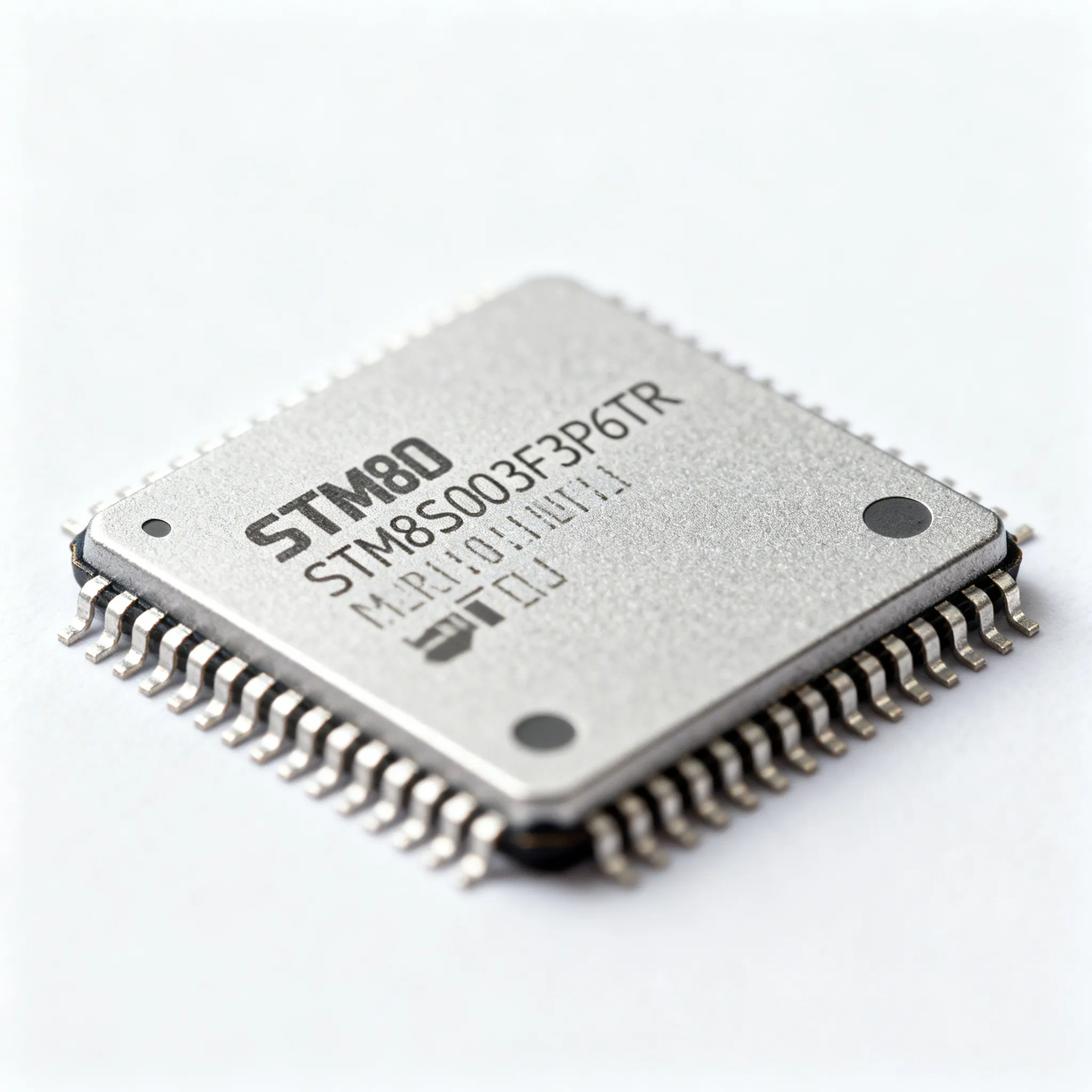
The STM8S003F3P6TR is a microcontroller that has garnered significant attention in the electronics design industry, mainly due to its cost-effectiveness and robust capabilities. With the semiconductor industry projected to reach $595.2 billion by 2026, as reported by the Semiconductor Industry Association, components like the STM8S003F3P6TR are expected to play a pivotal role in driving innovation and meeting the increasing demand for smarter, more efficient electronics. This article delves into the technical specifications, design considerations, and potential applications of the STM8S003F3P6TR, offering insights into its future in electronics design.
Technical Overview
The STM8S003F3P6TR is a member of the STM8S series of microcontrollers, known for their high performance and low power consumption. It features an 8-bit core, which is suitable for a wide range of applications from simple to complex control tasks. The microcontroller's architecture is designed to optimize processing efficiency and power management, making it ideal for battery-operated devices. The core operates at a frequency of up to 16 MHz, providing a balance between processing power and energy efficiency.
In terms of memory, the STM8S003F3P6TR offers 8 KB of Flash memory and 1 KB of RAM, which is adequate for many embedded applications. The device also includes a variety of peripherals, such as timers, analog-to-digital converters (ADCs), and communication interfaces, which enhance its versatility in different design scenarios. Its compact size and rich feature set make it a popular choice among designers looking to optimize space and cost without compromising on functionality.
Detailed Specifications
The following tables provide a detailed look at the electrical, thermal, and mechanical specifications of the STM8S003F3P6TR, as well as a comparison of its applications in various scenarios.
| Parameter | Value | Units | Notes |
|---|---|---|---|
| Operating Voltage | 2.95 to 5.5 | V | Standard voltage range |
| Operating Frequency | 16 | MHz | Maximum clock frequency |
| Flash Memory | 8 | KB | Program memory |
| RAM | 1 | KB | Data memory |
| EEPROM | 128 | Bytes | Non-volatile memory |
| ADC Resolution | 10 | Bits | Analog-to-digital converter |
| Number of GPIOs | 16 | - | General-purpose I/O |
| Supply Current (Active) | 7.5 | mA | At 16 MHz |
| Supply Current (Sleep) | 0.35 | µA | Low power mode |
| Timer | 3 | - | 16-bit timers |
| Parameter | Value | Units | Notes |
|---|---|---|---|
| Operating Temperature Range | -40 to 85 | °C | Industrial grade |
| Storage Temperature Range | -65 to 150 | °C | Long-term storage |
| Package Type | TSSOP-20 | - | Thin Shrink Small Outline Package |
| Package Dimensions | 6.5 x 4.4 | mm | Length x Width |
| Thermal Resistance Junction to Ambient | 83 | °C/W | Natural convection |
| Weight | 0.07 | g | Approximate |
| Lead Finish | Matte Tin | - | RoHS compliant |
| Application | Benefits | Challenges | Notes |
|---|---|---|---|
| Industrial Automation | High reliability | EMI susceptibility | Requires shielding |
| Consumer Electronics | Cost-effective | Limited processing power | Suitable for simple tasks |
| Automotive | Wide temperature range | Complex integration | Requires robust design |
| Home Automation | Low power consumption | Range limitations | Extend with repeaters |
| Healthcare Devices | Compact size | Regulatory compliance | Certification required |
Design Considerations
When designing with the STM8S003F3P6TR, engineers must consider several factors to optimize performance and ensure the reliability of the final product. First, the power supply design should accommodate the microcontroller's voltage range of 2.95 to 5.5 V, ensuring stable operation across this range. Utilizing low-dropout (LDO) regulators can help maintain voltage stability, especially in battery-powered applications.
Another critical aspect is the clock configuration. With a maximum operating frequency of 16 MHz, selecting the appropriate clock source and configuration is essential for balancing performance and power consumption. Designers can leverage the microcontroller's built-in clock management features to optimize this balance.
In terms of memory, the 8 KB Flash and 1 KB RAM should be sufficient for most applications; however, efficient code optimization and memory management are crucial to avoid resource constraints. Additionally, the limited EEPROM space of 128 bytes requires careful planning for data logging and non-volatile storage needs.
Peripheral configuration is another important consideration. The STM8S003F3P6TR offers a range of peripherals, including ADCs, timers, and communication interfaces. Engineers should tailor these peripherals to match the application's specific requirements. For instance, the 10-bit ADC is suitable for moderate precision requirements, but for higher precision, external ADCs might be necessary.
Step-by-Step Guide
Implementing a design with the STM8S003F3P6TR involves several steps, from initial planning to final testing. Below is a step-by-step guide to facilitate this process:
- Define Application Requirements: Begin by outlining the specific requirements of your application, including processing needs, power constraints, and peripheral usage.
- Select Power Supply: Design a power supply circuit that provides a stable voltage within the 2.95 to 5.5 V range. Consider using LDO regulators for efficiency.
- Configure Clock Settings: Choose the appropriate clock source and configuration to achieve the desired balance between performance and power consumption. Use the internal oscillator for cost-sensitive applications.
- Optimize Memory Usage: Develop an efficient code structure to maximize the use of available Flash and RAM. Consider using optimization techniques to minimize memory footprint.
- Set Up Peripherals: Configure the microcontroller's peripherals, such as ADCs and timers, to match the application requirements. Utilize the available GPIOs for interfacing with external components.
- Prototype and Test: Build a prototype to validate the design. Perform thorough testing to ensure functionality and reliability under various conditions.
- Iterate and Refine: Based on testing results, make necessary adjustments to the design. Focus on improving performance, reducing power consumption, and enhancing reliability.
- Finalize and Document: Once the design is validated, finalize the PCB layout and documentation. Ensure all design files are up-to-date and ready for production.
Common Issues & Solutions
Designing with the STM8S003F3P6TR can present several challenges. Here are some common issues and their solutions:
- Issue: Voltage Instability
- Solution: Use capacitors for decoupling near the power pins to stabilize the voltage supply.
- Issue: Insufficient Memory
- Solution: Optimize code to reduce memory usage or consider external memory options if feasible.
- Issue: ADC Noise
- Solution: Implement proper grounding and shielding techniques to minimize noise interference.
- Issue: EMI Susceptibility
- Solution: Use ferrite beads and proper PCB layout techniques to mitigate electromagnetic interference.
- Issue: Communication Errors
- Solution: Verify communication protocol settings and check for signal integrity issues.
Applications & Use Cases
The STM8S003F3P6TR is versatile and finds applications in various fields. In industrial automation, its reliability and wide operating temperature range make it ideal for controlling machinery and processes. For consumer electronics, its cost-effectiveness and compact size suit devices like remote controls and small appliances. In automotive applications, the microcontroller's robustness and temperature tolerance support its use in engine control units and sensor interfaces. Home automation systems benefit from its low power consumption, enabling efficient control of lighting and climate systems. Finally, in healthcare devices, the STM8S003F3P6TR provides a compact and reliable solution for portable medical equipment.
Selection & Sourcing Guide
When selecting and sourcing the STM8S003F3P6TR for your projects, it's crucial to partner with reputable distributors to ensure authenticity and availability. IC Online is an excellent resource for finding competitive pricing and fast delivery for this component. Verify stock levels and lead times to avoid potential supply chain disruptions, especially as demand for microcontrollers continues to rise.
FAQ
- Q: What is the maximum clock frequency of the STM8S003F3P6TR?
- A: The maximum clock frequency is 16 MHz.
- Q: How much Flash memory does the STM8S003F3P6TR have?
- A: It has 8 KB of Flash memory.
- Q: Is the STM8S003F3P6TR suitable for battery-powered applications?
- A: Yes, its low power consumption makes it ideal for such applications.
- Q: Can the STM8S003F3P6TR handle high-precision ADC tasks?
- A: It features a 10-bit ADC; for higher precision, consider external ADCs.
- Q: What package type does the STM8S003F3P6TR come in?
- A: It is available in a TSSOP-20 package.
- Q: How many timers does the STM8S003F3P6TR include?
- A: It includes three 16-bit timers.
- Q: What is the typical supply current in sleep mode?
- A: The typical supply current in sleep mode is 0.35 µA.
- Q: Is the STM8S003F3P6TR RoHS compliant?
- A: Yes, it is RoHS compliant with a matte tin lead finish.
Conclusion
The STM8S003F3P6TR is a versatile and reliable microcontroller that is well-suited for a wide range of applications, from industrial automation to consumer electronics. Its combination of performance, power efficiency, and cost-effectiveness makes it an attractive choice for designers looking to innovate in an ever-evolving electronics landscape. As the demand for smarter and more efficient devices continues to grow, the STM8S003F3P6TR is poised to play a significant role in shaping the future of electronics design.