Performance Showdown: IGBT vs MOSFET with Real Benchmark Data for Engineers
Expert guide on Performance Showdown: IGBT vs MOSFET with Real Benchmark Data for Engineers. Technical specs, applications, sourcing tips for engineers and buyers.
Introduction
In the realm of power electronics, the choice between Insulated Gate Bipolar Transistors (IGBTs) and Metal-Oxide-Semiconductor Field-Effect Transistors (MOSFETs) is pivotal for engineers striving for optimal performance in their applications. With the semiconductor industry reaching unprecedented heights, as evidenced by the $595.2 billion revenue projection for 2026, understanding the nuances of these components is more crucial than ever. Engineers must navigate through a plethora of specifications and application scenarios to make informed decisions. This article delves into a performance showdown between IGBTs and MOSFETs, providing real benchmark data to aid engineers in their component selection process.
Technical Overview
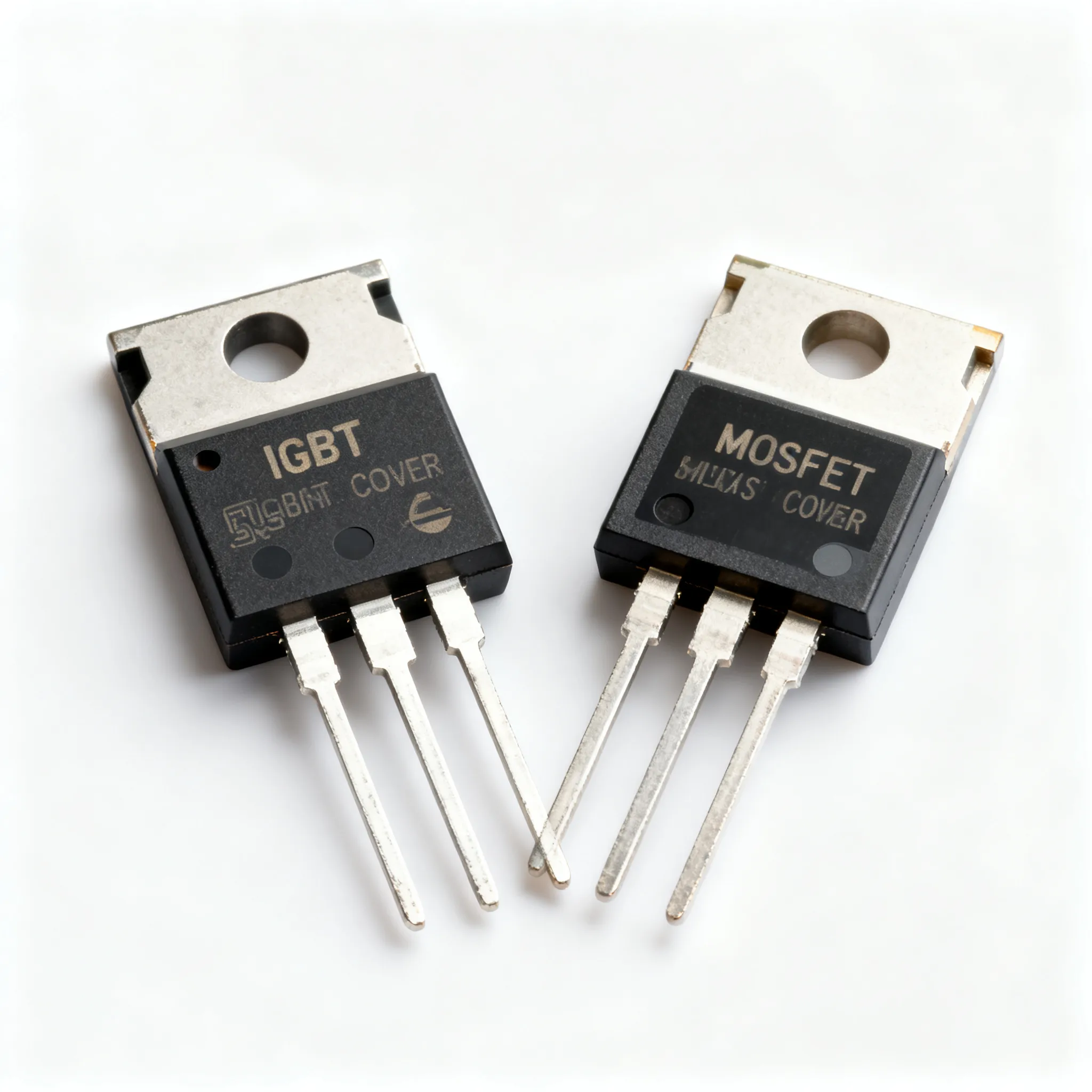
The fundamental difference between IGBTs and MOSFETs lies in their structure and operational principles. IGBTs combine the high efficiency and fast switching of MOSFETs with the high-voltage capabilities of bipolar transistors. This makes them ideal for high-power applications such as inverters and motor drives. On the other hand, MOSFETs, known for their fast switching speeds and high efficiency at low voltages, are often used in applications like power supplies and low-voltage motor controllers.
The choice between these two components often hinges on key parameters such as switching speed, conduction losses, and thermal performance. IGBTs generally exhibit higher conduction losses compared to MOSFETs, but they can handle higher voltages and currents, making them suitable for high-power applications. MOSFETs, with their low on-resistance and fast switching capabilities, excel in low to medium power applications. Understanding these core principles is essential for engineers to make the right choice for their specific application needs.
Detailed Specifications
| Parameter | IGBT | MOSFET | Units | Notes |
|---|---|---|---|---|
| Blocking Voltage | 1200 | 600 | V | Typical values for high-power applications |
| On-State Voltage Drop | 2.0 | 0.15 | V | Lower for MOSFETs, affecting efficiency |
| Switching Frequency | 20 | 100 | kHz | MOSFETs switch faster |
| Current Rating | 100 | 50 | A | IGBTs handle higher currents |
| Gate Charge | 200 | 50 | nC | Impacts drive requirements |
| Input Capacitance | 5000 | 1000 | pF | Higher for IGBTs |
| Thermal Resistance | 0.5 | 0.2 | °C/W | Critical for thermal management |
| Die Size | 8 | 4 | mm² | Impacts cost and integration |
| Cost per Unit | 5.00 | 2.50 | USD | Cost-effectiveness varies |
| Temperature Range | -40 to 150 | -55 to 175 | °C | MOSFETs generally offer wider range |
| Parameter | IGBT | MOSFET | Units | Notes |
|---|---|---|---|---|
| Junction-to-Case Thermal Resistance | 0.4 | 0.1 | °C/W | Lower is better for heat dissipation |
| Package Type | TO-247 | TO-220 | - | Commonly used packages |
| Weight | 5.5 | 2.0 | g | Impacts mechanical design |
| Height | 20 | 15 | mm | Package height |
| Width | 15 | 10 | mm | Package width |
| Length | 5 | 3 | mm | Package length |
| Mounting Style | Through Hole | Surface Mount | - | Installation method |
| Lead Finish | Matte Tin | Gold | - | Corrosion resistance |
| Application | IGBT | MOSFET | Notes |
|---|---|---|---|
| Motor Drives | Excellent | Good | IGBTs preferred for high power |
| Power Supplies | Good | Excellent | MOSFETs excel in efficiency |
| Inverters | Excellent | Good | IGBTs handle higher voltages |
| Low Voltage Applications | Poor | Excellent | MOSFETs are ideal |
| High Frequency Switching | Fair | Excellent | MOSFETs have faster switching |
The detailed specifications above highlight the distinct characteristics and typical values for IGBTs and MOSFETs. Engineers can use this data to make informed decisions based on parameters such as voltage, current, and thermal performance. The tables provide a clear comparison that can guide component selection based on specific application requirements.
Design Considerations
When designing circuits that incorporate IGBTs or MOSFETs, several key considerations must be taken into account to ensure optimal performance and reliability. The choice of component directly impacts the efficiency, thermal management, and overall cost of the system.
One of the primary considerations is the switching speed. MOSFETs offer superior switching speeds, making them suitable for applications requiring high-frequency operation. This is particularly beneficial in power supply designs where efficiency is paramount. However, the higher switching speed also necessitates careful consideration of electromagnetic interference (EMI) and the need for snubber circuits to mitigate voltage spikes.
Thermal management is another critical aspect, especially for IGBTs which tend to generate more heat due to higher conduction losses. Engineers must design adequate heat dissipation strategies, including the use of heat sinks and thermal pads, to prevent thermal runaway and ensure reliability. The thermal resistance values provided in the tables can guide the selection of appropriate cooling solutions.
Cost is also a significant factor, particularly in high-volume production. While IGBTs generally have higher unit costs, their ability to handle higher power levels may justify the investment in specific applications. Conversely, MOSFETs offer cost-effective solutions for low to medium power applications, making them an attractive choice for budget-conscious designs.
Finally, the choice of package type and mounting style can influence both the mechanical design and the ease of manufacturing. Surface mount MOSFETs offer advantages in automated assembly processes, while through-hole IGBTs provide robust mechanical connections for high-power applications.
Step-by-Step Guide
Designing a circuit with IGBTs or MOSFETs involves several steps to ensure optimal performance and reliability. Below is a step-by-step guide to assist engineers in the design process:
- Define Application Requirements: Determine the voltage, current, and switching frequency requirements of your application. This will guide the selection of either IGBT or MOSFET components.
- Select the Component: Use the electrical specifications table to choose a component that meets your application requirements. Consider factors such as blocking voltage, current rating, and on-state voltage drop.
- Consider Thermal Management: Evaluate the thermal resistance and junction-to-case thermal resistance values to design an appropriate cooling solution. This may involve selecting suitable heat sinks or thermal pads.
- Design the Gate Drive Circuit: For MOSFETs, ensure the gate drive circuit can supply sufficient gate charge for fast switching. For IGBTs, consider the gate drive voltage and current requirements.
- Implement Snubber Circuits: To mitigate voltage spikes and reduce EMI, design snubber circuits using capacitors and resistors as needed. This is particularly important for high-frequency applications.
- Prototype and Test: Build a prototype of your circuit and perform thorough testing to verify performance under different load conditions. Pay attention to thermal performance and switching behavior.
- Iterate and Optimize: Based on test results, make necessary adjustments to optimize performance. This may involve fine-tuning component values or adjusting the mechanical design for better heat dissipation.
- Finalize the Design: Once satisfied with the prototype, finalize the design for production, ensuring all components are sourced from reliable suppliers to maintain quality and consistency.
Common Issues & Solutions
While working with IGBTs and MOSFETs, engineers may encounter several common issues. Here are some real problems and their solutions:
- Overheating: This is a common issue with IGBTs due to their higher conduction losses. Solution: Implement effective cooling solutions such as heat sinks and thermal pads.
- Gate Drive Failures: Inadequate gate drive voltage can lead to inefficient switching. Solution: Ensure the gate drive circuit is designed to supply sufficient voltage and current.
- EMI Problems: Fast switching speeds of MOSFETs can cause EMI issues. Solution: Use snubber circuits and proper PCB layout techniques to minimize interference.
- Voltage Spikes: High switching speeds can cause voltage spikes. Solution: Implement snubber circuits to dampen these spikes and protect the components.
- Mechanical Stress: Improper mounting can lead to mechanical stress on the components. Solution: Ensure proper mounting techniques are used, especially for through-hole components.
Applications & Use Cases
IGBTs and MOSFETs find applications in various industries, each offering distinct advantages. IGBTs are commonly used in motor drives and inverters where high power and voltage handling are required. Their robust performance in these applications makes them the component of choice for industrial and automotive sectors.
Conversely, MOSFETs are widely used in power supplies and low-voltage motor controllers. Their fast switching speeds and low on-resistance make them ideal for applications where efficiency and response time are critical. Consumer electronics and renewable energy sectors often leverage MOSFETs for their compact size and cost-effectiveness.
Selection & Sourcing Guide
When selecting and sourcing IGBTs or MOSFETs, engineers should consider reliable suppliers to ensure component quality and availability. One such source is IC Online, an authorized distributor of electronic components offering competitive pricing and fast delivery. Engineers can use their platform to search and source components, ensuring they meet the specific requirements of their application.
FAQ
- What are the main differences between IGBTs and MOSFETs? IGBTs are better suited for high-power applications due to their higher voltage and current handling capabilities, while MOSFETs offer faster switching speeds and are more efficient at lower voltages.
- When should I use an IGBT over a MOSFET? IGBTs are preferred in applications requiring high voltage and current, such as motor drives and inverters.
- What are the thermal management considerations for IGBTs? Due to their higher conduction losses, IGBTs require effective cooling solutions such as heat sinks and thermal pads to prevent overheating.
- How does switching frequency affect component selection? Higher switching frequencies favor the use of MOSFETs due to their faster switching capabilities, while IGBTs are suitable for lower frequencies.
- Are there cost differences between IGBTs and MOSFETs? Yes, IGBTs generally have higher unit costs but are justified in high-power applications, while MOSFETs offer cost-effective solutions for lower power applications.
- How important is the gate drive circuit in these applications? The gate drive circuit is crucial for ensuring efficient switching and overall performance, especially in high-speed applications.
- Can I use MOSFETs in high-voltage applications? While MOSFETs can be used in high-voltage applications, IGBTs are often preferred due to their superior voltage handling capabilities.
- What are snubber circuits, and why are they important? Snubber circuits are used to dampen voltage spikes and reduce EMI, essential in high-speed switching applications.
- How do I choose the right package type for my application? Consider factors such as mounting style, mechanical design, and assembly process when choosing the package type, with surface mount MOSFETs offering advantages in automated assembly.
- Where can I find reliable suppliers for these components? Authorized distributors like IC Online offer competitive pricing and fast delivery for sourcing IGBTs and MOSFETs.
Conclusion
In conclusion, the choice between IGBTs and MOSFETs is a critical decision for engineers working in power electronics. Each component offers unique advantages and is suited to specific applications. By understanding the detailed specifications, design considerations, and common issues, engineers can make informed decisions to optimize performance and reliability. The insights provided in this article, along with real benchmark data, aim to guide engineers in selecting the right component for their needs.