Maximize Savings with Excess Inventory Buybacks and Discounted Components for OEMs
Practical guide for buyers and engineers: Maximize Savings with Excess Inventory Buybacks and Discounted Components for OEMs. Sourcing, risk, and selection notes.
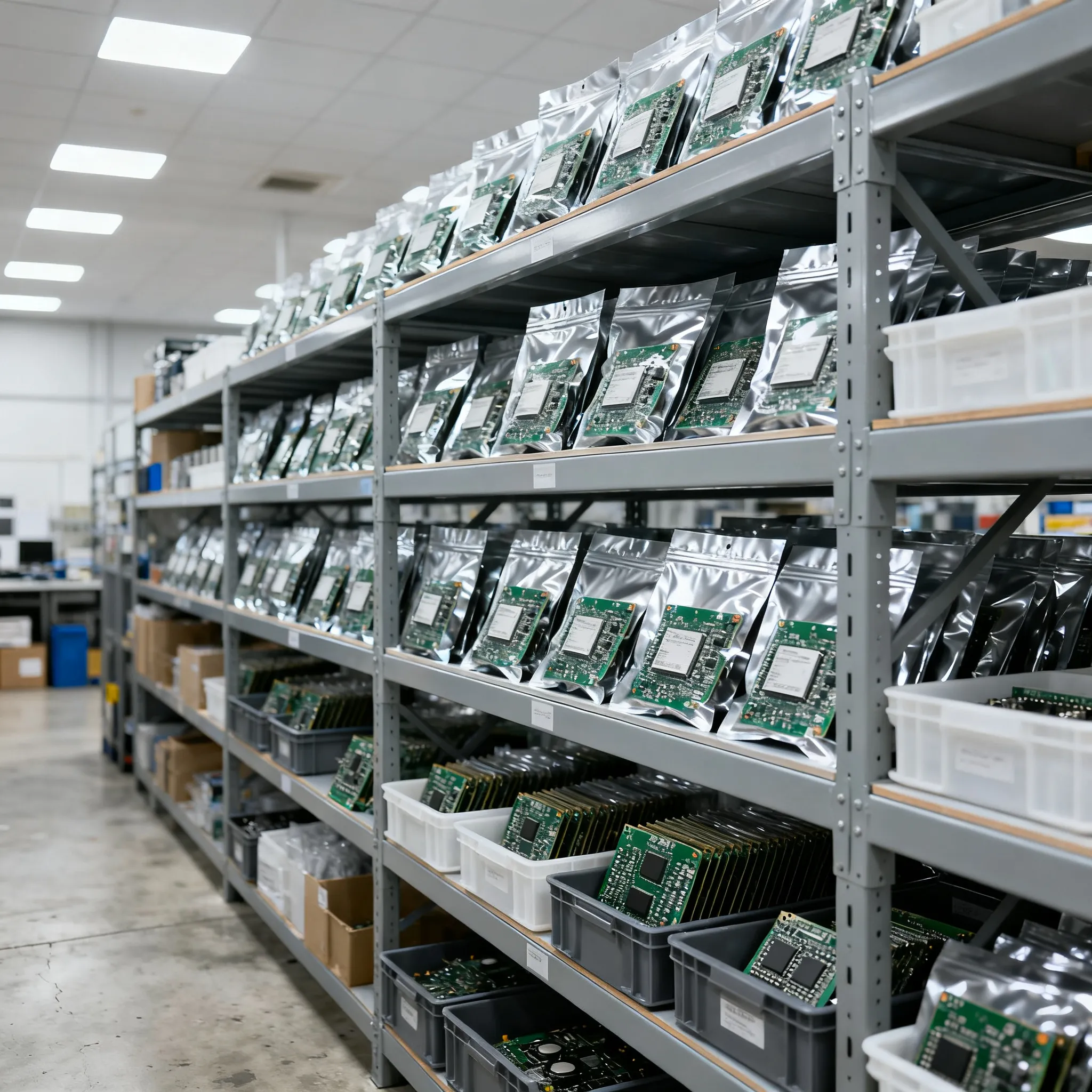
For electronics OEMs, excess component inventory has often been treated as a sunk cost — a line item to write down and forget. That mindset is changing. Strategic buyback programs, managed markdowns, and redistribution networks are turning slow-moving stock into a working-capital lever, while giving buyers a legitimate channel to source hard-to-secure parts at a discount. This article maps the exact mechanisms engineers and procurement teams can use to convert surplus risk into a sourcing advantage, and how to avoid the traps that erode those gains.
Why Excess Inventory Is No Longer a Dead Weight — And How Buybacks Are Reshaping Procurement
When a production forecast misses or a last-minute engineering change scraps a material pipeline, OEMs are left holding reels of components that still carry full acquisition cost. Carrying that stock ties up capital, consumes floorspace, and inflates inventory-carrying charges. Meanwhile, the same organization may be scrambling to find allocations of an entirely different part. Fast-Rite’s OEM optimizer work captures this tension succinctly: excess inventory ties up capital, while shortages risk costly line-down events.
The procurement industry is moving from reactive liquidation — dumping parts to a broker at cents on the dollar — to proactive asset optimization. Sourceability notes that the prerogative is shifting from fire-sale liquidation to treating excess supply as a resource that can be re-channeled into productive use. Buyers benefit because they can source components from this curated excess pool at meaningful discounts, often with full traceability, while sellers recover a higher percentage of original cost than a distress sale would yield.
Several buyback and redistribution models have matured enough to be woven into standard procurement and finance workflows. ODG’s excess inventory buyback solutions, for example, help enterprises extract value from surplus, obsolete, or slow-moving components while optimizing working capital. Dedicated partners like ASC Global give manufacturers immediate access to a ready-to-ship global inventory pool, converting what was once a balance-sheet headache into a fast-turnaround liquidity event. For engineering and procurement teams, the question is no longer “can we sell this?” but “which recovery channel yields the best blend of speed, price, and supply integrity?”
From Shelf to Savings: How Excess Buyback and Redistribution Mechanisms Actually Work
Every method of turning surplus inventory back into cash — or into a sourcing opportunity — operates on a slightly different mechanism. Understanding these core paths lets you match the approach to the part type, volume, and urgency.
Supplier buyback agreements. Some component manufacturers or franchised distributors offer buyback programs, especially for high-volume customers. Jay Hoehl Inc points out that even if returns aren’t standard, partial recovery can be negotiated. The seller typically receives a credit or cash at a negotiated percentage of the original purchase price. Because the parts flow back into authorized distribution, buyers who later source those same parts through official channels get full traceability and warranty.
Internal redistribution. Before any external sale, it pays to check whether a slow reel sitting in one division’s stockroom can satisfy an open demand in another business unit. Rand Technology analyzes global operations to identify where surplus inventory from one division can fulfill needs in another, and manages the logistics to validate and redistribute components. This avoids an external write-down entirely and delivers parts at zero incremental procurement cost.
Phased markdowns. Instead of dumping inventory in one deep discount that signals distress, Jay Hoehl Inc recommends a stepped schedule — for example, 10% → 20% → 30% over a defined timeline. This tests price elasticity, captures early buyers who value immediate availability, and preserves brand perception. Buyers who access these markdowns can lock in a solid price without the quality uncertainties often associated with one-shot clearance events.
| Method | How It Works | Seller Recovery Profile | Buyer Discount Potential | Best Fit |
|---|---|---|---|---|
| Supplier Buyback | Negotiated return to manufacturer or authorized distributor; credit or cash issued | Partial — typically higher than broker sale for high-volume accounts | Moderate discount when parts re-enter distribution as “open market” stock with full traceability | Standard ICs, passives, connectors still in active production |
| Internal Redistribution | Cross-divisional rebalancing of stock; no external transaction | Full cost avoidance — no write-down | Not applicable to external buyers, but frees up budget that can be redirected to other purchases | Large OEMs with multiple manufacturing sites |
| Phased Markdown Campaign | Controlled, time-bound discount steps offered to a curated buyer list or digital marketplace | Gradual — margin preserved by capturing price-insensitive buyers first | Sharper discounts in later phases; early phases offer availability advantage | Niche or higher-value ICs where brand perception matters |
| Excess Inventory Partner Pool | Sale to a specialist aggregator who lists components in a ready-to-ship global pool | Immediate liquidity, often competitive with spot-market offers | Discounts driven by market depth; buyers get one-stop access to diverse part numbers | Mixed surplus with unpredictable mix; OEMs wanting a single exit transaction |
Each path feeds a secondary supply stream that, when managed with discipline, offers OEM buyers an alternative to the allocation-constrained primary market. The buyer’s discount depth and the seller’s net recovery are inversely related to the friction and time required to complete the transaction. Understanding that trade-off is the next step.
Choosing Your Recovery Channel: Buyback Programs, Phased Markdowns, or Broker Sales
Not all surplus is equal, and neither are the channels for monetizing it. The decision tree splits along three axes: how fast you need to free up cash, how much of the purchase price you want to recover, and the level of traceability you’re willing to provide — or demand — in the secondary transaction.
ASC Global and similar partners offer immediate global reach, pooling excess stock into a single catalog that buyers can query through a BOM upload. This model favors speed and simplicity. Because the aggregator handles testing and logistics, the seller receives a quick payout, and buyers gain access to volume discounts that would be impossible if they shopped discrete broker listings one by one.
A phased markdown campaign, by contrast, is slower but can return a higher net price on parts for which there is latent demand. Jay Hoehl Inc notes that a step-down discount structure lets you capture early buyers who value availability over rock-bottom price, while still clearing dead stock in the final markdown window. For the buyer, this creates a tiered market: early-phase parts cost more but arrive with thorough documentation; later-phase units are cheaper but may carry looser date-code windows.
Supplier buyback programs often sit in the middle — recovery is negotiated, speed depends on the supplier’s RMA process, and the parts re-enter authorized distribution with full pedigree. For the OEM seller, the recovery rate is a function of customer volume and relationship leverage. For the buyer, it’s one of the safest secondary sources because the supplier stands behind the parts.
The table below juxtaposes the four principal channels from the perspective of the selling OEM and the buying procurement team. Use it to select the right channel for a given surplus lot, or to identify where your discounted-sourcing effort will find the best balance of price and risk.
| Recovery Channel | Speed of Liquidity | Seller Price Realization | Buyer Discount Depth | Traceability / Quality Assurance | Ideal Scenario |
|---|---|---|---|---|---|
| Dedicated Excess Partner (e.g., ASC Global) | Fast — immediate global pool listing | Competitive with spot market; single transaction | Moderate to aggressive, depending on pool depth | Partner-owned inspection; request date-code lineage | Mixed surplus lots; need for rapid cash conversion |
| Supplier Buyback Program | Moderate — subject to supplier RMA flow | Negotiated; often 20%–50% of original cost for high-volume parts | Shallow; buyer pays near-franchised price but gets full pedigree | Full manufacturer certification and warranty | Standard catalog parts; OEMs with strong supplier relationships |
| Phased Markdown Campaign | Slower — scheduled steps over weeks | Purer margin capture in early phases; final phase may approach broker levels | Increases over time; early buyers get availability advantage | Seller must provide documentation; buyer should verify per-phase | Higher-value ICs, modules; brand-sensitive sellers |
| Internal Redistribution | Immediate within enterprise | 100% — no external write-down | Not a buyer-facing channel | Internal logistics validation per Rand Technology model | Multi-site OEMs with visible cross-divisional demand |
For buyers, the message is clear: the supply channel you select dictates the verification burden you carry. A part sourced from a supplier buyback or an excess partner who publishes full test reports demands less in-house inspection than a unit picked from a late-phase markdown without supporting documentation. Build your sourcing process around that gradient of trust.
Discounted Component Sourcing Without the Pitfalls: A Buyer’s Practical Checklist
Securing a discount on excess inventory is not inherently riskier than buying through primary distribution — provided procurement runs a consistent verification sequence. The steps below translate the recovery-channel dynamics described earlier into an actionable workflow that protects your production line while optimizing cost.
- Trace the supply lineage before you commit. Require the seller to disclose whether the parts originated from an OEM-authorized source, a supplier buyback, or a broker aggregation. Sourceability emphasizes that established buyback programs guarantee authenticity through their inspection processes, but you still need to see a full date-code log and, where possible, the original manufacturer COC. If the seller can’t produce a documented chain of custody, escalate your incoming inspection.
- Align opportunistic buys with your reorder point logic. Discounted inventory can accidentally drown your MRP signals if it’s treated like a reorder-trigger event. Use the classic Tradogram ROP formula — ROP = Safety Stock + Demand during lead time — to set your base replenishment target. Treat any discounted lot as an overstock layer that reduces future PO quantities, not as a reason to lower safety stock. This keeps your core replenishment model intact while you capture the one-time discount.
- Consolidate fractional buys through a qualified partner. Excess inventory pools often contain partial reels or odd lot sizes. Buying from multiple sources multiplies administrative overhead and shipping cost. Fast-Rite highlights how consolidating suppliers simplifies purchasing and unlocks volume pricing. Work with a partner who can aggregate your BOM requirements from their excess network and present a single, vetted package — one invoice, one logistics stream, one quality report.
- Set unambiguous acceptance criteria for date codes and test reports. Before placing an order, agree on a maximum acceptable date code window (e.g., nothing older than three years unless the part is a legacy MPN with slow turnover) and require a test report generated within the last 90 days. If the source is an excess partner like ASC Global, ask what level of electrical testing is included beyond visual inspection. This prevents surprises when reel labels are scanned at goods-in.
- Close the loop with an RFQ, not a cart checkout. Excess stock availability changes by the hour. Treat any discounted offer as allocation-sensitive — confirm current quantities, date codes, and lead time with the supplier through a formal RFQ process. Uploading a BOM to a platform like IC-Online lets you query multiple vetted excess and franchise sources simultaneously, giving you a clear picture of where real savings lie without chasing individual listings.
The checklist is only as good as the documentation you demand. The table below distills the key verification parameters into a quick-reference format that procurement can share with incoming quality control.
| Verification Parameter | Why It Matters | What to Request | How to Validate |
|---|---|---|---|
| Date-code lineage | Old date codes may indicate long storage, potential moisture exposure, or solderability degradation | Full lot date-code listing before shipment | Cross-check with manufacturer date-code format; verify continuity across reels |
| Traceability to OEM-authorized source | Breaks in the chain of custody increase counterfeit risk | Supplier declaration of origin; original COC if available | Optional third-party lab sampling for authenticator ICs, or request authorized distributor verification if part originated from a buyback |
| Test reports (visual and electrical) | Visual-only inspection can miss ESD damage or degraded parametric performance | Report generated within 90 days, specifying test coverage (X-ray, SMD reflow compatibility, etc.) | Review test parameters against manufacturer datasheet acceptance limits; request sample photo evidence for component markings |
| Packaging integrity (MSL/ESD) | Improperly stored moisture-sensitive parts can fail during reflow | Moisture barrier bag seal date, humidity indicator card reading if opened | Verify per IPC/JEDEC J-STD-033 if re-baking is required; never accept parts where MSL window has expired without remediation |
| Quantity verification | Over- or under-count can disrupt production planning | Pre-shipment count confirmation, ideally with weigh-scale data | Perform sample reel count at receiving; reconcile with PO before ERP upload |
A disciplined verification sequence keeps opportunistic sourcing from morphing into a quality escape. Once integrated into your procurement process, it becomes a repeatable engine for capturing structural savings without compromising line reliability.
Excess Inventory Buybacks and Discounted Sourcing: Questions Your Engineering and Procurement Teams Are Asking
Q: What’s a realistic price recovery percentage when I sell excess inventory back to a supplier or specialist?
It varies by component category, demand, and customer volume, but partial recovery typically ranges from 20% to 70% of original cost. High-volume negotiated buyback agreements can yield better returns than broker channels, especially for common passives or standard ICs still in distribution. Niche or custom parts may fall on the lower end unless a specific buyer is identified. The key is to request quotes from at least two channels — a direct supplier buyback and an excess inventory partner — to benchmark the realizable value before committing.
Q: How can I ensure discounted components from excess inventory pools are not counterfeit or substandard?
Work only with vendors that provide full traceability to OEM-authorized sources, include date-code verification, and ideally offer third-party test reports. Avoid spot-market listings without documented test history; established buyback programs typically guarantee authenticity through their inspection processes. For high-value or safety-critical parts, consider adding a sample-based decapsulation or curve-trace verification step at incoming inspection. A trustworthy partner will not hesitate to share their internal quality control protocol.
Q: Should I redistribute surplus components internally before using an external buyback program?
Yes, always check internal cross-divisional needs first. Analyzing global operations for unmet demand within your own enterprise can often absorb slow-moving stock at zero incremental cost and avoid unnecessary write-downs. Partners like Rand Technology can manage the logistics of such internal redistribution, including transport, validation, and ERP alignment. Only what cannot be consumed internally should be released to an external recovery channel.
Q: Do phased markdowns really protect brand value when liquidating excess parts?
Yes. A stepped discount schedule (e.g., 10% → 20% → 30%) allows you to test price elasticity and capture early buyers who value availability, rather than one deep panic discount that signals distress and erodes perceived brand quality for all your components. Jay Hoehl Inc’s work on incremental markdown strategies shows that this approach often preserves more margin than a single steep cut, while maintaining the seller’s reputation when the same parts may return to the market later.
Q: How do I integrate opportunistic discounted component buys into an MRP system without distorting inventory signals?
Treat opportunistic purchases as an overstock layer above your regular reorder point logic. Use the ROP formula (safety stock + demand during lead time) to set your core replenishment triggers, then evaluate discounted stock as a separate “inventory buy-down” event that reduces future POs, not as a signal to lower your base safety stock. This prevents the MRP from interpreting the one-time surplus as a permanent demand dip and avoids future shortages when the discounted lot is consumed.
Excess inventory buyback and discounted sourcing are not occasional salvage operations — they are now repeatable, quantitative elements of a comprehensive procurement strategy. The difference between capturing a 20% recovery and a 70% recovery, or between a genuine discount and a costly quality escape, lies in the process rigor applied at every step. With the mechanisms, channel comparisons, and verification checklists mapped out above, engineering and procurement teams can convert what was once an inventory liability into a reliable, documented cost advantage.
Ready to put these strategies into practice? Upload your BOM to IC-Online and request a quote to see real, allocation-sensitive pricing from a network that spans excess inventory programs, franchised distribution, and vetted independent sources — with flexible MOQs and no obligation.
References & Further Reading
- The OEM Optimizer’s Guide to Driving Component Cost Savings – Fast-Rite
- Transforming Excess Supply into Valuable Assets – Sourceability
- Excess Inventory Management for Electronics – Rand Technology
- Excess Inventory Buyback – ODG (Origin IC)
- Excess Inventory Solutions – ASC Global
- The Complete Guide to Managing Excess Inventory – Jay Hoehl Inc
- How to Optimize Inventory Levels for Cost Savings – Tradogram
- IC-Online – BOM Upload and RFQ Platform