

Memory Chip Shortage 2026: How to Source DRAM and DDR4 Components Without Supply Chain Disruptions
Practical guide for buyers and engineers: Memory Chip Shortage 2026: How to Source DRAM and DDR4 Components Without Supply Chain Disruptions. Sourcing, risk, and selection notes.
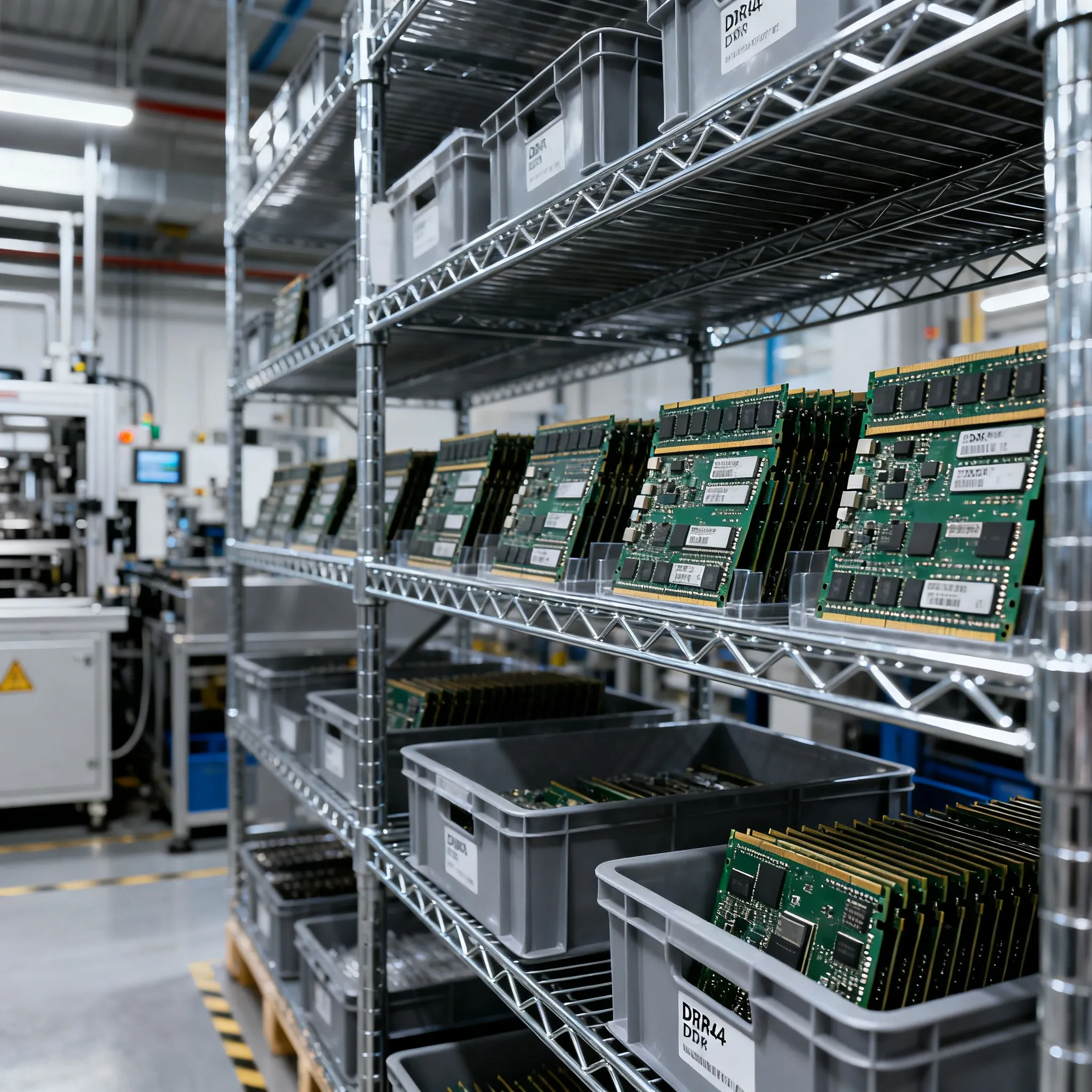
RAMmageddon 2026: Why DDR4 and DRAM Sourcing Has Never Been Tougher
If you are a procurement lead or design engineer responsible for DRAM and DDR4 in Q3 2026, you are already living inside what the media has labeled “RAMmageddon.” The 2025–present global memory supply shortage has tightened into a structural crisis that no amount of expediting can fix overnight. On July 8, 2026, Micron broke ground on a new $9.3 billion memory fab — a move that confirms the industry’s long-term bet on demand, but the facility will not begin volume production until Q3 2028. That means the capacity pipeline you are counting on today is essentially frozen for the next two years.
The numbers are stark. DDR4 and DDR5 contract prices have moved 80 to 90 percent higher quarter-over-quarter in multiple segments, and spot prices are even more volatile. Major memory makers report that lead times for many DDR4 and DDR5 configurations have stretched beyond 40 weeks, with order books already committed well into 2027. The root cause is not a single factory fire or a temporary spike in consumer electronics; it is a fundamental reallocation of wafer capacity away from standard DRAM and toward high-bandwidth memory (HBM) for AI accelerators. Every hyperscale data center GPU that ships with HBM removes three to four times the wafer area from the DDR5 and DDR4 pool. That math is not going to reverse until new fabs come online — and those fabs are years away.
For buyers and engineers who have only seen cyclical memory gluts, this allocation market is unfamiliar territory. The old playbook of waiting for a price correction is failing. Instead, you need to understand the wafer-level dynamics, compare every sourcing channel on its real availability and risk profile, and audit your bill of materials with the rigor of a life-safety system. This article maps the shortage mechanics, the sourcing options, and the concrete steps you can take right now to keep your production lines running without handing your BOM over to counterfeiters.
How HBM Demand Is Reshaping the DRAM Wafer Supply Chain
The memory market has always been cyclical, but the current cycle is driven by a structural shift that even the most experienced buyers may not have internalized. AI training and inference clusters require HBM stacks that deliver terabytes-per-second bandwidth, and these stacks consume disproportionate amounts of silicon. Industry analyses, including sourcing intelligence from GlobX, point to a roughly 3:1 HBM-to-DDR5 wafer conversion ratio — producing one gigabit of HBM consumes three times the wafer area of one gigabit of standard DDR5. When HBM is sold out for the entire calendar year, as SK Hynix, Samsung, and Micron have reported for 2026, the wafer reallocation becomes absolute.
DRAM is a commodity product. That means the three major producers can — and do — shift production lines toward the highest-margin product almost in real time. MSI’s analysis of the 2025–2026 shortage explains that AI-favored memory types like HBM are diverting capacity away from PC and embedded DDR4/DDR5, creating scarcity that cascades through every density and speed grade. The result is not just higher prices; it is a zero-sum allocation system where a purchase order for 10,000 units of DDR4-2666 SODIMM may simply receive a “no bid” from franchised distributors because the die that would have gone into those modules is now committed to an HBM line.
The table below distills the key drivers linking the AI boom to your DDR4 sourcing headache. Each driver translates a wafer-level reality into a procurement-floor constraint.
| Driver | Mechanism | Procurement Impact |
|---|---|---|
| AI data center expansion and HBM demand | Hyperscalers consume HBM for every new GPU accelerator; HBM is sold out for 2026 at all three suppliers. | Standard DRAM wafer allocation falls sharply; DDR4 and DDR5 lines become capacity-constrained regardless of separate demand cycles. |
| 3:1 HBM-to-DDR5 wafer conversion ratio | Each HBM stack uses approximately three times the die area of an equivalent DDR5 chip, magnifying the wafer burden. | Every gigabyte of HBM shipped removes three gigabytes of potential DDR5/DDR4 supply, tightening all density nodes. |
| Limited number of HBM volume producers | Only SK Hynix, Samsung, and Micron manufacture HBM at scale; no alternative foundry can absorb the overflow. | Buyers cannot redirect demand to a second-tier fab; all standard DRAM faces the same allocation wall. |
| Commodity nature of DRAM enables rapid line reallocation | Manufacturers prioritize high-margin HBM over legacy DDR4, deprecating older process nodes and test capacity. | DDR4-2666, DDR4-3200, and low-density DDR5 modules become “end of life” sooner than expected, forcing redesigns. |
| Speculative stockpiling and double-ordering | OEMs and distributors build safety stock, amplifying real demand and creating artificial spot shortages. | Lead times stretch beyond 40 weeks, and spot prices separate from contract prices, punishing lean-inventory strategies. |
| New wafer fab capacity not until 2028 | Micron’s $9.3B fab breaks ground in mid-2026, with first volume wafer outs in Q3 2028; other greenfield fabs follow similar timelines. | The allocation environment persists through 2027; any near-term relief must come from demand destruction or process migration, not new bricks-and-mortar. |
Understanding these drivers changes how you negotiate. When a franchised distributor says “allocation,” they are not hiding inventory; they are reflecting the wafer-level decisions made in Hwaseong, Pyeongtaek, and Boise. Your best leverage is to map your exact memory configuration against the priority list of the memory fabs and to qualify alternative part numbers that sit on less over-subscribed process nodes. That exercise begins with a sourcing channel comparison that accounts for both availability and authenticity risk.
Sourcing Options Compared: Authorized Distribution, Independent Brokers, and Direct Allocation
In an allocation market, the procurement channel you choose often determines whether you receive parts at all — and whether those parts are what they claim to be. The traditional hierarchy of authorized distribution first, broker market last, still holds, but the ground has shifted. Authorized distributors are now partly rationing partners, and the independent channel has become a lifeboat for long-lifecycle industrial and automotive programs that cannot afford to wait for the next allocation window.
Microchip USA, a specialist independent distributor, notes that the shortage is not limited to consumer electronics; it affects AI data centers, server infrastructure, and exactly the kind of long-lifecycle industrial and automotive systems that engineers on this site manage. When a franchised catalog house shows zero stock for an eight-week rolling window, a vetted independent distributor with in-house quality labs and a documented chain of custody can be the difference between shipping finished goods and idling a line. At the same time, Sourceability’s 2026 outlook emphasizes the need to audit your BOM for at-risk memory components and to map transition paths before you are forced into the spot market.
The table below compares the four sourcing channels you are most likely to encounter during the 2026 memory shortage. It is not a theoretical ranking; it reflects the on-the-ground reality reported by buyers and independent distributors through Q2 2026.
| Sourcing Channel | Typical Allocation Status (Q3 2026) | Lead Time (Weeks) | Key Advantages | Key Risks |
|---|---|---|---|---|
| Franchised Authorized Distributor | Under strict allocation; many DDR4/DDR5 lines are on allocation with no new non-contract orders accepted. | 28–52 weeks for non-allocated parts; contract customers may see 12–20 weeks for reserved lines. | Full traceability, manufacturer warranty, and JEDEC-compliant parts. Long-term agreements can secure a share of the wafer. | Allocation can be pulled with little notice; sole-source dependency on one distributor remains a single point of failure. |
| Vetted Independent Distributor (e.g., Microchip USA) | No formal allocation; stock is purchased from excess inventory, OEM overstock, and authorized drops. | 4–10 weeks for stocked parts; custom sourcing may extend to 16 weeks. | Access to hard-to-find and end-of-life DDR4 speeds; can supply parts when franchised channels show zero stock. | Requires rigorous incoming inspection; counterfeit risk if the distributor does not provide full test reports and a warranty. |
| Direct Manufacturer Negotiation | Only available to high-volume, strategic accounts; many mid-size OEMs are being pushed to distribution. | Contract lead times with committed wafer starts; 20–40 weeks for new direct agreements. | Closest link to wafer allocation decisions; can negotiate custom labeling and long-lifecycle assurance. | Minimum order quantities (MOQs) may be prohibitive; renegotiation takes months and is not agile for spot shortages. |
| Unauthorized Broker / Spot Market | No allocation; stock is typically surplus, reclaimed, or gray-market. | 1–2 weeks for in-stock parts. | Immediate availability when no other channel has stock. | High risk of counterfeit, relabeled, or moisture-damaged components. No warranty, no traceability; unsuitable for safety-critical systems without destructive testing. |
The independent distributor row is not a recommendation to abandon your authorized partners; it is a recognition that the allocation system has created gaps that only the independent channel can fill for legacy DDR4 and low-density DDR5 modules. The key is to vet that channel now, while you still have time to qualify sample lots, rather than panicking when a line is down. The next section lays out a practical sequence that turns this insight into a BOM-level plan.
Audit Your BOM, Map Transition Paths: Practical Steps to Secure Memory in 2026
If you have not yet audited your bill of materials for single-source DRAM dependencies, the third quarter of 2026 is the time to start. Sourceability’s guidance to identify at-risk components and map transition paths is not a suggestion; it is a survival tactic. The same report makes clear that memory makers’ order books are committed well into 2027, and A2 Global’s analysis confirms that lead times beyond 40 weeks are already the norm for many DDR4 and DDR5 configurations. Waiting for a market correction is not a strategy.
Start with a line-by-line BOM audit. Kynix’s investigative explainer on DDR4 supply tightening highlights how AI-driven wafer allocation is accelerating the obsolescence of certain DDR4 speed grades and densities. Parts that were mainstays in industrial motherboards eighteen months ago — DDR4-2666 8Gb x8 components, for example — are now competing with HBM for the same fab capacity. If your design locks in a single manufacturer part number, you are already at risk.
The following table maps the key mitigation actions against the stage of the shortage cycle, giving you a timeline-based decision framework. Each action carries a trade-off that you must weigh against your production schedule and quality requirements.
| Mitigation Action | When to Implement | Trade-off / Benefit |
|---|---|---|
| BOM Audit & Risk Assessment | Immediately (Q3 2026) | Identifies single-source DDR4 and DDR5 part numbers and maps them to allocation status. Trade-off: requires engineering time, but the alternative is a line-down event. |
| Qualify Second-Source Drop-in Alternatives | Q3–Q4 2026 | Validates pin-compatible, functionally equivalent DRAM from a different manufacturer or independent distributor stock. Trade-off: signal integrity and timing validation takes weeks; delaying qualification limits your options when allocation tightens further. |
| Design-for-Migration (Shared DDR4/DDR5 Footprint) | During next board spin or redesign | Allows a single PCB layout to accept either DDR4 or DDR5 with register and power delivery changes. Trade-off: may increase PCB complexity and BOM count, but future-proofs the design against continued DDR4 scarcity. |
| Buffer Stock & Long-Term Supply Agreements | Q4 2026–Q1 2027 | Locks in a quantity of allocated parts at a known price, protecting against further spot price escalation. Trade-off: ties up working capital and warehousing space; unused stock may become obsolete if a redesign is forced. |
| Engage Vetted Independent Distributors | Now, before line-down pressure | Establishes a relationship and qualification process for hard-to-find DDR4 and DDR5 parts. Trade-off: requires building a quality audit protocol, but provides a safety valve when franchised channels go to zero. |
Beyond the table, a few operational rules are proving critical in the 2026 allocation environment:
- Do not rely on a single franchised distributor for all your memory. Even if you have a long-term agreement, allocation can be reprioritized by the manufacturer. Distribute your share across two authorized partners and one pre-qualified independent distributor.
- Test every independent-distributor lot before it hits the floor. At minimum, perform marking permanency, X-ray inspection, and functional testing at temperature corners. If your application is industrial or automotive, solderability and decapsulation analysis on a sample basis are not optional.
- Re-evaluate your memory controller settings. Some DDR4 controllers can be tuned to accept a wider range of timing parameters, which opens up secondary part numbers that are not exact clones of your original qualified DRAM.
- Watch for last-time-buy (LTB) announcements. The combination of HBM wafer reallocation and process node migration means that certain DDR4 densities and speed grades may receive LTB notices earlier than historical patterns suggest. Subscribe to the manufacturer’s PCN (product change notification) system and independent distributor LTB trackers.
These steps are not theoretical. Engineers who started this process in mid-2025 are now running production while competitors are scrambling on the spot market. The FAQ below addresses the most common questions that surface when teams begin executing this plan.
DDR4 & DRAM Sourcing FAQ: What Engineers and Buyers Need to Know Now
Q: What are the realistic lead times for DDR4 and DDR5 today, and when will new fab capacity ease the shortage?
Lead times for many DDR4 and DDR5 configurations have extended beyond 40 weeks, with major producers’ order books committed into 2027. The widely cited Micron $9.3 billion fab that broke ground in July 2026 is not expected to begin volume production until Q3 2028. Other greenfield expansions follow similar four-to-five-year timelines. The allocation environment will therefore persist through at least 2027, and any near-term relief must come from demand moderation or the migration of some designs to alternative memory types, not from new wafer starts.
Q: How can I qualify a second source for DDR4 when the market is on allocation?
Start by auditing your BOM to identify every single-source DRAM component. Then work with independent distributors that specialize in hard-to-find and end-of-life parts — they can often supply genuine, factory-original DDR4 from excess inventory or OEM overstock. Evaluate drop-in alternatives from the other two major DRAM manufacturers. Before cutting over, run full signal integrity simulations and in-system timing validation across voltage and temperature corners. For industrial and automotive long-lifecycle designs, this validation is not a nice-to-have; it is the only way to avoid field failures that trace back to a memory substitution.
Q: Is it worth redesigning to DDR5 to avoid the DDR4 shortage?
DDR5 is also constrained, because the same wafer capacity that could make DDR5 is being diverted to HBM. In fact, low-density DDR5 modules may see tighter supply than certain DDR4 types that are still in production on older, dedicated process nodes. If your platform already supports DDR5, evaluate the cost and availability trade-offs carefully. However, a full redesign to DDR5 requires a new board layout, a DDR5-compatible memory controller, and often a new processor or SoC, plus complete re-validation. For many programs with tight deadlines, a redesign is not feasible within the allocation window. The smarter near-term move is often to qualify a second DDR4 source and design a shared DDR4/DDR5 footprint for the next board revision.
Q: What are the risks of buying memory from unauthorized independent brokers?
Counterfeit, refurbished, or relabeled parts are a real and documented risk in the 2026 spot market. Unauthorized brokers may offer components that have been pulled from e-waste, re-marked with higher speed grades, or repackaged without proper moisture-sensitive handling. Work only with reputable independent distributors that provide full traceability, batch-specific test reports, and a warranty. In mission-critical industrial, automotive, or medical applications, the cost of a single counterfeit DRAM failing in the field can far exceed the premium paid for a qualified, traceable source. Avoid any spot-market purchase that lacks a documented quality assurance protocol.
Q: How should we adjust our procurement strategy for memory in long-lifecycle products?
Negotiate long-term supply agreements or buffer contracts with authorized distributors or, if your volume qualifies, directly with the manufacturer. These contracts should specify the exact part number, speed grade, and packaging, and include a non-cancellable, non-returnable clause that locks in the wafer allocation. For legacy DDR4 speeds and densities that are likely to receive last-time-buy notices, secure an LTB quantity that covers your projected demand plus a buffer. If a board redesign is possible, evaluate shared footprints for DDR4 and DDR5 to ease future migration. And always maintain a qualified relationship with at least one independent distributor that can supply factory-original parts when the authorized channel runs dry.
Conclusion
The 2026 memory shortage is not a transitory blip. It is a wafer-level reallocation driven by the AI industry’s appetite for HBM, and it will define DRAM and DDR4 sourcing decisions through at least 2028. Engineers and buyers who treat this as a structural shift — rather than a cyclical downturn — will be the ones who keep their lines running. The path forward is clear: audit your BOM, qualify second sources through vetted independent distributors, map your transition paths to DDR5 or alternative densities, and lock in long-term agreements while you still have negotiating leverage. For mixed BOMs that span multiple memory types and flexible minimum order quantities, platforms like IC-Online provide a consolidated sourcing interface that can help you compare availability across authorized and independent channels simultaneously, giving you the data you need to make fast, informed decisions in an allocation market.
References & Further Reading
- 2025–present global memory supply shortage – Wikipedia
- Memory Chip Shortage 2026: Sourcing DRAM & DDR4 – GlobX
- The Global Memory Chip Shortage: DRAM, DDR4, NAND Flash, and HBM Memory – Microchip USA
- The memory shortage is set to grow through 2026 – Sourceability
- The 2026 Memory Chip Shortage: How to Source DRAM and NAND in an Allocation Market – A2 Global
- Understanding Memory Shortages: Why DDR4 Supply Is Tightening in 2025 – Kynix
- Memory Shortage 2025–2026: Causes, Impact, and How to Build a PC – MSI
- IC-Online – Mixed BOM Sourcing & Flexible MOQ