MF52D103F3435L100-1.25-2P Lifecycle & Obsolescence Risk Checklist
MF52D103F3435L100-1.25-2P lifecycle and obsolescence risk checklist. What to verify before redesign or last-time-buy — without assuming drop-in replacements.
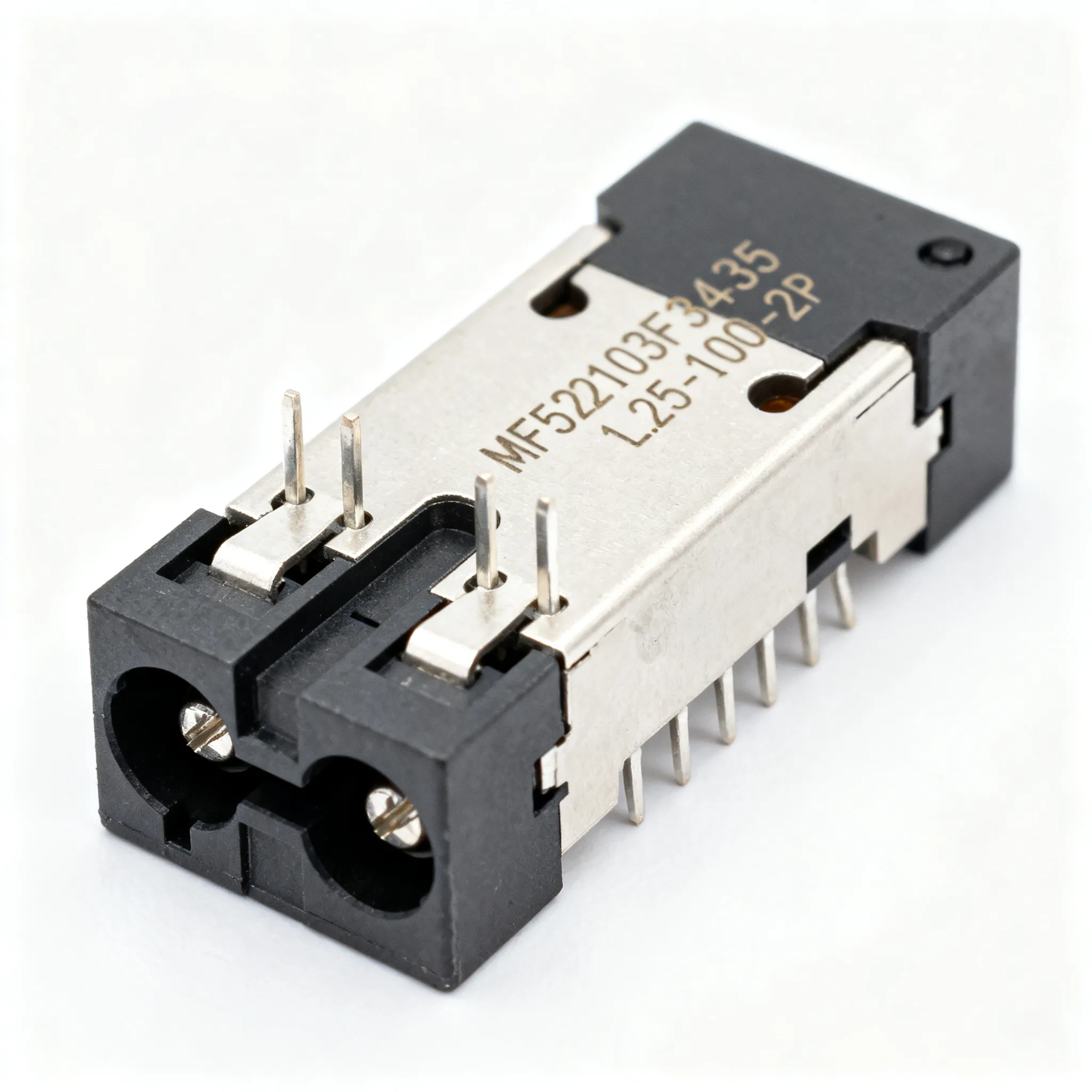
Why the MF52D103F3435L100-1.25-2P Thermistor’s Lifecycle Risk Is a Hidden Procurement Blind Spot
The MF52D103F3435L100-1.25-2P NTC thermistor is a workhorse in temperature sensing, battery management, and HVAC control. Its 10 kΩ resistance at 25 °C and 3435 K B25/85 curve make it a standard choice for designers who need a predictable, low-cost sensor. But that same ubiquity can mask a serious supply-chain vulnerability: the component’s lifecycle can shift from Active to Not Recommended for New Design (NRND) or End-of-Life (EOL) with little warning, forcing a scramble for alternatives or an unplanned redesign.
Many procurement teams treat passives as commodities and assume they will always be available. That assumption is dangerous. Even a simple thermistor can trigger a line-down situation if the manufacturer discontinues the exact variant you depend on. The Luminovo guide on component obsolescence explains how reactive management—only acting when a part is already obsolete—leads to costly redesigns, forced re-qualification, and supply disruption. A part like the MF52D103F3435L100-1.25-2P demands proactive monitoring because even a small change in lead length, pitch, or tolerance code can carry a different lifecycle status from the standard 10 kΩ NTC you think you are buying.
This checklist is built for engineers and buyers who need to keep this thermistor on the BOM without getting caught by a quiet phase-out. We’ll unpack the part number’s lifecycle-sensitive specs, walk through a verified sourcing strategy, and hand you a practical monitoring routine that draws on NASA’s version-control discipline and the SiliconExpert obsolescence framework. The goal is not to predict a specific EOL date—no one can do that without an official notice—but to build a system that catches the risk early enough to act.
Decoding the MF52D103F3435L100-1.25-2P Part Number and Lifecycle-Sensitive Specifications
The full part number carries far more than just electrical parameters. Every character in the code can tie to a specific manufacturing batch, tooling, or variant that may be discontinued independently. Understanding the breakdown is the first step to assessing lifecycle risk.
The MF52 series is a widely used epoxy-coated NTC thermistor platform. The TT Electronics application note on accessing lifecycle data highlights that even legacy passive components now have online EOL tracking, but you must know exactly which variant you are looking up. The table below decodes MF52D103F3435L100-1.25-2P based on the MF52 series datasheet conventions. Always verify these values against the manufacturer’s official documentation, as coding schemes can vary between suppliers.
| Parameter | Value/Range | Unit/Notes |
|---|---|---|
| Resistance at 25 °C (R25) | 10 kΩ | ±1 % (F tolerance code) |
| B constant (25/85 °C) | 3435 K | ±1 % typical |
| Operating temperature range | -55 to +125 | °C |
| Dissipation constant | ≥2 | mW/°C (still air) |
| Thermal time constant | ≤7 | seconds (still air) |
| Lead wire length | 100 | mm |
| Lead pitch | 1.25 | mm |
| Pin configuration | 2-pin radial | Straight leads |
| Insulation | Epoxy coating | Standard |
| Typical packaging | Bulk / tape | Confirm with supplier |
Tip: The “F” in the part number typically indicates a ±1% resistance tolerance, but some manufacturers use “F” for the B-constant tolerance. Clarify this with the datasheet. The “L100” segment specifies the lead length in millimeters. A request for the same 10 kΩ/3435 K thermistor without the exact lead length code can land you a part that is mechanically incompatible with your assembly, even if the electrical specs match. And that variant may be on a completely different lifecycle track.
Sourcing Alternatives to the MF52D103F3435L100-1.25-2P: Cross-Reference and Verification Strategies
When the primary SKU shows signs of tightening—longer allocation, rising minimum order quantities, or a PCN that hints at last-time-buy—you need a pre-qualified set of alternatives. The Luminovo component lifecycle guide stresses that evaluating alternatives should happen before the EOL notice, not after. Similarly, the SiliconExpert obsolescence management approach recommends a proactive triage: identify second-source candidates early, validate their lifecycle status, and then lock in the sourcing strategy.
The table below compares three sourcing paths you can take for the MF52D103F3435L100-1.25-2P. None of these are compatibility must be verified (package, pinout, firmware) replacements; every candidate must be verified in your specific circuit and assembly environment.
| Sourcing Path | Example Candidate | Verification Checklist | Lifecycle Risk |
|---|---|---|---|
| Same-series variant | MF52D103F3435L150-1.25-2P (150 mm leads) | Lead length, form factor, thermal time constant effect, PCB fit | Low; same manufacturer, but confirm variant is not NRND |
| Cross-manufacturer equivalent | Generic 10 kΩ, 3435 K, ±1% NTC, 1.25 mm pitch, 2-pin radial | Resistance tolerance, B-constant tolerance, dissipation constant, lead pitch, coating material, lifecycle stage via distributor | Medium; verify single-source risk through manufacturer docs |
| Module-based replacement | Analog temperature sensor module with on-board conditioning | Output voltage range, calibration, mounting, firmware adjustment | High; requires design change and re-qualification |
A same-series variant with a longer lead length is often the path of least resistance, but you must still confirm that the manufacturer hasn’t already earmarked that variant for discontinuation. Cross-manufacturer equivalents exist because the MF52 footprint is widely cloned, but every supplier uses its own B-constant tolerance and coating process. A “10 kΩ 3435 K” thermistor from a different factory may behave identically at room temperature but diverge at the extremes of your operating range. The SiliconExpert database can help you cross-reference and pull lifecycle statuses from multiple manufacturers simultaneously, but the final validation must happen on your bench.
A Practical Lifecycle Monitoring Checklist for MF52D103F3435L100-1.25-2P Buyers and Design Engineers
Waiting for a distributor to flag a part as obsolete is a reactive posture that invites line-downs. Instead, build a recurring monitoring rhythm that catches the subtle early signals. The checklist below is structured around the version-control discipline described in NASA MSFC-STD-3620, which mandates that every user verify they are working with the correct version of a component before production. The same principle applies to tracking the MF52D103F3435L100-1.25-2P across its lifecycle.
| Step | Action | Tools / Resources | Frequency |
|---|---|---|---|
| 1 | Subscribe to the manufacturer’s PCN/PDN relay | Manufacturer portal, distributor alerts | Quarterly, or whenever a BOM refresh is done |
| 2 | Check the official lifecycle stage through authorized distributors | Distributor product pages, SiliconExpert, IC-Online RFQ lifecycle query | Monthly for long-running production |
| 3 | Monitor lead-time creep and MOQ shifts | Distributor quotes, ERP trend history | Every quote cycle |
| 4 | Maintain a master list of approved alternatives with version control | Internal PLM, the NASA standard MSFC-STD-3620 as a procedural model | Update when a new candidate is qualified |
| 5 | Use online lifecycle data services to track EOL dates | TT Electronics lifecycle portal, SiliconExpert | Automated weekly alerts if available |
| 6 | Integrate a proactive risk management approach | SiliconExpert or similar for automated alerts and cross-references | Continuous |
Key Takeaway: The NASA standard’s core instruction—“check the master list to verify that this is the correct version before use”—translates directly to the electronics supply chain. For the MF52D103F3435L100-1.25-2P, that master list should include the exact part number, its approved alternative(s), the date the lifecycle status was last confirmed, and the PCN reference number. When a PCN arrives, you can instantly see which assemblies are affected and whether the alternative is already cleared for use.
Lead-time creep is often the earliest practical signal of a problem. If a part that normally ships in 4 weeks suddenly shows a 12-week allocation window in distributor quotes, treat it as a yellow flag. Request a formal allocation-backed lead time confirmation from the supplier and escalate the alternative part qualification. The SiliconExpert model emphasizes that these signals are far more actionable than waiting for an EOL notice that may arrive only weeks before the last-time-buy window closes.
Engineer and Buyer FAQs on the MF52D103F3435L100-1.25-2P Lifecycle and Sourcing
Q: What is the current lifecycle stage of the MF52D103F3435L100-1.25-2P, and how can I verify it?
The lifecycle stage is manufacturer-specific and can change without a public announcement. To verify, check the manufacturer’s official PCN/PDN database and consult authorized distributors. The Luminovo guide breaks down the classic stages—Active, NRND, EOL—and explains how to recognize a shift before it impacts production. Use a distributor’s lifecycle lookup tool or submit an RFQ to IC-Online requesting the current lifecycle status for this exact SKU.
Q: Is there a candidate for evaluation (verify pinout and firmware) replacement from another manufacturer?
No single compatibility must be verified (package, pinout, firmware) exists. The MF52 platform is widely copied, but you must verify resistance (10 kΩ), B25/85 (3435 K), tolerance, lead spacing (1.25 mm), and 2‑pin configuration. Cross-reference MF52-series thermistors from other brands, then test in‑circuit across the full temperature range before committing. A candidate that matches the room-temperature resistance may still cause unacceptable errors at low or high temperatures if the B-constant tolerance or self-heating characteristics differ.
Q: What are the typical lead‑time and early warning signs of obsolescence for this part?
Lead times can vary from a few weeks to several months, especially if the manufacturer is allocating capacity. Warning signs include a shift to NRND status, steeply rising minimum order quantities, or the part disappearing from distributor inventories. The SiliconExpert approach helps detect these signals early by cross-referencing multiple data sources and flagging parts that show a pattern of declining availability.
Q: How should I update my BOM if the MF52D103F3435L100-1.25-2P goes obsolete?
Identify alternative parts via parametric search, update the BOM, and manage the PCN with your contract manufacturer. Follow the checklist in this article’s guidance section: pull the master list of approved alternatives, select the candidate that matches your form factor and calibration, request a qualification sample, and then issue a change order. A controlled transition prevents a last‑minute redesign that could compromise your production schedule.
Q: Can I use a different NTC with a different B value if I adjust the circuit?
It is possible but requires recalibration of the temperature measurement system because the B constant defines the resistance‑temperature curve. A 10 kΩ thermistor with a 3977 K B value, for example, will show a different voltage droop across the same bias resistor, leading to measurement errors. Evaluate the risk using the Luminovo framework and confirm compatibility through simulation or bench testing. In many cases, a firmware adjustment alone is not sufficient if the hardware gain stage was designed for a specific thermistor curve.
Q: How does NASA’s version control standard apply to tracking this NTC thermistor?
NASA MSFC-STD-3620 mandates verifying the correct version before use and maintaining a master list that defines the approved configuration. The same principle applies here: maintain a master list of the exact part number variants, date codes, and PCNs for the MF52D103F3435L100-1.25-2P. When a PCN arrives, you can immediately compare it against your list and determine whether the alternative part is already qualified. This practice prevents using an obsolete or incorrect revision in your assembly.
References & Further Reading
- Component Obsolescence: Lifecycle & EOL Management Guide – Luminovo
- Manage Obsolescence Risk – SiliconExpert
- NASA MSFC-STD-3620 – Check the Master List
- Instant Access to Life Cycle and Obsolete Product Data Online – TT Electronics
- MF52D103F3435L100-1.25-2P Product Detail on IC-Online
- IC-Online – Mixed BOM & Flexible MOQ Sourcing
- NTC Thermistors – Digi-Key
- NTC Thermistors – Mouser Electronics
The lifecycle of a small, inexpensive thermistor like the MF52D103F3435L100-1.25-2P rarely makes headlines, but it can quietly become the single point of failure in a multi-million-unit production ramp. Building a robust monitoring and sourcing framework now—before the PCN arrives—is the only way to absorb an EOL event without a fire drill. Start by confirming the current lifecycle status and allocation‑backed lead time for this exact SKU through an authorized channel. Have your BOM reviewed for variant‑specific risk, and keep your master list of alternatives under version control.
Ready to secure your supply? Request a quote for the MF52D103F3435L100-1.25-2P or upload your full BOM to IC-Online. Our team can help you cross‑reference lifecycle data and find allocation‑ready alternatives without assuming a perfect drop‑in exists.