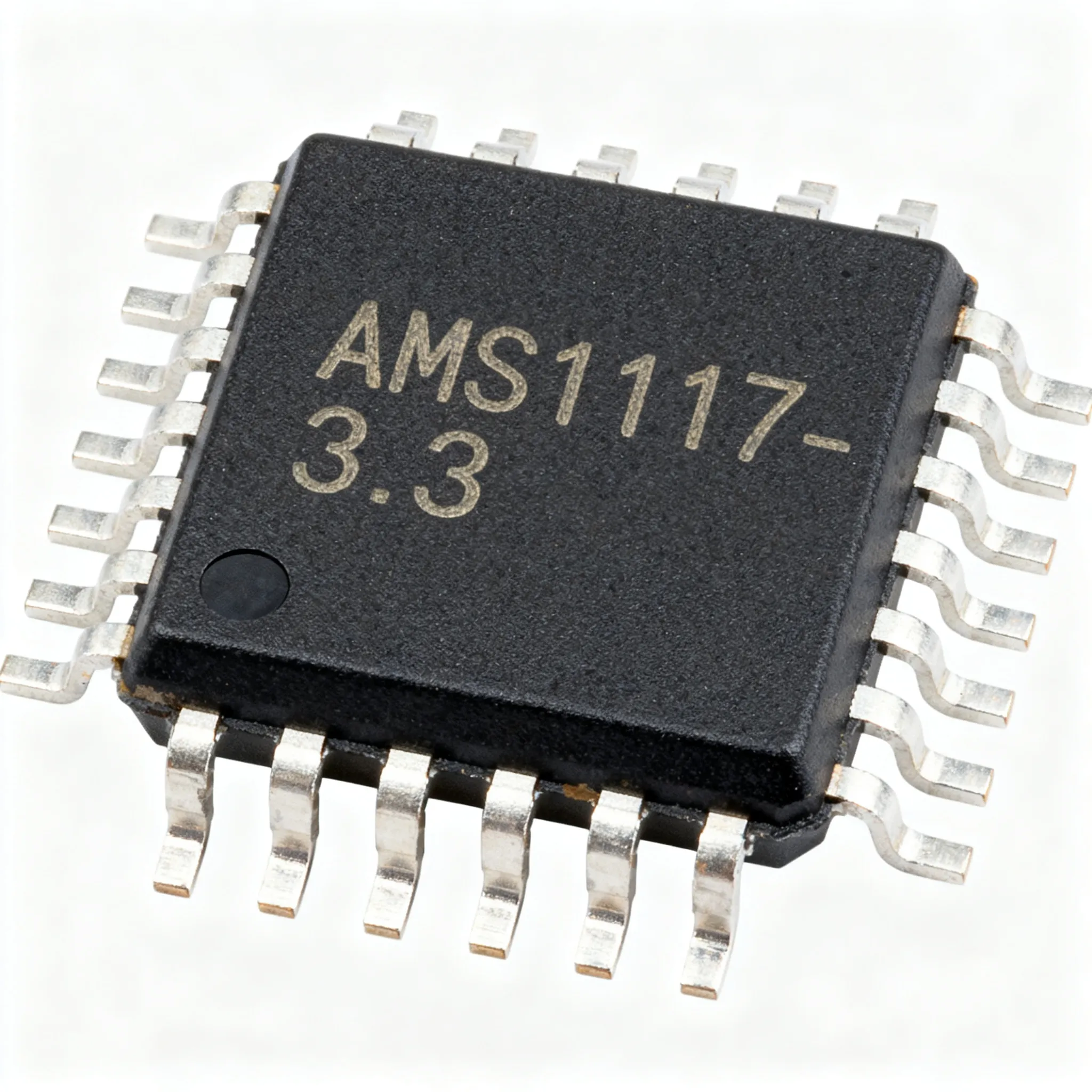

microcontroller price
Allocation-sensitive sourcing for OEM buyers: what to inspect and what to ask on RFQ. Confirm current terms with the supplier — no invented lead times.
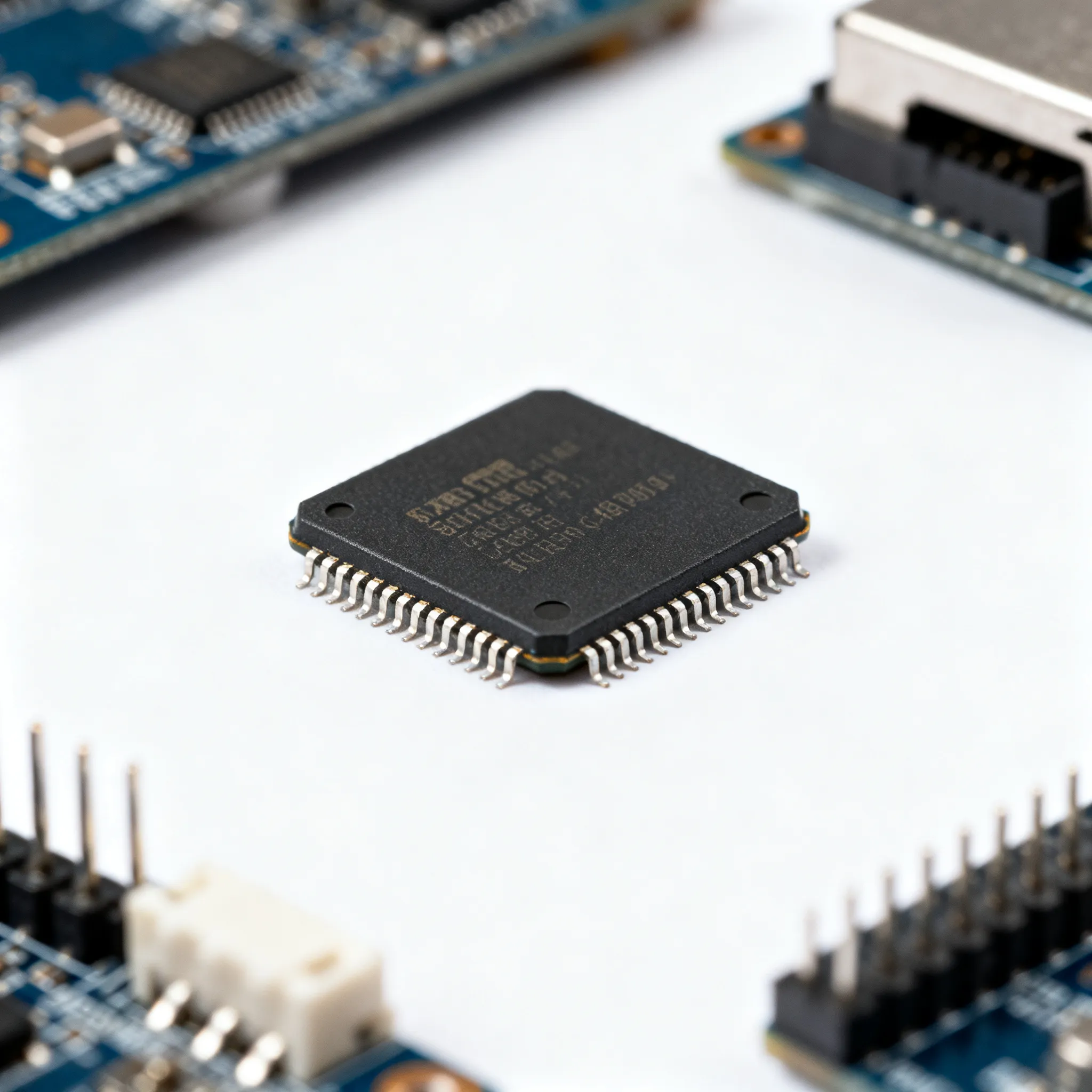
Why Microcontroller Prices Keep Shifting After the Component Crisis
The days of single-digit-week lead times and predictable quarterly pricing for mainstream microcontrollers felt like a distant memory for nearly three years. Today, the landscape is more nuanced — and in some ways more treacherous for buyers who assume the crisis is fully behind them. Workhorse families like the STM32 have seen lead times return to 6–10 weeks in 2026 with multiple authorized distributors online (source), yet underlying fab economics, geopolitical friction, and shifting demand pools continue to make MCU pricing anything but flat.
What's different now is the shape of the volatility. Rather than blanket scarcity across all nodes and packages, we're seeing targeted allocation pressure on specific process geometries, flash densities, and package types. A 180nm Cortex-M0+ in QFN may sit on the shelf at competitive prices, while a feature-rich Cortex-M4 in a legacy LQFP footprint commands premiums and multi-month confirmation windows. Understanding these fault lines — and how to navigate them — separates teams that absorb cost from teams that lock in value.
| Driver | Mechanism | Procurement Impact |
|---|---|---|
| Fab capacity allocation between HBM/DRAM and MCU wafers | Memory-grade silicon commands higher margin per wafer; foundries prioritize DRAM and HBM runs, squeezing mature-node MCU capacity | Price floors rise on 90nm–180nm MCU processes even when demand is flat; allocation-sensitive, confirm via RFQ |
| ARM core licensing cost structure | Cortex-M0/M0+ carries lower per-unit royalties than M4/M7; vendor-proprietary cores (RISC-V, 8051 derivatives) bypass ARM fees entirely | Core selection directly sets baseline silicon cost; verify royalty impact with manufacturer when evaluating RISC-V migration candidates |
| Package material and leadframe pricing | Copper leadframes and mold compounds tracked upward through 2024–2025; QFP and QFN packages reflect this in per-unit cost | Package choice now carries significantly more weight in total BOM cost than pre-2021 norms; BGA and WLCSP see different trajectories |
| Geographic fab concentration and export controls | Advanced-node MCUs with on-chip flash above 512KB increasingly face cross-border shipment reviews and extended customs clearance | Dual-source qualification and regional fab diversification reduce single-point exposure; verify country-of-origin with distributor |
| Channel inventory oscillation | Distributors burned by 2022 overstock now run leaner buffers; sudden design-win ramps trigger spot-price spikes before allocation kicks in | Quarterly forecast-sharing with authorized distributors becomes the difference between locked pricing and spot-market premiums |
| Ultra-low-cost entrants (sub-$0.15 MCUs) | Puya PY32 and similar families reset floor pricing expectations, pressuring legacy 8-bit and low-end 32-bit tags downward | Cost ceiling drops for simple control functions, but ecosystem and reliability verification add upfront engineering expense |
Tip: When a distributor quotes an allocation window instead of a ship date, treat that as a signal to initiate parallel qualification of a second source — not just to renegotiate price. The window itself indicates supply elasticity is exhausted at current pricing.
The takeaway for procurement leads and design engineers alike: MCU pricing is no longer a static line item negotiated once during BOM lock. It's a dynamic variable shaped by fab economics, package material markets, and channel behavior. The teams that treat it as such — and build sourcing processes that anticipate rather than react — are the ones closing designs under budget.
The Economics Behind a Microcontroller's Sticker Price
If you've ever looked at two Cortex-M0+ parts with similar flash and RAM and wondered why one costs $0.35 and the other $1.20, you've brushed against the layered reality of MCU pricing. The silicon die itself is only part of the story. Below the glossy top-line spec, cost accrues across at least six dimensions that manufacturers manage — and buyers need to decode.
Start with the process node. Mature geometries — 180nm, 130nm, 90nm — dominate the MCU space because analog performance, flash reliability, and cost structure align well there. Moving to 40nm or 28nm shrinks die area but demands more expensive mask sets, finer process control, and often a different flash cell architecture. That's why a 28nm Cortex-M33 doesn't automatically underprice a 90nm Cortex-M4: the wafer cost per square millimeter moves in the opposite direction from die area savings until volumes justify the NRE.
Then layer on the core license. ARM-based MCUs carry per-unit royalties and an upfront license fee, both of which scale with core complexity. A Cortex-M0+ costs less to integrate than a Cortex-M7. Vendors using proprietary cores — or increasingly, RISC-V — can strip out those royalty costs entirely. The Puya PY32 family exploits this aggressively: a Cortex-M0+ part at 24 MHz with 24 KB flash and 3 KB SRAM pushes below $0.08 in volume (source). At the $1 boundary, Jay Carlson's comprehensive survey reveals a clear schism between ARM-based designs and those built on proprietary architectures, each with distinct cost, toolchain, and supply-chain trade-offs (source).
Flash and SRAM sizing is the most visible cost lever. On-chip flash at 512 KB or 1 MB commands a premium not just for the additional memory cells, but because larger flash arrays push die size up and can shift the part into a different process node or test regimen. SRAM follows a similar pattern but with a steeper die-area penalty per bit. Pin count and I/O muxing matter, too: every additional pin drives package cost, test time, and sometimes ESD protection requirements.
Parametric search engines like GlobalSpec let engineers and buyers filter by these hard specs — core architecture, flash/RAM boundaries, I/O count, package — to map cost to features before ever requesting a quote (source). This step alone often surfaces candidates that procurement hasn't yet reviewed, especially when the initial BOM was designed around a single manufacturer's ecosystem.
Key takeaway: The biggest cost driver in an MCU is not the silicon — it's the decision to specify a part without understanding which dimensions of its price are structural (node, core, flash size) and which are commercial (channel margin, allocation status, geographic origin). Separating these allows you to negotiate against cost, not against availability.
Cost-Conscious MCU Showdown: When to Switch from Classic Platforms
The instinct to standardize on a single MCU family is understandable: one toolchain, one firmware base, one qualification cycle. But when supply tightens or pricing breaks budget, that instinct becomes a liability. The good news is that the alternative landscape in 2026 is richer — and more rigorously benchmarked — than at any point in the last decade. The challenge is knowing which switch is worth the engineering effort.
The ESP32 ecosystem has long been the default for cost-sensitive Wi-Fi and Bluetooth designs, but alternatives now challenge it on price, power, and software maturity. The Raspberry Pi Pico 2 W, nRF52840, nRF54L15, and even sub-$4 Wi-Fi chips offer credible paths for connected designs, each with different toolchain overhead and supply-chain profiles (source). On the industrial side, the STM32 family retains its stature: active since 2007, still in volume production, and backed by multiple authorized distributors with lead times normalized to 6–10 weeks (source).
| Comparison Metric | Classic Platform (STM32 Cortex-M4, e.g., STM32F407) | High-Quality Alternative | Selection Criteria & Failure Boundary |
|---|---|---|---|
| Core & performance | ARM Cortex-M4 @ 168 MHz, FPU, DSP instructions | GD32F407 (Cortex-M4 @ 168 MHz) — evaluate pin compatibility; verify peripheral register maps and analog specs against STM32 reference | Logic-compatible in many applications; analog performance (ADC SNR, DAC settling) and errata differ. Cross-check datasheet timing boundaries before firmware port. |
| Wi-Fi / BLE connectivity | ESP32-S3 (dual-core Xtensa LX7, Wi-Fi 4, BLE 5.0) | Raspberry Pi Pico 2 W (dual-core Cortex-M33 + RP2040 Wi-Fi) or nRF52840 (Cortex-M4 + BLE 5 / 802.15.4) | Pico 2 W wins on toolchain maturity and community support; nRF52840 wins on BLE stack robustness and ultra-low-power profiles. Confirm SDK licensing terms. |
| Ultra-low-cost control | STM8S003F3 (8-bit, 8 KB flash, $0.25–$0.40 range) | Puya PY32F002B (Cortex-M0+ @ 24 MHz, 24 KB flash, 3 KB SRAM, ~$0.08 in volume) | Unit cost advantage is real, but verify flash endurance (typically fewer cycles), ESD ratings, temp range, and toolchain support before committing to production (source). |
| Industrial robustness | NXP MC9S08SC4 (8-bit S08 core, 4 KB flash, automotive-grade documentation) | Evaluate APM32 or AT32 families as candidates; verify electrical specs in manufacturer datasheet against NXP reference | Industrial temperature range (-40°C to +125°C) and ESD robustness often separate viable alternatives from lab-only parts. Require full characterization data. |
| High-integration mixed-signal | STM32G4 (Cortex-M4, advanced analog, on-chip op-amps, DAC) | Evaluate nRF54L15 or MSPM0G family for analog integration; verify pinout and firmware compatibility via manufacturer documentation | On-chip analog integration offsets external component cost. Verify ADC effective resolution (not just bits), DAC settling, and op-amp GBW against system requirements. |
None of these alternatives is a drop-in replacement; compatibility must be verified in each dimension (package, pinout, firmware). The GD32 vs. STM32 comparison is illustrative: pin-compatible in many packages, but peripherals, analog performance, and errata behavior can diverge in ways that matter at production scale. The Puya PY32 pushes the cost floor to impressive levels, yet its ecosystem, documentation depth, and supply-chain transparency remain works in progress — factors that add engineering cost even as they reduce unit cost.
Jay Carlson's exhaustive $1 MCU roundup drives this point home: the cheapest silicon is rarely the cheapest solution when you account for development time, reliability testing, and the risk of an EOL that forces a redesign (source). The decision to switch platforms should be gated by a quantified comparison: unit savings multiplied by forecast volume, minus the loaded cost of engineering hours for porting, re-testing, and qualifying the new supply chain.
How to Lock in Microcontroller Costs Without Sacrificing System Performance
Cost-locking an MCU isn't a single negotiation tactic — it's a sequence of technical and commercial steps that begin long before the RFQ goes out. The engineers and buyers who do this well share a common discipline: they read datasheets like contracts, not like brochures, and they build sourcing processes around verified parameters rather than brand preference.
Start with the datasheet itself — and recognize that "a" datasheet is often a collection of documents. The family reference manual, the electrical characteristics supplement, the errata sheet, and the package addendum each contain critical data that affects qualification. The NXP MC9S08SC4 datasheet illustrates this well: it separates electrical and timing specifications into clearly bounded sections, making cross-comparison with alternative parts methodical rather than speculative (source). The MPC5533 datasheet from the same manufacturer goes deeper — power considerations, DC/AC electrical characteristics, and AC timing specifications are laid out in a discipline that rewards careful study (source).
A structured approach to reading these documents prevents the most expensive kind of substitution error: the one discovered after boards are assembled. The process begins with the absolute maximum ratings table, moves through DC electrical characteristics and I/O pin behavior, and only then addresses timing and AC performance (source). This sequence matters because a part that matches on flash, RAM, and core can still fail in your circuit if its I/O drive strength, ESD clamp behavior, or power-on-reset threshold differs from the original.
| Action | When to Use | Trade-off |
|---|---|---|
| Parametric pre-filtering via GlobalSpec or distributor search | Before committing to a single manufacturer's ecosystem; early BOM stage | Adds 2–3 hours of engineering time upfront; surfaces candidates procurement may miss, reducing single-source lock-in |
| Multi-document datasheet cross-check (reference manual + errata + electrical supplement) | When evaluating any pin-compatible alternative; pre-qualification | Requires deep technical review (4–8 engineering hours per candidate); catches peripheral and analog divergences before they become field failures |
| Authorized distributor forecast-sharing agreement | Quarterly or per-design-win; before allocation windows tighten | Demands volume transparency from the buyer in exchange for price and allocation commitment; reduces spot-market exposure |
| Dual-source qualification with verified electrical characterization | During initial design or at first allocation signal; before production ramp | Doubles qualification workload; eliminates single-source fragility and provides leverage in commercial negotiations |
| Higher-integration MCU evaluation (on-chip DC/DC, precision oscillator, advanced analog) | When BOM line count is bloated; mid-lifecycle cost-reduction pass | Unit MCU cost rises while total BOM cost falls; verify that integrated blocks meet performance specs without external compensation components |
| Lifecycle and EOL verification via RFQ and manufacturer PCN tracking | Before selecting any ultra-low-cost or niche-architecture MCU | Requires ongoing supplier engagement; prevents redesigns triggered by unexpected NRND or EOL notices on parts with thin market presence |
Pairing technical qualification with commercial discipline is what turns price pressure into design resilience. When your BOM includes an MCU with a verified second source, backed by datasheet-level cross-comparison and an active forecast-sharing agreement with at least one authorized distributor, you've moved from reacting to allocation notices to anticipating them. The conversation with the distributor shifts from "can you get it" to "what's your best confirmed price against our 12-month forecast."
Practical steps to harden your MCU sourcing
- Require full electrical characterization data for any alternative candidate. Don't accept a one-page summary or a claim of pin-compatibility. Ask for the manufacturer's electrical characteristics document and compare DC parameters, I/O drive curves, and power-on-reset behavior against your incumbent part.
- Verify flash endurance and data retention specifications. Ultra-low-cost MCUs often achieve their price point by trading off flash cell robustness. Check the rated program/erase cycles and data retention at maximum operating temperature — not just at 25°C — before committing to production volumes.
- Cross-check the errata sheet for both the incumbent and the candidate. All MCUs have errata. The question is whether the specific bugs affect your application. A candidate with a cleaner errata on your critical peripherals may outperform a name-brand part with known issues in your use case.
- Build a parametric search discipline into your sourcing process. Use tools like the GlobalSpec MCU parametric search to filter by hard constraints — core, flash/RAM, I/O count, package — before engaging suppliers. This surfaces options that brand-loyal search habits miss (source).
- Treat single-source MCU positions as risk items in your BOM risk register. Even if the part is available today, absence of a verified second source means your production line is one allocation event away from a line-down situation. Flag it, price the qualification cost of an alternative, and get leadership sign-off on the risk acceptance or the mitigation investment.
Note: The goal of cost-locking is not the lowest unit price on a single line item. It's the lowest total landed cost over the production life of the design, factoring in qualification expense, supply-chain resilience, and the engineering cost of managing alternatives. An MCU that costs $0.50 more per unit but eliminates three external ICs and a crystal while offering a verified second source is frequently the better financial decision — even if procurement's line-item report flags it as a cost increase.
Engineer-to-Engineer: Hard Questions About Microcontroller Pricing
After a decade and a half of riding MCU market cycles, certain questions surface in every cost-sensitive design review. The answers aren't always comfortable, but they're shaped by data, datasheets, and the accumulated scars of substitutions that worked — and ones that didn't.
Q: Are 8-cent MCUs like the Puya PY32F002B reliable for production?
They can be, in the right application and with the right verification. The PY32F002B — a Cortex-M0+ at 24 MHz with 24 KB flash and 3 KB SRAM — achieves its price point through aggressive process optimization and a lean ecosystem. But reliability is application-specific. Verify flash endurance (typically fewer program/erase cycles than mainstream equivalents), ESD ratings, and operating temperature range against your product's environmental profile. The supply chain is often single-source and less transparent than established manufacturers; expect more limited development tools and a smaller community knowledge base (source). For high-volume, cost-optimized products with benign operating conditions and stable firmware, these parts can deliver on their price promise. For industrial or safety-relevant applications, budget the additional engineering effort to close the documentation and testing gap.
Q: Can I safely substitute an STM32 with a GD32 or other clone?
Often yes for logic-compatible operations — GPIO toggling, UART, SPI, basic timer functions — but "often" is not "always," and production is not a breadboard. GD32 variants frequently match STM32 pinouts and register maps at the digital-peripheral level, yet analog performance, clock-tree behavior, and errata can diverge. Pin-compatible does not mean drop-in. A structured multi-document approach to datasheet reading is essential: compare electrical characteristics, timing specifications, and any hidden behavioral differences before committing (source). Factor in the cost of firmware re-validation, particularly around analog front-end behavior and interrupt latency, when calculating the net savings of a clone-based migration.
Q: What's a realistic lead time today for a mainstream Cortex-M microcontroller?
For widely used STM32 variants, lead times have returned to 6–10 weeks in 2026, supported by multiple authorized distributors carrying active inventory (source). Niche families, high-pin-count packages, or parts with specific analog front-end configurations can still stretch beyond 16 weeks. Treat any part not on your distributor's confirmed allocation list as allocation-sensitive — verify with the supplier rather than relying on a market-average number. The spread between "typical" and "your PO" is where procurement surprises live.
Q: What are the hidden costs of ultra-cheap microcontrollers?
Unit price is the tip of the iceberg. Below the waterline sit engineering time spent wrestling with a weaker toolchain, fewer debugger options, a smaller knowledge base for troubleshooting, and potential reliability testing to close documentation gaps. Higher failure rates in harsh environments (temperature cycling, ESD events, supply transients) can erase unit savings through field returns. Jay Carlson's $1 MCU comparison underscores how a mediocre part can increase total project cost once you account for development friction and production risk (source). The calculus is straightforward: multiply the per-unit savings by your forecast volume, then subtract the loaded cost of the additional engineering hours, the testing budget, and a risk-weighted allowance for potential redesign if the part goes EOL or fails qualification.
Q: When does a more expensive MCU actually lower total BOM cost?
Higher integration is the classic case. On-chip DC/DC converters, precision oscillators (±0.5% or better without an external crystal), advanced analog blocks (op-amps, comparators, 12-bit+ ADCs with internal references), and multiple voltage-rail support can eliminate a surprising number of external components. Parts like the nRF52840 or the STM32G4 family illustrate this: the unit MCU cost is higher, but the PCB area shrinks, passive counts drop, pick-and-place time decreases, and supply-chain complexity contracts. In one design cycle at a previous team, swapping a $1.80 MCU plus $0.90 of external analog and power management for a $2.70 highly integrated part netted $0.40 in BOM savings and eliminated three supply-chain line items — a win that procurement and engineering could jointly celebrate.
Q: How can I filter MCU alternatives by hard specs to find a cost-effective replacement?
Parametric search engines are the first filter. GlobalSpec's MCU search lets you narrow the field by core architecture, flash and RAM boundaries, I/O count, package type, and operating temperature range — all before engaging a single supplier (source). Once you have a shortlist, cross-reference each candidate's full documentation set — reference manual, electrical characteristics supplement, and errata — against your system's hard boundaries. The NXP MC9S08SC4 datasheet (source) and the MPC5533 datasheet (source) model the level of parametric depth you need to verify. This two-step process — parametric filtering followed by deep datasheet cross-check — uncovers second-source candidates that survive production without the performance compromises that rushed substitutions invite.
References & Further Reading
- Best Microcontrollers 2025: Top 10 MCUs Compared (STM32, ESP32, RP2040) — FindMyChip
- ESP32 Alternatives — Cheaper, Lower-Power and Faster Microcontrollers Compared (2026 Guide) — ESPBoards
- What Are the Cheapest Microcontrollers (and Which to Avoid)? — Predictable Designs
- The Amazing $1 Microcontroller — Jay Carlson
- MC9S08SC4 Data Sheet — NXP Semiconductors
- MPC5533 Microcontroller Data Sheet — NXP Semiconductors
- Microcontrollers (MCU) Specifications — GlobalSpec Parametric Search
- How to Read a Microcontroller Datasheet: Introduction and First Steps — All About Circuits
Microcontroller pricing rewards preparation. The market has stabilized from its post-crisis extremes, but the fault lines between process nodes, package types, and core architectures ensure that price discovery remains active rather than passive. Engineers who build parametric search and multi-document datasheet review into their sourcing workflow, and buyers who treat forecast-sharing and dual-source qualification as standard practice, consistently close designs closer to target cost — and with fewer last-week surprises.
The next step is specific to your BOM. Whether you're evaluating a GD32 against an STM32, weighing the Puya PY32 for a cost-optimized design, or re-qualifying your entire MCU line card for allocation risk, the same discipline applies: verify before you commit, and build your sourcing around confirmed parameters, not assumptions.
Ready to de-risk your MCU sourcing? Request a quote or upload your BOM at IC-Online for a mixed-BOM review with flexible MOQ. Our team cross-references your line items against authorized distributor networks to confirm current availability and allocation-backed lead times — so your next design doesn't stall on a part that looked available on a screen.