Obsolete Electronic Component Options: How to Secure Authentic, Long-Lifecycle Parts for OEM Production
Practical guide for buyers and engineers: Obsolete Electronic Component Options: How to Secure Authentic, Long-Lifecycle Parts for OEM Production. Sourcing, risk, and selection notes.
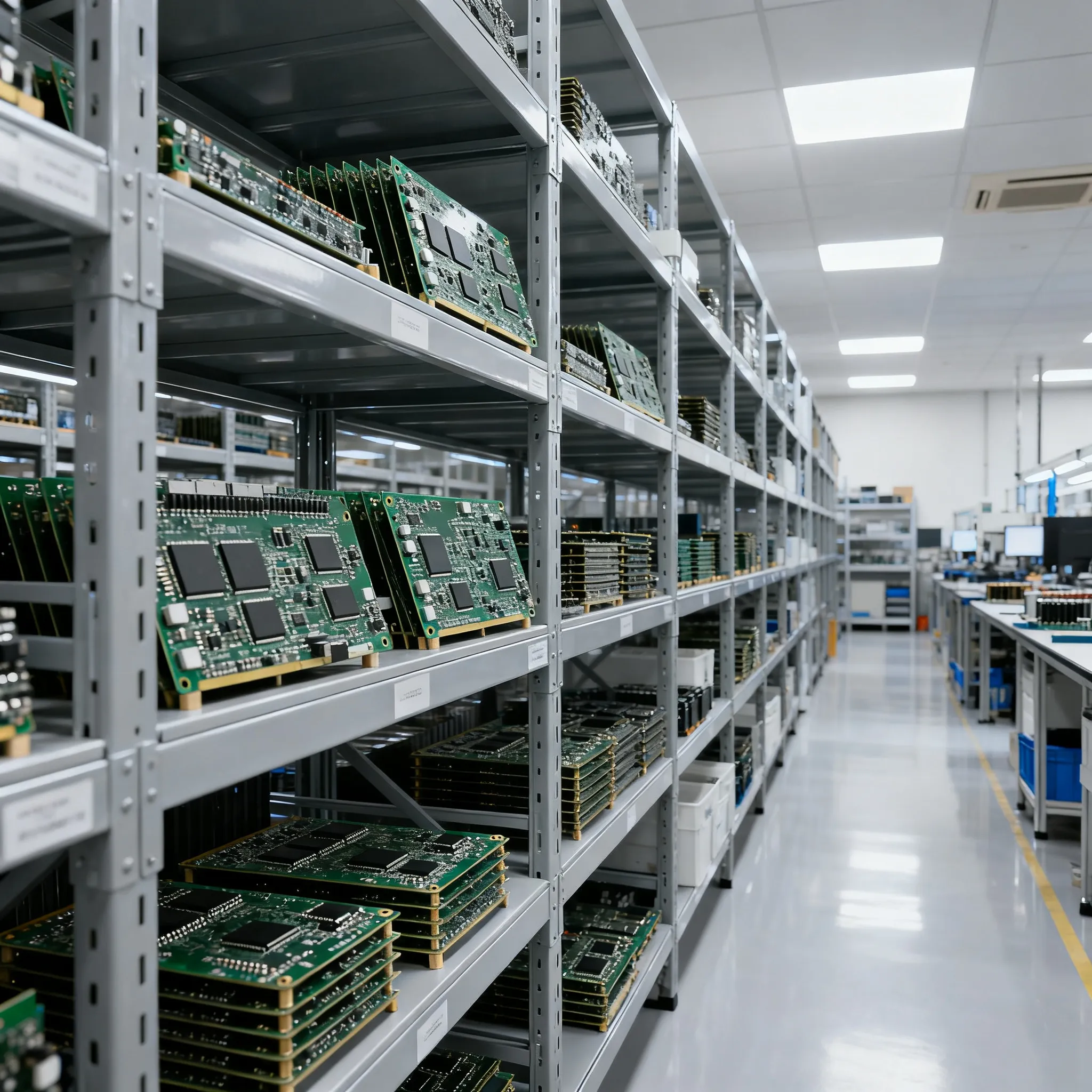
The EOL Domino Effect: How One Obsolete Part Can Cripple Long-Lifecycle OEM Production
You have a production line building a medical imaging system certified a decade ago, or an industrial motor drive that ships 500 units a year. The BOM barely changes. Then the PCN arrives: a single 32-bit microcontroller, a legacy RS-485 transceiver, or a specific high-density connector has moved to End-of-Life. The authorized distributors show zero stock within 72 hours. Your contract manufacturer is now idle, and the line-down cost is accruing at $15,000 per hour.
This is not a hypothetical. In long-lifecycle OEM production — defense platforms sustaining 20-year fielded systems, railway signaling equipment with 15-year service commitments, industrial automation controllers that cannot be recertified — the EOL domino effect is the single largest unmanaged supply chain risk. One part number triggers a cascade. The procurement team scrambles to the spot market and discovers that the original part has a lead time of several months or is simply unavailable, as documented in alternative component sourcing discussions. Brokers quote prices 10× to 30× above the last contract price. And the counterfeit risk moves from a theoretical concern to a statistical near-certainty.
The reactive spot-market approach is exactly what counterfeiters exploit. Automa's guide on obsolete component sourcing describes this clearly: a reactive strategy means sourcing from the spot market after discontinuation, where counterfeit risk peaks, prices spike, and lead times stretch beyond any production schedule tolerance. You are not buying components; you are buying time, and time is running out.
The real cost of an obsolete part is rarely the component itself. It is the engineering hours diverted to emergency redesign, the recertification expense, the line-down penalties, and the reputational damage of a missed delivery commitment to a customer operating critical infrastructure. The question is not whether you will encounter an EOL part — if your product lives longer than three years, you will. The question is whether you have a structured, multi-option strategy ready before the PCN arrives.
How Components Become Obsolete and Why Lifecycle Data Is Your First Line of Defense
Semiconductor and connector manufacturers manage product lifecycles through distinct phases that are predictable if you know where to look. Understanding these phases is not academic; it is the difference between a controlled last-time-buy and a panicked scramble.
The lifecycle typically progresses through four stages: Active (full production, full support, datasheet updates), Not Recommended for New Designs (NRND) (still in production but the manufacturer is signaling that replacement is coming), End-of-Life (EOL) (a formal PCN has been issued, last-time-buy window is open, final shipments are scheduled), and Obsolete (no longer manufactured, no factory stock, authorized distribution inventory is depleted).
The critical inflection point is NRND. Ultra Librarian notes that a microcontroller flagged as "not recommended for new designs" can be identified before it is built into a critical control system, saving teams from future redesign costs. Yet many OEMs only discover a part is NRND when they attempt a reorder and the authorized distributor shows "obsolete" as the status. This is a failure of BOM hygiene, not of supply chain intelligence.
Proactive BOM auditing using lifecycle monitoring platforms — SiliconExpert, IHS Markit Parts Intelligence, and manufacturer-specific databases — converts the EOL event from a surprise into a scheduled activity. These tools cross-reference every line item on your BOM against the manufacturer's official lifecycle status, PCN database, and multi-source availability. The investment is modest compared to a single line-down event.
Tip: Run a lifecycle audit on every active BOM at least quarterly. For products with certified configurations that cannot be changed without regulatory recertification, run it monthly. The NRND flag is your early-warning radar.
| Lifecycle Status | Manufacturer Signal | Recommended OEM Action | Risk Window |
|---|---|---|---|
| Active | Full production, no PCN issued | Standard procurement; monitor quarterly | Low — normal allocation risks only |
| NRND | Manufacturer recommends against new designs; still shipping | Begin cross-reference evaluation; identify pin-compatible alternatives; assess LTB economics | Medium — 6–24 months before EOL PCN |
| EOL (Last-Time-Buy) | Formal PCN with LTB deadline; final order date published | Execute LTB for remaining production life; qualify drop-in substitute; initiate redesign if volumes are high | High — 3–12 months to place final order |
| Obsolete | No factory production; authorized stock depleted | Independent distributor sourcing with full authentication; accelerated redesign; or product retirement | Critical — counterfeit risk peaks immediately |
This table is not a theoretical framework. It is a decision calendar. The distance between NRND and EOL is your engineering runway. Waste it, and you are forced into the high-risk column on the right. What makes this particularly challenging for long-lifecycle OEMs is that components can become obsolete for reasons unrelated to your product's viability: changes in industry standards, like RoHS compliance, can result in the withdrawal of parts that do not meet new regulatory requirements, as Unibetter notes. The part is not technically deficient; it is simply no longer manufactured because the wafer fab retooled for a smaller geometry or the packaging line was decommissioned.
Your Options Matrix: Last-Time Buy, Drop-In Substitutes, Redesign, or Independent Sourcing
When a component on your BOM transitions to EOL or obsolete status, you have exactly four strategic options. Each carries a different cost structure, timeline, risk profile, and engineering burden. The choice is not uniform across all parts — a $0.08 passive component demands a different response than a $45 FPGA. The following matrix maps the decision space.
| Comparison Metric | Last-Time Buy (LTB) | Drop-In Substitute | PCB Redesign | Independent Distributor Sourcing |
|---|---|---|---|---|
| Lead Time to Production | Weeks (procurement only) | 4–12 weeks (qualification) | 6–18 months (design + recertification) | Days to weeks (spot market) |
| Unit Cost Impact | Negotiated LTB pricing; inventory carrying cost | Typically ±10% of original part | New BOM cost; engineering NRE | 2×–30× original price; volatile |
| Counterfeit Risk | Near-zero (factory-direct) | Near-zero (Active part from authorized distribution) | Zero (new parts, new supply chain) | High; requires AS6171 testing |
| Engineering Effort | Minimal (procurement and finance) | Moderate (cross-reference qualification) | High (schematic, layout, firmware, compliance) | Moderate (authentication testing) |
| Best For | Low-volume, short remaining product life, no substitute available | Pin-compatible parts with identical electrical specs | High-volume, long remaining life, or no substitute exists | Urgent shortfall; bridging stock while redesign completes |
Last-Time Buy (LTB) is the most straightforward option but requires accurate volume forecasting. You are buying enough parts to cover the remaining production life of the product, plus a buffer for field service and RMA. The risk is shelf-life degradation — moisture-sensitive devices (MSDs) and electrolytic capacitors degrade in storage. The financial risk is inventory carrying cost and the possibility that the product is retired earlier than forecast, leaving you with stranded inventory.
Drop-in substitutes are the ideal outcome but require rigorous qualification. Cosolvic's cross-reference evaluation checklist provides the framework: electrical parameters must match (voltage, current, timing, temperature range), package and pinout must be identical or compatible, qualification requirements must be met (automotive, medical, military grade), and the replacement part must itself be in Active lifecycle status. Too many engineers stop at "same package, same pinout" and discover during qualification that the substitute has a different power-on-reset threshold or a shifted timing margin that causes intermittent field failures. The checklist is not a suggestion; it is a gate.
PCB redesign is the most expensive option but sometimes the only one. If no stock is available and no suitable cross-reference exists, a PCB redesign may be necessary, as Cosolvic notes. This is particularly true for application-specific parts — custom ASICs, specialized analog front-ends, or proprietary communication controllers. The redesign must account for not just the replaced component but any downstream changes: firmware updates, peripheral compatibility, EMI/EMC recertification, and functional safety reassessment.
Independent distributor sourcing is the option of last resort for bridging stock. Vyrian, DigiKey, and other specialized distributors maintain inventories of obsolete and EOL parts, but the counterfeit risk is real and must be managed. Vyrian, for example, is noted for rigorous testing and industry-recognized certifications that ensure customers get only authentic components. The key distinction is between authorized distribution (factory-direct traceability) and independent distribution (secondary market, requires verification). Automa's lifecycle monitoring platform emphasizes that a proactive approach — identifying at-risk parts before they become obsolete — allows you to build relationships with vetted independent distributors on your timeline, not the market's.
Key Takeaway: The optimal strategy is rarely a single option. For a typical long-lifecycle BOM, you will execute LTB on microcontrollers and ASICs, qualify drop-in substitutes for discretes and standard logic, redesign a few critical sections, and use independent distributors for bridging stock during the transition. The decision matrix above should be applied part-by-part, not policy-by-policy.
How to Authenticate and Secure Long-Lifecycle Parts: Testing, Supplier Vetting, and Standards That Matter
Sourcing an obsolete component from an independent distributor is not the end of the process; it is the beginning of an authentication workflow that must be treated as non-negotiable. Obsolete components are still essential for legacy systems, as Unibetter explains, but their value to counterfeiters is proportional to their scarcity. A part that is no longer manufactured but still required by a defense contractor or medical OEM is a high-value target.
The authentication flow begins before you place an order, with supplier vetting. Verify that the distributor holds certifications that are relevant to your supply chain integrity: ISO 9001 for quality management, AS9120 for aerospace distribution (which includes traceability and counterfeit prevention requirements), and membership in industry organizations like ERAI. Ask for documentation of their incoming inspection process. A distributor that cannot describe their inspection flow in detail is not a supplier you should trust with a production-critical part.
Once parts arrive, the testing hierarchy defined by SAE AS6171 provides the framework. This aerospace industry standard for counterfeit detection specifies a tiered approach: start with external visual inspection under magnification (checking for sanding marks, inconsistent laser etching, incorrect package dimensions), proceed to X-ray inspection (verifying die size, lead frame geometry, and wire bond consistency against a known-good sample), perform electrical testing at full operational parameters — speed, temperature, voltage — to verify all datasheet specifications, and if anomalies remain, conduct destructive physical analysis (decapsulation) to examine the die markings and geometry.
AS6171 is technically an aerospace standard, but its methodology applies to any high-reliability supply chain. The standard recognizes that no single test is sufficient; counterfeiters have become adept at passing visual inspection while delivering parts that fail at temperature extremes or exhibit degraded long-term reliability. The electrical testing step is particularly important: a part that passes a simple go/no-go functional test at room temperature may fail when tested across the full specified temperature range or at the datasheet's minimum and maximum supply voltages.
When qualifying a drop-in substitute, apply the full cross-reference evaluation checklist:
- Electrical parameters: Verify voltage, current, timing, temperature range, ESD rating, and latch-up immunity against the original part's datasheet. Do not assume "equivalent" means "identical."
- Package and pinout: Confirm not just the package type but the exact package drawing, thermal pad dimensions, and pin 1 orientation. A 0.1 mm difference in pad size can create solder joint reliability issues.
- Qualification grades: If the original part was qualified to AEC-Q100 (automotive), ISO 13485 (medical), or MIL-STD-883 (military), the substitute must carry the same or equivalent qualification. A commercial-grade substitute in a medical device is a regulatory violation.
- Lifecycle status: The substitute must itself be in Active lifecycle status. Replacing one obsolete part with another near-EOL part simply resets the clock without solving the problem.
- Functional testing: Bench-test the substitute in a representative circuit across voltage and temperature corners. One cycle of power-on-reset may work; a thousand cycles may reveal marginal behavior.
Even genuine-looking parts from independent distributors must be tested. The physical appearance of a component tells you nothing about its electrical provenance. A part may be a genuine manufacturer part that was pulled from scrapped assemblies, re-balled, and re-marked with a newer date code. It may pass visual inspection perfectly and fail electrical testing at temperature. The only way to know is to test.
| Test Method | What It Detects | Limitations | AS6171 Reference |
|---|---|---|---|
| External Visual Inspection | Sanding marks, re-marking, incorrect package dimensions, inconsistent date/lot codes | Cannot detect internal die substitution or electrical failures | AS6171 Section 4.2 |
| X-ray Inspection | Die size discrepancies, missing or inconsistent wire bonds, lead frame differences | Cannot verify electrical performance; requires known-good comparison | AS6171 Section 4.3 |
| Electrical Testing (Full Spec) | Parametric failures at temperature/voltage extremes, timing violations, out-of-spec leakage | Time-intensive; requires test program development | AS6171 Section 4.4 |
| Decapsulation / DPA | Die markings, die geometry, manufacturer origin | Destructive; sample-based only | AS6171 Section 4.5 |
The testing investment scales with the risk. A $2 op-amp going into a consumer product may warrant visual and electrical spot-checking. A $300 FPGA going into an avionics LRU demands the full AS6171 hierarchy. The decision framework is straightforward: what is the cost of a field failure multiplied by the probability of a counterfeit reaching your assembly line? For long-lifecycle OEMs in regulated industries, that number is almost always large enough to justify comprehensive testing.
Engineers' FAQ: Sourcing and Sustaining Obsolete Components in Long-Lifecycle OEMs
Q: How do I know if a part is truly obsolete or just experiencing a temporary shortage?
Check the manufacturer's official PCN/EOL notice and lifecycle status on authorized distributor databases. Temporary shortages — allocation — do not trigger a formal EOL notice. The part remains in Active or NRND status, and authorized distributors show "backordered" or "allocation" rather than "obsolete." Tools like SiliconExpert and IHS Markit Parts Intelligence consolidate this data and can confirm whether the part is permanently discontinued or only allocation-constrained. If the manufacturer has issued a formal PCN with a last-time-buy date, the part is truly EOL. If there is no PCN but stock is zero, you are likely in an allocation cycle and the part will return.
Q: When should I execute a last-time buy instead of redesigning?
Choose LTB when the production volume is low, the remaining product life is short, and the component has no pin-compatible alternative. The decision must weigh inventory carrying cost — typically 15–25% of the inventory value per year — and the risk of shelf-life degradation. Moisture-sensitive devices (MSL 3 and above) and electrolytic capacitors have finite shelf lives even in controlled storage. If your remaining production life exceeds 5 years and annual volumes are in the thousands, redesign is almost always the better economic choice. If the product has 2 years of production remaining and you need 500 units, LTB is the rational path.
Q: What is the real risk of buying obsolete parts from unauthorized distributors?
Counterfeit risk is high and systematic: parts may be relabeled with newer date codes, salvaged from e-waste, or be functional rejects that failed the manufacturer's own testing. Even if visually perfect, only full AS6171-compliant testing can confirm authenticity. Unauthorized sourcing also voids manufacturer traceability — you cannot trace the part's chain of custody, and in regulated industries (medical, aerospace, defense), this is a compliance violation in itself. The risk is not just a failed part; it is a field failure in a safety-critical system where the root cause investigation traces back to your sourcing decision.
Q: Can I trust date codes on obsolete components?
Date codes are easily altered and are among the most frequently counterfeited markings on electronic components. A hot-air rework station and a laser etcher are all that is needed to re-mark a 2015 part as a 2023 part. Authenticate parts through electrical testing, X-ray inspection for die consistency, and decapsulation. Relying on date codes alone is a common procurement trap. If a broker offers "new old stock" with recent date codes at below-market prices, the date codes are almost certainly falsified.
Q: What is the AS6171 standard and does it apply to my testing?
AS6171 is an aerospace industry standard for counterfeit detection that details a hierarchy of tests — visual, X-ray, electrical, and destructive. It is the gold standard for any high-reliability supply chain, even outside aerospace. The standard is published by SAE International and is referenced by the U.S. Department of Defense and major aerospace primes. It applies to your testing if your product operates in a high-reliability environment where field failure carries significant safety or financial consequences. Medical devices, industrial safety systems, transportation signaling, and defense platforms all benefit from AS6171-aligned testing, even if the standard is not contractually required.
Q: How do I qualify a cross-referenced part without losing functional safety or compliance?
Use a thorough checklist: verify all electrical parameters — voltage, current, timing, temperature range — against the original datasheet. Confirm package and pinout compatibility, including thermal pad dimensions and solder mask definitions. Verify qualification grades — automotive, medical, military — and ensure the replacement is in Active lifecycle status. Then perform full functional and environmental testing on a prototype, including corner-case testing at minimum and maximum supply voltages and across the full operating temperature range. For functional safety applications, the substitute must be assessed against the same safety integrity level (SIL or ASIL) as the original part, and the assessment must be documented in the safety case. This is not a datasheet comparison exercise; it is a verification and validation activity that requires bench time.
References & Further Reading
- Alternative Electronic Components for Safer PCBA Builds — BestPCBs
- Platform for Sourcing Obsolete Electronic Components: 2026 Guide — Automa
- Obsolete Electronic Components: How to Source EOL Parts — Cosolvic
- Finding Obsolete Electronic Components: Top Distributors to Trust — Partstack
- Obsolete Electronic Parts: Strategies for Procurement — Level Solutions / PRB Logics
- What Are Obsolete Electronic Components? 6 Tips for Sourcing — Unibetter
- Obsolete Electronic Components: Risk and Your Product's Lifecycle — Ultra Librarian
Managing obsolete component risk is not a procurement problem; it is a product lifecycle engineering discipline. The OEMs that handle it best treat EOL as a scheduled event, not a surprise. They audit BOMs quarterly, maintain cross-reference libraries for at-risk parts, qualify independent distributors during the NRND window, and apply AS6171-aligned testing as standard practice. The tools and standards exist. The difference between a controlled transition and a line-down crisis is the calendar. For mixed BOMs with flexible MOQ requirements and lifecycle monitoring support, visit IC-Online to connect with vetted suppliers who understand the long-lifecycle OEM reality. Your next EOL part is already on your BOM. The question is whether you have identified it yet.