

R5F100MKGFB#30 Supply Risk Assessment: What to Ask Before You Buy
Assess R5F100MKGFB#30 sourcing risks before you buy. RFQ questions on traceability, date codes, testing, alternatives, and supply continuity for procurement...
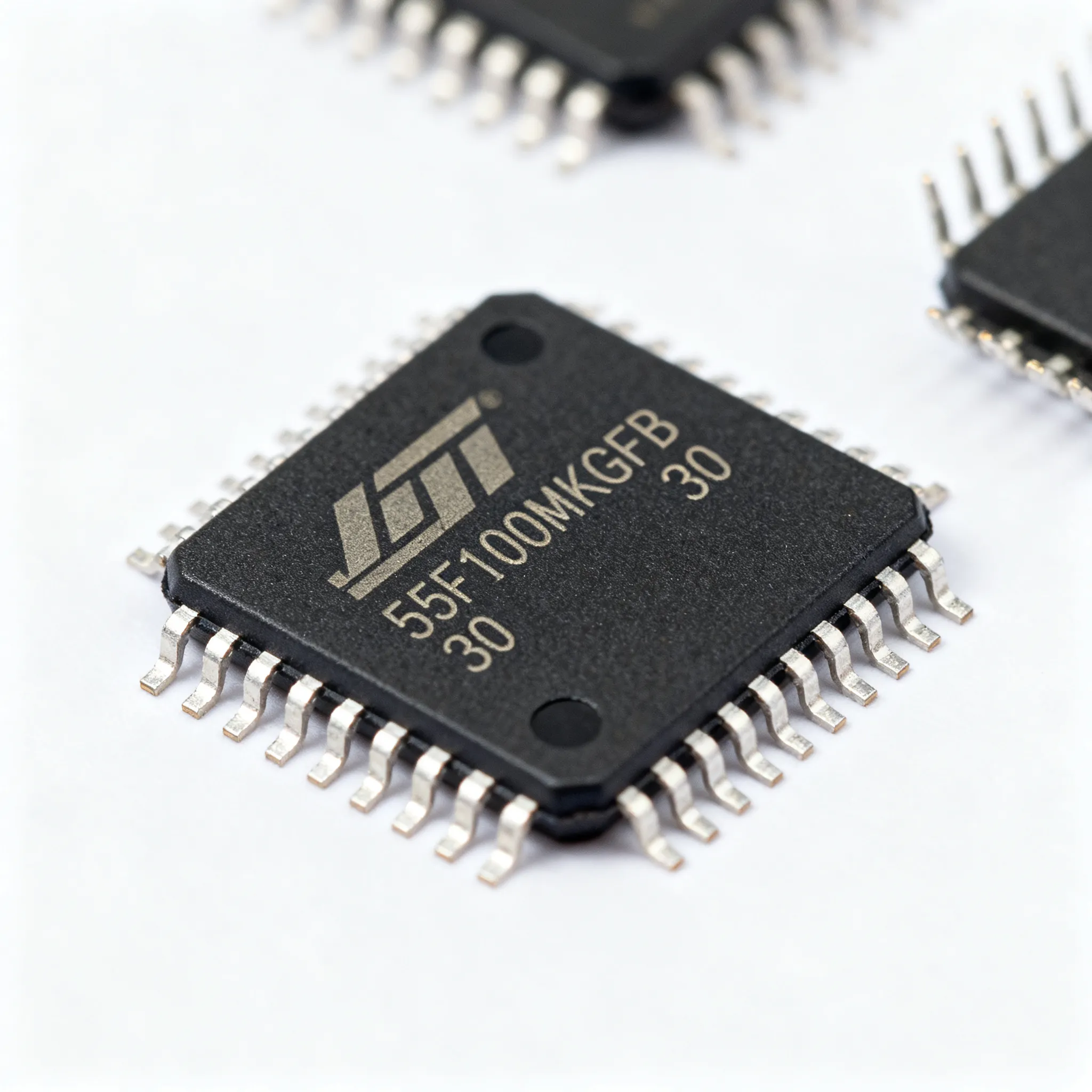
Why Disruption Keeps Hitting Low-Power MCU Lines Like the RL78/G13 R5F100MKGFB#30
If you have sourced microcontrollers for industrial, IoT, or consumer equipment over the last three years, you already know the pattern: a mature, widely adopted MCU family quietly shifts from "available" to "allocation-sensitive" without a headline announcement. The Renesas RL78/G13 R5F100MKGFB#30 sits squarely in that category. It is not a bleeding-edge part. It is a 16-bit workhorse with a proven pedigree, and that maturity is precisely what makes its supply dynamics deceptive.
Dashboards may show reassuring safety-stock levels for the RL78/G13 line, yet recent supply-chain analysis reveals that aggregate inventory figures mask granular risks. A 2025 investigation into hidden supply chain vulnerabilities documented cases where component-level defects evaded sampling-based inspections entirely, only emerging as field failures long after products shipped. These latent defects triggered warranty claims, recalls, and regulatory scrutiny—outcomes that no ERP dashboard predicted.
Manufacturing risks compound the problem. Equipment malfunctions, unplanned maintenance, and labor constraints create domino effects that ripple through fabrication schedules. Delays in production can cascade unpredictably, and for a part manufactured on a mature process node like the R5F100MKGFB#30, reallocation of fab capacity to higher-margin lines is a recurring pressure point. When a foundry prioritizes 40nm automotive-qualified runs over legacy 130nm MCU production, the RL78/G13 buyer feels the impact weeks before any formal allocation notice arrives.
The FDA recall database offers a parallel lesson. In pharmaceutical and medical-device supply chains, seemingly minor process adjustments—a solvent supplier change, a temperature setpoint tweak—have introduced degradation pathways that escaped routine quality checks. A single undocumented process change can introduce failure modes invisible to standard sampling protocols. The same principle applies to semiconductor fabrication: a shift in mold compound, bond-wire supplier, or test-site location can alter long-term reliability in ways that data sheets do not reflect. For the R5F100MKGFB#30, whose typical applications include sensor hubs, motor-control sub-systems, and battery-powered instrumentation, undetected parametric drift is a genuine field-risk.
Key Takeaway: Supply risk for the R5F100MKGFB#30 is not a function of headline shortages. It is a function of opaque fab-allocation decisions, hidden process changes, and inspection gaps that standard procurement workflows never address. The questions you ask before placing an order determine whether you catch those risks or ship them to your customers.
Mapping the R5F100MKGFB#30's Hidden Supply Vulnerabilities
Before you can ask intelligent RFQ questions, you need to understand which specifications of the R5F100MKGFB#30 create supply sensitivity. This is not about memorizing the data sheet. It is about recognizing which parameters tie directly to fabrication-process choices, test-program coverage, and second-source feasibility.
The R5F100MKGFB#30 belongs to the Renesas RL78/G13 family, a 16-bit CISC architecture optimized for ultra-low-power operation. According to manufacturer documentation, the device supports a wide supply voltage range of 1.6 V to 5.5 V and operates across a temperature span of -40°C to +85°C. It is RoHS3 compliant and REACH unaffected, which satisfies baseline environmental requirements but tells you nothing about provenance or process stability. The wide voltage tolerance is a genuine design advantage—it gives your power-supply architecture breathing room—but it also means the internal voltage regulator and flash-memory charge pumps must accommodate a broad input range, making them sensitive to process skew at fab corners.
Below is a spec-to-risk mapping that connects the R5F100MKGFB#30's datasheet parameters to real-world supply vulnerabilities.
| Parameter | Datasheet Value / Characteristic | Supply Vulnerability & Verification Note |
|---|---|---|
| Supply Voltage (VDD) | 1.6 V – 5.5 V | Wide-range LDO and flash pump design; process-skew sensitivity at reticle limits. Verify lot-level VDD min/max margin during incoming inspection. |
| Operating Temperature | -40°C to +85°C | Industrial grade; does not imply automotive qualification. Confirm temperature-grade test coverage if used near thermal extremes. |
| Package | LFQFP (likely LQFP variant based on family suffix) | Lead-frame and mold-compound sourcing changes can alter MSL rating and coplanarity. Demand mold-compound change notifications from the supplier. |
| Flash Memory | Family-typical embedded NOR flash | Endurance and retention depend on tunnel-oxide process stability. A fab-process tweak can shift erase/write endurance; verify data-retention spec per shipment lot. |
| RoHS / REACH Status | RoHS3 compliant, REACH unaffected | Compliance certificates age; request a dated, shipment-specific declaration—not a generic PDF downloaded once and filed. |
| Core Architecture | RL78 16-bit CISC, low-power | Single-source architecture. Verify whether any pin-compatible evaluation candidate exists; assume firmware re-validation will be required for any alternative. |
| On-Chip Peripherals | Timers, ADC, serial interfaces (family-typical) | Peripheral IP blocks are fab-process dependent. A test-site change can alter ADC linearity or timer accuracy at temperature extremes. |
Reading this table, the pattern should be clear: every parameter that makes the R5F100MKGFB#30 attractive for low-power, wide-voltage designs also introduces a verification checkpoint that most incoming-inspection procedures skip. The wide supply-voltage range, for instance, is validated at final test using a test program that assumes a specific fabrication corner. If the fab shifts that corner—even within spec—your worst-case margin may erode.
To structure an internal risk assessment for a part like this, the NIST SP 800-30r1 risk assessment framework provides a useful lens. Originally developed for information-security risk, its methodology—identify threat sources, assess vulnerability, determine likelihood and impact—translates directly to semiconductor supply risk. Map "threat source" to fabrication-process change, "vulnerability" to the specific parametric sensitivity documented above, and "impact" to your end-product's safety or performance margin. The output is not a pass/fail answer. It is a prioritization of which lots demand deeper incoming testing and which can proceed with standard checks.
Tip: If your application pushes the R5F100MKGFB#30 to its voltage or temperature extremes, treat every new shipment as a process-change candidate until proven otherwise. The data sheet guarantees performance under specified conditions, but it does not guarantee that the silicon you receive was fabricated under the same process recipe as the qualification lot you tested two years ago.
Authorized Distribution, Brokers, and Gray Market: Where Your R5F100MKGFB#30 Really Comes From
The sourcing channel you choose for the R5F100MKGFB#30 dictates the traceability, testing, and recourse you receive. "In stock" means radically different things depending on whether you are looking at a franchised distributor's warehouse, an independent broker's shelf, or an aggregator site scraping inventory feeds. Understanding these differences is not a procurement formality—it is the single most consequential risk decision you make for this part.
Real-time stock availability and advertised lead times often diverge significantly. A supplier may list inventory as available when it is actually subject to back-to-back ordering from a third party. Ask explicitly whether the stock is in-house spot inventory or contingent on another source's confirmation. The difference determines whether you receive parts in five days or five months.
Qualification lead time itself is a supply-chain risk. If you receive non-conforming R5F100MKGFB#30 units from an unverified channel and must re-qualify an alternative, the timeline stretches beyond the procurement delay. Engineering weeks spent re-characterizing a replacement MCU across temperature, voltage, and firmware paths represent a hidden cost that the lowest quote never captures.
The table below frames the trade-offs across the three primary sourcing channels for a mature, allocation-sensitive MCU like the R5F100MKGFB#30.
| Comparison Metric | Franchised Distributor | Independent Broker | Selection Criteria & Red Flags |
|---|---|---|---|
| Traceability to Manufacturer | Full lot-level traceability; factory-direct shipment records available on request | Variable; may be consolidated from multiple sources with incomplete paper trails | Require lot-level documentation; a missing or redacted lot code is a hard stop. |
| Counterfeit / Relabeling Risk | Near-zero for factory-sealed inventory; covered by distributor warranty | Elevated; visual inspection insufficient to detect professional relabeling | Independent DC/AC parametric testing beyond visual inspection is essential for broker-sourced parts. |
| Real-Time Stock Accuracy | Generally accurate for bonded inventory; allocation parts may show "available" but require factory confirmation | Often lists consignment stock or back-to-back availability; confirm spot vs. contingent inventory | Ask: "Is this inventory in your physical possession today?" Document the answer in the PO. |
| Change-Notification Enforcement | Contractual PCN (Product Change Notification) pipeline from manufacturer, typically 90 days | No PCN pipeline; process-change awareness depends on broker's relationship depth | A missing PCN commitment means you assume full responsibility for undetected process changes. |
| Compliance Documentation | Shipment-specific RoHS/REACH certificates, country-of-origin declaration | May supply generic or outdated certificates; verify date and lot correlation | Demand a dated, lot-specific compliance package—not a file downloaded from a portal three years ago. |
| Recourse for Non-Conforming Parts | Contractual return/refund; quality agreements with manufacturer backing | Negotiable; often limited to replacement or credit, not consequential damages | If your end-product carries regulatory liability, the cost of weak recourse exceeds any unit-price saving. |
One often-overlooked detail: when sourcing from aggregator platforms, the attached documentation may not be the original manufacturer's data sheet. Some distributors append their own coversheets to manufacturer PDFs, which can obscure revision history, errata, or qualification notes. For the R5F100MKGFB#30, insist on the unmodified Renesas data sheet with the manufacturer's document number and revision date clearly visible. A distributor-added coversheet is not inherently fraudulent, but it can mask an outdated or superseded revision that omits critical errata.
Vague or incomplete specifications in an RFQ force suppliers to make assumptions, which leads to inconsistent quotes, scope gaps, and unreliable pricing. When you issue an RFQ for the R5F100MKGFB#30, specify the exact MPN suffix, required date-code range, lot-traceability requirements, and compliance documentation expectations. A quote that returns in minutes without clarifying questions is often a quote built on assumptions—and those assumptions become your liability.
Structured RFQ questions across security, pricing, and risk categories produce more comparable responses and expose gaps early. For the R5F100MKGFB#30, add sourcing-specific questions: "What is the country of origin for this lot?" "Can you provide the manufacturer's test-program revision used at final test?" "What is your documented process for handling a customer-reported suspected counterfeit?" Suppliers who answer these questions substantively demonstrate the traceability infrastructure you need.
The Pre-Order Validation Checklist Every R5F100MKGFB#30 Buyer Should Run
The difference between a smooth production ramp and a line-down crisis often traces back to the questions asked—or not asked—before the PO was issued. The checklist below is structured around the specific vulnerabilities of the R5F100MKGFB#30, drawing on the supply-chain risk patterns, regulatory lessons, and procurement best practices explored in the previous sections.
Each item is actionable: it specifies what to demand, from whom, and why it matters for this particular MCU.
- Confirm lot-level traceability to the Renesas production site. Request the lot number, date code, and assembly-site identifier directly from the supplier. Cross-check the date code against Renesas's published shipment history for the RL78/G13 family. A lot code that cannot be traced to a known production window is a red flag that warrants independent electrical verification before the parts reach your SMT line.
- Demand a contractual supplier change-notification commitment. As demonstrated in regulated industries, even minor process adjustments can introduce new failure modes. Require the supplier to notify you of any process, material, or test-site change affecting the R5F100MKGFB#30 with a minimum 90-day lead time and a mandatory impact assessment. Treat any undocumented change as a trigger for an out-of-turn risk review.
- Distinguish advertised lead times from allocation-backed commitments. Ask the supplier whether the quoted lead time reflects factory-confirmed allocation or a best-estimate based on historical averages. If the part is subject to back-to-back ordering, the lead time is contingent on a third party's inventory—and that contingency is your risk. Get the allocation confirmation in writing.
- Assess whether your application requires a formal safety-level risk assessment. For safety-related control functions, the general principle articulated in safety module integration guidelines applies: perform a system-level risk assessment to determine the required integrity level and verify that the chosen MCU—with its specific firmware implementation—can support it. The R5F100MKGFB#30's data sheet alone does not answer this question; your firmware architecture and failure-mode coverage do.
- Verify compliance artifacts before payment—not after shipment. Request a shipment-specific RoHS3/REACH certificate, a country-of-origin declaration, and the unmodified Renesas data sheet (not a distributor coversheet). Confirm that the certificate date aligns with the shipment date and the lot code. Stale compliance documents are a warning sign that the supplier is recycling paperwork across multiple transactions.
- Run incoming electrical testing beyond visual inspection. Component-level verification requires a risk framework that goes beyond sampling-based visual checks. For the R5F100MKGFB#30, consider verifying supply-voltage margin (both minimum and maximum), ADC linearity at temperature, and flash-programming endurance on a per-lot sample basis. Professional relabeling defeats visual inspection; electrical parameters are harder to fake.
- Evaluate qualification lead time for alternatives before you need them. Even if you have no intention of switching, knowing the qualification timeline for an alternative MCU informs your last-time-buy calculus. Qualification lead time is itself a supply risk; start the evaluation before the obsolescence window forces a panic decision.
The table below translates these seven actions into a pre-order decision framework, mapping each check to the risk it mitigates and the documentation that validates it.
| Validation Step | Risk Mitigated | Evidence to Demand | Trigger for Escalation |
|---|---|---|---|
| Lot traceability confirmation | Counterfeit, relabeled, or mixed-lot inventory | Lot code + date code + assembly site; Renesas shipment-history cross-check | Untraceable lot code; date code outside known production window |
| Change-notification clause | Undetected process/material changes introducing latent defects | Contractual PCN clause with 90-day minimum and impact assessment | No PCN pipeline; supplier unwilling to commit contractually |
| Allocation-backed lead time | Line-down delays from contingent inventory | Written factory allocation confirmation; spot-stock verification | Lead time quoted without allocation confirmation; back-to-back dependency |
| Safety-level risk assessment | Inadequate integrity level for safety function | System-level FMEA or risk assessment per relevant standard | Application involves safety control without documented assessment |
| Compliance documentation | Environmental non-compliance; regulatory liability | Shipment-specific RoHS3/REACH certificate + COO declaration | Stale or generic certificates; mismatched lot/date |
| Incoming electrical test | Parametric drift; latent reliability defects | Per-lot sample test report covering VDD margin, ADC linearity, flash endurance | Parametric shift exceeding datasheet guard-band; supplier cannot explain |
| Alternative qualification timeline | Single-source lock-in; last-time-buy panic | Engineering evaluation plan for candidate MCU with firmware re-validation estimate | No candidate identified; qualification time exceeds safety-stock coverage |
This framework is not theoretical. It is built on the specific architecture and supply position of the R5F100MKGFB#30—a mature, single-source MCU with wide operating margins that can mask process drift until field conditions expose it. Run through this checklist before every significant order, and you shift from reactive firefighting to proactive risk management.
R5F100MKGFB#30 Supply Risk FAQ: Straight Answers for Engineers and Buyers
The following questions distill the most frequent concerns we hear from engineers and procurement teams sourcing the R5F100MKGFB#30. Each answer is grounded in the data sheet, the supply-chain risk research cited throughout this article, and practical field experience with mature MCU lines.
Q: How can I verify that a batch of R5F100MKGFB#30 is genuine and not a refurbished or relabeled grey-market part?
Request lot-level traceability documents that tie the specific lot number and date code to Renesas's production records. Authorized distributors can provide this directly; independent brokers may resist. Do not rely on visual inspection alone—professional relabeling operations produce cosmetically convincing parts. As supply-chain risk analysis has documented, latent defects often evade sampling-based inspections, so independent DC/AC parametric testing beyond a visual check is essential. Verify supply-voltage margin, ADC performance, and flash-programming behavior on a sample basis. A genuine R5F100MKGFB#30 that passes visual inspection but drifts at temperature corners is a field failure waiting to happen.
Q: What are the real lead times for R5F100MKGFB#30, and why do they differ from advertised numbers?
Advertised lead times typically assume uninterrupted fab runs, no equipment downtime, and full staffing—conditions that real-world semiconductor manufacturing does not guarantee. Equipment malfunctions and labor shortages create unpredictable scheduling domino effects. Additionally, some suppliers list inventory as available when it is subject to back-to-back ordering from a third party. Always ask whether the listed stock is in-house spot inventory or contingent on another source. Only a factory-confirmed allocation provides a reliable lead-time commitment. Request written confirmation that ties the delivery date to a specific production lot.
Q: If Renesas issues a last-time-buy notice for the R5F100MKGFB#30, what steps should we take immediately?
First, freeze your lifetime-buy calculation based on your product's remaining production forecast plus a reasonable buffer for field-service spares. Secure a final order with confirmed non-cancellable/non-returnable (NCNR) terms to lock in the allocation. Simultaneously—not after the order is placed—initiate qualification of an alternative MCU. Qualification lead time is a supply risk in its own right, often stretching 12–18 months for a full re-characterization across temperature, voltage, and firmware regression testing. Starting qualification only after the LTB window closes guarantees a gap between your last R5F100MKGFB#30 shipment and your first qualified alternative. Evaluate candidates that share the RL78 instruction set to minimize firmware rework, but verify pinout, peripheral mapping, and electrical characteristics—do not assume compatibility.
Q: What compliance documentation should I demand before accepting a shipment?
At minimum, three documents: (1) the unmodified Renesas data sheet with the manufacturer's document number and revision date clearly visible—not a distributor-added coversheet that may obscure errata; (2) a shipment-specific certificate of RoHS3 and REACH conformance, dated and correlated to the lot code; (3) a country-of-origin declaration. The RL78/G13 family carries RoHS3 and REACH compliance, but certificates age and must reflect the specific shipment, not a generic file downloaded once. For applications with safety implications, request evidence that the part, as implemented in your firmware architecture, supports the required integrity level—this goes beyond the data sheet and into system-level risk assessment, as safety module standards advise.
Q: How do we enforce supplier change notifications for a mature MCU like the R5F100MKGFB#30?
Build detailed change-notification clauses into your procurement contract. Specify that any change to fabrication process, mold compound, bond-wire supplier, test site, or test-program revision triggers a mandatory notification with a minimum 90-day lead time and a documented impact assessment. Even seemingly minor process tweaks—a solvent supplier change, a temperature setpoint adjustment—can introduce new degradation pathways. The semiconductor equivalent might be a change in mold-compound formulation or test-site relocation, either of which can shift parametric performance within data sheet limits while degrading long-term reliability. If a supplier cannot or will not commit to change-notification terms, treat every shipment as a process-change candidate and budget for incoming electrical verification accordingly.
Q: Does the R5F100MKGFB#30's wide supply voltage range make it more resilient to supply-chain variations?
The 1.6 V–5.5 V operating range documented in Renesas's data sheet provides meaningful design flexibility for your power-supply architecture, but it does not compensate for device-level reliability risks introduced by fabrication changes. The internal voltage regulator, flash charge pumps, and analog peripherals are designed to operate across that range, but their performance at the extremes depends on process parameters set at the fab. A process skew that tightens the regulator's dropout characteristic, for instance, might pass final test at nominal conditions while failing at the low end of the voltage range under temperature stress. Resilience must be verified per lot through incoming electrical characterization; do not assume that a wide data sheet range guarantees immunity to process variation.
References & Further Reading
- The Hidden Supply Chain Risk No Dashboard Shows — Supply Chain Management Review
- Supply Chain Risk Management (SCRM): Complete Guide 2026 — Ivalua
- Recalls, Market Withdrawals, & Safety Alerts — FDA
- FDA Recalls: Class 1, 2, 3 Guide — Assyro AI
- Essential Questions You Should Include in an RFQ for Procurement — CloudEagle.ai
- Critical Material Supply Risks & Industrial Parts Procurement — Mechanical Power Inc.
- 47 Essential RFP Questions to Ask Vendors in 2025 — SifThub.io
- Electronic Components Sourcing: A Practical Guide to Reliable Procurement — TechBullion
- R5F100MFAFB#30 Renesas Electronics Corporation Datasheet — DiGi-Electronics
- ← Previous ArticleNext Article >>
Related Articles
 Blog
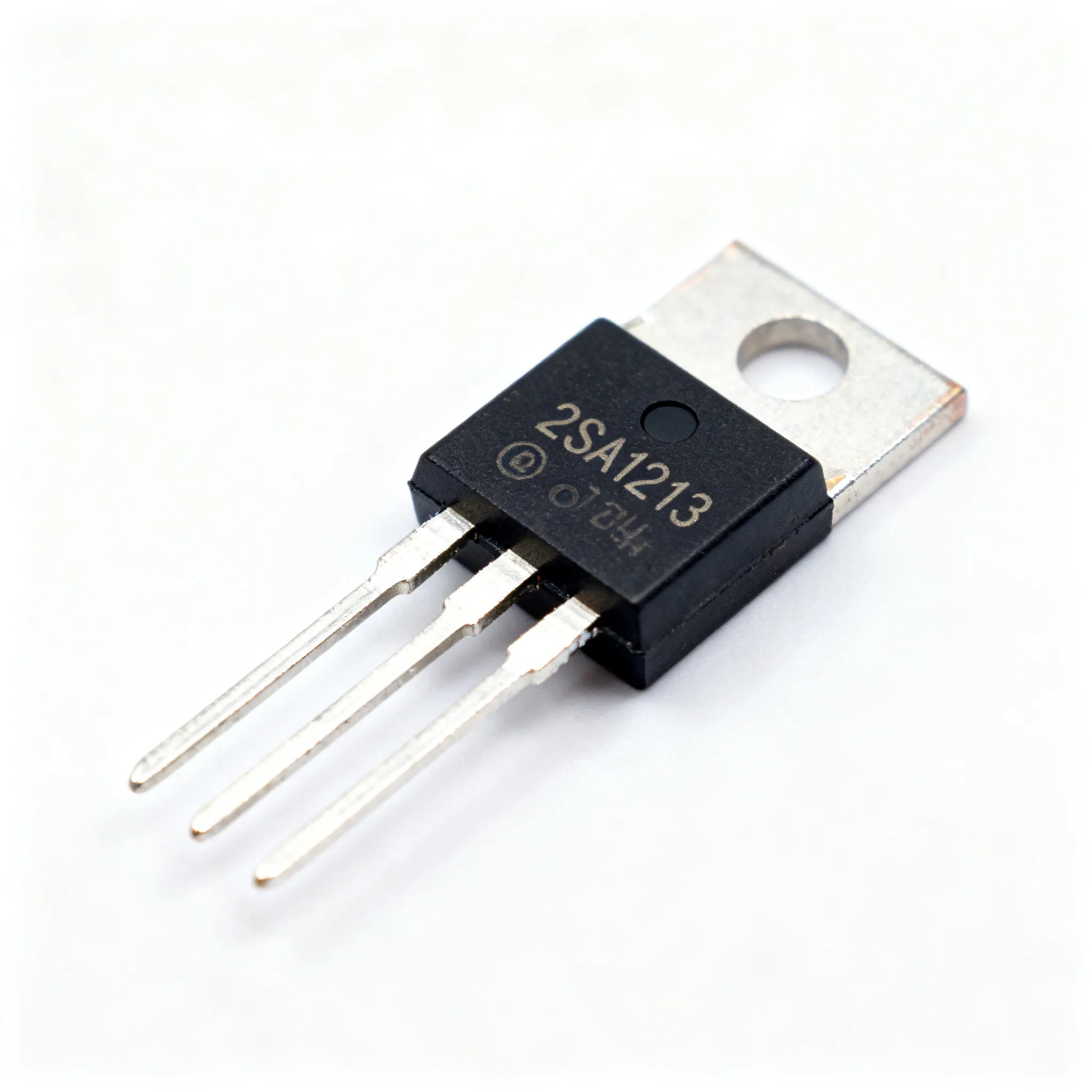
Blog2SA1213 Obsolescence Risk Checklist: Confirm Lifecycle Status Before Sourcing
2SA1213 lifecycle and obsolescence risk checklist. What to verify before redesign or last-time-buy — without assuming drop-in replacements.
 Blog
BlogMaximize Savings with Excess Inventory Buybacks and Discounted Components for OEMs
Practical guide for buyers and engineers: Maximize Savings with Excess Inventory Buybacks and Discounted Components for OEMs. Sourcing, risk, and selection notes.
 Blog
BlogBOM Line Risk Review: How to Vet Your Bill of Materials Before Production Release
BOM and RFQ best practices for electronic component procurement. Upload your BOM or request a quote for mixed lines and flexible MOQ.
 Blog
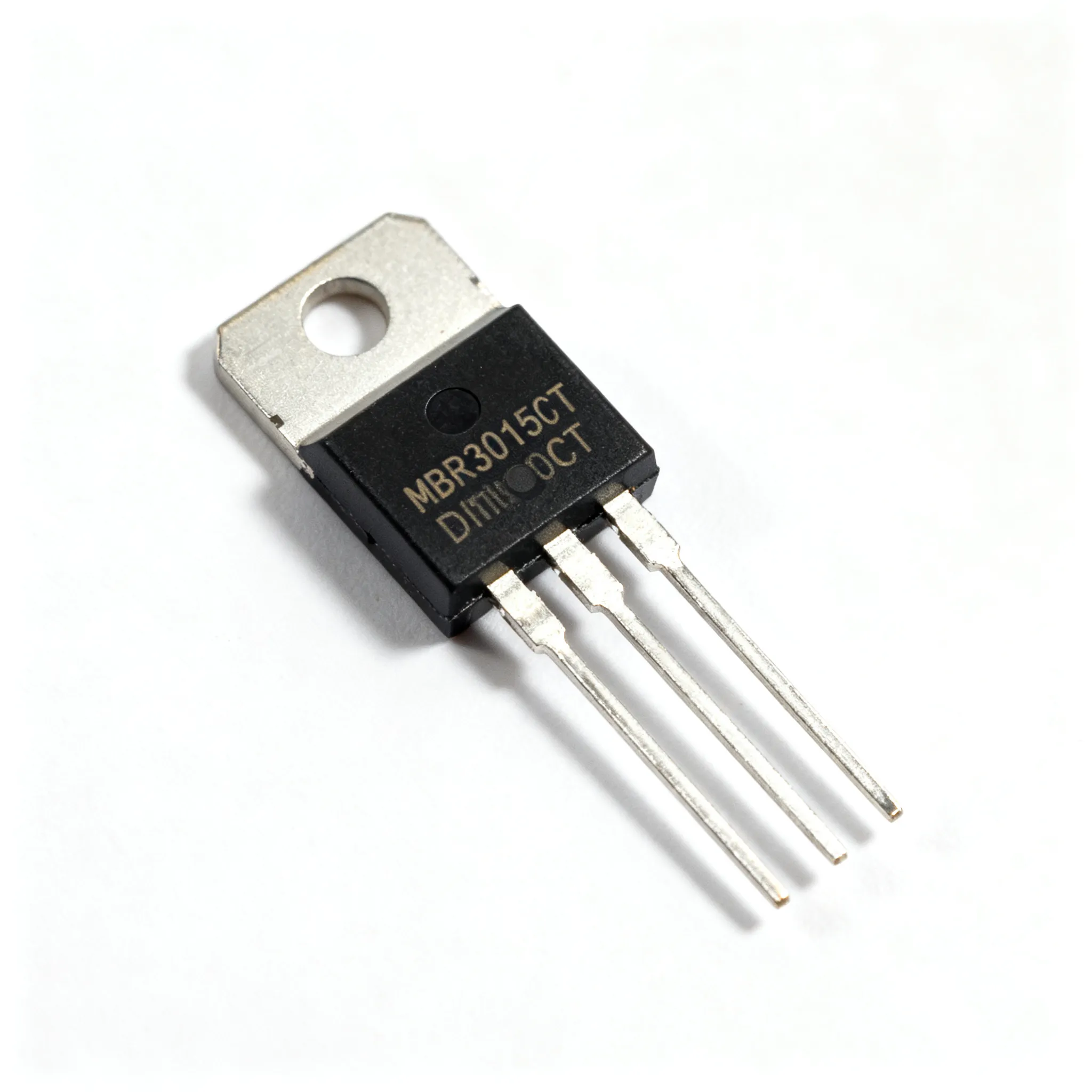
BlogMBR30150CT Supply Risk Assessment: What to Ask Before You Buy
Assess MBR30150CT sourcing risks before you buy. RFQ questions on traceability, date codes, testing, alternatives, and supply continuity for procurement teams.
 Blog
BlogUnderstanding the GND Wire in Electronic Design
What is GND wire? It's the zero-voltage reference and current return path in circuits, crucial for signal integrity, safety, and EMI control in modern electronics.
 Blog
BlogSell Excess Electronic Components: Turn OEM Inventory into Revenue
Practical guide for buyers and engineers: Sell Excess Electronic Components: Turn OEM Inventory into Revenue. Sourcing, risk, and selection notes.