RGS50TSX2DGC11 Supply Risk Assessment: What to Ask Before You Buy
Assess RGS50TSX2DGC11 sourcing risks before you buy. RFQ questions on traceability, date codes, testing, alternatives, and supply continuity for procurement...
Why the RGS50TSX2DGC11 Deserves a Supply-Side Deep Dive Right Now
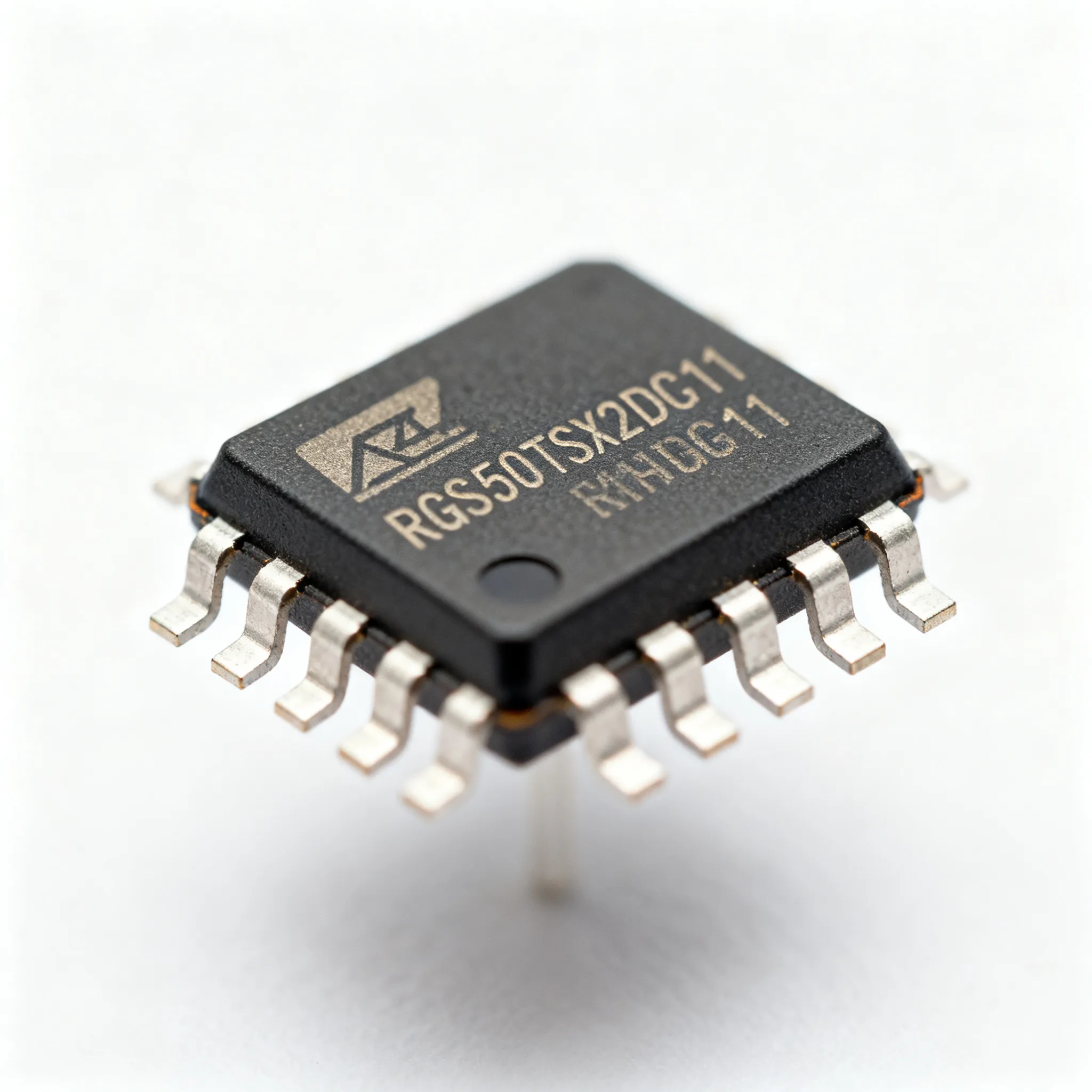
Power semiconductor procurement has rarely been a straightforward exercise, but the past two years have introduced a level of volatility that seasoned buyers still find unsettling. IGBTs — particularly single-sourced, application-specific variants in the 1200 V class — sit at the intersection of expanding demand from inverter, UPS, and renewable-energy markets and a supply base that remains concentrated among a handful of fabs. The ROHM RGS50TSX2DGC11 is a 50 A, 1200 V field-stop trench IGBT in a TO-247N package, and it plays a quiet but critical role in general-purpose inverters, photovoltaic inverters, and power conditioners. When a device like this becomes allocation-sensitive, the ripple effects reach project timelines, production schedules, and ultimately the balance sheet.
What makes supply-chain risk assessment for the RGS50TSX2DGC11 particularly urgent right now is not a single headline event but a convergence of structural pressures. Power semiconductor fab capacity, while expanding, remains tight for mature trench-IGBT processes. ROHM's internal manufacturing strategy — which blends in-house wafer processing with outsourced backend assembly — means that multiple nodes in the supply chain must align for a single shipment to clear. Add to this the reality that many procurement teams treated IGBTs as commodity discretes for years, only to discover during the last allocation cycle that second-source qualification can take six to nine months of engineering time. A structured risk assessment, informed by frameworks like the Check Point supply chain risk assessment methodology, helps procurement and engineering teams move from reactive firefighting to proactive planning.
The obvious first step is to confirm the device's current lifecycle status. The official ROHM product page for the RGS50TSX2D series should be consulted for any PCN (Product Change Notification) or EOL (End-of-Life) notices. This is not a box-ticking exercise — a part that shifts from "Active" to "Not Recommended for New Design" (NRND) can still be ordered, but the procurement dynamics change substantially. Allocation priority drops, minimum order quantities may shift, and authorised distributors begin managing their inventory positions differently. Requesting a formal lifecycle confirmation letter from ROHM's authorised channel adds a layer of documented assurance that a distributor's website stock status cannot provide.
Tip: When requesting lifecycle documentation, ask specifically for the ROHM internal product code associated with the GC11 suffix variant. The GC11 designation indicates a specific lead-free plating and RoHS compliance configuration, and ROHM's PCN system tracks these suffix variants independently. Confirming the correct internal code avoids the frustration of receiving a lifecycle statement for the wrong plating option.
Beyond lifecycle status, the conversation should shift to allocation visibility. Power semiconductor allocations are rarely announced publicly; they are communicated through authorised distributor channels, often with short notice. Building a relationship with ROHM's regional distribution team — and requesting quarterly allocation outlooks rather than relying on spot-market availability checks — is the single most effective hedge against supply disruption. The RS Components listing provides a useful snapshot of list pricing and standard pack quantities, but it should not be treated as a real-time supply forecast. Treat it as a starting point for a conversation, not the final word on availability.
Decoding the RGS50TSX2DGC11: Key Specs Engineers Can't Afford to Overlook
Procurement professionals sometimes treat the datasheet as an engineering document — and it is — but it is also the single most important supply-chain risk document in the qualification process. A parameter that looks like a routine electrical specification to a buyer may, to an engineer, represent a hard boundary condition that no alternative part can cross without a board respin. The RGS50TSX2DGC11 datasheet, accessible through the ROHM product page, contains several parameters that directly affect procurement decisions — because they determine how narrow or wide the field of acceptable alternatives actually is.
The table below extracts the parameters that matter most when evaluating supply risk. These are not the only specifications in the datasheet, but they are the ones that tend to eliminate candidate substitutes during the qualification process. A "close enough" assumption on any of these is a fast path to field failures, thermal runaway, or gate-drive instability.
| Parameter | Value / Range | Unit | Procurement Significance |
|---|---|---|---|
| Collector-Emitter Voltage (VCES) | 1200 | V | Hard boundary; alternatives must match or exceed. Underspecifying here is a direct safety risk in inverter DC-link applications. |
| Collector Current (IC) at TC = 100°C | 50 | A | Derating curve must be compared; a part rated 50 A at 25°C but 35 A at 100°C is not equivalent. |
| Short-Circuit Safe Operating Area (SCSOA) | 10 | µs | Critical for protection circuit design. A shorter SCSOA means the gate driver must react faster, potentially requiring a redesign of the desaturation detection circuit. |
| VCE(sat) (Typical) | 1.65 (at IC = 50 A) | V | Directly affects conduction losses. A higher VCE(sat) in a substitute means more heat to manage, potentially requiring heatsink or airflow changes. |
| Turn-Off Switching Energy (Eoff) | Refer to datasheet curves | mJ | Switching losses scale with frequency. A substitute with higher Eoff may overheat at the same switching frequency, forcing a frequency reduction or thermal redesign. |
| Package | TO-247N | — | Mechanical fit is non-negotiable. The "N" suffix in TO-247N typically indicates a specific lead-form or standoff height; verify mechanical drawings. |
| Gate-Emitter Threshold Voltage (VGE(th)) | 5.5–6.5 (Typical) | V | Gate drive voltage margins must be checked. A lower threshold may cause spurious turn-on; a higher threshold may prevent full saturation. |
| Operating Junction Temperature (Tj) | -40 to +175 | °C | Wide Tj range supports industrial and outdoor inverter applications. Substitutes with lower Tj(max) may require derating. |
The 10 µs SCSOA guarantee deserves particular attention because it is one of the defining features of the RGS series. In a short-circuit event, the IGBT must survive long enough for the gate driver's desaturation detection circuit to recognise the fault, initiate a soft turn-off, and bring the collector current to zero. If the SCSOA window is shorter than the protection circuit's reaction time, the device fails — often destructively. When evaluating alternative IGBTs, this parameter is not a "nice to have"; it is a gate-driver compatibility constraint. A substitute with a 5 µs SCSOA may require a complete redesign of the protection circuit, adding weeks or months to the qualification timeline.
The RS Components listing provides a useful cross-reference for the commercial part number and standard packaging, but the full electrical characterisation — including the all-important switching energy curves across temperature — lives in the ROHM datasheet. Engineers evaluating the RGS50TSX2DGC11 for a new design should download the latest revision directly from ROHM's site, not rely on cached or third-party summaries. Datasheet revisions can introduce subtle parameter changes that affect the qualification report.
Comparing RGS50TSX2DGC11 with Other 1200 V/50 A IGBTs: What to Watch Out For
Even if the RGS50TSX2DGC11 is the design team's first choice — and there are solid engineering reasons why it might be — the procurement team needs a clear, quantitative picture of where it sits relative to alternatives. This is not about undermining the engineering decision; it is about understanding the size of the supply-risk window. If the ROHM part goes on allocation and the only qualified alternative is six months away from approval, the production line stops. If, on the other hand, the comparison matrix shows that two or three devices share similar enough characteristics to be qualified in parallel, the supply risk drops substantially.
The table below compares the RGS50TSX2DGC11 with two other 1200 V / 50 A-class IGBTs from major manufacturers. These are presented as evaluation candidates — not as compatibility must be verified (package, pinout, firmware) replacements. Every parameter must be verified against the full datasheet, and bench testing under the actual application conditions (switching frequency, DC-link voltage, gate resistance, thermal environment) is non-negotiable.
A word of caution before diving into the comparison: a quick web search for "RGS" IGBT specifications can inadvertently pull up the Carlo Gavazzi RGS series datasheet. Those RGS devices are solid-state relays, not IGBTs — a completely different component category. This is a practical reminder that part-number precision matters enormously when qualifying second sources. A single missing suffix character can lead a buyer to an entirely wrong product family.
| Comparison Metric | ROHM RGS50TSX2DGC11 | STMicroelectronics STGWA50M120DF3 (Evaluation Candidate) | Selection Criteria & Failure Boundary |
|---|---|---|---|
| VCES | 1200 V | 1200 V | Must match; underspecifying risks catastrophic failure in 800 V DC-link systems. |
| IC (TC = 100°C) | 50 A | ~50 A (verify derating curve) | Compare at actual operating TC, not 25°C. A 10 A difference at 100°C can force a heatsink redesign. |
| VCE(sat) (Typical) | ~1.65 V at 50 A | ~1.85 V at 50 A (verify datasheet) | Higher VCE(sat) increases conduction losses proportionally. A 0.2 V difference at 50 A adds 10 W of extra heat per device. |
| SCSOA | 10 µs | Verify with manufacturer | Shorter SCSOA demands faster gate-driver response. If the desaturation blanking time exceeds the SCSOA, the device is unprotected. |
| Package | TO-247N | TO-247 (verify lead-form) | Mechanical compatibility includes lead spacing, standoff height, and creepage distance. TO-247 variants are not always interchangeable. |
| Gate Charge (QG) | Refer to datasheet | Refer to datasheet | Gate drive current requirements scale with QG. A higher gate charge may require a lower gate resistor or a stronger driver IC. |
The comparison highlights a recurring theme in IGBT procurement: the devil is in the derating curves and the dynamic parameters. Two devices that look identical on a parametric search — both 1200 V, both 50 A, both in TO-247 — can diverge significantly when you examine VCE(sat) at temperature, turn-off energy at the actual switching frequency, and short-circuit withstand behaviour. The ROHM datasheet provides the detailed characterisation curves needed to make these comparisons accurately. Insist on the same level of detail from any alternative supplier before committing to a qualification programme.
For procurement teams managing a multi-source strategy, the practical recommendation is to qualify at least one alternative IGBT in parallel — not on paper, but through the full incoming inspection, bench-test, and reliability-validation sequence. The cost of that qualification programme, spread over the production volume, is almost always lower than the cost of a line stoppage during an allocation cycle.
Questions to Ask Before You Commit to an RGS50TSX2DGC11 Order
Experienced buyers know that the gap between a distributor's website showing "In Stock" and a committed delivery date that survives a production schedule is wider than it looks. The RGS50TSX2DGC11 is no exception. Before placing an order — especially a volume order that gates a production run — there is a structured set of questions that procurement should ask, and get answers to in writing. The framework below draws on the principles outlined in the Check Point supply chain risk assessment datasheet, adapted for the specific realities of power semiconductor procurement.
The questions fall into four categories: availability and lead time, authenticity and traceability, lifecycle and change control, and incoming inspection readiness. Each category addresses a different dimension of supply risk, and skipping any one of them leaves a gap that can surface at the worst possible moment.
| Risk Category | Question to Ask the Supplier | What a Satisfactory Answer Looks Like | Red Flag |
|---|---|---|---|
| Availability & Lead Time | What is the allocation-backed, committed delivery date — not the website stock status? | A written commitment with a date, backed by a confirmed allocation from ROHM's authorised channel. The RS listing provides a reference point, but the committed date comes from the distributor's order desk. | "We expect stock next week" without a purchase-order acknowledgment tied to a specific shipment. |
| Availability & Lead Time | Can you provide weekly allocation updates during tight supply windows? | A clear process for status updates, ideally with a named contact who has visibility into ROHM's regional allocation. | Radio silence after the order is placed; "check the website" as the only update mechanism. |
| Authenticity & Traceability | Can you provide full lot traceability back to ROHM's authorised channel? | Lot codes, date codes, and distributor chain-of-custody documentation that can be cross-referenced with ROHM's customer portal. | Lot codes that are obscured, relabelled, or inconsistent with ROHM's standard format. |
| Authenticity & Traceability | What is the maximum acceptable date code for this shipment? | Buyers should specify a maximum date code age (e.g., within 24 months) and require confirmation. Older stock may have solderability concerns or missing PCN coverage. | Supplier refuses to disclose date codes before shipment or insists on "no returns" for date-code-related issues. |
| Lifecycle & Change Control | Is the GC11 suffix variant still active, and are there any open PCNs affecting it? | A formal statement from ROHM or an authorised distributor confirming lifecycle status and listing any open PCNs with their effective dates. | Vague assurances ("it's still in production") without documentation. |
| Lifecycle & Change Control | If an EOL or NRND notice is issued, what is the last-time-buy window and the recommended migration path? | A clear timeline with quantities and a recommended replacement part number from ROHM. | No documented migration path; "we'll let you know when it happens." |
| Incoming Inspection | Can you provide a sample lot for incoming inspection before the volume shipment? | A small quantity (e.g., 10–25 units) from the same lot as the volume order, with matching lot and date codes. | Sample lot from a different batch than the volume order — defeats the purpose of pre-screening. |
| Incoming Inspection | What test reports (e.g., curve tracer, X-ray, solderability) can you provide within 90 days of shipment? | Test reports dated within 90 days, specific to the shipped lot. Buyers should require these as a condition of acceptance. | Generic certificates of conformance with no lot-specific test data. |
The table above is a starting point, not a complete checklist. Every procurement organisation has its own quality requirements, and some industries — medical, aerospace, automotive — layer additional documentation demands on top. The principle, however, is universal: get the answers in writing, tie them to a specific lot and purchase order, and verify them before the parts reach the production line.
Key Takeaway: The single most valuable hour a buyer can spend before placing a volume order for the RGS50TSX2DGC11 is a phone call or video meeting with the distributor's product manager — not the inside sales representative, but the person who actually sees ROHM's allocation numbers. That conversation can surface constraints that never appear on a website or in an automated inventory feed.
RGS50TSX2DGC11 Sourcing and Application FAQs
Senior engineers and procurement leads who have been through multiple allocation cycles tend to circle back to the same handful of questions about the RGS50TSX2DGC11. The answers below address the practical realities — not textbook definitions, but the kind of guidance that comes from managing IGBT supply chains through both feast and famine.
Q: What is the typical lead time for the RGS50TSX2DGC11, and how can I get a more accurate forecast?
Lead times for power IGBTs in the 1200 V class can fluctuate between 8 and 30 weeks depending on ROHM's fab loading, backend assembly capacity, and regional allocation decisions. The key word is "allocation" — during periods of tight supply, ROHM allocates available wafers across its authorised distributor network based on historical demand, forecast accuracy, and strategic account status. A distributor's website may show "In Stock" for small quantities, but that does not translate to a committed date for a production-volume order. Always request a committed delivery date from an authorised distributor (such as RS Components or another ROHM-authorised channel) tied to a purchase order acknowledgment. During tight supply windows, ask for a weekly update — not as a courtesy, but as a condition of the order. The difference between a "committed" date and a "projected" date is the difference between a production schedule that holds and one that slips.
Q: Can I substitute the RGS50TSX2DGC11 with the standard RGS50TSX2D (without the GC11 suffix) or an alternative manufacturer's part?
The GC11 suffix in RGS50TSX2DGC11 denotes a specific RoHS-compliant, lead-free plating variant. The base RGS50TSX2D may be functionally identical in terms of electrical parameters, but the plating composition, solderability characteristics, and regulatory compliance status may differ. Before accepting a substitution, verify the full part number with ROHM's PCN (Product Change Notification) system and confirm that the alternative plating meets your assembly process requirements — particularly if you are using a specific solder paste or wave-soldering profile. For alternative manufacturers' IGBTs, the qualification process is more involved. Compare VCE(sat), switching losses (Eon and Eoff at your actual switching frequency and gate resistance), short-circuit withstand time, and the pin-out. Never assume drop-in compatibility without bench testing the gate drive circuit, the thermal layout, and the protection scheme. A part that looks identical on a parametric search can behave very differently under your specific operating conditions.
Q: How do I verify that the shipped RGS50TSX2DGC11 parts are genuine ROHM and not counterfeit?
Counterfeit IGBTs are a real and persistent problem in the power semiconductor market, particularly for parts that experience allocation pressure. Genuine ROHM RGS50TSX2DGC11 devices should arrive in packaging that carries ROHM's standard labelling with lot traceability codes, date codes, and the manufacturer's hologram where applicable. Cross-reference the lot number with the authorised distributor and, if available, with ROHM's customer portal. For initial screening, use a curve tracer to verify the output characteristics and compare them against the datasheet — counterfeit parts often show anomalies in VCE(sat) or threshold voltage. For deeper confidence, particularly on high-value or safety-critical orders, request a sample for decapsulation and die marking verification. The die inside a genuine ROHM RGS50TSX2D will carry ROHM's internal marking convention, and any deviation is a strong indicator of a counterfeit or remarked device. The cost of a decapsulation test is negligible compared to the cost of a field failure traced to a counterfeit IGBT.
Q: What does the 10 µs SCSOA guarantee mean for my inverter design, and how does it affect reliability?
The 10 µs short-circuit safe operating area (SCSOA) is one of the headline specifications of the RGS series and a key differentiator for the RGS50TSX2DGC11. In practical terms, it means the IGBT is guaranteed to survive a short-circuit event — with the gate fully on, the full DC-link voltage across the collector-emitter terminals, and current rising rapidly — for up to 10 microseconds under the specified conditions (gate voltage, junction temperature, and DC-link voltage as defined in the ROHM datasheet). This 10 µs window is the time available for the gate driver's desaturation detection circuit to recognise the fault, initiate a soft turn-off, and bring the current under control. If the protection circuit takes longer than 10 µs to respond — due to blanking time, propagation delay, or a slow gate-resistor network — the IGBT may be operating outside its guaranteed safe area, and failure becomes a statistical probability rather than a remote possibility. The reliability implication is direct: the SCSOA rating sets the upper bound on the protection circuit's response time. Design the desaturation detection loop to react well within 10 µs, and size the gate resistor to achieve a controlled turn-off that avoids voltage overshoot. This is not a parameter to leave to the default settings of a gate-driver IC.
Q: Does the RGS50TSX2DGC11 have any known long-term reliability concerns or early failure signatures?
No public failure event, recall, or reliability advisory is flagged for the RGS50TSX2DGC11 specifically. The RGS series is built on ROHM's mature field-stop trench IGBT process, which has been in volume production for several years and is well-characterised in the power electronics industry. However, this does not mean the device is immune to the failure mechanisms common to all IGBTs. Latch-up can occur if the device is repeatedly stressed beyond its Safe Operating Area (SOA) — particularly during hard-switching events with excessive di/dt or dv/dt. Gate oxide degradation can accumulate over time if the gate-emitter voltage approaches or exceeds the absolute maximum rating, even transiently. The most practical reliability monitoring approach for end-users is to track VCE(on) drift over the operating life of the equipment. A gradual increase in VCE(on) can indicate bond-wire degradation or die-attach fatigue, both of which precede catastrophic failure. Thermal cycling — the number and depth of temperature excursions from cold start to full load — is another parameter worth logging, as it correlates strongly with solder-joint and wire-bond lifetime. The advice is standard but worth repeating: operate the device within the datasheet limits, design the protection circuit to act faster than the SCSOA window, and monitor for early warning signs through routine parameter trending.
For procurement teams and engineers looking to take the next step, the most effective action is to submit a structured RFQ through a platform that can aggregate authorised distributor responses and provide visibility into real allocation positions. IC-Online offers a BOM upload tool that supports mixed-line-item RFQs with flexible minimum order quantities — a practical way to test the market for the RGS50TSX2DGC11 alongside any alternative IGBTs or supporting components your design requires. The platform's multi-distributor reach means you can compare committed lead times, pricing, and allocation availability in a single workflow, rather than chasing individual distributor quotes. The outcome is a clearer picture of supply risk — and a faster path to a production-ready procurement decision.
References & Further Reading
- RGS50TSX2D — Data Sheet, Product Detail | ROHM.com — Official product page with datasheet, application notes, and PCN/EOL status for the RGS series field-stop trench IGBTs.
- Supply Chain Risk Assessment Datasheet | Check Point — Framework for identifying and minimising risk associated with third-party connections; applicable to semiconductor procurement risk evaluation.
- ROHM RGS50TSX2DGC11 Single IGBT, 50 A 1200 V, 3-Pin TO-247N | RS Components — Commercial listing with pricing, packaging information, and standard availability reference for the GC11 suffix variant.
- Carlo Gavazzi RGS Series Datasheet — Solid-state relay datasheet illustrating the importance of part-number precision; the Gavazzi RGS series is not related to the ROHM RGS IGBT family.
- IC-Online — Electronic Components Search and RFQ Platform — Multi-distributor BOM upload and RFQ tool for comparing lead times, pricing, and allocation across authorised channels.
- ROHM Semiconductor — Technical Support and PCN Portal — Access product change notifications, lifecycle status inquiries, and technical documentation for ROHM IGBT products.