ROI Calculator Shows HiSilicon's Value
You need the best value for your video analytics project. HiSilicon offers superior long-term performance and efficiency. An
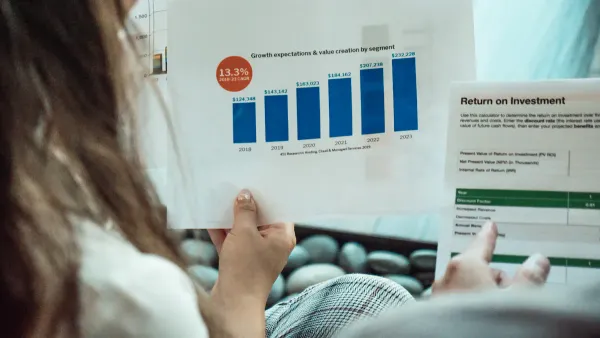
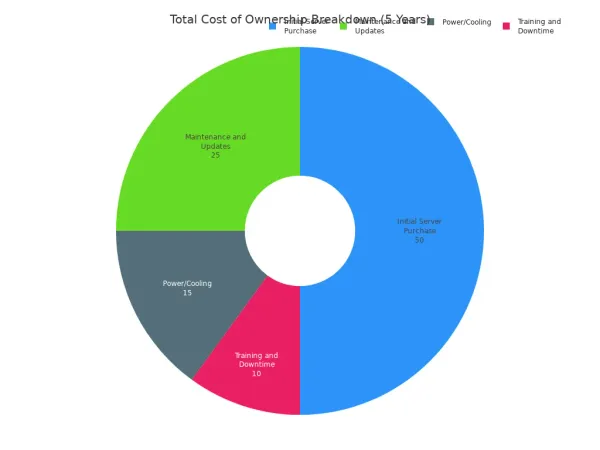
You need the best value for your video analytics project. HiSilicon offers superior long-term performance and efficiency. An initial price tag does not show the full picture. Operational costs like power and cooling often make up a large part of your total spending over time.
An ROI calculator helps you see these future savings. You can quantify the financial returns from HiSilicon's power-efficient hardware. This makes your choice a strategic investment, not just a hardware purchase.
Key Takeaways
- An ROI calculator helps you see the true cost of video analytics projects. It shows long-term savings from power and cooling, not just the first price.
- HiSilicon hardware saves money over time. It uses less power and fits more cameras per server than other options.
- HiSilicon is great for big projects like smart cities. It also works well for small projects like retail stores with limited space.
- HiSilicon is not always the best choice. For very small projects or if your team already uses NVIDIA, other options might be better.
THE 'INVESTMENT': INITIAL COSTS

The "Investment" in your ROI formula is more than just the price on a sales receipt. You must consider both the initial hardware purchase and the engineering resources needed to get your system running. A true ROI Calculator helps you weigh these upfront costs accurately.
HARDWARE COSTS: HISILICON VS. ALTERNATIVES
At first glance, general-purpose CPUs seem like a cheap and familiar option. However, specialized hardware often provides better value for specific tasks. For example, you can find a HiSilicon-based board capable of processing 32 channels of 1080p video for approximately $45. This low unit cost is powerful.
When you scale up your project, the financial benefits become even clearer. A system built on general-purpose CPUs requires more servers to handle a large number of cameras. Specialized hardware, like a GPU or HiSilicon's NPU, processes more cameras per server. This reduces your total hardware spending for large-scale deployments.
Consider this comparison for a 1,000-camera system:
| Feature | CPU-based System | GPU-based System |
|---|---|---|
| Cameras per server | 20-30 | Over 200 |
| Unit Cost | Appears cheaper | Typically more expensive |
| Cost-effectiveness | Less cost-effective | More cost-effective |
| Analytics Quality | Standard | Much higher |
DEVELOPMENT AND INTEGRATION COSTS
Hardware is only one part of your investment. You also need to account for the time and effort your development team spends. This is where you face a clear trade-off.
Platforms like NVIDIA CUDA are dominant in the AI world. Your team may already have experience with them. HiSilicon's software stack presents a different path.
- NVIDIA's Ecosystem: CUDA, TensorRT, and cuDNN are mature and widely adopted. Developers have access to extensive documentation and community support.
- HiSilicon's Ecosystem: The MindSpore framework is a powerful alternative but has a smaller user base. This can mean a steeper learning curve for your team.
Note: You are investing development time to unlock greater long-term efficiency. The initial effort to learn a new platform is a calculated cost that pays off through lower operational expenses later.
THE 'RETURN': LONG-TERM VALUE

Your initial investment is only half the story. The "Return" is where HiSilicon's value truly shines over the long term. An ROI Calculator reveals that operational expenses, not hardware, often determine your project's total cost. You will see significant financial returns from efficiency gains over a 3-to-5-year period.
OPERATIONAL SAVINGS: POWER & COOLING
Power consumption is a major operational cost. Every watt your hardware uses generates heat, which you must then pay to cool. One watt of power creates 3.412 British thermal units (Btu) of heat per hour. This adds up quickly in a data center.
Modern GPU-based systems are incredibly power-hungry. A single high-end GPU can consume a large amount of energy, as shown below.
| GPU Model | Thermal Design Power (TDP) |
|---|---|
| NVIDIA B200 (Air Cooled) | 1000W |
| NVIDIA B200 (Liquid Cooled) | 1200W |
In contrast, HiSilicon's NPUs are designed for power efficiency. They process more video streams per watt. This directly lowers your electricity bills and reduces the strain on your cooling systems, generating substantial savings year after year.
DENSITY GAINS: FOOTPRINT & MAINTENANCE
Data center space is expensive. You want to maximize your processing power in the smallest possible footprint. GPU-heavy server racks create a major challenge.
- Modern GPU racks can demand over 50kW of power.
- Next-generation systems are pushing toward 100kW per rack.
- Many data centers are only built to handle 5-10kW per rack.
HiSilicon's specialized hardware allows you to achieve higher density. You can process more camera channels in a single server. This means you need fewer servers, less rack space, and less complex cooling infrastructure. A smaller physical footprint also simplifies maintenance, saving you time and labor costs.
PERFORMANCE RETURNS: ACCURACY & RELIABILITY
Your video analytics system must be accurate to be valuable. False positives create unnecessary work for your team. They must manually review incorrect alerts, which costs time and money. HiSilicon's dedicated hardware and optimized software deliver higher accuracy for analytics tasks. This improved reliability means your team spends less time verifying alerts and more time responding to real events, boosting operational efficiency.
ROI CALCULATOR IN ACTION: USE CASES
Theory and data sheets are helpful. Real-world scenarios show you the true impact of your technology choices. Let's explore three different situations. These examples demonstrate how HiSilicon's value changes based on your project's scale, constraints, and goals.
SCENARIO 1: LARGE-SCALE SMART CITY
Imagine you are managing a smart city project. You need to analyze video from 5,000 traffic cameras 24/7. Your goals are to detect accidents, monitor traffic flow, and identify public safety issues. This massive scale presents huge challenges in cost, power, and physical space.
You need a solution that is both powerful and efficient. A general-purpose CPU or GPU system would require a massive data center. HiSilicon offers a more practical path. Its specialized NPUs process many more video streams per server.
This high density directly reduces your initial hardware investment. You buy fewer servers to accomplish the same job.
| System Type | Servers Needed for 5,000 Cameras | Estimated Rack Space |
|---|---|---|
| CPU-Based System | ~200 Servers | 10 Racks |
| GPU-Based System | ~25 Servers | 2 Racks |
| HiSilicon-Based System | ~15 Servers | 1 Rack |
The Result: Your project requires less hardware, a smaller physical footprint, and significantly less power. Over a five-year operational period, the savings on electricity and cooling alone can amount to millions of dollars. The long-term TCO is dramatically lower, proving a massive return on your investment.
SCENARIO 2: ON-PREMISE RETAIL ANALYTICS
Now, picture yourself as an IT director for a retail chain with 200 stores. You want to deploy on-premise analytics to monitor queue lengths and customer behavior. Data privacy is critical, so all processing must happen inside the store. Each store has a small IT closet with limited power and no special cooling.
A traditional server is not an option. It is too big, too loud, and generates too much heat. This is where HiSilicon's edge solutions excel.
- Small Footprint: A single, compact HiSilicon-based appliance can handle all 16 cameras in a typical store.
- Low Power: The device consumes very little energy. It runs cool without needing extra fans or air conditioning.
- Easy Deployment: You can ship a pre-configured box to each store for simple plug-and-play installation.
For this use case, the return on investment comes from operational improvements and low TCO. You gain valuable business insights without the high cost and complexity of deploying server-grade hardware in every store. The low unit cost and minimal energy use make the project financially viable across the entire chain.
SCENARIO 3: WHEN NOT TO CHOOSE HISILICON
HiSilicon is a powerful tool, but it is not the right choice for every single project. An honest ROI Calculator will show you when the investment does not make sense. You should consider alternatives in these situations:
- Small, Temporary Projects: Do you need to analyze just one or two camera streams for a short-term experiment? A standard PC with a CPU or a consumer-grade graphics card will be faster to set up and cheaper upfront. The long-term efficiency of HiSilicon does not provide a return on such a small scale.
- Rapid Prototyping with a CUDA Team: Your development team may have deep expertise in NVIDIA's CUDA platform. If your primary goal is to build a proof-of-concept very quickly, sticking with a familiar ecosystem is more efficient. The cost of retraining your team would outweigh the hardware benefits for a short-term evaluation.
- Needing Top-Tier General AI Performance: If your project involves more than just video analytics, like training large language models (LLMs), a general-purpose GPU system is more flexible. HiSilicon's hardware is highly specialized for video, not for broad AI research tasks.
Choosing the right hardware is a strategic decision. You must weigh development time, upfront costs, and long-term operational expenses to find the best fit for your specific needs.
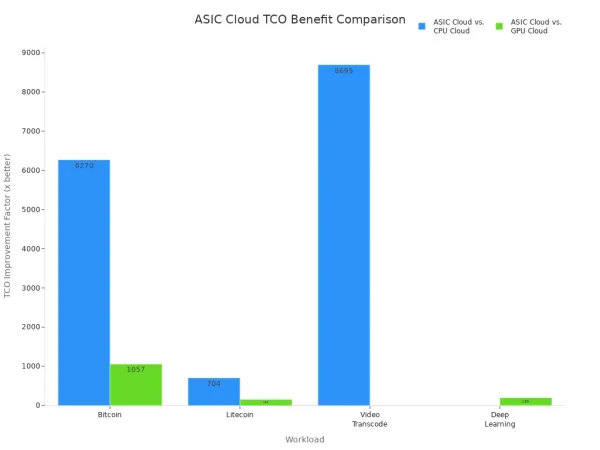
Choosing your video analytics hardware is an economic decision. An ROI calculator helps you look beyond the initial price. For large-scale projects, specialized hardware delivers massive long-term savings. Research shows that ASICs, the technology behind HiSilicon, offer a far better Total Cost of Ownership (TCO) for tasks like video processing.
Your Next Step: Use an ROI framework for your own project. You can prove the powerful financial case for specialized hardware yourself.
FAQ
### How does an ROI calculator prove HiSilicon's value?
An ROI calculator models your total project costs over time. It shows you how HiSilicon's lower power use and high density create significant savings. You see a clear financial return beyond the initial hardware price.
### Is the HiSilicon software ecosystem difficult to learn?
Your team may need time to learn HiSilicon's software stack. This initial effort is an investment.
- You gain access to highly optimized tools.
- You unlock maximum hardware efficiency.
- The long-term operational savings justify the initial learning period.
### Is HiSilicon only for large-scale projects?
No. HiSilicon offers excellent solutions for many project sizes. While it excels in large smart city deployments, its low-power edge devices are perfect for smaller, on-premise systems like retail analytics.
### Why is performance-per-watt so important?
Every watt of power costs you money for electricity and cooling. Better performance-per-watt means you process more video streams with less energy. This directly lowers your operational expenses every single day. 📉