SAK-XC2268N-40F80L AA Supply-Risk Assessment: Key Questions to Include in Your RFQ
Expert guide on SAK-XC2268N-40F80L AA Supply-Risk Assessment: Key Questions to Include in Your RFQ. Technical specs, applications, sourcing tips for engineers and buyers.
SAK-XC2268N-40F80L AA Supply-Risk Assessment: Key Questions to Include in Your RFQ
When a Discontinued MCU Still Drives Your BOM: The SAK-XC2268N-40F80L AA Situation
The SAK-XC2268N-40F80L AA is not a chip you can simply pull from a distributor’s shelf anymore. Infineon first flagged the discontinuation of this 16‑bit XC2200‑family microcontroller in a 2018 product change notice, and the part reappeared on a confirmed discontinued list in September 2022. Despite this double notification, the device still appears in legacy automotive body controllers, industrial sensor interfaces, and HVAC actuator modules where field‑proven qualification makes a redesign expensive and time‑consuming. That mismatch between a dead part and a living bill of materials turns every sourcing inquiry for the SAK-XC2268N-40F80L AA into a supply‑risk event.
The dual notification timeline is critical: the 2018 Information Note N° 057/18 introduced the SAK‑XC2268N‑40F80L AB and SAK‑XC2268N‑40F80LR AB as direct replacements, while the 2022 Information Note N° 069/22 removed the AA variant from the product list entirely. Both documents confirm that the core silicon is identical, but the package designator and ordering code have changed—differences that can silently break a PCB footprint or make a batch of components unreflowable if you don’t ask the right questions before you buy.
When you issue an RFQ for the SAK-XC2268N-40F80L AA today, you are not just comparing unit prices. You are confronting a market populated by a mix of factory‑sealed new‑old‑stock (NOS), reclaimed devices from scrapped assemblies, and outright counterfeits. The following sections arm you with the technical detail and the RFQ questions that will expose whether a batch of AA‑marked parts is a safe bridge buy or a latent reliability threat.
Reading the Datasheet Through a Supply-Risk Lens: Key Parameters and Lifecycle Clues
Before you approach the open market, you need to understand exactly what the SAK-XC2268N-40F80L AA is—and what it is not. The XC2268N is a member of Infineon’s C166SV2‑based XC2200 family, combining a 40 MHz C166SV2 core with 80 KB of embedded Flash and 8 KB of RAM. The original AA variant shipped in a PG‑LQFP‑100‑8 package, a 100‑lead low‑profile quad flat pack with a 0.5 mm pitch and a body size of 14 mm × 14 mm. The device includes a rich set of on‑chip peripherals—two CAN nodes, up to 16 ADC channels, multiple capture/compare units, and a real‑time clock—that made it a solid choice for distributed control nodes in harsh environments.
From a supply‑risk perspective, the package suffix is the most important number on the datasheet. The PG‑LQFP‑100‑8 and the later PG‑LQFP‑100‑15 differ in lead frame plating and stand‑off height, details that affect solder joint reliability and moisture sensitivity level (MSL). The table below maps the three ordering codes directly referenced in Infineon’s own documentation, pulling together the parameters that determine whether a substitute can be placed on your existing board without re‑qualification.
| Parameter | SAK‑XC2268N‑40F80L AA (Obsolete) | SAK‑XC2268N‑40F80L AB (Active) | SAK‑XC2268N‑40F80LR AB (Active) |
|---|---|---|---|
| Core / Max Frequency | C166SV2, 40 MHz | C166SV2, 40 MHz | C166SV2, 40 MHz |
| Flash / RAM | 80 KB / 8 KB | 80 KB / 8 KB | 80 KB / 8 KB |
| Package (JEDEC outline) | PG‑LQFP‑100‑8 | PG‑LQFP‑100‑8 | PG‑LQFP‑100‑15 |
| Ordering Code (SP Number) | SP000720866 | SP001679840 | SP001115324 |
| Lifecycle Status | Discontinued (2018/2022) | Active | Active |
| Sourcing Channel | Open market only | Authorized distribution / LCSC | Authorized distribution / JLCPCB stock |
| Footprint Risk | Baseline | Identical to AA | Requires verification (‑15 version) |
Tip: The AB variant carries the same PG‑LQFP‑100‑8 package code as the original AA, so it is the closest electrical and mechanical match. The LR AB variant, listed at LCSC and JLCPCB as a standard‑assembly part, lands inside a PG‑LQFP‑100‑15 package. While the pinout is functionally identical, the different plating and stand‑off height can shift the solder paste window and MSL rating. Never assume a drop‑in; always cross‑check the package outline drawing from the Datasheet Archive against your PCB library before committing to a reflow batch.
Mapping the Infineon XC2200 Family: Drop-in and Near-Drop-in Alternatives
Infineon’s discontinuation notice explicitly lists alternative sales names, but the document does not distinguish between pin‑compatible replacements and devices that merely share the same functional block. If you are maintaining a legacy design, your first choice is to move to the active AB or LR AB variants of the XC2268N. Where those are unavailable or lead times are unacceptable, you may need to evaluate functionally similar parts from the same XC2200 family—each with its own memory map, peripheral set, and market status.
The table below places the SAK-XC2268N-40F80L AA alongside the manufacturer‑recommended successors and three other 16‑bit XC2200 devices that appear in the aftermarket. The “Sourcing Risk” column is a qualitative assessment based on the part’s lifecycle and observed open‑market activity, not a guarantee of availability.
| Part Number | Flash (KB) | RAM (KB) | Package | Lifecycle Status | Key Difference vs. AA | Sourcing Risk |
|---|---|---|---|---|---|---|
| SAK-XC2268N-40F80L AA | 80 | 8 | PG‑LQFP‑100‑8 | Discontinued | Baseline | High – open market only |
| SAK‑XC2268N‑40F80L AB | 80 | 8 | PG‑LQFP‑100‑8 | Active | Same package, different SP code | Low – authorized channels |
| SAK‑XC2268N‑40F80LR AB | 80 | 8 | PG‑LQFP‑100‑15 | Active | Package variant; check footprint | Low‑Medium |
| SAK‑XC2265N‑40F80L AA | 80 | 8 | PG‑LQFP‑100‑8 | Discontinued (069/22) | Reduced peripheral set (fewer CAN nodes) | High – open market, Alibaba listings (example) |
| SAK‑XC2267M‑104F80L AB | 104 | 8 | LQFP‑100 | Active (selected distributors) | Higher Flash, different speed grade | Medium – limited distribution (ariat‑tech) |
| SAK‑XC2238N‑40F80L AA | 80 | 8 | PG‑LQFP‑100‑8 | Discontinued (DigiPart listing) | Simpler timer unit, no second CAN | High – flagged as discontinued |
The SAK‑XC2265N‑40F80L AA and SAK‑XC2238N‑40F80L AA are both discontinued, so they do not solve the underlying supply problem. They appear here because they are sometimes offered as “equivalent” by brokers who do not understand the peripheral differences. The SAK‑XC2267M‑104F80L AB, while active, carries a different Flash size and potentially a different maximum operating frequency; a firmware re‑compile and timing validation are mandatory. Always return to the manufacturer’s discontinuation notice as the authoritative source for recommended replacements, and cross‑reference any open‑market offer against the original ordering code to avoid rebadged parts.
The RFQ Playbook: Questions That Expose Real Supply Risk for Discontinued MCUs
When the SAK-XC2268N-40F80L AA appears on your BOM, a standard RFQ template that asks only for unit price and delivery date is not enough. The part is no longer manufactured, so every batch you evaluate is either genuine NOS, a factory‑programmed AB variant incorrectly labeled, or a counterfeit. Embedding the following questions in your RFQ gives you the data you need to decide whether to accept a lot, quarantine it, or escalate to a full redesign.
| RFQ Question | Why It Matters | What a Trustworthy Supplier Should Provide |
|---|---|---|
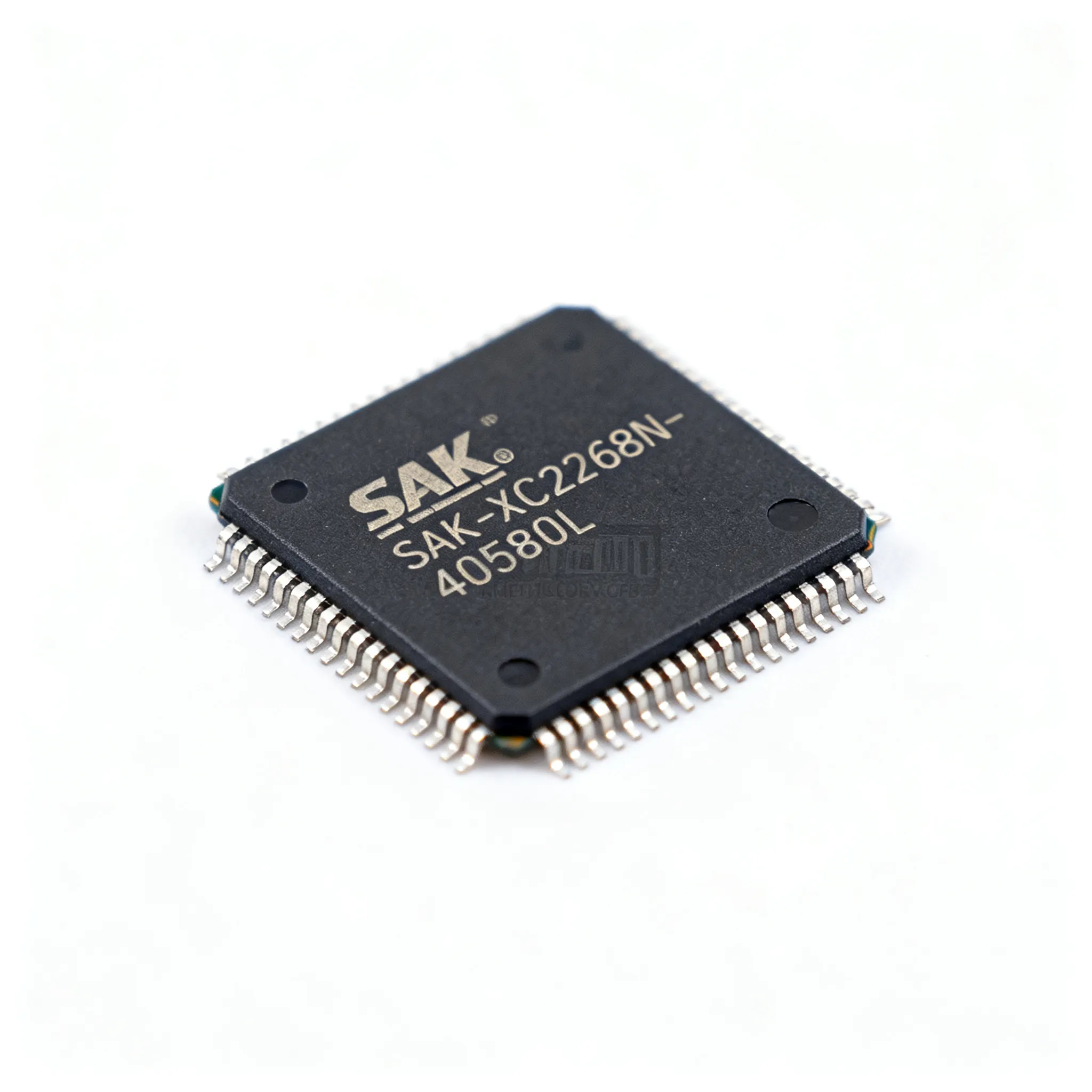
| 1. “What is the exact date code and lot code on the physical devices you are offering?” | Date codes older than 2018 are consistent with pre‑EOL production; post‑2022 codes indicate a counterfeit or remarking risk. | High‑resolution photos of the top‑side marking, including the Infineon logo, lot code, and date code quadrants. |
| 2. “Can you provide a photograph of the original Infineon moisture‑barrier bag and inner box label with the SP number?” | Original packaging is the strongest evidence of factory‑sealed NOS. Missing or damaged labels are a red flag for re‑bagged parts. | Image of the MSL label, bag seal, and the SP000720866 ordering code on the carton. |
| 3. “Are you an authorized Infineon distributor for this part, or are you sourcing from the open market?” | Authorized distribution is no longer available for the AA variant, so any claim of “authorized” status must be treated with extreme skepticism. | Written confirmation of the supply chain pedigree, and if the source is a broker, the name of the original OEM or CEM that de‑stocked the parts. |
| 4. “What is the moisture sensitivity level (MSL) of this batch, and has the dry‑pack seal been broken?” | An LQFP‑100 package with a compromised moisture barrier can suffer popcorning during reflow, even if the part passes electrical test at room temperature. | MSL rating per the original label, and a statement that the bag has remained sealed or, if opened, the parts have been baked per J‑STD‑033. |
| 5. “Will you allow a sample conformity test of 5–10 pieces before we accept the full lot?” | A small sample allows you to run X‑ray inspection, decapsulation, and electrical verification against a known‑good AA or AB reference. | A no‑cost or low‑cost sample lot shipped with the same traceability paperwork as the full quantity. |
| 6. “What is your warranty and return policy for non‑conforming or counterfeit devices?” | A supplier that refuses to stand behind authenticity is not worth the risk, regardless of price. | A written guarantee covering full refund, including rework and line‑down costs, if the parts are later proven counterfeit. |
Beyond these six questions, your RFQ should also request a formal statement of the supply chain continuity. If you are buying from a source that holds stock listed at LCSC or similar platforms, ask whether the same lot can be reserved for a follow‑on order. Many open‑market batches are one‑time opportunities; if you cannot secure a second purchase, you may be forced into a redesign sooner than your product roadmap allows. Finally, whenever you receive a batch of SAK-XC2268N-40F80L AA parts, budget for a third‑party lab to perform a sample decapsulation and compare the die markings against a known XC2268N die. This is the only way to catch a re‑marked XC2265N or a completely unrelated chip that has been laser‑engraved with the Infineon logo.
FAQs: SAK-XC2268N-40F80L AA Sourcing and Risk Mitigation
Q: What is the official replacement for the SAK-XC2268N-40F80L AA?
Infineon’s discontinuation notices point to the SAK‑XC2268N‑40F80L AB and the SAK‑XC2268N‑40F80LR AB. The AB variant uses the same PG‑LQFP‑100‑8 package, so it is mechanically identical to the AA. The LR AB variant uses a PG‑LQFP‑100‑15 package, which has a different lead‑frame finish and stand‑off height. Both are functionally equivalent but must be verified against your hardware revision, especially if your board was laid out for the original AA footprint.
Q: Is the SAK-XC2268N-40F80LR AB pin-compatible with the AA version?
The LR AB variant comes in a PG‑LQFP‑100‑15 package, which differs from the AA’s PG‑LQFP‑100‑8. While the pinout is largely compatible, the package footprint may require a PCB layout change. The Datasheet Archive and the JLCPCB part detail show footprint differences that can affect solder fillet geometry. Always check the latest Infineon datasheet and any PCN addenda before substituting.
Q: How can I verify the authenticity of a discontinued part like the SAK-XC2268N-40F80L AA?
Ask for high‑resolution photos of the lot code and date code, request Infineon’s original label and packing slip, and where possible cross‑reference the traceability code with the distributor. Independent test labs can perform X‑ray and decapsulation analysis on samples. For known NOS stock, insist on dry‑pack verification and MSL compliance. A batch that fails any of these checks should be rejected, even if the unit price is attractive.
Q: What are the risks of buying from open market sources like Alibaba for this part?
The main risks include counterfeit or rebadged devices, improper storage causing moisture damage, no traceability, and no warranty. Alibaba listings for the SAK‑XC2265N‑40F80L show the range of unverified stock—some may be genuine NOS, but others may be re‑marked scrap. Always validate suppliers through third‑party inspection and request a small sample lot before committing to volume. The price advantage rarely compensates for a field failure in a safety‑related ECU.
Q: Should I redesign to a newer Infineon MCU instead of trying to source the obsolete AA variant?
If your production volume is high and lifecycle is long, a redesign to an active XC2200 series part (or a newer XMC or Aurix family) is the safest route. The AB and LR AB variants are active, but if your design can tolerate a mid‑life update, moving to a device with active supply commitment eliminates the recurring risk of chasing discontinued stock. A redesign also gives you the opportunity to capture cost savings from a more modern process node and improved peripheral integration.
References & Further Reading
- Infineon Information Note N° 057/18 – Discontinuation and replacement introduction
- Infineon Information Note N° 069/22 – Confirmed discontinued products list
- LCSC: SAK‑XC2268N‑40F80LR AB pricing and stock
- JLCPCB: SAK‑XC2268N‑40F80LR AB footprint and assembly data
- Datasheet Archive: SAKXC series datasheets and package outlines
- Ariat‑Tech: SAK‑XC2267M‑104F80L AB stock and datasheet
- DigiPart: SAK‑XC2238N‑40F80L AA distributor listings
- Alibaba: SAK‑XC2265N‑40F80L open‑market offers
Conclusion & Next Step
The SAK-XC2268N-40F80L AA is a textbook example of a part that lives on in BOMs long after the factory has stopped shipping it. Every purchase is a risk‑management exercise, not a simple transaction. By understanding the package suffix differences, cross‑referencing the official replacement path, and embedding the six RFQ questions above into your sourcing process, you can separate genuine traceable NOS from the thousands of questionable devices circulating on the open market. When in doubt, redirect your engineering effort toward the active AB or LR AB variants, or use the supply‑risk event as the trigger for a controlled migration to a newer Infineon platform.
Ready to source the SAK-XC2268N-40F80L AA or its active replacements? Upload your BOM to IC‑Online and request a consolidated quote. Our team will help you navigate mixed‑lifecycle bills of materials, verify supplier traceability, and structure RFQs that protect your production line from counterfeit and moisture‑damaged components.