Selecting the Right MOSFET: Key Considerations for Your Next Project
Selecting the Right MOSFET: Key Considerations for Your Next Project table { border-collapse: collapse; width: 100%; } th, td { border:
Introduction
In the rapidly evolving world of electronics, selecting the right MOSFET (Metal-Oxide-Semiconductor Field-Effect Transistor) is critical for the success of your project. With the semiconductor industry projected to reach $595.2 billion by 2026, the demand for efficient and reliable MOSFETs continues to grow. MOSFETs play a vital role in power management, switching applications, and amplification, making them indispensable in modern electronics design. Understanding the specifications, datasheets, and application circuits is crucial to ensure optimal performance and reliability in your designs.
Technical Overview
MOSFETs are semiconductor devices used to amplify or switch electronic signals. They are a core component in many electronic circuits due to their high efficiency and fast switching capabilities. A MOSFET consists of three terminals: the gate, drain, and source. The voltage applied to the gate controls the current flow between the drain and source, allowing for precise control of electronic signals.
There are two main types of MOSFETs: N-channel and P-channel. N-channel MOSFETs are generally preferred for their higher electron mobility, resulting in lower on-resistance and higher current capacity. P-channel MOSFETs, on the other hand, are used in high-side switching applications where the source is connected to a positive voltage. Choosing the right type depends on your specific application needs.
Key parameters to consider when selecting a MOSFET include drain-source voltage (VDS), threshold voltage (VGS(th)), on-resistance (RDS(on)), and maximum current capacity (ID). These specifications determine the MOSFET's suitability for your application and are essential for ensuring efficient and reliable operation.
Detailed Specifications
| Parameter | Value | Units | Notes |
|---|---|---|---|
| Drain-Source Voltage (VDS) | 60 | V | Maximum voltage between drain and source |
| Gate-Source Voltage (VGS) | ±20 | V | Maximum voltage between gate and source |
| Continuous Drain Current (ID) | 30 | A | Maximum current through the drain |
| Threshold Voltage (VGS(th)) | 2.5 | V | Minimum gate-source voltage to turn on the MOSFET |
| On-Resistance (RDS(on)) | 15 | mΩ | Resistance between drain and source when MOSFET is on |
| Gate Charge (QG) | 45 | nC | Total charge required to turn on the MOSFET |
| Input Capacitance (Ciss) | 1200 | pF | Capacitance between gate and source |
| Reverse Transfer Capacitance (Crss) | 50 | pF | Capacitance between drain and gate |
| Output Capacitance (Coss) | 300 | pF | Capacitance between drain and source |
| Maximum Power Dissipation (PD) | 100 | W | Maximum allowable power dissipation |
The electrical specifications of a MOSFET provide crucial information for selecting the right component for your design. Parameters like the drain-source voltage and continuous drain current determine the voltage and current handling capabilities of the MOSFET, which are vital for ensuring it can handle the demands of your application. The threshold voltage and on-resistance affect the efficiency and switching speed, impacting the overall performance of your circuit.
| Parameter | Value | Units | Notes |
|---|---|---|---|
| Junction-to-Case Thermal Resistance (RθJC) | 0.5 | °C/W | Thermal resistance from junction to case |
| Junction-to-Ambient Thermal Resistance (RθJA) | 50 | °C/W | Thermal resistance from junction to ambient |
| Maximum Junction Temperature (TJ) | 150 | °C | Maximum operating temperature of the junction |
| Storage Temperature Range (TSTG) | -55 to 175 | °C | Temperature range for safe storage |
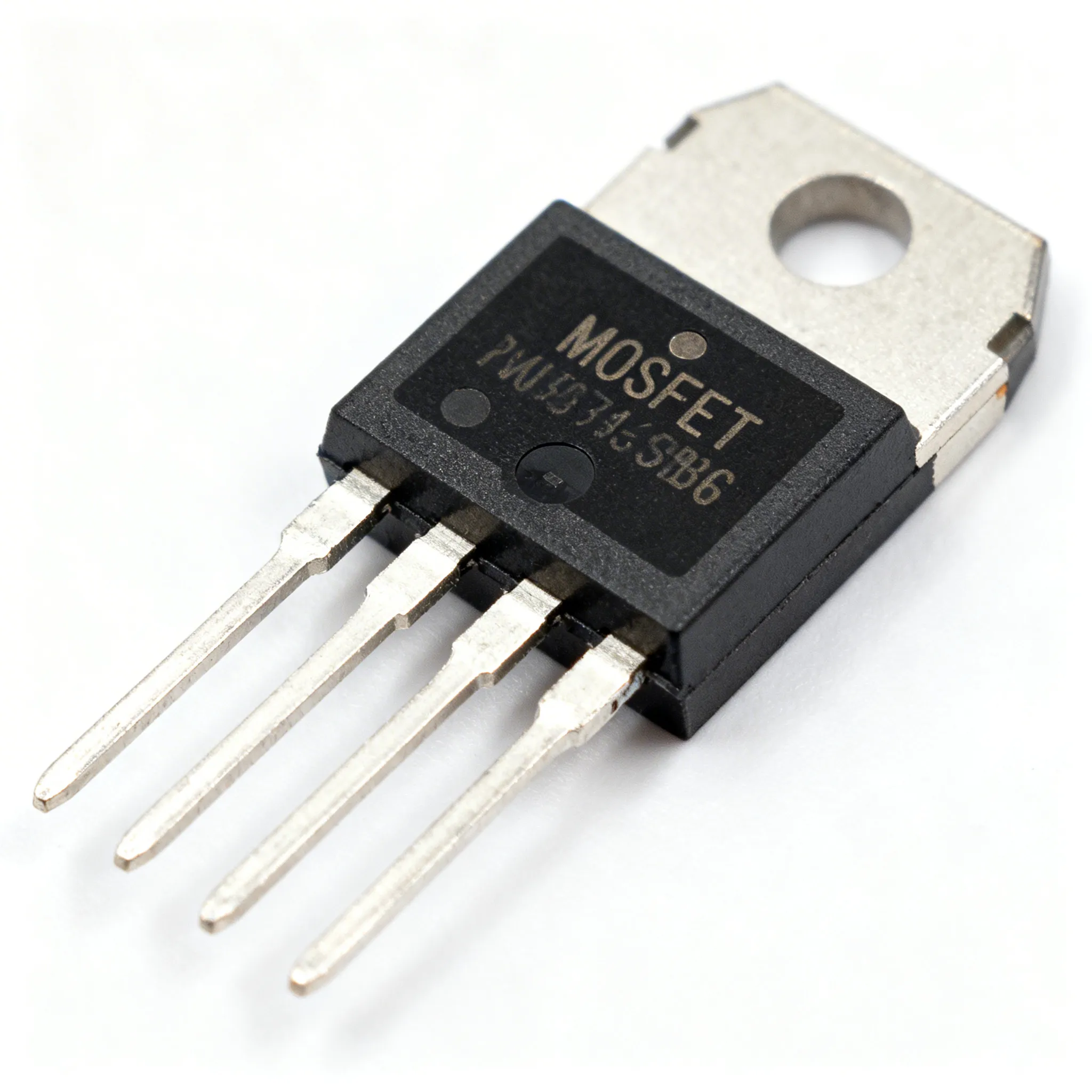
| Package Type | TO-220 | - | Industry standard package |
| Mounting Type | Through Hole | - | Method of mounting the component |
| Lead Count | 3 | - | Number of leads on the package |
| Weight | 2.1 | g | Weight of the component |
Thermal and mechanical specifications are critical for ensuring the MOSFET can operate reliably under varying environmental conditions. The thermal resistance values (RθJC and RθJA) indicate how effectively the MOSFET can dissipate heat, which is crucial for preventing thermal runaway and ensuring long-term reliability. Package type, mounting method, and lead count are essential for ensuring compatibility with your circuit board design and assembly process.
| Application | Recommended MOSFET | Notes |
|---|---|---|
| Switching Power Supply | IRF3205 | High current capacity and low on-resistance |
| Motor Control | IRLZ44N | Optimized for fast switching and low losses |
| DC-DC Converter | IRF530 | Efficient for boost and buck converters |
| Audio Amplifier | IRF540 | Low distortion and high fidelity |
| LED Driver | IRF9540N | Suitable for high-side switching |
Choosing the right MOSFET for your specific application is essential for achieving optimal performance. For example, the IRF3205 is ideal for switching power supplies due to its high current capacity and low on-resistance. In motor control applications, the IRLZ44N offers fast switching and low losses, making it an excellent choice. Understanding the application-specific requirements will help you select the most suitable MOSFET.
Design Considerations
When designing a circuit with MOSFETs, several practical guidelines should be considered to ensure optimal performance and reliability. First, always consider the thermal management of the MOSFET. Effective heat dissipation is critical, especially in high-power applications. Use heat sinks or active cooling methods to maintain the MOSFET's temperature within the specified limits.
Secondly, gate driving is an essential aspect of MOSFET operation. Ensure that the gate driver circuit can provide sufficient voltage and current to turn the MOSFET on and off rapidly. This minimizes switching losses and improves efficiency. In high-frequency applications, consider using a dedicated gate driver IC to achieve the best performance.
Another important consideration is the layout of the PCB. Minimize the length of the traces connecting the MOSFET to reduce parasitic inductance and resistance, which can lead to increased switching losses and EMI (Electromagnetic Interference). Proper layout techniques help achieve stable and efficient operation.
Additionally, consider the MOSFET's safe operating area (SOA). The SOA defines the limits of voltage and current that the MOSFET can handle without damage. Ensure that your design stays within these limits, particularly during transient conditions such as startup or shutdown.
Finally, consider the reliability and availability of the MOSFET. Choose components from reputable manufacturers with a proven track record of reliability. Check for availability and lead times to avoid potential supply chain disruptions.
Step-by-Step Guide
- Define the Application Requirements: Start by identifying the specific requirements of your application, including voltage, current, switching frequency, and environmental conditions. This will help you narrow down the selection of suitable MOSFETs.
- Review Datasheets: Examine the datasheets of potential MOSFET candidates. Pay close attention to key specifications such as VDS, ID, RDS(on), and VGS(th). Ensure that the MOSFET meets or exceeds your application's requirements.
- Consider Thermal Management: Evaluate the thermal performance of the MOSFET. Calculate the power dissipation and ensure that the chosen MOSFET can handle the thermal load. Implement appropriate cooling solutions if necessary.
- Design the Gate Drive Circuit: Design a gate drive circuit that provides the necessary voltage and current to switch the MOSFET efficiently. Consider using a gate driver IC for high-frequency applications.
- Simulate the Circuit: Use simulation software to model the MOSFET's behavior in your circuit. Simulations can help identify potential issues and optimize the design before physical implementation.
- Prototype and Test: Build a prototype of your circuit and conduct thorough testing. Verify that the MOSFET operates within the specified limits and meets the performance requirements.
- Optimize the Design: Based on testing results, make any necessary adjustments to improve performance, efficiency, and reliability. This may involve tweaking component values or layout changes.
- Document the Design: Create comprehensive documentation of your design, including schematics, layout files, and test results. This documentation will be valuable for future reference and troubleshooting.
Common Issues & Solutions
- Overheating: If the MOSFET overheats, ensure proper thermal management by using heat sinks or active cooling. Check for adequate airflow and consider reducing the power dissipation.
- Switching Losses: To minimize switching losses, optimize the gate drive circuit for faster switching. Consider using a gate driver IC to achieve better performance.
- Electromagnetic Interference (EMI): EMI can be mitigated by improving the PCB layout. Minimize trace lengths and use proper grounding techniques to reduce radiated emissions.
- Gate Voltage Spikes: Voltage spikes can damage the MOSFET's gate. Use gate resistors and snubber circuits to dampen voltage transients and protect the gate.
- Component Failure: Choose MOSFETs from reputable manufacturers and ensure they are rated for the application's voltage and current levels. Verify component ratings in the datasheet.
Applications & Use Cases
MOSFETs find applications in a wide range of industries, from consumer electronics to industrial automation. In the automotive sector, they are used in electric vehicle powertrains, enabling efficient energy conversion and motor control. In renewable energy systems, MOSFETs are integral to inverters and power converters, ensuring efficient energy transfer from solar panels to the grid.
In the consumer electronics market, MOSFETs are used in power adapters, battery chargers, and audio amplifiers, providing efficient power management and high-quality sound reproduction. Industrial applications include motor drives, robotics, and power supplies, where MOSFETs offer reliable and efficient operation in demanding environments.
Selection & Sourcing Guide
Selecting the right MOSFET involves careful consideration of the application's requirements and the component's specifications. Once you have identified the suitable MOSFET, sourcing it from a reliable distributor is crucial to ensure quality and availability. Visit IC Online to explore a wide range of MOSFETs from leading manufacturers, offering competitive pricing and fast delivery.
FAQ
- What is the difference between N-channel and P-channel MOSFETs? N-channel MOSFETs have higher electron mobility, offering lower on-resistance and higher current capacity. P-channel MOSFETs are used in high-side switching applications.
- How do I calculate the power dissipation of a MOSFET? Power dissipation can be calculated using the formula PD = ID² × RDS(on) + VDS × ID during switching.
- What is the safe operating area (SOA) of a MOSFET? The SOA defines the limits of voltage and current that the MOSFET can handle without damage. It is specified in the datasheet and should be adhered to during operation.
- Why is gate drive important in MOSFET applications? The gate drive circuit provides the necessary voltage and current to switch the MOSFET efficiently, minimizing switching losses and improving overall performance.
- How can I reduce EMI in my MOSFET circuit? EMI can be reduced by optimizing the PCB layout, minimizing trace lengths, and using proper grounding techniques to reduce radiated emissions.
- What is the role of a gate resistor in a MOSFET circuit? A gate resistor limits the inrush current to the gate, reducing the risk of voltage spikes and protecting the MOSFET from damage.
- Can MOSFETs be used in audio amplifier applications