Selecting the Right Opto-isolator: A Guide to Choosing Between Vishay's ILQ-036 and ILQ-052 for Your Circuit Design
Expert guide on Selecting the Right Opto-isolator: A Guide to Choosing Between Vishay's ILQ-036 and ILQ-052 for Your Circuit Design. Technical specs, applications, sourcing tips for engineers and buyers.
Introduction
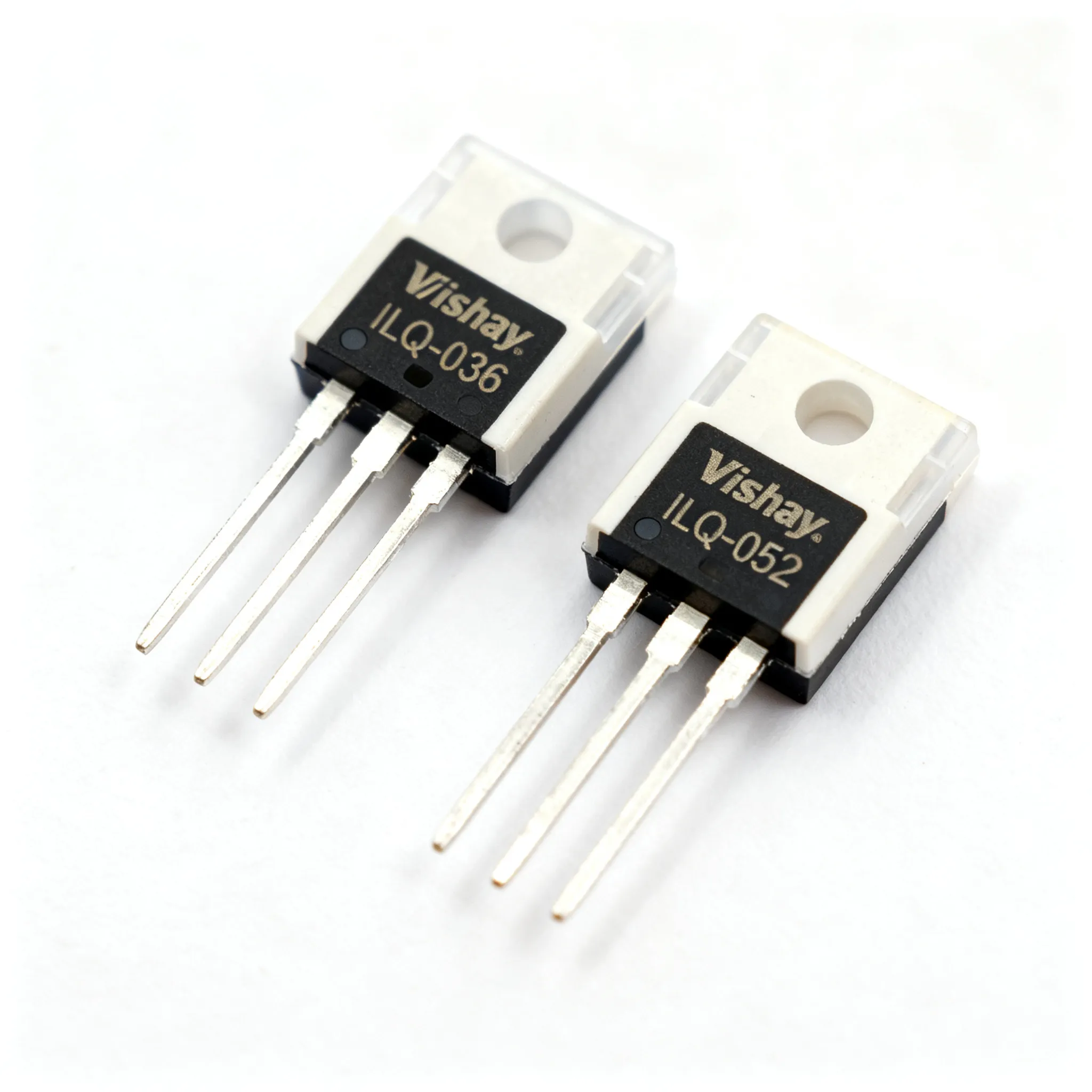
In the rapidly evolving world of electronics, ensuring the reliability and performance of circuit designs is paramount. Opto-isolators, crucial components in managing electrical isolation and signal integrity, are indispensable in many applications. Two popular models in the market are Vishay's ILQ-036 and ILQ-052. This guide aims to assist engineers in selecting the right opto-isolator for their designs, balancing performance with cost-effectiveness. As the semiconductor industry continues to grow, with revenues projected to reach $595.2 billion by 2026, the importance of making informed component choices cannot be overstated. This article will provide a comprehensive overview of these opto-isolators, including technical specifications, design considerations, and sourcing tips.
Technical Overview
Opto-isolators, also known as optocouplers, are components that use light to transfer electrical signals between two isolated circuits. This isolation is crucial in preventing high voltages from affecting the system receiving the signal. Vishay's ILQ-036 and ILQ-052 are both multi-channel opto-isolators that offer robust performance in a variety of applications. The ILQ-036 is known for its high speed and low power consumption, making it ideal for high-performance digital circuits. In contrast, the ILQ-052 offers enhanced isolation voltage and current transfer ratio (CTR), making it suitable for applications requiring higher isolation levels. Understanding these core principles is essential for ensuring optimal performance and reliability in your designs.
Detailed Specifications
| Parameter | ILQ-036 | ILQ-052 | Units | Notes |
|---|---|---|---|---|
| Channels | 4 | 4 | Count | Number of opto-isolator channels |
| Isolation Voltage | 2500 | 5000 | V | Higher for ILQ-052 |
| CTR (Current Transfer Ratio) | 50-600 | 100-400 | % | Varies with input current |
| Propagation Delay | 100 | 300 | ns | Delay time for signal transmission |
| Power Consumption | Low | Medium | - | Relative power usage |
| Operating Temperature | -40 to 100 | -40 to 85 | °C | Temperature range |
| Input Current | 10 | 20 | mA | Typical input current |
| Output Voltage | 5 | 5 | V | Maximum output voltage |
| Package Type | DIP | DIP | - | Dual In-line Package |
The above table compares the critical specifications of Vishay's ILQ-036 and ILQ-052 opto-isolators. It's evident that while both components share similarities, such as the number of channels and package type, they differ significantly in other parameters. The ILQ-036 excels in applications requiring high-speed signal transmission due to its lower propagation delay. Conversely, the ILQ-052 offers superior isolation voltage, making it suitable for high-voltage applications. Understanding these differences is crucial for selecting the right component for your specific needs.
Design Considerations
When designing a circuit that incorporates opto-isolators, several factors must be considered to ensure optimal performance. First, consider the isolation voltage requirements of your application. If your design involves high-voltage environments, the ILQ-052 with its 5000V isolation voltage may be more appropriate. Next, evaluate the speed requirements of your circuit. The ILQ-036 offers a faster propagation delay, making it more suitable for high-speed data transmission applications.
Another crucial factor is the current transfer ratio (CTR). The ILQ-036 provides a broader CTR range, which can be advantageous in designs where input current variations are expected. Additionally, consider the power consumption of the opto-isolator. The ILQ-036 is designed for low power consumption, which is beneficial in battery-powered applications or designs where thermal management is a concern.
Temperature range is another important consideration. The ILQ-036 operates over a wider temperature range, making it more versatile in varying environmental conditions. Lastly, ensure that the package type fits your PCB layout. Both models are available in DIP packages, which are widely used for their ease of handling and mounting.
Step-by-Step Guide
Implementing an opto-isolator into your circuit design involves several steps:
- Identify Requirements: Determine the isolation voltage, speed, and current transfer ratio needed for your application.
- Select the Opto-isolator: Choose between ILQ-036 and ILQ-052 based on the identified requirements.
- Design the Circuit: Integrate the opto-isolator into your circuit schematic, ensuring proper placement and connections.
- Simulate the Design: Use simulation software to model the circuit and verify the performance of the opto-isolator.
- Prototype the Circuit: Assemble a physical prototype on a breadboard or PCB to test the design in real-world conditions.
- Test and Validate: Conduct thorough testing to validate the performance, checking parameters such as isolation voltage and signal transmission speed.
- Iterate and Optimize: Make necessary adjustments to optimize the design based on test results.
- Finalize the Design: Once validated, finalize the design for production, ensuring all specifications are met.
Common Issues & Solutions
| Issue | Solution |
|---|---|
| Signal Distortion | Ensure proper grounding and minimize signal path length to reduce noise. |
| Excessive Power Consumption | Use the ILQ-036 for lower power consumption in battery-operated devices. |
| Insufficient Isolation | Select the ILQ-052 for applications requiring higher isolation voltage. |
| High Propagation Delay | Choose the ILQ-036 for applications demanding faster signal transmission. |
| Temperature Constraints | Ensure the opto-isolator operates within specified temperature ranges. |
| Component Mismatch | Verify component specifications to ensure compatibility with the rest of the circuit. |
Several common issues can arise when using opto-isolators, but these can be mitigated with proper design and component selection. Signal distortion can often be resolved by ensuring proper grounding and minimizing signal path lengths. If power consumption is a concern, the ILQ-036 is preferable for its low power usage. Applications requiring higher isolation voltage should opt for the ILQ-052. Addressing these issues early in the design phase can prevent costly revisions later.
Applications & Use Cases
Opto-isolators like the ILQ-036 and ILQ-052 are used in a variety of applications across different industries. In industrial automation, they are employed to isolate control signals from high-voltage machinery, ensuring safety and reliability. In telecommunications, opto-isolators help prevent signal interference in data transmission. Their use in consumer electronics is also prevalent, where they protect sensitive components from power surges. The versatility of these components makes them valuable in any application requiring electrical isolation and signal integrity.
Selection & Sourcing Guide
When selecting and sourcing opto-isolators, it's crucial to consider both performance specifications and availability. For purchasing, visit IC Online, an authorized distributor offering competitive pricing and fast delivery. Ensure that the chosen component meets all design criteria and is readily available to avoid delays in production.
FAQ
- What is the primary function of an opto-isolator? Opto-isolators provide electrical isolation between two circuits while allowing signal transfer via light.
- How do I choose between ILQ-036 and ILQ-052? Consider your application's isolation voltage, speed, and power requirements.
- Can opto-isolators be used in high-frequency applications? Yes, but it's important to choose a model with appropriate propagation delay and bandwidth.
- What are the packaging options for these opto-isolators? Both ILQ-036 and ILQ-052 are available in DIP packages.
- Are there any special handling requirements? Handle with care to avoid damage from static electricity and follow proper soldering techniques.
- What is the typical lifespan of an opto-isolator? Lifespan depends on operating conditions but generally exceeds 20 years in typical applications.
- Can I use these opto-isolators in extreme temperatures? The ILQ-036 has a wider operating temperature range, making it suitable for more extreme conditions.
- How do I test an opto-isolator in my circuit? Use an oscilloscope to check signal integrity and isolation voltage under load conditions.
- What should I do if I encounter signal distortion? Review grounding and signal path designs, and consider using shielded cables.
- Where can I purchase these components? Visit IC Online for purchasing options.
Conclusion
Selecting the right opto-isolator is critical to ensuring the success of your circuit design. By understanding the specifications and design considerations of Vishay's ILQ-036 and ILQ-052, you can make informed decisions that enhance the performance and reliability of your applications. Whether it's for industrial automation, telecommunications, or consumer electronics, these components offer the isolation and signal integrity needed in today's advanced electronic systems.