Sell Excess Electronic Components: Turn OEM Inventory into Revenue
Practical guide for buyers and engineers: Sell Excess Electronic Components: Turn OEM Inventory into Revenue. Sourcing, risk, and selection notes.
Why Surplus Component Stockpiles Are Growing — and Quietly Eroding Margins
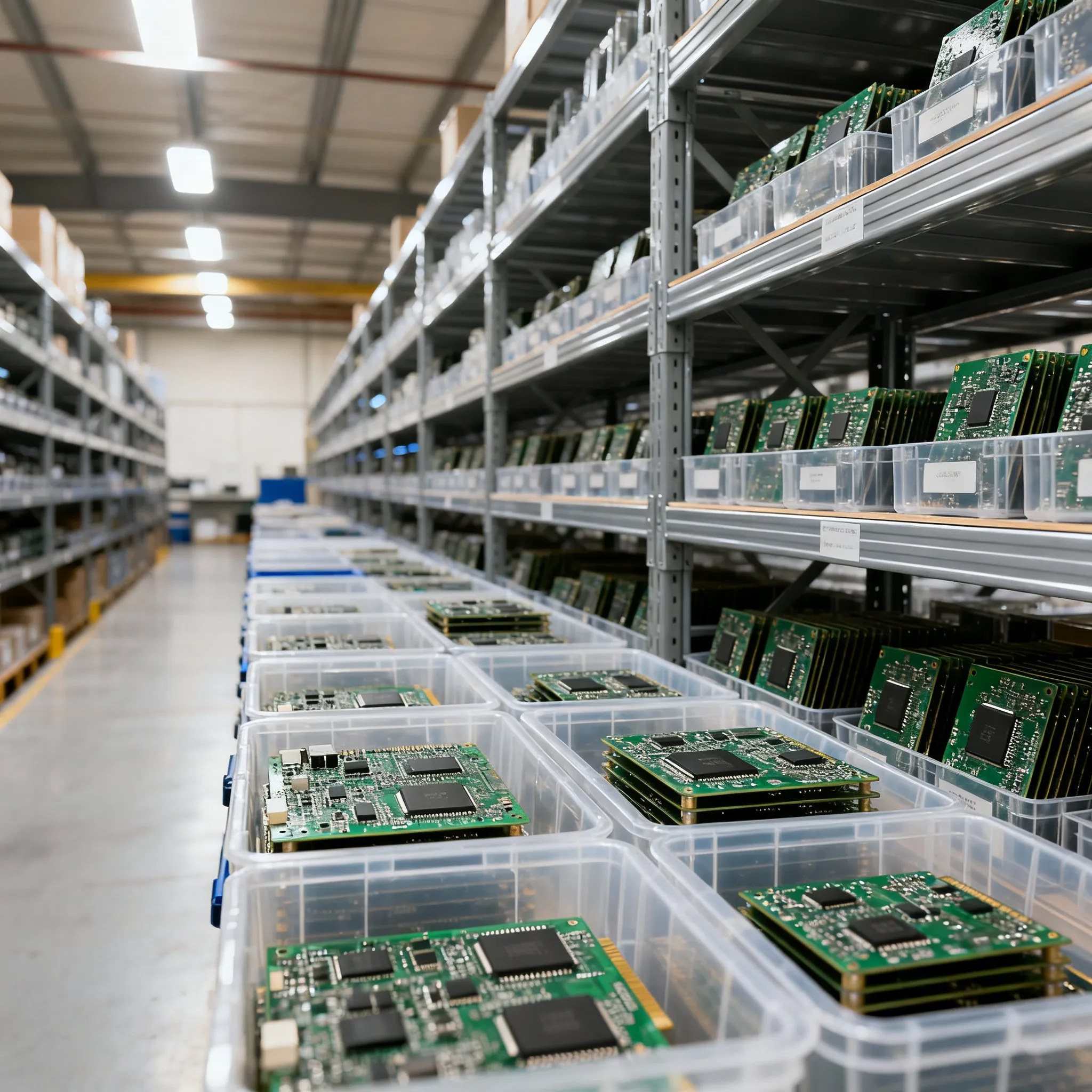
Warehouse space consumed by unopened reels of microcontrollers. Capital tied up in production overage that no BOM currently requires. Engineering change orders that orphaned an entire tray of FPGAs overnight. These scenarios aren't hypothetical—they're the reality facing OEM procurement teams who rode out the semiconductor supply crunch only to find themselves on the other side of a different problem entirely.
The semiconductor shortage that dominated headlines for nearly three years has given way to a landscape where excess inventory is the new margin killer. Sourceability observes that many OEMs have been left holding far too much supply now that semiconductor stock levels are stabilizing. What was once a defensive buffer against unpredictable allocation has become a balance-sheet liability. Amplio puts it bluntly: pandemic-era chip shortages have flipped into buildups of excess inventory—and they flipped fast.
The carrying costs are rarely calculated in full. Beyond the obvious—square footage, insurance, handling—there's the less visible drain: components aging past their moisture-sensitive floor life, date codes drifting beyond customer-acceptable windows, and opportunity cost of capital that could fund new product development. A reel of 3,000 MCUs sitting on a shelf for 18 months isn't just idle; it's depreciating in marketability with every quarter.
Product safety recalls add another layer of volatility. The U.S. Consumer Product Safety Commission regularly issues electronics recalls that can strand entire production lots overnight. A single component-related recall can transform thousands of units of otherwise functional inventory into dead stock that must be carefully dispositioned—sold with proper disclosure, segregated from active production, or responsibly recycled. Without a disposition plan, these reels sit in limbo, consuming space and complicating inventory audits.
Rand Technology frames the solution clearly: convert surplus inventory into revenue through a verified buyer network before carrying costs erode whatever margin remains. Their excess inventory management programs demonstrate that proactive resale, reallocation, and strategic disposition turn idle assets into working capital. The alternative—waiting until the CFO demands a warehouse cleanup—almost always yields worse pricing, rushed decisions, and higher risk of disposal into uncontrolled secondary markets.
Key takeaway: Excess inventory isn't a warehousing problem. It's a cash-flow problem with a time-sensitive solution window. The longer components sit, the more value they lose to date-code aging, MSL exposure, and market shifts. A disciplined sell-side process—audit, segment, price, channel-match—recovers revenue that would otherwise evaporate.
From Pallet to Payout: How to Prepare and Price Your Excess Inventory
Turning idle stock into recovered revenue starts long before you contact a buyer. Buyers of excess electronic components—whether independent brokers, marketplace participants, or OEMs seeking allocation relief—assess value based almost entirely on the documentation package you provide. Incomplete data means steeper discounts, longer negotiation cycles, or outright rejection of otherwise sellable material.
Vyrian emphasizes that listing components with a distributor who handles excess inventory buyers requires preparation: industry certifications such as ISO 9001 and AS9120 signal to buyers that your material has been handled under documented quality management processes. Suntsu Electronics reinforces this, noting that comprehensive data collection—product specifications, detailed component descriptions, photographs, and provenance—directly influences the recovery rate you can command. The depth of your audit determines the strength of your negotiating position.
Tip: Before cataloging anything, establish traceability boundaries. Know which reels have full chain-of-custody documentation (original manufacturer COC, distributor packing slips, incoming inspection records) and which were acquired through non-authorized channels. Buyers will ask; the answer affects pricing.
The audit itself should capture, at minimum: manufacturer part number (MPN), quantity, date code, lot code, packaging type (tape-and-reel, tray, tube), moisture sensitivity level (MSL), and storage conditions since receipt. For high-value or EOL components, include original purchase documentation, test reports no older than 90 days, and photographs showing reel labels and packaging integrity. A well-prepared lot sells faster and at a higher multiple than an undocumented mystery pallet.
Component Segmentation: Matching Documentation Depth to Recovery Potential
Not all excess deserves the same level of preparation effort. Segmenting your inventory by type, condition, and market demand lets you allocate resources where they'll yield the greatest return. The table below provides a practical framework for classifying components before pricing discussions begin.
| Component Category | Typical Condition | Market Demand Signal | Documentation Required | Approximate Recovery Rate (vs. Book Value) |
|---|---|---|---|---|
| New / Unused, Factory-Sealed | Original packaging intact, MSL preserved, date code <2 years | High—active MPNs in current BOMs | COC, incoming inspection records, photos of sealed packaging | 50–85% |
| Production Overage, Opened but Verified | Partial reels, trays opened for sampling, stored in controlled environment | Moderate—depends on date code and MPN activity | COC, test report (<90 days), bake certificate if MSL exposed, reel photos | 35–65% |
| End-of-Life (EOL) / NRND | Varies; may be factory-sealed or surplus | Niche—maintenance and repair buyers, long-lifecycle OEMs | EOL notice from manufacturer, full traceability, COC, obsolescence declaration | 20–50% (can spike for scarce EOL MPNs) |
| Recall-Affected or Non-Conforming | Identified via CPSC or manufacturer recall notice | Very low—restricted resale; requires full disclosure | Recall notice, non-conformance declaration, segregation certificate | 5–15% (or scrap value only) |
| Mixed / Unverified / No Traceability | Unknown origin, mixed date codes, no documentation | Minimal—high risk for buyers; often sold as "unverified" | As much as available; buyer assumes verification burden | 5–20% (commodity/scrap pricing) |
The recovery ranges above are approximate and depend heavily on MPN-specific market conditions. A scarce EOL microcontroller with a known last-time-buy date may fetch well above nominal book value; a common voltage regulator with active second sources will land at the lower end. Benchmark against authorized distributor pricing for the same or proximate date codes—but recognize that excess inventory rarely commands distributor-level pricing. Independent broker listings on platforms that aggregate global inventory provide a more realistic pricing anchor.
Pricing methodology matters. Start with current authorized distribution pricing for the MPN (or the closest functional equivalent if the original is EOL). Apply a discount curve that accounts for date-code aging (roughly 5–10% per year beyond 24 months), MSL exposure risk, lot size (larger homogeneous lots command premiums), and completeness of documentation. Tools that pull live stock levels from major distributors can help you understand whether you're selling into a supply-constrained or supply-flush market—information that shifts your asking price materially.
Brokerage, Marketplace, or Auction? Matching the Channel to Your Component Lot
Your choice of sales channel determines speed, price realization, risk exposure, and administrative burden. A tray of high-reliability FPGAs with full traceability deserves a different route than a mixed box of unverified passives. Amplio's channel evaluation framework weighs three dimensions—speed, price, and complexity—and recommends matching high-value lots to specialized electronic components buyers while routing lower-value or obsolete inventory to high-volume platforms or certified industrial liquidators.
Vyrian operates on the principle that surplus connects with buyers seeking specific parts through distributor-managed networks. CLOSO takes an automation-driven approach, using AI agents to match MPNs to live catalog data and push listings to platforms like eBay's Business & Industrial category and specialized forums—a method the company reports saves approximately three hours weekly in manual spec transcription for sellers managing large inventories.
The table below breaks down five common channels against criteria that matter when you're selling OEM excess.
| Channel | Recovery Speed | Typical Price Realization | Seller Effort | Counterfeit / Liability Risk | Best For |
|---|---|---|---|---|---|
| Independent Broker | Days to 2 weeks | Moderate to High (30–70% of book) | Low—broker handles listing and buyer vetting | Moderate—verify broker credentials (ERAI, AS9120) | Homogeneous lots, active MPNs, full documentation |
| Online Marketplace (eBay, specialized forums) | Weeks to months (depends on listing quality) | Moderate (20–60% of book) | High—self-listing, spec transcription, buyer communication | Higher—seller bears verification burden | Small lots, niche MPNs, hobbyist/repair demand |
| Direct OEM Sale | 2–8 weeks | High (40–80% of book) | Moderate—requires direct buyer relationship | Lower—known counterparty, direct negotiation | Volume lots of active MPNs to known end-users |
| Auction / Liquidation Platform | Days to weeks | Low to Moderate (10–40% of book) | Low—platform manages listing and settlement | Moderate—mixed buyer pool | Mixed or unverified lots, EOL inventory, quick-turn liquidation |
| Certified Recycling / Scrap | Immediate | Minimal (commodity value only) | Very low—pickup and disposition handled | Lowest—material destroyed, not resold | Non-conforming, recall-affected, or zero-demand components |
Channel selection isn't binary. Many OEMs run a hybrid approach: high-value, documented lots go to a vetted broker or direct OEM buyer; mid-tier inventory hits an automated marketplace listing tool; and scrap-grade material routes to certified recyclers with appropriate environmental certifications. The critical discipline is matching documentation depth to channel expectations—sending an unverified mixed lot to a broker who expects full traceability wastes everyone's time and damages your credibility for future transactions.
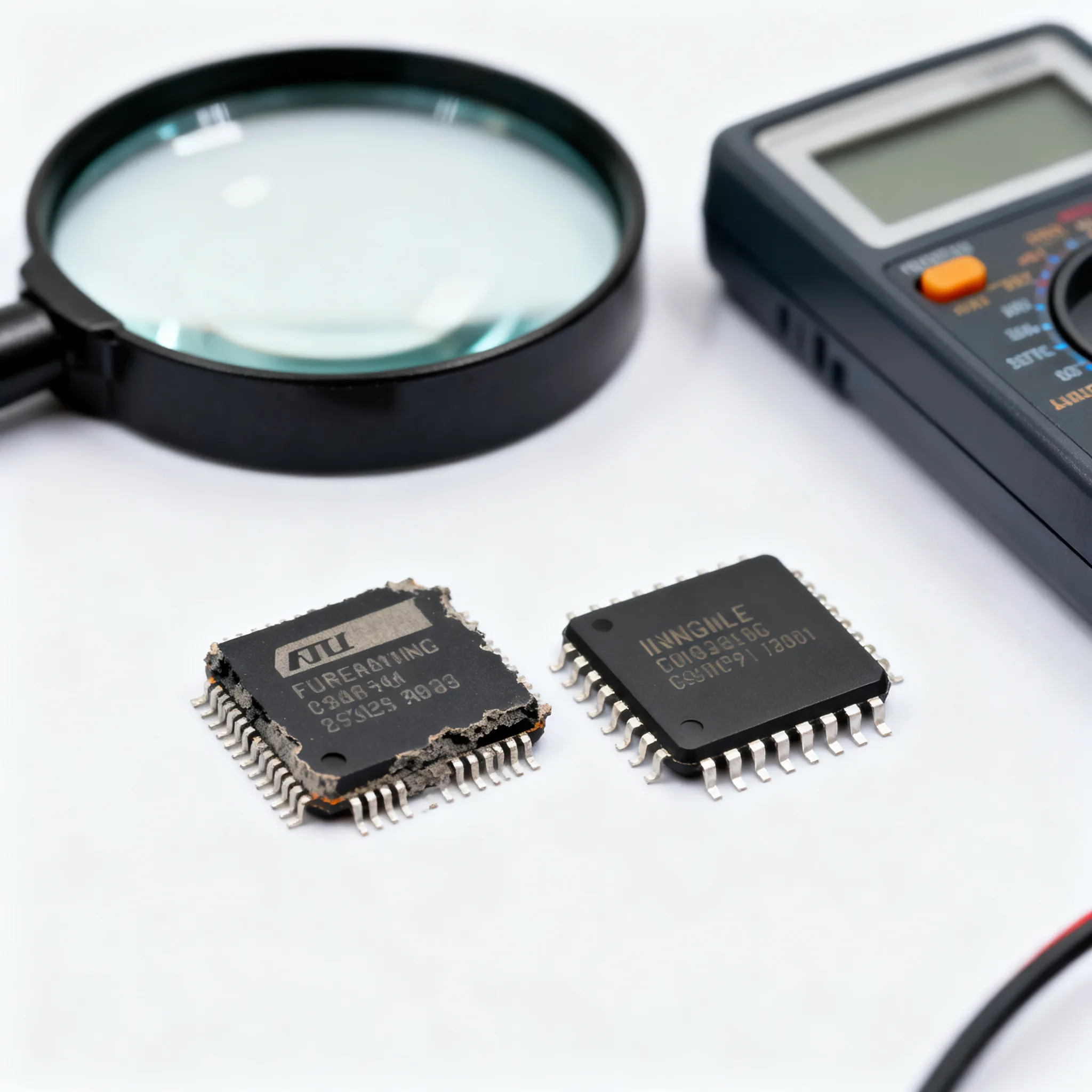
One caution: the independent broker market includes participants with widely varying quality practices. A buyer who can't produce a valid AS9120 certificate, ERAI membership verification, or recent OEM references should give you pause. The counterfeit electronics trade preys on poorly vetted excess inventory channels, and components sold through uncontrolled routes can reappear in the supply chain bearing your company's lot labels—a reputational risk that far outweighs any marginal price advantage from a less-scrupulous buyer.
Seven Checks to Safeguard Margins When Selling Surplus Semiconductors
Before you ship a single reel, due diligence on the buyer side protects both your revenue recovery and your company's supply-chain reputation. Rand Technology emphasizes a vetted buyer network with rigorous quality protocols as the foundation of responsible excess disposition. The seven checks below form a practical pre-shipment workflow that procurement teams can implement immediately—whether selling through a broker, marketplace, or direct channel.
- Verify buyer credentials against industry registries. Request the buyer's current ERAI membership, AS9120 or ISO 9001 certificate (verify the certificate number against the issuing registrar's database), and at least three references from recent OEM transactions. Cross-check the company name against industry watchlists and the CPSC recall database. A legitimate buyer will provide these without hesitation; hesitation is its own signal.
- Insist on full traceability documentation in your commercial terms. Your sales agreement should specify that the buyer must maintain lot-code traceability throughout their resale process and must not obscure or remove original manufacturer labels. This clause won't prevent every bad actor, but it establishes a contractual basis for recourse if your components surface in counterfeit investigations.
- Require a mutual non-disclosure agreement (NDA) before sharing detailed inventory lists. Your excess inventory list reveals which components you overbought, which designs may be changing, and which suppliers you're moving away from. That information has competitive value. An NDA should cover not only pricing but also the MPN-level composition of your excess lot.
- Use escrow or letter-of-credit terms for unfamiliar counterparties. For transactions above a threshold your finance team defines (typically $5,000–$25,000 depending on risk appetite), escrow protects against non-payment while assuring the buyer that material won't ship until funds are verified. The modest escrow fee is cheap insurance on a first transaction with a new buyer.
- Address moisture sensitivity and re-baking obligations in writing. If your components are MSL 3 or higher and have exceeded their specified floor life outside dry-pack, disclose this upfront. Specify whether you will re-bake and re-seal prior to shipment (and at whose cost) or whether the buyer accepts the material as-is with a corresponding price adjustment. Ambiguity here generates disputes; clarity prevents them.
- Avoid locking into minimum-order commitments that force you to bundle sellable inventory with scrap. Some buyers will offer attractive pricing on high-demand MPNs contingent on taking your entire lot—including the unsellable reels. Evaluate the blended price carefully: selling the good material separately, even at a slightly lower unit price, often nets more total recovery than accepting a bundled deal that undervalues your best components.
- Clarify tax treatment with your finance team before pricing. Selling excess at a loss may generate a deductible write-down in the same fiscal year, while scrapping inventory at zero recovery takes a full COGS charge. The after-tax outcome can differ materially from the headline sale price. Involve your controller or tax advisor early; the optimal approach depends on your jurisdiction, inventory accounting method, and current-year profit position.
These checks don't just protect revenue—they establish your organization as a responsible seller. In an industry where counterfeit components remain a persistent concern, buyers are increasingly selective about who they source from. A reputation for well-documented, honestly represented excess inventory attracts better buyers and better pricing over time.
A quick reference for the moisture-sensitivity portion of your pre-sale checklist:
| MSL Rating | Floor Life (Unopened, ≤30°C/60% RH) | Action if Floor Life Exceeded | Documentation to Provide Buyer |
|---|---|---|---|
| MSL 1 | Unlimited at ≤30°C/85% RH | No special handling required | Standard COC |
| MSL 2 | 1 year | Re-bake per J-STD-033 if exceeded | Bake certificate, time/temp log |
| MSL 2a | 4 weeks | Re-bake + re-seal in MBB with desiccant and HIC | Bake certificate, seal-date label |
| MSL 3 | 168 hours (7 days) | Re-bake + re-seal in MBB + HIC; buyer may require re-bake regardless | Full bake log, moisture-barrier bag seal record, HIC photo |
| MSL 4–6 | 72 hours or less | Re-bake mandatory before sale; re-seal with fresh desiccant and HIC | Bake certificate, bag seal record, HIC photo, storage condition affidavit |
If you lack in-house re-baking capability, factor the cost of an external bake-and-rebag service into your pricing model. Buyers of MSL 3+ components will either demand this documentation or discount aggressively—often 20–40% below documented material—to cover their own verification and reprocessing costs.
Senior Engineer and Procurement FAQs: Selling Excess OEM Components
These questions surface repeatedly when engineering and supply-chain teams begin liquidating surplus semiconductor inventory. The answers reflect practices observed across multiple OEM disposition programs and buyer qualification frameworks.
Q: How can we verify that a component buyer isn't a counterfeit broker?
Require the buyer to provide current ERAI membership verification, a valid AS9120 or equivalent quality management certificate (verify the certificate number through the issuing registrar's online database), and references from at least three recent transactions with identifiable OEMs—not just other brokers. Cross-check the company name and principals against industry watchlists maintained by organizations focused on counterfeit mitigation. Request a mock inspection report for a high-value reel to assess their incoming QC process before committing any inventory. Legitimate buyers invest in inspection capability; counterfeit operators typically do not. If the buyer resists any of these verification steps, treat that resistance as disqualifying.
Q: What documentation is required to avoid liability when selling end-of-life (EOL) or recalled parts?
Provide a clear obsolescence notice or manufacturer EOL bulletin, a declaration of non-conformance if the parts are subject to a recall or known defect, full date-code and lot-code traceability back to your original purchase, and a certificate of conformance confirming storage conditions aligned with manufacturer guidelines (temperature, humidity, ESD protection). The commercial terms must include a disclaimer that components are sold "as-is, no warranty, no fitness for particular purpose." For recall-affected material, explicitly state the recall number and date in the sales documentation. Segregate this material physically from active inventory to prevent accidental cross-contamination. Never co-mingle EOL or recalled parts with production stock.
Q: How do we set a realistic asking price for a mixed lot of excess components?
Start by segmenting the lot by condition category and market demand signal (see the segmentation table in Section 2 above). Benchmark each segment against three pricing references: current authorized distributor pricing for the same or proximate MPN and date code, independent broker listings on aggregated inventory platforms, and recent auction results for comparable date codes and quantities. Apply discount factors for remaining shelf life beyond 24 months, unverified MSL status, missing documentation, and small lot fragmentation. Platforms such as CLOSO can pull live stock levels from distributors like DigiKey and Mouser to contextualize whether the market is supply-constrained or overstocked for your specific MPN. Price constrained parts closer to distributor levels; price overstocked parts competitively against broker listings.
Q: Are there tax advantages to writing off inventory versus selling at a loss?
Writing off inventory typically provides a direct cost-of-goods-sold deduction in the fiscal year the write-down is recognized, reducing taxable income by the full book value. Selling at a loss recovers some cash—even 20–30% of book value—while still generating a deductible loss equal to the difference between book value and sale price. The after-tax cash impact depends on your jurisdiction's corporate tax rate, your company's current-year profitability, and whether the inventory was previously written down. In some jurisdictions, components donated to qualified educational institutions or nonprofit research organizations may qualify for deductions at or near fair market value with less administrative burden than a commercial sale. Work with your finance team or tax advisor to model the net cash outcome; the answer is rarely obvious from the gross price alone. The key trade-off: write-off maximizes the current-year deduction but recovers zero cash; selling at any price recovers cash but may defer some deduction benefit.
Q: Our excess includes moisture-sensitive devices – do we need to re-bake before sale?
Yes, if MSL 3 or higher components have exceeded their specified floor life without continuous dry-pack storage. Section 4 above includes an MSL reference table; the practical rule is that if you cannot prove the components were stored in sealed moisture-barrier bags with valid humidity indicator cards throughout their post-manufacturing life, assume floor life has been exceeded and re-bake accordingly. Provide a bake certificate documenting time, temperature, and the standard followed (typically J-STD-033). Re-seal in fresh moisture-barrier bags with new desiccant packs and a humidity indicator card showing safe levels. Label each bag with the new seal date. Buyers will either demand this documentation or discount unverified moisture-sensitive material substantially—often by 30% or more—to cover their own reprocessing and the risk of latent delamination or popcorning during reflow.
Q: Can we sell custom-programmed microcontrollers, or do we need to erase firmware first?
Erase all proprietary firmware and perform a blank check verification before shipping. Selling programmed microcontrollers with your IP intact exposes your company to firmware extraction, reverse engineering, and potential liability if the programmed devices enter unauthorized applications. If the MCU cannot be mass-erased—for example, one-time-programmable (OTP) devices or parts with locked flash that prevents bulk erasure—your options narrow. You may sell them as pre-programmed devices only to authorized end-users under a separate licensing agreement that specifies the permitted use case and prohibits reverse engineering. Alternatively, scrap the devices and take the full write-off. For standard flash-based MCUs, erasure is straightforward and should be standard operating procedure: perform a mass erase, run a blank check to confirm all memory addresses read as erased state, and document the process. Buyers of excess MCUs generally prefer blank parts; pre-programmed devices carry unknowns that suppress pricing regardless of any IP considerations.
References & Further Reading
- Manage Excess Electronic Components — Sourceability
- How to Sell Excess Electronics Components — Amplio
- Electronics Recalls — U.S. Consumer Product Safety Commission
- Excess Inventory Management for Electronics — Rand Technology
- Sell Excess Electronic Components: Turn Inventory into Revenue — Vyrian
- The Million-Dollar Reel: How to Sell Excess Electronic Components Without Getting Scammed — CLOSO
- Excess Inventory Management — Suntsu Electronics
Ready to turn your excess OEM inventory into recovered revenue? Whether you're holding production overage, EOL components, or a mixed lot that needs professional segmentation and pricing, the first step is getting a clear picture of what you have. Upload your BOM or excess inventory list via IC-Online for a confidential review. Our team works with mixed BOMs and flexible MOQs—no minimum lot size required to start the conversation. Request a quote today and move those reels off your shelf and back onto your balance sheet.