Supplier Speed and Reliability: How OEM Buyers Can Secure On-Time Electronic Component Deliveries
Practical guide for buyers and engineers: Supplier Speed and Reliability: How OEM Buyers Can Secure On-Time Electronic Component Deliveries. Sourcing, risk, and selection notes.

When Recalls Become a Supply Chain KPI: On-Time Delivery as a Survival Metric in 2025–2026
OEM procurement teams once measured supply chain health through simple fill rates and price variances. That scoreboard has shifted. The SCMR analysis of 2025 vehicle recalls shows that “recall readiness” is now a core performance metric, demanding speed, transparency, and cross‑functional coordination to contain systemic defects before they trigger stop‑ship orders [1]. In electronics, a recall is no longer a remote quality‑department event — it is a direct supply chain KPI tied to component authenticity, traceability, and on‑time delivery.
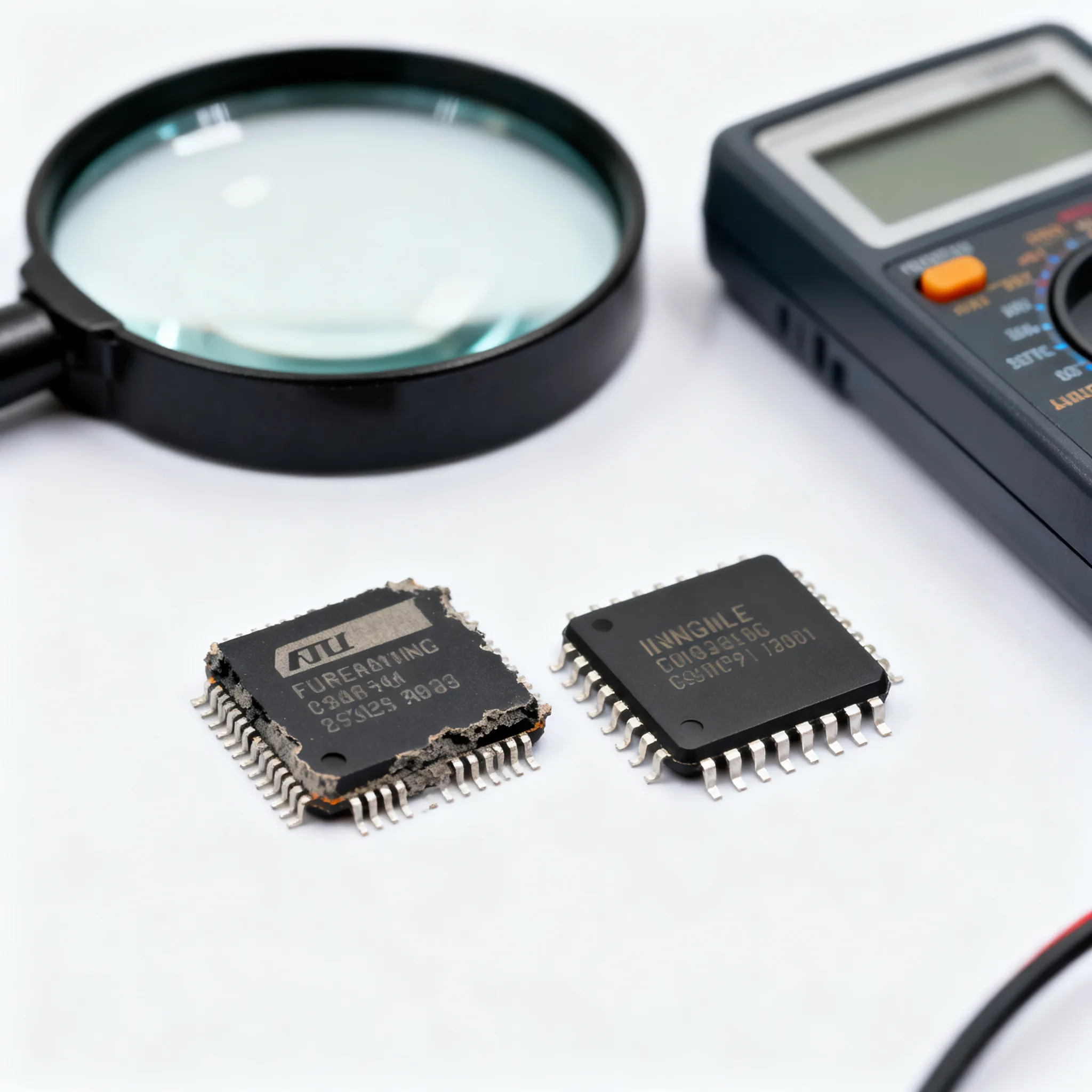
The underlying pressure is clear. OEMs contend with fragmented vendor networks and material shortages that make traditional sourcing models brittle [3]. When a single‑source microcontroller or gate driver misses its delivery window, the impact cascades into rework, expedited freight, and, in the worst case, a product recall. Field experience captured in the IC‑Online 2026 shortage update indicates that for gray‑market components, the failure rate for high‑demand MCUs and power MOSFETs can exceed 5% — a figure that translates directly into line‑stop events and recall costs far beyond any upfront unit‑price saving [2].
In this environment, supplier speed and reliability are not “nice‑to‑have” traits — they are the bedrock of production continuity. A supplier that delivers on‑time with complete documentation and allocation transparency reduces the probability that a catastrophic quality event will blindside engineering and procurement. The remainder of this article lays out the frameworks, strategies, and practical vetting steps OEM buyers need to secure reliable electronic component deliveries, without relying on static lead‑time estimates or risky, unverified channels.
Beyond Quoted Lead Times: What Real Supplier Speed and Reliability Look Like in Electronics Sourcing
Ask any experienced OEM buyer and they will confirm: a quoted lead time is a negotiation opener, not a delivery commitment. Real speed is the supplier’s demonstrated ability to manage dynamic allocation, communicate changes before they become delays, and ship within a window that aligns with production schedules. Slow responses create operational drag even before a shipment is late. Planners chase status updates instead of managing risk, and buyers are left with incomplete information that distorts MRP runs [4].
Forward‑thinking distributors have shifted from repeating manufacturer estimates to active lead‑time management: updating lead time data based on real supply conditions, not historical averages. Early demand visibility — where suppliers work closely with OEM procurement to anticipate upcoming needs and secure capacity — is the distinction between a partner and a transactional source [5]. For the OEM, this translates into a set of reliability indicators that extend well beyond a single on‑time delivery (OTD) percentage.
We ground this in the structured definition of OEM procurement: a process that secures original components while managing quality, cost, and supply risk through clear technical specifications and design ownership [10]. When that process is coupled with dynamic supplier intelligence, the result is a sourcing engine that surfaces delays before they become line‑down emergencies.
| Reliability Indicator | What to Look For | How to Verify via RFQ | Risk if Ignored |
|---|---|---|---|
| On‑Time Delivery History (OTD) | Consistent performance ≥ 95% for orders of comparable volume and complexity, not averaged across all SKUs | Request tailored OTD reports for your commodity group; speak with references who placed similar mix‑volume orders | Schedule slippage that consumes safety stock and forces premium‑freight burn |
| Response Time to Change‑Order Requests | Supplier acknowledges and provides an allocation‑aware revision within 24–48 hours | Time‑stamped quotes: ask to see historical response‑time data during a prior allocation‑tight quarter | Delayed schedule updates that mask true shortages until it is too late to replan |
| Allocation Transparency | Live or weekly‑refreshed visibility into factory WIP, reserved buffer, and any partial‑shipment plan | Require the supplier to share a non‑redacted example of their allocation dashboard or portal during evaluation | Inability to distinguish a temporary push‑out from a permanent hard‑shortage |
| Partial Shipment Communication | Proactive notification before a partial shipment is dispatched, with confirmation of balance ETA and order‑logic reference | Include “partial‑shipment notification SLA” as a scored item in the RFQ response; validate against reference feedback | Production stoppage downstream because MRP assumes 100% delivery at one receipt |
| Early Warning of Slippage | Supplier raises a flag within 48 hours of detecting a schedule risk, not a week after the due date | Ask for a mock escalation drill: “if you saw a 14‑day push on a Tier‑1 MCU, show us the email and the mitigation options you’d send” | Last‑minute expediting costs and loss of credibility with your own operations team |
Key takeaway: These indicators form a reliability fingerprint. An OEM that scores suppliers on this matrix, rather than on quoted lead time alone, builds a supply base that absorbs disruption without triggering a recall or a line stoppage.
OEM Supply Strategies Compared: How Consolidation, Hybrid Models, and Direct Partnerships Affect Lead‑Time Certainty
No single procurement strategy fits every BOM. The choice between concentrating spend with a few deep partners, diversifying across multiple sources, or using data‑driven risk platforms determines how quickly your organization can react when an allocation‑sensitive component tightens. The following comparison draws on real supplier approaches documented in electronics and industrial procurement literature.
An integrated OEM supply chain strategy that replaces reactive scheduling with proactive planning — using the same equipment and processes for proto‑typing as for production — shortens the gap between design validation and volume ramp [6]. In a multi‑source model, buyers consistently stress that on‑time delivery matters more than the quoted lead time [7]. Meanwhile, a dashboard‑driven risk‑monitoring model surfaces late surprises earlier by giving one view of PO and component status across suppliers, enabling BOM health checks before risk crystallizes [8].
| Comparison Metric | Deep Consolidation (Fewer, Closer Suppliers) | Balanced Multi‑Source (On‑Time Over Lowest Quote) | Dashboard‑Driven Risk Model (Elisa Industriq Ref.) | Selection Criteria & Failure Boundary |
|---|---|---|---|---|
| Lead‑Time Certainty | High, when the partner integrates early into your S&OP; capacity reservations reduce volatility | Moderate; certainty emerges from overlapping allocation windows and rapid re‑source capability | High visibility, but certainty depends on supplier data quality; late‑flag signals improve reaction time | Choose consolidation if you have stable, high‑volume demand and can co‑invest in buffer. Hybrid/balanced is safer when BOMs are heterogeneous and contain allocation‑sensitive single‑source parts. |
| Risk During Allocation Events | Lower — supplier typically protects strategic accounts first | Medium — ability to pull from secondary sources within a vetted pool, but fragmented spend may reduce individual priority | Lower operational surprise — early alerts let you trigger back‑up plans before the allocation window closes | Monitor allocation transparency. If a consolidated supplier cannot share factory WIP, the concentration risk becomes unacceptable. Verify ability to source from multiple approved vendor lists without introducing unverified stock. |
| Communication Speed | Fast, with direct access to planning and engineering contacts | Variable; depends on the tier of each source. Smaller local partners may respond faster than large catalog distributors | Standardized dashboards speed up data gathering but don’t replace human escalation when a line‑down is imminent | Evaluate response time during a live RFQ: how quickly does each supplier give an allocation‑backed answer? Slow responses indicate operational drag that will worsen under pressure. |
| Total Cost of Ownership | Often lowest annual TCO after accounting for reduced expediting and freight; unit price may be slightly higher | Competitive unit pricing, but premiums spike when scrambling for last‑minute alternates; risk of counterfeit introduction is higher with unvetted secondary sources | Higher upfront platform and integration cost; the trade‑off is lower recall risk and better audit trails | Assign a cost‑of‑delay to each critical component. Any strategy that fails to account for the penalty of a line‑stop will misprice sourcing decisions. |
| Scalability for New Product Introduction | Works well when the partner can mirror production processes from prototype stage | Strong — buyers can qualify alternate parts on the bench without relying on a single IP relationship | Scales through analytics rather than headcount; good for large global BOMs needing compliance tracking | Verify that any consolidation partner has the engineering bandwidth to support design‑change velocity. A partner that delays engineering feedback becomes a bottleneck, not a safety net. |
In electronic component procurement, the “right” model often blends elements. A consolidated primary relationship for high‑runner MCUs and discretes, supplemented by a vetted secondary source for commercial‑grade passives and connectors, with a risk dashboard layered on top, gives you early warning while preserving flexibility. The key is to evaluate supplier speed and reliability against the failure cost of the parts they supply, not their shipping metric alone.
Actionable Steps for OEM Buyers: Vetting Suppliers, Questioning Lead‑Time Promises, and Building a Reliability‑First Sourcing Playbook
Moving from theory to execution requires a repeatable vetting process that challenges every lead‑time promise and exposes the difference between a transactional distributor and a true supply‑chain partner. The following steps draw from industrial procurement best practices and electronics‑specific field experience.
1. Demand delivery data for comparable volumes and speak with references directly. A supplier’s aggregated on‑time rate hides performance on your specific commodity. Buyers should request delivery‑performance data for programs that match their order complexity and volume, and then contact those references themselves. Actual production cycle time is a more reliable gauge than quoted lead times [11].
2. Prioritize certified, standards‑compliant product with accessible technical support. A supplier that offers certified products, a broad component range covering your BOM, reliable lead times, accessible technical support, and a straightforward trade account structure removes hidden friction that erodes schedule confidence [9].
3. Factor reliability, customization, and total value into supplier scorecards — not just unit cost. For severe‑duty electronics applications, the criteria that sustain long‑term success are reliability, customization, support, delivery performance, and total value. A low‑cost source that cannot sustain delivery during an allocation event creates a cost that far outweighs the initial price difference [12].
4. Test supplier responses before awarding business. During the RFQ stage, submit a change‑order request for a handful of line items and measure response time, quality of the answer, and whether the supplier pro‑actively suggests alternatives. A supplier that takes days to acknowledge a routine change will take longer when a critical part slips. The response time is a leading indicator of future service quality.
| Vetting Step | What to Request / Observe | Red Flag | How to Act on the Finding |
|---|---|---|---|
| Delivery‑History Audit | OTD data for your commodity segment, during the last allocation‑tight quarter | Supplier refuses to segment data or only provides a blended average across all customers | Remove from critical‑path sourcing until segment‑level data is supplied; apply a lower weight in scorecards |
| Reference Check | Live conversations with 2–3 OEM buyers who place similar‑volume and mix‑complexity orders | References were hand‑selected from a single perfect‑quarter snapshot | Ask: “What happened during the last supply disruption — when did you know and how was it resolved?” Avoid references that cannot share a real disruption story. |
| Technical Support Drill | Request a PCN (Product Change Notification) alert procedure walkthrough and a sample report | No documented PCN flow, or the flow depends on a single person | Mandate a PCN agreement in the supplier quality contract; verify quarterly with mystery‑shopper‑style queries |
| Lead‑Time Breakdown Request | Factory logistics plan for your top 5 components: WIP status, buffer‑stock policy, allocation rules | Supplier cannot separate manufacturer lead time from their own logistics overlay | This is common but treat it as a risk factor; require buffer‑stock commitments if transparency cannot be improved |
5. Build a shared risk register for multi‑quarter programs. The most reliable OEM‑supplier relationships include a living document that logs the top components with allocation sensitivity, the supplier’s current projection, and agreed mitigation steps (alternate die sources, staggered purchase orders, or pre‑negotiated safety stock). This early‑warning system converts the theoretical “we’ll let you know” into a measurable SLA.
On‑Time Component Delivery: What Experienced OEM Buyers Ask
Q: How do I differentiate a realistic quoted lead time from an artificially short one meant to win the business?
Compare the quote against the component’s allocation history, manufacturer MOQs, and the supplier’s actual on‑time‑delivery data for similar volumes. Request references that match your order complexity, and be suspicious of lead times that drastically undercut the manufacturer’s published schedule without a clear buffer‑stock or early‑demand‑visibility mechanism. A supplier that cannot explain how they will meet a short lead time — for example, through factory‑held inventory or advanced allocation — is likely quoting an aspirational date that will slip after the PO is placed.
Q: When a single‑source IC has a lead time beyond 30 weeks, is a pin‑compatible redesign truly cheaper than buying from non‑franchised sources?
Often yes. Gray‑market failure rates for high‑demand MCUs and power MOSFETs can exceed 5% — based on documented field experience, not estimates — leading to line‑stops and recall costs that dwarf the BOM savings from a lower unit price. A redesign using a more available equivalent, while carrying its own validation and re‑qualification expense, frequently proves cheaper when the cumulative risk of counterfeit, re‑marked, or improperly stored parts is fully accounted for. Before committing, verify single‑source risk via manufacturer documentation and confirm allocation‑backed lead time with your authorized distributor. Treat any redesign candidate as an evaluation part: verify package, pinout, and firmware before assuming compatibility.
Q: What supplier reliability metrics matter beyond the standard OTD (on‑time delivery) percentage?
Look at response time to change‑order requests, transparency into factory allocation, consistency of partial‑shipment communication, and how early the supplier notifies you of a potential slippage. Slow responses create operational drag even before a shipment becomes late, leaving planners reliant on incomplete information. A supplier that delivers 98% on‑time but takes five days to answer a reschedule inquiry creates more friction than a 90%‑OTD supplier who flags issues within hours and presents alternatives immediately.
Q: How should I weight on‑time delivery versus unit price in a supplier scorecard?
Rather than a fixed weight, assign a cost‑of‑delay figure to each part. An MCU that stops a production line if late carries a far higher penalty than a connector with a ready second source. Use that per‑part penalty to compare total cost of ownership, making it clear that a slightly higher‑priced but demonstrably reliable source often costs less overall. For high‑criticality components, add a “reliability multiplier” to any quote from a source that cannot provide audited OTD data and allocation transparency.
Q: What are the earliest warning signs that a supplier is about to miss a lead‑time commitment?
Watch for slower response times to status inquiries, sudden requests for revised delivery dates without a linked allocation change, changes in the shipping carrier or routing without an explanation, and inconsistent answers from different points of contact within the same supplier. A dashboard that aggregates PO and component status across suppliers can surface these signals before they escalate into a full delay. Once you observe two or more of these indicators on the same order, treat the commitment as at‑risk and activate your contingency plan immediately — expedite alternate sourcing, buffer‑stock release, or re‑prioritize production.
References & Further Reading
- Turning vehicle recalls into a test of supply chain resilience — SCMR
- 2026 Electronic Component Shortage Update — IC‑Online
- OEM Supply Chain Strategy: Cut Risk and Lead Times — TMC Inc.
- Supplier Reliability: Reduce Surprises and Improve Planning — SourceDay
- Delivering on Promised Lead Times — ichome.com
- OEM Supply Chain: Fewer Suppliers, Faster Lead Times — TMC Inc.
- OEM vs ODM Manufacturing Lead Times — Alibaba Seller Blog
- OEM Procurement Strategy: 10 Ways to Organize Supply Chains — Elisa Industriq
- 10 questions for OEM hardware procurement — ERA Everywhere
- OEM Procurement — Definition, Process + Best Practices — Procurement Tactics
- How to Choose OEM Industrial Manufacturers — THACO Industries
- Key Supplier Characteristics for Electronics — Marlin Technologies
Turning Insights Into Action: Your Next RFQ
Supplier speed and reliability are not qualities you discover after the first late shipment — they are verifiable disciplines that differentiate a strategic electronics partner from a transactional source. OEM buyers who embed the reliability indicators, vetting steps, and comparison frameworks outlined here into their RFQ process reduce the probability of line‑down events, gray‑market failures, and costly schedule surprises. Every component on your BOM deserves an allocation‑aware assessment, not a static lead‑time assumption.
Begin with a mixed‑BOM RFQ that tests communication speed, delivery history, and transparency. The most reliable supply chains are built on data, not on promises.
Request a quote or upload your BOM via IC‑Online
Flexible MOQ • Allocation‑backed lead‑time checks • Expert technical sourcing support