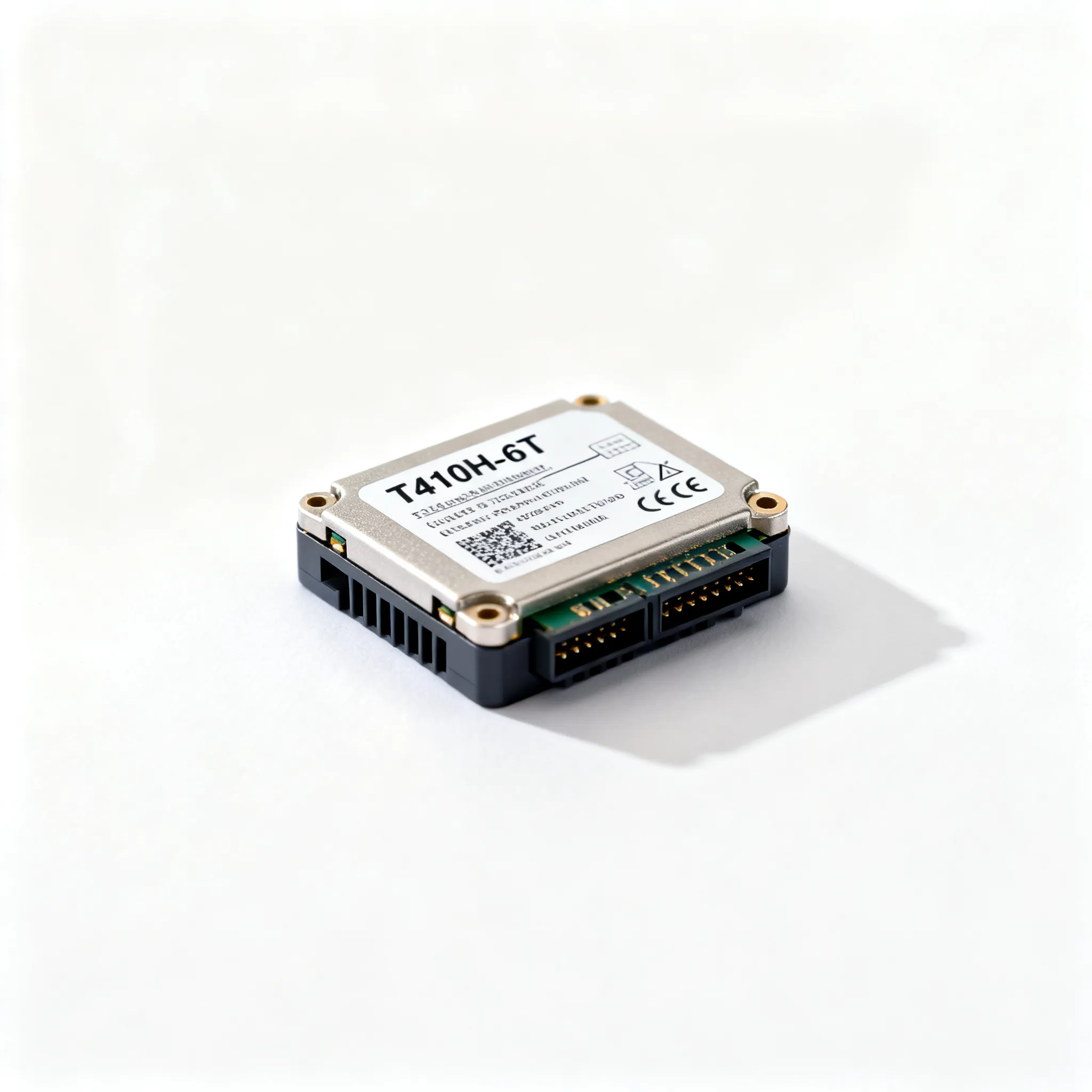
T410H-6T Obsolescence Risk Checklist: Verify Lifecycle Status Before Procurement
T410H-6T lifecycle and obsolescence risk checklist. What to verify before redesign or last-time-buy — without assuming drop-in replacements.
Why T410H-6T Lifecycle Status Suddenly Matters: 2026 Supply Chain and Regulatory Pressure Points
Ask any procurement manager who lived through the 2021–2023 allocation crisis, and they will tell you the same thing: the components that burned the most engineering hours were not the exotic FPGAs or custom ASICs. They were mid-range power discretes — parts like T410H-6T — that quietly slipped from "Active" to "Not Recommended for New Design" while teams were distracted by higher-profile shortages. By the time anyone noticed, the last-time-buy window had closed.
That scenario is not hypothetical. Two structural shifts in 2025–2026 are converging to make lifecycle vigilance on power discretes a procurement imperative rather than a best practice. The first is the sustained semiconductor supply-demand imbalance that continues to pressure mature-node fabrication capacity [1]. The second is the wave of EU and U.S. PFAS regulations taking effect in 2025 and beyond, which are already forcing manufacturers to reassess materials, coatings, and subcomponents throughout their portfolios [2]. For a power TRIAC like T410H-6T, which relies on specific molding compounds and lead-frame finishes, a regulatory-driven requalification can trigger an EOL notice faster than any demand forecast would predict.
Key Takeaway: End-of-life components discovered late — after last-time-buy windows have closed — represent the single most expensive shortage to resolve in any BOM. The cost multiplies when the part sits in multiple product lines, each requiring requalification of an alternative under different operating conditions. For T410H-6T, the question is not whether obsolescence will eventually arrive, but whether your team will know about it with enough runway to act.
Industry trackers now show that component obsolescence rates have accelerated beyond the traditional 10–15 year lifecycle curve that engineers once relied on for power discretes. Manufacturers are pruning mature product lines aggressively, and the cost-benefit analysis of continued production increasingly tilts toward EOL when a part faces combined pressure from regulatory requalification cost and shifting wafer allocation [2]. Parts like T410H-6T — mature, well-characterized, and embedded in long-life industrial designs — are precisely the type most vulnerable to a silent transition.
Tip: The absence of a PCN does not equal a green light. Many manufacturers only publish product change notifications when a decision is final, not when a part is under internal review. Proactive monitoring tools and regular BOM scrubbing are the only defenses against being surprised.
Decoding T410H-6T Lifecycle Stages: What 'Active', 'NRND', and 'Last-Time-Buy' Actually Mean
Not all "Active" statuses mean the same thing. A manufacturer may list a part as Active because it has not formally entered the discontinuance process, yet behind the scenes, wafer starts may have been reduced, assembly lines consolidated, or test capacity reallocated. Understanding the granular meaning of each lifecycle stage — and what it demands from procurement — is the foundation of obsolescence risk management for T410H-6T.
Texas Instruments, whose lifecycle management framework has become an informal industry benchmark, publishes clear guidelines: a standard product is not eligible for obsolescence if three conditions exist — active customer demand, available manufacturing capability, and sufficient profitability [3]. When any one of these three pillars weakens, the part enters the obsolescence pipeline. The table below maps each stage to what procurement teams should expect and verify before committing a T410H-6T order.
| Lifecycle Stage | Manufacturer Behavior | Procurement Risk Level | Required Action for T410H-6T |
|---|---|---|---|
| Active – Full Production | Regular wafer starts; standard lead times; unrestricted order entry | Low | Verify lifecycle status quarterly via manufacturer portal; confirm allocation-backed lead time through RFQ on IC-Online |
| Active – Maturity | Reduced wafer starts; lead times extending; order minimums may apply | Medium | Begin second-source evaluation; request written lifecycle statement from manufacturer; monitor PCN alerts monthly |
| NRND (Not Recommended for New Design) | No new design registrations accepted; existing customers served at reduced volumes | High | Freeze new design-in immediately; quantify lifetime buy volume across all product lines; initiate alternative qualification |
| Last-Time-Buy (LTB) Announced | Final order window open typically 6–12 months; non-cancellable, non-returnable orders | Critical | Place LTB order within window; confirm delivery schedule with supplier; verify date codes meet production solderability window |
| EOL / Obsolete | No further production; limited or no manufacturer support | Severe | Source only through authorized distributors with full traceability; consider third-party test lab verification for any broker-sourced inventory |
The gap between "Maturity" and "NRND" is where most procurement teams lose time. A part can sit in Maturity for years with no formal notice, yet every passing quarter increases the probability of an abrupt NRND declaration. For T410H-6T, engineers should treat any lead-time extension beyond the historical norm as an early warning signal — even if the manufacturer portal still displays "Active."
Tip: Distributor websites may show "Active" for parts that have already entered Maturity at the manufacturer level. Always cross-reference the manufacturer's official lifecycle page as the authoritative source. For high-volume or safety-critical applications, request a written lifecycle statement directly from the manufacturer's product line manager.
Automated test equipment (ATE) platforms provide a sobering parallel. Semiconductor test systems routinely stay in production service for 10 years or more, yet the PCBA subsystems inside them contain components whose lifecycle clocks tick independently. A single EOL power device like T410H-6T on an ATE pin card can force a redesign costing far more than the part itself [4].
How Cross-Reference Alternatives to T410H-6T Stack Up on Lifecycle Predictability
Finding a form-fit-function alternative to T410H-6T solves only half the problem. The harder question is whether the replacement part brings a lifecycle clock that is meaningfully longer than the original. A substitute that itself sits in Maturity — or worse, carries an undocumented EOL risk due to the same PFAS compliance pressures — simply trades today's problem for tomorrow's crisis.
The industry now offers a range of BOM intelligence platforms that shift obsolescence analysis from reactive firefighting to proactive monitoring. Each tool in the table below approaches lifecycle predictability differently, and the right choice depends on whether your organization needs deep parametric cross-referencing, real-time PCN monitoring, or BOM-level risk scoring.
| Tool / Platform | Lifecycle Intelligence Capability | Strength for T410H-6T Cross-Reference | Limitation to Verify |
|---|---|---|---|
| PCBCart BOM Screening [4] | Engineer-led BOM obsolescence audit with defined trigger points (lead-time threshold, PCN receipt, allocation notice) | Best for programs where a human engineer screens each alternative against application-specific parameters; ideal for ATE and industrial designs with 10+ year service life | Service-based; response time depends on BOM complexity; verify that screening covers the specific package variant of T410H-6T |
| Luminovo Design to Source [5] | Analyzes availability, multi-source risk, and PDN/EOL timelines; enables obsolescence prediction months or years in advance | Strong for early-stage design where lifecycle-aware part selection can prevent future EOL surprises; integrates with configure-price-quote workflows | Predictive models are probabilistic; confirm any predicted EOL timeline with manufacturer documentation before locking in a replacement design |
| SiliconExpert Proactive Monitoring [6] | Identifies semiconductors, passives, and electromechanical components at risk; includes lifecycle status, multi-sourcing, inventory, and environmental compliance data | Broadest database depth; useful for cross-referencing T410H-6T against multiple manufacturers and evaluating environmental compliance alongside lifecycle | Database coverage for mature discretes with multiple package variants may require manual verification; confirm that alternative MPNs are not themselves flagged for NRND |
| Accuris Parts Intelligence [7] | Identifies lifecycle status, EOL risk, PCNs, and potential obsolescence early; evaluates form-fit-function alternatives | Strong PCN detection engine; useful for setting automated alerts on T410H-6T to catch lifecycle shifts before they appear on distributor portals | Alternative recommendations require engineering validation of gate sensitivity, holding current, and thermal characteristics specific to TRIAC applications |
What matters for T410H-6T specifically is that any cross-reference part must match not only the headline electrical ratings — 600V blocking voltage, 4A RMS on-state current, logic-level gate drive — but also the thermal impedance and package parasitics that influence snubber design in AC mains switching applications. A TRIAC with identical datasheet numbers but a different internal die layout can behave differently under inductive loads, particularly at high dV/dt. This is why the industry checklists emphasize form-fit-function verification, not just parametric equivalence [4].
The real value of cross-referencing tools is not just finding a part that works — it is finding one whose lifecycle clock has more years left than the original. A BOM that answers "no" to more than one or two of the PCBCart obsolescence screening questions is carrying more risk than its program owners may realize [4].
The T410H-6T Pre-Order Lifecycle Audit: 5 Verification Steps Backed by Industry Checklists
Before issuing a purchase order for T410H-6T, whether for production or as a lifetime buy buffer, procurement and engineering teams should walk through a structured audit. The framework below borrows directly from two sources that have codified obsolescence risk assessment: the PCBCart self-audit checklist, which asks whether every BOM line has a current lifecycle status or whether status is only checked reactively when a part fails to ship [4], and NASA MSFC-STD-3620, which defines an obsolescence mitigation risk matrix used to evaluate program-level exposure [8].
Each of the five steps below corresponds to a decision gate. Passing all five does not guarantee supply continuity — but failing any one should trigger immediate escalation before funds are committed.
- Verify Lifecycle Status at the Manufacturer Level. Do not rely on distributor portal data alone. Visit the manufacturer's official product page for T410H-6T and confirm the lifecycle classification. If the manufacturer offers a written lifecycle statement service, request one for audit trail purposes. A part that appears "Active" on a distributor site but "Maturity" on the manufacturer site requires immediate second-source planning.
- Check for Unresolved or Pending PCNs. Search the manufacturer's PCN database for any notifications tied to T410H-6T, including process change notices that may precede an EOL announcement by quarters. A PCN that flags a mold compound change due to PFAS compliance should be treated as a lifecycle shift indicator, even if the part remains technically "Active." [2]
- Define Your Escalation Trigger Point. Ask the question from the PCBCart audit framework: "Is there a defined trigger point — lead-time threshold, PCN receipt, allocation notice — that starts the mitigation process, or does action wait for a stock-out?" [4] For T410H-6T, set a hard threshold: if quoted lead times exceed your production buffer by 2x, initiate second-source qualification immediately, regardless of lifecycle status.
- Assess Multi-Source Feasibility. Determine whether a pin-compatible alternative to T410H-6T exists that can be qualified without a PCB respin. If no such alternative is currently available, verify single-source risk through manufacturer and distributor documentation. Do not assume a second source will emerge after EOL — the economics of mature power discretes make reverse-engineering an EOL part unattractive unless the market is deep. [6]
- Validate Date Codes and Traceability for Any LTB Inventory. If placing a lifetime buy, specify a minimum date code in the purchase agreement and require lot traceability documentation back to the manufacturer's test records. Inventory with date codes older than three years should be evaluated for solderability and moisture sensitivity before being accepted into production. [7]
The NASA obsolescence mitigation risk matrix adds another dimension: it forces teams to evaluate not just the probability of obsolescence, but the consequence severity if it occurs [8]. For a part like T410H-6T used in an industrial motor controller or a lighting dimmer with regulatory safety certification, the consequence of an unplanned EOL is not just a BOM cost increase — it is a recertification cycle that can delay revenue by six months or more.
The table below matches each audit outcome to a specific mitigation action and the trade-off it implies.
| Audit Finding | Mitigation Action | When to Execute | Trade-off / Cost |
|---|---|---|---|
| Lifecycle confirmed "Active" with lead times within buffer | Continue procurement with quarterly status review; set automated PCN alert via Accuris or SiliconExpert | Ongoing — no immediate action | Minimal; requires process discipline to maintain monitoring cadence |
| "Active" but lead times 2x historical norm | Initiate second-source evaluation for pin-compatible alternatives; do not wait for formal NRND | Within 30 days of lead-time spike detection | Engineering time for evaluation; risk of unnecessary effort if lead times normalize |
| "NRND" declared but no LTB date set | Quantify lifetime demand across all SKUs; begin alternative qualification on highest-revenue product line first | Within 90 days of NRND notice | Inventory carrying cost for LTB; qualification cost for alternative; potential PCB respin if no pin-compatible drop-in exists |
| LTB window open with confirmed end date | Place non-cancellable LTB order; negotiate delivery schedule; require lot traceability and minimum date code | Before LTB window closes — no exceptions | Cash tied up in buffer stock; obsolescence write-off risk if demand forecasts overestimate |
| Part already EOL; no authorized distributor stock | Evaluate broker-sourced inventory only with third-party test lab verification; accelerate redesign to remove part from BOM | Immediate redesign initiation | Highest cost: redesign + recertification + potential line-down risk during transition |
The discipline is straightforward: do not let a low-cost power discrete like T410H-6T become the single-point failure that stops a high-margin product line. Plan for obsolescence during the early stages of product development, and empower the procurement team to play chess instead of Whac-A-Mole [5].
T410H-6T Lifecycle & Procurement: Questions a Senior Engineer Actually Asks
The following questions come from real procurement and engineering discussions — the kind that happen after the datasheet comparison is done and the hard decisions about risk, timeline, and budget remain. Each answer ties back to the tools, frameworks, and sources cited throughout this article.
Q: When should I start believing that a T410H-6T 'lifetime buy' notice is genuine, not just a marketing push to clear warehouse stock?
Verify against the manufacturer's official product change notification (PCN) system — a genuine lifetime buy is always accompanied by a formal discontinuance notice with a defined last-time-buy date and a final ship date. Cross-check with independent BOM intelligence tools like SiliconExpert [6], which aggregate PCN data across manufacturers and can confirm whether the notice is consistent with broader product line trends. If the part is already in "Not Recommended for New Design" (NRND) status and production lead times are extending quarter over quarter, treat a lifetime buy notice as the final procurement window — do not assume a second chance. Manufacturers rarely reverse an LTB once it has been formally issued.
Q: We found T410H-6T stock at a broker that claims full traceability but shows a date code three years older than our last approved deliverable. Is that a red flag?
Yes. Verify the lot traceability directly with the original manufacturer if possible — many manufacturers offer online lot code validation tools. Older date codes may originate from pre-EOL production runs, which is not inherently disqualifying, but they introduce risks: moisture sensitivity level (MSL) floor-life expiration, solderability degradation on lead finishes, and the possibility of relabeled or remarked parts. For any broker-sourced T410H-6T inventory, require a third-party test lab report covering visual inspection, X-ray, solderability testing, and electrical verification against the datasheet minimum/maximum parameters. Even with full traceability claims, the rule remains: authorized distributors first, brokers only with independent test verification.
Q: What's the difference between a manufacturer-declared lifecycle status and what I see on a distributor's website? Which one drives our buy decision for T410H-6T?
Distributor data can lag behind the manufacturer's internal lifecycle database by weeks or months, and may also reflect regional allocation decisions rather than global product status. A distributor may show "Active" for a part that the manufacturer has already classified as "Maturity" internally. Always use the manufacturer's official lifecycle page — for example, TI.com's product lifecycle portal [3] — as the authoritative source. For high-volume production or safety-critical designs, request a written lifecycle statement from the manufacturer's product line manager, and retain it as part of your audit trail. When manufacturer and distributor data conflict, the manufacturer's declaration governs.
Q: How long before a projected EOL should we qualify an alternative to T410H-6T, given that our PCB respin takes 6 months?
Backward-plan from the last-time-buy date: you need a qualified alternative before the LTB window closes, not after. With a 6-month PCB respin cycle, add at least 6 months for alternative component qualification, firmware validation, and regulatory recertification if applicable. That means you need to start second-source verification at least 12 months before the projected LTB date. If no PCN has been issued yet, set an automated alert using a tool like Accuris Parts Intelligence [7] to detect early lifecycle shifts. As a rule of thumb, begin second-source evaluation when T410H-6T reaches the "Maturity" stage — do not wait for the formal NRND announcement. The difference between 12 months and 6 months of qualification time can determine whether your product ships on schedule or stalls at a redesign gate.
Q: Can we still use T410H-6T in new designs if the manufacturer says it's 'Active' but distributors are showing 52-week lead times?
An "Active" status combined with severely extended lead times is a signal of constrained supply, not necessarily an impending EOL — but the distinction matters little to a production schedule. If lead times exceed your production buffer and no competitive second source exists, treat T410H-6T as high-risk for new designs, even without an official EOL notice. Use a BOM scrubbing service like PCBCart's engineering-led screening [4] to identify whether a pin-compatible alternative exists that can be designed in without a PCB respin. If such an alternative is available and carries a healthier lifecycle outlook, design it in now — do not wait for the EOL notice that may arrive after your boards are already in fabrication. The cost of a late-stage redesign always exceeds the cost of an early, voluntary migration.
References & Further Reading
- Semiconductor Shortage 2026: EU OEM Survival Guide — GlobX
- Component Obsolescence in 2026: Risks, Drivers, and Impact — Part Analytics
- Product Life Cycle — Texas Instruments
- Semiconductor Test Equipment Obsolescence Risk Management — PCBCart
- Component Obsolescence: Lifecycle & EOL Management Guide — Luminovo
- Manage Obsolescence Risk — SiliconExpert
- Parts Intelligence: Component Data & Alternates Search — Accuris
- MSFC-STD-3620 — Obsolescence Mitigation Risk Matrix — NASA
Next Step: Verify Your T410H-6T Lifecycle Status Before the Window Closes
Obsolescence risk on mature power discretes like T410H-6T does not announce itself with fanfare. It arrives as a quiet manufacturer portal update, a distributor allocation notice, or a PCN that lands in an unmonitored inbox. The five-step audit framework outlined above gives your team a repeatable process to catch these signals before they become line-down events.
Whether you need a current lifecycle confirmation, a cross-reference evaluation for form-fit-function alternatives, or a full BOM obsolescence screening, start with a no-obligation RFQ. Upload your bill of materials — mixed BOM, flexible MOQ — via IC-Online and let the procurement desk confirm allocation-backed availability, traceability documentation, and lifecycle status for T410H-6T and every other line item in your design.