TC33X2104E Obsolescence Risk Checklist: Verify Lifecycle & Sourcing Risks
TC33X2104E lifecycle and obsolescence risk checklist. What to verify before redesign or last-time-buy — without assuming drop-in replacements.
Why a Single Legacy MCU Like TC33X2104E Can Cripple Your BoM in 2024
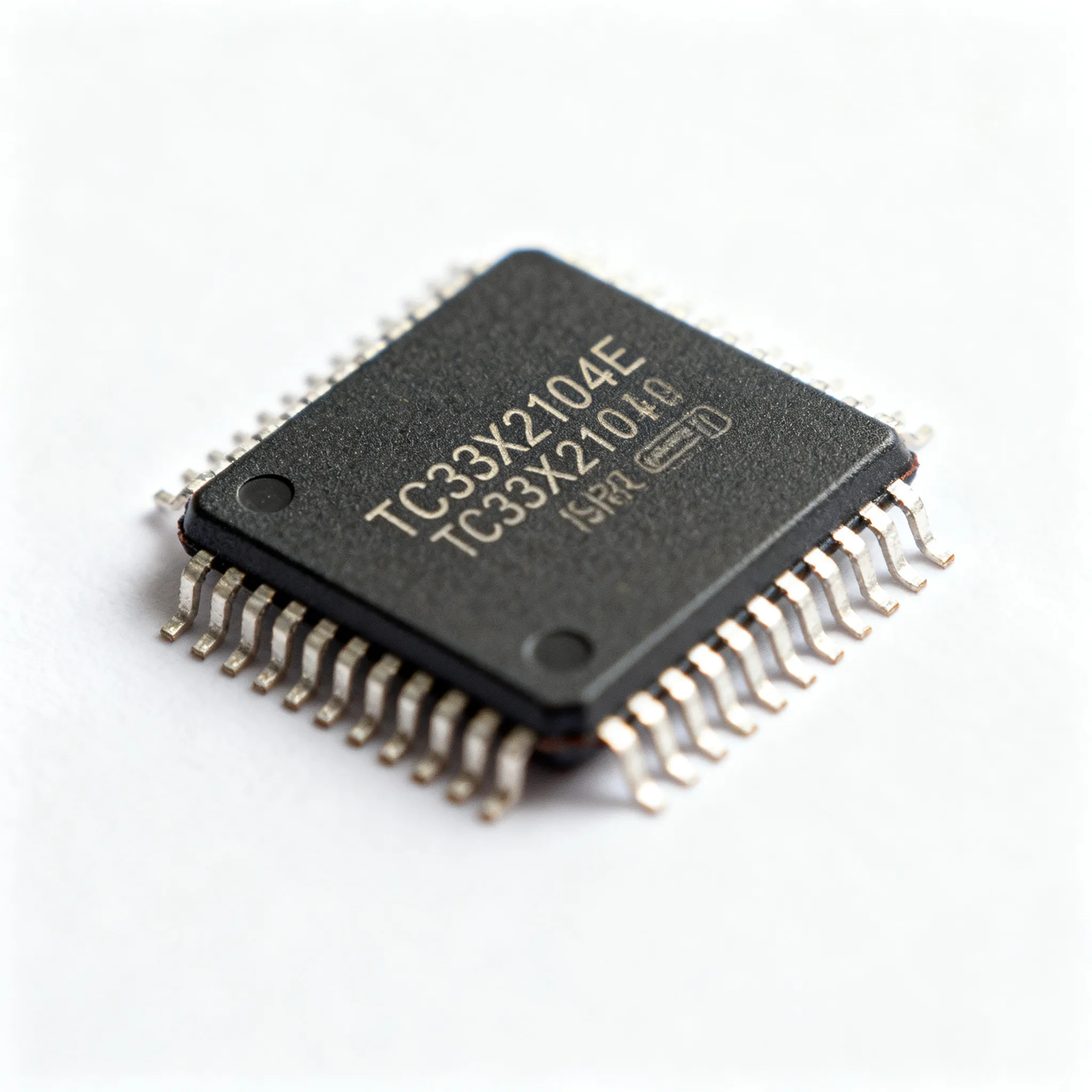
The TC33X2104E is a 4‑bit CMOS microcontroller from Toshiba’s legacy TMP47C series, widely embedded in appliance control boards, HVAC fan-coil units, and industrial timer modules. These designs often count on a few kilobytes of mask ROM and a fixed‑function peripheral set that hasn’t changed in a decade. When a purchasing manager discovers that the manufacturer has moved the part to “Not Recommended for New Design” (NRND) — or worse, issued a Last‑Time Buy notice — the impact rarely stops at a single line item. An entire bill of materials that was qualified around the TC33X2104E’s I/O timing, brown‑out behavior, and 5 V tolerance can stall production within one planning cycle.
The semiconductor allocation landscape has amplified this risk. Fab‑capacity shifts and 200‑mm wafer constraints, documented in recent EE Times analysis of extended lead‑time trends, mean that older mask‑ROM processes are often the first to be curtailed. Procurement teams that treat the TC33X2104E as “always available” can find themselves with zero allocation overnight. Without a structured lifecycle and sourcing risk checklist, you’re forced into reactive bridging buys, rushed PCB re‑designs, and exposure to grey‑market parts that may carry latent reliability faults.
This article lays out that checklist — a practical framework for detecting lifecycle signals, evaluating migration paths, and hardening your sourcing pipeline so that the TC33X2104E doesn’t become a single‑point failure in your supply chain.
Decoding TC33X2104E Lifecycle Signals: PCN, LTB and the Hidden Lead‑Time Clock
Mature CMOS MCUs like the TC33X2104E rarely vanish without warning. The manufacturer’s notification chain typically starts with a Product Change Notification (PCN) that may announce a process transfer or a move to a longer fab cycle. The critical inflection point is the NRND declaration, which formally signals that Toshiba will not qualify new designs and may reduce future wafer starts. After NRND, a discontinuance notice and a Last‑Time Buy (LTB) window follow, after which the part enters post‑obsolescence and is supported only through the remaining authorized distributor inventory or, riskily, the open market.
The table below maps each phase to the procurement actions that seasoned engineering and supply‑chain teams should trigger. All lead‑time windows cited are representative of 4‑bit MCU families; for the specific TC33X2104E, always confirm allocation‑backed timing with an authorized Toshiba distributor.
| Lifecycle Phase | Typical Notification Lead Time | Recommended Procurement Action | Safety‑Stock Multiplier (Annual Demand) |
|---|---|---|---|
| Active – Full Production | N/A | Monitor PCN alerts; maintain standard safety stock | 1.2× |
| Not Recommended for New Design (NRND) | 6–12 months before LTB | Launch alternative qualification; begin bridging buy | 2.0× + LTB buffer |
| Last‑Time Buy Window | Order cutoff typically 2–3 months before final fab closure | Place final buy with authorized distribution; include field‑service margin | 3.0× or total remaining product‑life demand, whichever larger |
| Post‑Obsolescence | Procurement through brokers only | Accelerate redesign; avoid unauthorized channels | Minimize usage; execute cut‑over plan |
Three practical steps cut through the ambiguity:
- Register for PCN alerts directly on Toshiba’s customer portal and cross‑check that the TC33X2104E lifecycle status displayed there matches what your distributors show.
- Request a formal “Lifecycle and Last‑Time Buy Projection Letter” from the manufacturer’s authorized channel. This document spells out final order dates and any remaining allocation constraints.
- When NRND is confirmed, immediately calculate your total requirement: (annual demand × years of remaining product life) + 30 % margin for field replacements, then verify that your clean‑room storage meets IPC/JEDEC J‑STD‑020 moisture sensitivity levels for the original tray or tape‑and‑reel packaging.
Weighing Drop‑In Replacements vs. Architectural Migrations for TC33X2104E
When the TC33X2104E lifecycle clock starts ticking, the instinct is often to find a pin‑compatible substitute that fits the existing PCB footprint. In the 4‑bit MCU space, true drop‑in compatibility is rare. Even devices offered in the same SDIP‑42 or QFP‑44 package can diverge in I/O drive strength, brown‑out reset thresholds, instruction cycle timing, and peripheral register mapping — subtle differences that can cause field failures if not fully validated.
The alternative is a deliberate architectural migration to a modern 32‑bit ARM Cortex‑M0+ platform, such as the STM32G0 family, which is designed for cost‑sensitive appliance applications and backed by a 15‑year longevity program. This path requires a new PCB layout and a firmware rewrite, but it eliminates the single‑source risk inherent in legacy mask‑ROM MCUs and gives you a supply‑chain roadmap that aligns with the product’s remaining life.
The side‑by‑side comparison below helps you weigh the engineering effort against the obsolescence risk profile. All parameters for the TC33X2104E are based on Toshiba’s TMP47C family datasheet characteristics; verify exact values using your own qualification data.
| Comparison Metric | TC33X2104E (4‑bit CMOS) | Candidate ARM Cortex‑M0+ Migration (e.g., STM32G031) | Selection Criteria & Failure Boundary |
|---|---|---|---|
| Operating Voltage | 2.2–5.5 V (verify datasheet) | 1.8–3.6 V; some I/Os are 5 V tolerant | If the system exclusively uses 5 V logic and direct I/O drive, a discrete level‑shifter stage is needed. Failure to shift can cause latch‑up or signal integrity failures. |
| I/O Sink/Source Drive | 10 mA typical per pin | Up to 25 mA with programmable drive strength | Verify that existing loads (relay coils, LED strings) are within the new MCU’s absolute maximum ratings; otherwise add external drivers. |
| Instruction Cycle Time | 1 µs at 4 MHz (typical) | Single‑cycle 32‑bit core at up to 64 MHz | Real‑time control loops written in assembly will require complete re‑timing. A cycle‑accurate emulation may need a hardware timer‑capture block. |
| On‑Chip Peripherals | 4‑bit timers, basic I/O ports, no ADC | Multiple 16‑bit timers, UART, I2C, SPI, 12‑bit ADC, comparator | Missing ADC or UART on the original MCU means those functions are currently external; migrating them on‑chip simplifies the BOM but changes pin‑mapping. |
| Programming Model | 4‑bit CISC, limited C‑compiler support | ARM Thumb‑2 ISA; standard GCC/Keil/IAR toolchains | Rewrite of entire control firmware is mandatory. Factor in 6–12 months of development and full regression testing. |
| Long‑Term Availability Commitment | Subject to Toshiba lifecycle policy; NRND risk | 15‑year longevity program documented by STMicroelectronics | A commitment letter from the new supplier should be requested before PCB tape‑out to avoid repeating the obsolescence cycle. |
Tip: If your product must ship for more than five years, the architectural migration is almost always the lower‑risk choice. EE Times’ industry analysis consistently shows that legacy MCU redesign is cheaper than a production halt caused by a single‑source shortage. Also refer to IPC design‑quality frameworks for requalification guidelines after any component substitution.
How to Audit Authorized Sourcing and Avoid Counterfeit TC33X2104E Parts
Once the TC33X2104E transitions to NRND or LTB, demand for remaining inventory spikes, and unauthorized distributors flood the market with parts of uncertain origin. A component that looks identical under a loupe can be a remarked pull‑out, a recovered die with altered lot codes, or even a functional clone fabricated on a different process that fails at temperature extremes. Engineering and procurement teams must apply forensic‑level diligence to every incoming lot.
The baseline rule is simple: only procure through a franchised distributor listed on Toshiba’s official sales‑channel page. When that’s not possible, the following table provides a field‑ready checklist to separate suspect parts from legitimate inventory.
| Inspection Point | Acceptable Characteristic | Suspicious Sign | Verification Method |
|---|---|---|---|
| Lot Code & Date Code | Consistent font, format, and location; date code within manufacturer’s documented active window | Multiple date codes on same reel; date code newer than the known discontinuance date | Cross‑reference with Toshiba’s authorized lot‑history database; confirm that the date code falls inside the production window for the TC33X2104E |
| Mold Compound & Marking | Uniform matte finish, crisp laser engraving, no surface scratches | Dimples inconsistent with original cavity; sanded or re‑coated top surface; faint ghost marks underneath | Compare with known‑good samples under 10× magnification; request a side‑by‑side photo from the seller before shipment |
| Lead Finish & Plating | Smooth, uniform solder‑dip; no re‑tinning evidence | Irregular plating thickness, dull spots on leads, flux residue near the body | Perform XRF analysis to verify the composition of the lead‑finish alloy; compare with the original Toshiba plating specification |
| X‑Ray Die Integrity | Die outline, bond wires, and pad layout match the manufacturer reference image | Die size mismatch, extra bond wires, or evidence of a secondary die‑attach step | Request an X‑ray inspection report from a IPC‑1782‑compliant test lab; reject any lot that cannot be authenticated |
| Functional Test at Corner Cases | All I/O parameters, timing margins, and brown‑out thresholds meet the datasheet windows | Oscillator start‑up failures at low temperature or high VDD trip points out of spec | Run a short functional test at −10 °C and +70 °C, monitoring I/O drive strength and watchdog reset timing |
Build your procurement due‑diligence process around these five actions:
- Confirm franchised status. Ask the distributor for a current “Manufacturer Authorization Letter” and verify it against Toshiba’s website. Without this, you have no legal assurance of traceability.
- Require a Full Lot‑Traceability Report. The report should map every invoice line to the manufacturer’s original packing slip, including the shipping date and destination from the wafer fab.
- Get a 90‑day recertification test report. Authorized labs can re‑verify electrical and visual characteristics; insist on a report dated within 90 days of shipment.
- Apply chain‑of‑custody controls aligned with IPC‑1782. Even if full certification isn’t required, borrowing the standard’s traceability framework — digital imaging at each handoff, tamper‑evident packaging, and documented change‑of‑custody — dramatically reduces substitution risk.
- Cross‑check lifecycle claims directly with Toshiba. If a broker asserts that the TC33X2104E is still in “active, full production,” log in to Toshiba’s customer portal and verify. Discrepancies are the most common early warning of grey‑market sourcing.
TC33X2104E Lifecycle and Sourcing: Answers from the Field
Senior engineers and buyers face a handful of recurring questions when the TC33X2104E lifecycle uncertainty hits a production schedule. The answers below distill decades of supply‑chain and design‑migration experience into actionable guidance.
- Q: How can I confirm the active lifecycle status of TC33X2104E without trusting a single distributor’s inventory display?
Always cross‑check the manufacturer’s official product page and sign up for PCN alerts. Request a formal lifecycle letter from Toshiba’s authorized channel and verify the part’s qualification level in your BoM tool against the latest EOL date published in the datasheet addendum. Relying on a single distributor’s stock‑status flag is dangerous; lifecycle status is a contractual matter, not a warehouse snapshot.
- Q: What is a realistic last‑time‑buy window for a legacy Toshiba MCU like TC33X2104E?
Typical LTB windows for mature 4‑bit MCU families span 6 to 12 months after the discontinuance notice, but the order cutoff can be much tighter — sometimes only 60 days after notification. Always factor in a 20–30 % buffer for final production runs and extra stock for field‑service repairs, while beginning qualification of alternatives at the NRND signal. Confirm the exact LTB deadline with your authorized distributor and lock in a non‑cancellable, non‑returnable purchase order well before the cutoff.
- Q: Are there any verified pin‑compatible replacements for TC33X2104E, or must we redesign the PCB?
True pin‑compatible replacements with identical firmware behavior are rare. Even candidates offered in the same package can differ in I/O drive strength, brown‑out thresholds, and peripheral memory maps. Plan for a full electrical and firmware validation cycle. If the product lifetime extends beyond five years, consider an ARM‑based migration that eliminates the inherent risk of another legacy‑MCU obsolescence event.
- Q: What red flags indicate counterfeit TC33X2104E parts in non‑franchised channels?
Look for inconsistent lot codes, dimples that don’t match the original molding, re‑tinning evidence on leads, and date codes newer than the known discontinued date. Request photographic evidence and XRF analysis reports. Where possible, use authorized distributors that follow IPC‑1782 traceability practices; they can provide the chain‑of‑custody documentation that independent brokers rarely supply.
- Q: When should we initiate a bridging buy for TC33X2104E, and how much inventory is prudent?
Start the bridging buy as soon as the manufacturer issues an NRND notice or you observe persistently shrinking distributor stock. Calculate total required volume as (annual demand × remaining product life) + 30 % safety margin, and verify that storage conditions meet MSL requirements documented by IPC/JEDEC J‑STD‑020 for the original packaging. Remember that mask‑ROM parts are not field‑programmable; any bridging buy must be an exact die‑matched device.
- Q: What steps can we take if the manufacturer has already issued an EOL for TC33X2104E but we have outstanding design commitments?
Immediately lock in an LTB order with an authorized distributor. In parallel, launch a fast‑track alternative qualification using a cross‑reference list from Toshiba’s migration guide. If no direct alternative exists, evaluate emulation solutions with FPGA/CPLD or negotiate a custom last‑run wafer agreement with the supplier, provided volumes justify the NRE. Time is critical; every week of indecision reduces the available LTB quantity and limits your redesign window.
References & Further Reading
- EE Times – Electronics Engineering News – Ongoing coverage of semiconductor allocation, lead‑time trends, and obsolescence management strategies.
- IPC – International Electronics Manufacturing Standards – IPC‑A‑610 and IPC‑1782 traceability frameworks.
- RFQ or BOM upload on IC-Online.