The Future of Power Electronics: MOSFET Transistor Trends and Innovations for 2026
The Future of Power Electronics: MOSFET Transistor Trends and Innovations for 2026 Introduction The landscape of power electronics is rapidly evolving, with MOSFET transistors at the forefront of i
Introduction
The landscape of power electronics is rapidly evolving, with MOSFET transistors at the forefront of innovation. As we approach 2026, these components are becoming increasingly essential in a variety of applications, from consumer electronics to industrial systems. The global semiconductor industry, valued at $595.2 billion in 2026, reflects this growth. With the demand for efficient power conversion and management solutions on the rise, understanding the latest trends and specifications in MOSFET technology is critical for engineers and designers. This article delves into the key specifications, design considerations, and applications of MOSFET transistors, offering insights into their future role in power electronics.
Technical Overview
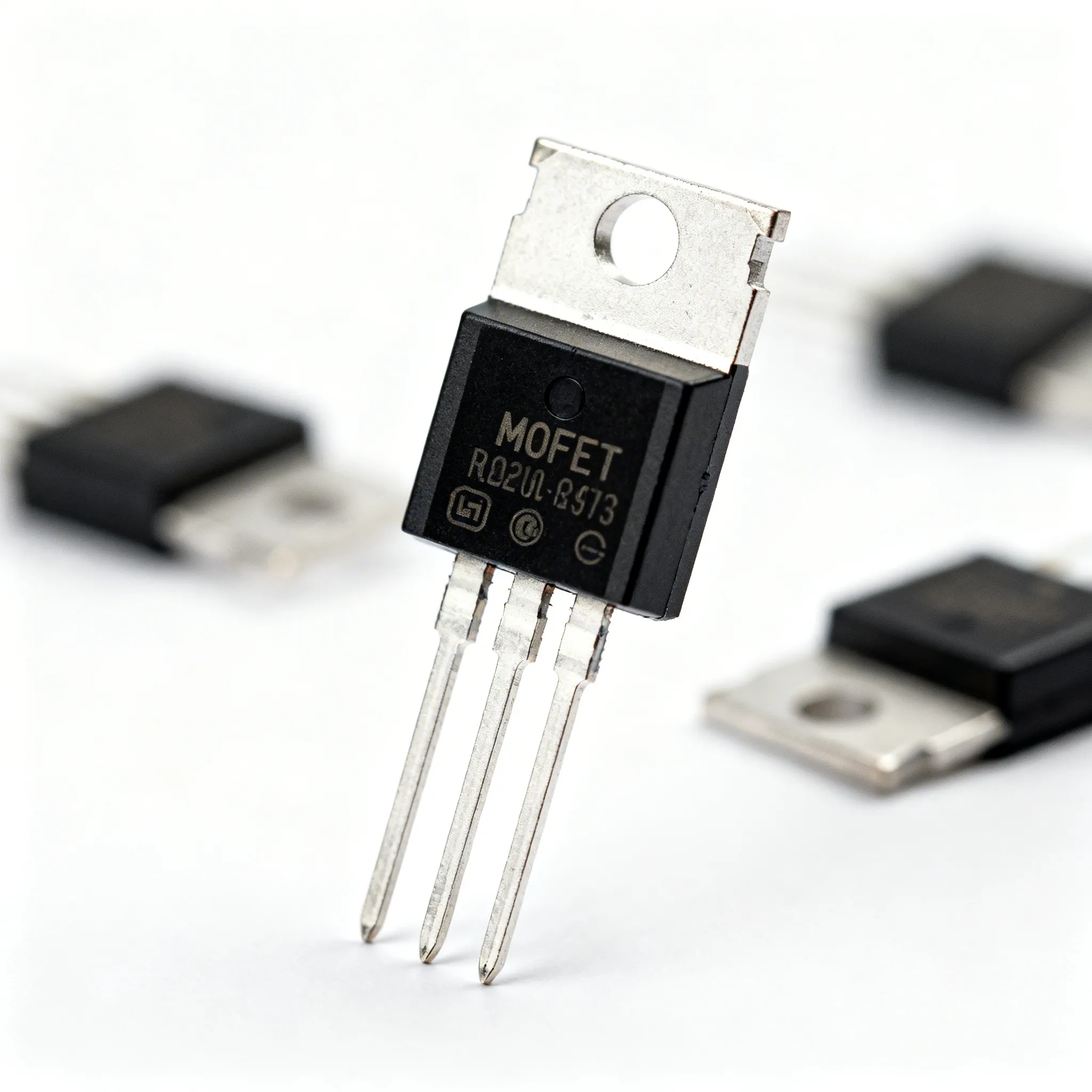
MOSFETs (Metal-Oxide-Semiconductor Field-Effect Transistors) are a type of transistor used for amplifying or switching electronic signals. They are widely used due to their high efficiency and fast switching capabilities. The basic working principle involves an electric field controlling the flow of current, making them ideal for use in power management applications. As technology advances, the focus is on improving their performance in terms of switching speed, thermal management, and integration with other components. Silicon carbide (SiC) and gallium nitride (GaN) are emerging as significant materials in MOSFET development, offering superior performance over traditional silicon-based devices. These advancements are paving the way for smaller, more efficient, and cost-effective power solutions.
Detailed Specifications
Table 1: Electrical Specifications
| Parameter | Value | Units | Notes |
|---|---|---|---|
| Drain-Source Voltage (VDS) | 600 | V | Maximum voltage across drain and source |
| Gate-Source Voltage (VGS) | 20 | V | Maximum voltage across gate and source |
| Continuous Drain Current (ID) | 75 | A | Rated current at 25°C |
| Threshold Voltage (VGS(th)) | 3.0 | V | Gate voltage required to turn on the MOSFET |
| RDS(on) | 0.005 | Ω | On-state resistance |
| Total Gate Charge (Qg) | 100 | nC | Charge required to switch the MOSFET |
| Input Capacitance (Ciss) | 3000 | pF | Measured at VDS = 25V |
| Output Capacitance (Coss) | 400 | pF | Measured at VDS = 25V |
| Reverse Transfer Capacitance (Crss) | 100 | pF | Measured at VDS = 25V |
| Switching Frequency | 1 | MHz | Maximum operating frequency |
| Body Diode Recovery Time | 50 | ns | Time required for the body diode to recover |
Table 2: Thermal & Mechanical Specs
| Parameter | Value | Units | Notes |
|---|---|---|---|
| Junction Temperature (Tj) | 175 | °C | Maximum operating temperature |
| Storage Temperature (Tstg) | -55 to 175 | °C | Temperature range for safe storage |
| Thermal Resistance Junction-to-Case (RθJC) | 0.5 | °C/W | Efficiency of heat dissipation |
| Thermal Resistance Junction-to-Ambient (RθJA) | 62.5 | °C/W | Efficiency of heat dissipation |
| Package Type | TO-247 | - | Standard package format |
| Mounting Style | Through Hole | - | Type of mounting used |
| Weight | 4.5 | g | Weight of the component |
| Lead Finish | Matte Tin | - | Finish of the leads |
Table 3: Application Comparison
| Application | Recommended MOSFET | Key Specifications | Notes |
|---|---|---|---|
| Switch-Mode Power Supplies (SMPS) | SiC MOSFET | High VDS, Low RDS(on) | Improves efficiency and thermal performance |
| Electric Vehicles (EVs) | GaN MOSFET | High Frequency, Low Qg | Enables compact and efficient design |
| Renewable Energy Systems | Superjunction MOSFET | High Efficiency, Low Loss | Optimized for solar inverters |
| Consumer Electronics | Standard MOSFET | Low Cost, Moderate Performance | Sufficient for low power applications |
| Industrial Automation | Trench MOSFET | High ID, Robust Design | Suitable for harsh environments |
| Telecommunications | LDMOS | High Power, High Linearity | Ideal for RF applications |
Design Considerations
When designing with MOSFETs, several key considerations ensure optimal performance and reliability. First, selecting the right MOSFET for your application is crucial. Consider the voltage and current requirements, as well as the switching frequency. For high-efficiency applications, materials like SiC and GaN offer lower losses and higher thermal performance compared to traditional silicon MOSFETs.
Thermal management is another critical aspect. Ensure that the device's thermal resistance is compatible with your cooling solutions to prevent overheating. The package type and mounting style also play a role in thermal performance and should be aligned with the design's physical constraints.
Additionally, the gate drive circuit must be carefully designed to provide the necessary drive current and voltage to switch the MOSFET efficiently. This involves selecting appropriate gate resistors and ensuring that the gate-source voltage does not exceed the specified limits.
Furthermore, consider the impact of parasitic elements such as inductance and capacitance, which can affect switching performance. Using proper layout techniques and minimizing trace lengths can help mitigate these effects.
Lastly, reliability and longevity are paramount, especially in critical applications. Ensure that the MOSFET operates within its safe operating area (SOA) and consider implementing protection mechanisms like over-voltage and over-current protection to enhance system robustness.
Step-by-Step Guide
Implementing MOSFETs in a design involves several steps, each requiring careful consideration and planning. Here is a step-by-step guide to help you effectively integrate MOSFETs into your projects:
- Define Application Requirements: Start by understanding the specific needs of your application. Determine the voltage, current, and power levels required, as well as any specific performance criteria such as efficiency or thermal limits.
- Select the Appropriate MOSFET: Based on the application requirements, choose a MOSFET with suitable electrical and thermal specifications. Use resources like DigiKey for detailed datasheets and a wide selection of components.
- Design the Gate Drive Circuit: Calculate the required gate charge and design a gate drive circuit that can provide sufficient current and voltage to switch the MOSFET efficiently. Consider using gate drivers for high-frequency applications.
- Layout and Parasitics Management: Design the PCB layout to minimize parasitic inductance and capacitance. Keep the traces short and use ground planes to reduce noise and improve thermal performance.
- Thermal Management: Implement appropriate cooling solutions based on the MOSFET's thermal resistance and power dissipation. Use heat sinks or fans if necessary to maintain the junction temperature within safe limits.
- Implement Protection Mechanisms: Protect the MOSFET from over-voltage, over-current, and thermal events. Consider using snubber circuits, TVS diodes, or current limiting techniques to improve reliability.
- Prototype and Test: Build a prototype of your design and conduct thorough testing to verify performance under various conditions. Pay attention to thermal behavior, switching performance, and overall efficiency.
- Iterate and Optimize: Based on the test results, make necessary adjustments to the design. This may involve selecting different components, refining the layout, or improving the cooling solutions to achieve optimal performance.
Common Issues & Solutions
Designing with MOSFETs can present several challenges. Here are some common issues and their solutions:
- Overheating: This can occur if the MOSFET operates beyond its thermal limits. Ensure proper heat dissipation through heat sinks or fans, and verify that the thermal resistance is within acceptable limits.
- Gate Oscillations: Improper gate drive can lead to oscillations. Use appropriate gate resistors and ensure the gate drive circuit is well-designed to provide stable operation.
- Parasitic Inductance: High parasitic inductance can cause voltage spikes during switching. Minimize trace lengths and use decoupling capacitors to reduce inductance effects.
- Switching Losses: High switching losses can reduce efficiency. Opt for MOSFETs with low gate charge and fast switching capabilities, and optimize the gate drive circuit to minimize losses.
- Electromagnetic Interference (EMI): Switching can generate EMI that affects other components. Use proper layout techniques, shielding, and filtering to mitigate EMI.
- Device Failure: Exceeding the MOSFET's safe operating area can lead to failure. Implement protection circuits and ensure the device operates within specified limits.
Applications & Use Cases
MOSFETs are versatile components used in a wide range of applications. In consumer electronics, they are integral to power management circuits, ensuring efficient operation of devices like laptops and smartphones. In the automotive industry, MOSFETs are critical for electric vehicle powertrains, contributing to efficient energy conversion and management. Renewable energy systems, such as solar inverters, also rely on MOSFETs to convert DC to AC power efficiently. Industrial automation benefits from their robust performance in motor control applications, while telecommunications use them in RF amplifiers for high-frequency applications. As technology advances, MOSFETs will continue to play a pivotal role in enabling cutting-edge solutions across various sectors.
Selection & Sourcing Guide
When selecting and sourcing MOSFETs, it's important to consider factors such as availability, cost, and compatibility with your design requirements. IC Online is an excellent resource for sourcing components, offering competitive pricing and fast delivery. Ensure that the chosen MOSFET meets your application's electrical and thermal specifications, and verify that it is from a reliable manufacturer to ensure quality and performance.
FAQ
- What is a MOSFET? A MOSFET is a type of transistor used for switching and amplifying electronic signals.
- Why are SiC and GaN MOSFETs becoming popular? SiC and GaN offer superior performance in terms of efficiency and thermal management compared to silicon MOSFETs.
- How do I choose the right MOSFET for my application? Consider the voltage, current, and power requirements, as well as switching frequency and thermal performance.
- What are common issues when designing with MOSFETs? Issues include overheating, gate oscillations, and parasitic inductance, which can be mitigated with proper design and layout.
- How can I improve thermal performance? Use heat sinks, fans, and ensure the thermal resistance is compatible with your cooling solutions.
- What is the role of the gate drive circuit? It provides the necessary drive current and voltage to switch the MOSFET efficiently.
- What is the significance of RDS(on)? It represents the on-state resistance and affects the MOSFET's efficiency and thermal performance.
- Can MOSFETs be used in high-frequency applications? Yes, especially GaN MOSFETs, which offer high switching speeds suitable for such applications.
- What protection mechanisms should be implemented? Consider over-voltage, over-current, and thermal protection to enhance reliability.
- Where can I find MOSFET datasheets? Resources like DigiKey provide comprehensive datasheets and component information.
Conclusion
As we look towards 2026, the advancements in MOSFET technology are poised to transform power electronics. With innovations in materials and design, MOSFETs will continue to provide efficient, reliable, and cost-effective solutions across a variety of applications. By understanding the detailed specifications, design considerations, and common challenges, engineers can leverage these components to create cutting-edge systems that meet the demands of modern technology.