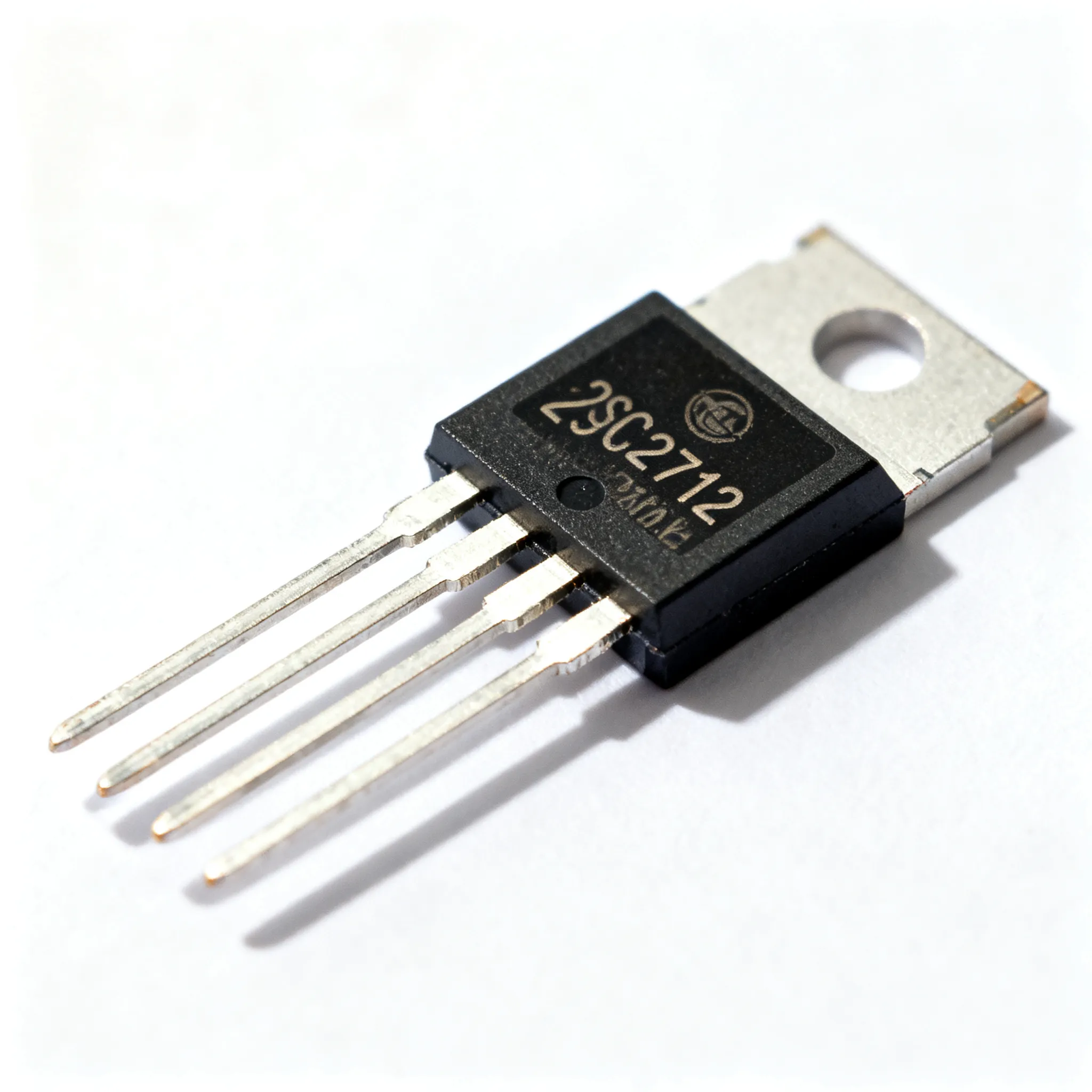
URF4803QB-100WR3 Obsolescence Risk Checklist: Lifecycle Verification Steps for Buyers
URF4803QB-100WR3 lifecycle and obsolescence risk checklist. What to verify before redesign or last-time-buy — without assuming drop-in replacements.
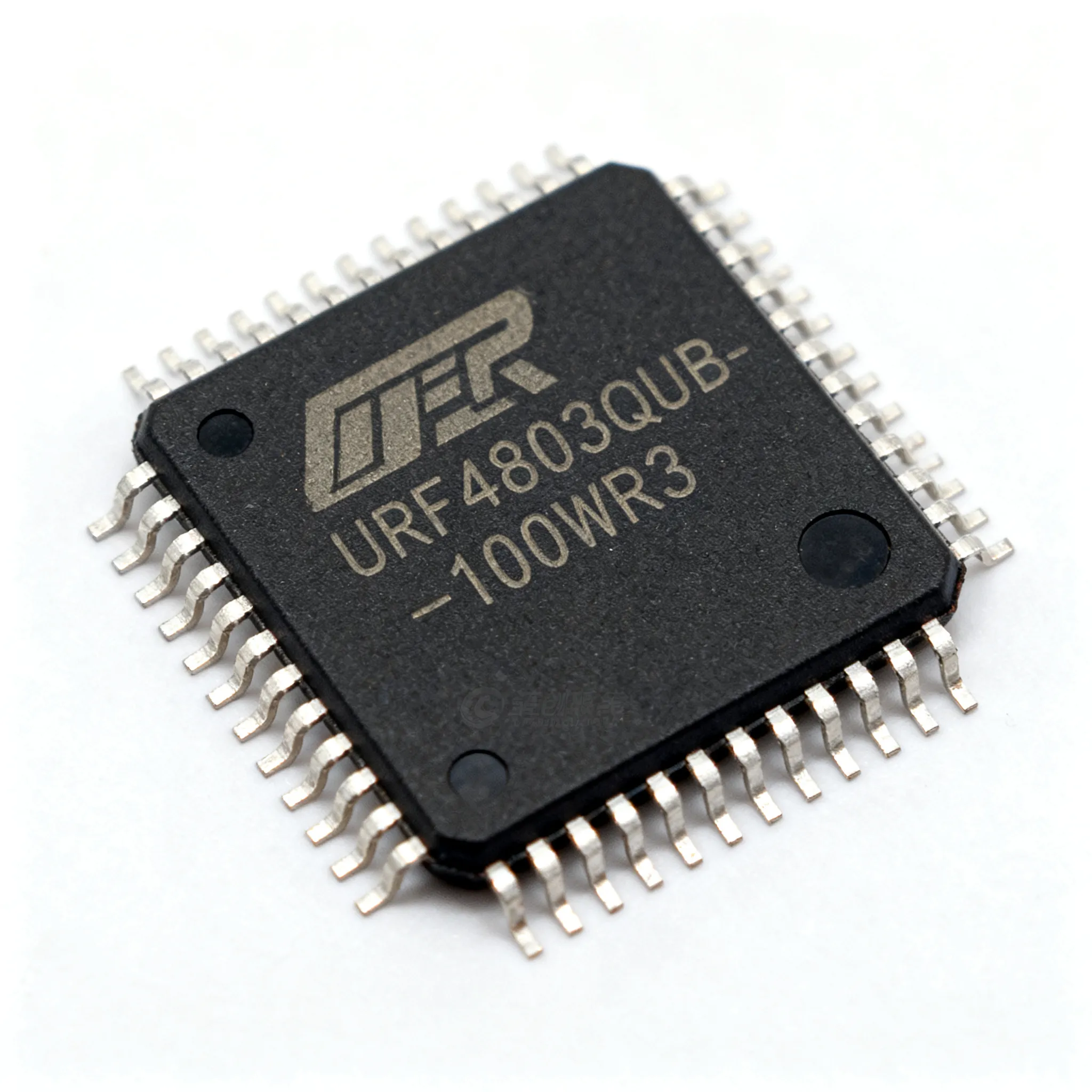
URF4803QB-100WR3 and the 621,909 Components That Disappeared Last Year
In 2025, a record 621,909 electronic components were discontinued or declared obsolete—roughly one-third more than in 2023—according to lifecycle intelligence firm Z2Data, as reported by Dasenic. For procurement buyers and engineers, that figure isn’t an abstract statistic; it’s a line-stop waiting to happen. It also means that a module listed as “Active” on a manufacturer’s website, like URF4803QB-100WR3, can disappear with as little as a 90-day PCN window, forcing a scramble for last-time buys or a rushed redesign.
The CPSC product-safety recall handbook reminds us that in regulated systems—medical, aerospace, industrial safety—a component vanishing from the approved BOM isn’t just a supply headache; it can trigger a field safety recall if an uncertified substitute enters the chain. That’s why lifecycle verification must move from a quarterly audit to a continuous discipline, starting with an honest look at how URF4803QB-100WR3 fits into your product’s lifetime and what happens if it’s gone tomorrow. The lifecycle stages framework from Luminovo’s guide—introduction, growth, maturity, decline, EOL, obsolescence—gives buyers a common language to talk about risk. The following checklist builds on that framework so you can move from reactive firefighting to proactive mitigation.
What Lifecycle Status Actually Means for URF4803QB-100WR3—Beyond the Manufacturer's Label
An “Active” label on a datasheet can lull a procurement team into complacency. Behind that word, a module could already be on allocation, restricted to a handful of strategic customers, or quietly migrated to a new die revision that alters subtle electrical behavior. SiliconExpert notes that traditional obsolescence data often stops at “available/not available” binary status, but real risk management demands a deeper view: Is the part in a shrinking process node? Has the assembly site been moved? Are the authorized distributors reducing shelf stock while lead times stretch for no apparent demand-driven reason?
For URF4803QB-100WR3, an engineer or buyer must decode the implications of each formal lifecycle stage, not just read the current tag. The table below maps the typical trajectory of a power module through its commercial lifetime and the corresponding actions you should take to avoid a sudden supply crisis, based on the predictable lifecycle curve described in IC Online’s end-of-life guide.
| Lifecycle Stage | Typical Label | What It Really Means for URF4803QB-100WR3 | Recommended Buyer Action |
|---|---|---|---|
| Introduction | Active / New Release | Limited production history; may be allocation-sensitive during ramp. Process changes and yield learning are underway. | Monitor lead times closely; secure samples and qualify early if you plan to adopt for new designs. Ask for an estimated maturity timeline. |
| Growth | Active | Broad availability, but watch for unexpected capacity constraints at the factory. Second-source options may start to appear. | Set up automated PCN/EOL alerts from the manufacturer and at least one third-party service. Begin identifying form-fit candidates. |
| Maturity | Active | Supply is usually stable, but the part is a candidate for end-of-life planning within 2–4 years. Margins may shrink, causing the vendor to deprioritize the line. | Engage the manufacturer’s product marketing to obtain a roadmap. Initiate qualification of an alternate power module in parallel so you’re not starting from zero when a PCN hits. |
| Decline / NRND | Not Recommended for New Design | Formal signal that the vendor is steering new designs away. Existing production may still be supported, but the countdown to EOL has started. | Stop using URF4803QB-100WR3 in new designs immediately. Calculate last-time buy (LTB) quantity and secure a written commitment from the manufacturer for LTB window and final shipment date. |
| End-of-Life (EOL) | End-of-Life / Last Time Buy | Final orders accepted within a defined window. After the cutoff date, no more factory shipments. Pricing may escalate. | Execute the LTB order with a conservative buffer. Validate your alternate source or replacement module and schedule board-level qualification. Confirm you have enough stock for production bridging and repair spares. |
| Obsolete | Discontinued | Factory stock exhausted. Any available inventory exists only in the authorized aftermarket or on the open market. The original manufacturer provides no further support. | Source only from thoroughly vetted aftermarket channels with full traceability. Accelerate your redesign timeline and consider any safety recertification implications. |
Tip: A module that shifts directly from “Active” to “EOL” without an NRND phase happens more often than buyers expect, especially after a merger or fab closure. That’s why quarterly checks alone aren’t enough; you need automated alerting that catches these abrupt transitions before the LTB window closes.
When URF4803QB-100WR3 Disappears: Comparing Your Sourcing and Redesign Options
Once URF4803QB-100WR3 slides into obsolescence, you essentially face three paths. The right choice depends on your product’s remaining life, regulatory constraints, and the cost of a line stoppage. GlobX emphasizes that treating obsolete sourcing as a controlled process—built on traceability, supplier verification, and documented lifecycle data—is the only way to avoid counterfeit material. For buyers supporting high-reliability or aerospace systems, even a form-fit-function alternate must satisfy rigorous qualification per NASA center-level standards, which means a simple “pin-compatible” claim isn’t enough without full environmental and radiation test data.
The table below compares the three principal sourcing strategies when URF4803QB-100WR3 becomes unobtainable through the original franchise.
| Comparison Metric | Option A: Last-Time Buy (LTB) from OEM | Option B: Authorized Aftermarket / Surplus | Option C: Open-Market Brokers | Selection Criteria & Failure Boundary |
|---|---|---|---|---|
| Cost | Standard pricing early in the LTB window; may rise toward the cutoff. Requires cash for a large, up-front buy. | Typically 1.2–2× original price, depending on availability. You pay for traceability and testing. | Can range from below original cost to 5× or more for scarce date codes. Prices are opaque and volatile. | LTB is cheapest per unit but ties up working capital. Authorized aftermarket balances cost and traceability. Broker pricing is justified only when no other path exists and line-down costs exceed the premium. |
| Lead Time / Availability | Manufacturer-defined window; you must order before the final order date. Delivery can be up to the last shipment date. | Stock is immediately available from verified shelf inventory, but quantities are finite. | Immediate shipment if inventory exists, but no guarantee of long-term availability for follow-on orders. | For high-volume production bridging, LTB is the safest supply. For low-volume or repair spares, authorized aftermarket can be more economical. Open-market is a short-term bridge, not a strategy. |
| Counterfeit / Quality Risk | Negligible—parts ship directly from the manufacturer with full pedigree. | Low when sourced from franchised surplus dealers who provide certificates of conformance, date codes, and test reports. | High—independent brokers often mix returns, recycled, or re-marked components. Without third-party testing, you cannot be sure what’s inside. | For any safety-critical or certified end equipment, avoid open-market parts unless a physical test lab verifies each lot. A single counterfeit can cause a field recall, erasing any savings. |
| Traceability & Certification | Complete manufacturer CoC, lot traceability, and RoHS/REACH compliance declarations. | Reputable surplus houses provide original manufacturer paperwork or their own traceability chain along with third-party electrical and visual inspection reports. | Often absent or fabricated. Paperwork may not match lot codes. Traceability breaks the moment the part leaves the broker’s anonymous supply chain. | If your quality system requires ISO 13485, AS9100, or similar standards, open-market sourcing is generally not auditable. Insist on chain-of-custody documentation before accepting any non-franchised stock. |
| Engineering Effort / Redesign | None—the module is identical to your existing design. No board spin or requalification required. | Minimal—you are buying the identical part number, so form-fit-function is preserved. You may still want to verify firmware compatibility if the module contains a microcontroller. | None if genuine, but electrically degraded or different-revision parts can cause intermittent failures that are hard to diagnose. | LTB and authorized aftermarket avoid redesign, which can cost tens to hundreds of thousands of dollars once you factor in PCB layout, thermal validation, and compliance retesting. Open-market is a last resort; budget for engineering time to debug any anomalies. |
Ultimately, your decision point is whether the product line is winding down or has years of profitability left. If the latter, investing in a drop-in evaluation candidate now—even while URF4803QB-100WR3 is still listed as available—gives you a safety net. You can phase in the new module on your own schedule rather than under duress.
The 7-Step URF4803QB-100WR3 Lifecycle Verification Checklist Every Buyer Should Run Now
The checklist that follows turns the abstract concept of obsolescence management into concrete, weekly-executable actions for URF4803QB-100WR3. It blends Luminovo’s PCN management best practices—which stress the importance of monitoring change notifications before they become supply disruptions—with SiliconExpert’s recommendation to move beyond reactive firefighting and use early-warning analytics that factor in foundry consolidation, process transfers, and component age. Each step below is a gate; skip one, and you amplify the risk of a surprise shortage.
- Confirm the exact ordering part number, package, and acceptable date code range. Many power modules carry suffixes that encode temperature range, output voltage, or firmware version. A single digit mismatch can deliver a module that passes visual inspection but fails on your board. Define the full manufacturer MPN string—URF4803QB-100WR3—and document it in your ERP.
- Check the manufacturer’s official lifecycle statement. Visit the component’s product page and look for a “Product Status” field, a separate PCN/EOL portal, or a lifecycle letter from the regional FAE. If no statement exists, submit a direct inquiry through your franchised distributor; get the response in writing.
- Monitor PCN and EOL alerts from multiple independent sources. Relying solely on the manufacturer’s email list is risky—mergers or rebrands can disrupt notification streams. Set up alerts through at least one third-party lifecycle tool and through your authorized distributor’s PCN feed. Cross-referencing catches the gap when the manufacturer’s system lags.
- Verify authorized distributor inventory and allocation status. Even when “Active,” URF4803QB-100WR3 may be on allocation. Request a written confirmation of unrestricted availability and ask about any minimum order quantity (MOQ) or non-cancellable, non-returnable (NCNR) terms. If allocation exists, document the rationale and expected duration.
- Review environmental and regulatory compliance. Confirm RoHS, REACH, and any applicable regional regulations (e.g., TSCA, Prop 65). A module may still be sold but lose its RoHS exemption, which can block its use in CE-marked equipment. Request updated compliance certificates dated within the last 12 months.
- Evaluate second-source or drop-in candidates for URF4803QB-100WR3. Identify modules from other manufacturers that target the same input voltage range, output power, and package footprint. Evaluate pin-compatible options by overlaying datasheet pinouts, comparing transient response and efficiency curves, and testing one sample on your own board. Never assume a candidate is a drop-in replacement until you have measured worst-case electrical and thermal margins under your specific load profile.
- Document a formal mitigation plan and file it with your product lifecycle record. The plan should assign ownership, list the trigger points (e.g., NRND declaration, allocation beyond 12 weeks, price increase over 20%), specify the chosen alternate module or LTB budget, and include a timeline for board requalification. Distribute the plan to engineering, purchasing, and quality teams.
A workflow summary table helps procurement and engineering teams run through the verification in a repeatable manner.
| Step | Action | Verification Tool / Data Source | Red Flags |
|---|---|---|---|
| 1 | Confirm full MPN, date code, package | ERP records, authorized sample, original order history | Inconsistent suffixes in warehouse stock; date codes older than 2 years without documented storage conditions |
| 2 | Check manufacturer lifecycle statement | OEM product page, direct FAE inquiry, PCN portal | Absent or ambiguous status; “contact factory” without further detail |
| 3 | Set up automated PCN/EOL alerts | Distributor alert systems, SiliconExpert, IHS/PartMiner, IC Online’s BOM monitoring | Alerts failing after a corporate domain change; inconsistent labeling between manufacturer and aggregator |
| 4 | Verify distributor inventory and allocation | Authorized distributor portals, allocation letters, RFQ | Consistently low shelf stock despite “Active” status; extended NCNR terms; price surcharges |
| 5 | Review environmental compliance docs | Manufacturer’s material declarations, compliance certificates | Expired RoHS exemptions; missing REACH SVHC declarations |
| 6 | Evaluate drop-in candidates | Datasheet cross-reference, in-house thermal and electrical testing, evaluation boards | Vendors claiming “compatibility must be verified case by case” without measured data; incorrect no-load behavior or soft-start timing |
| 7 | Document mitigation plan | Internal PLM system, approved vendor list, quality audit records | Plan not updated for over 12 months; assigned owner no longer with the company |
This checklist transforms a one-time panic into a structured, auditable process. When you can show an auditor that you’ve been tracking URF4803QB-100WR3 across all seven gates, you demonstrate due diligence that regulators and certification bodies expect.
URF4803QB-100WR3 Obsolescence Questions Every Engineering Buyer Asks
Q: How can I verify that a URF4803QB-100WR3 unit from an independent distributor is genuine and not counterfeit?
A: Require full traceability documentation: original manufacturer certificate of conformance (CoC) showing the exact part number, lot code, and date code. Perform a detailed visual and dimensional inspection against a known-good authorized sample, checking laser marking, label fonts, and pin straightness. If the volume justifies it, submit samples to a third-party test lab for decapsulation and electrical parametric testing. Legitimate surplus dealers will provide a chain-of-custody and will not hesitate to offer test reports. Vague provenance, such as “overstock from a contract manufacturer in an untraceable region,” is a red flag that warrants rejection.
Q: The manufacturer still lists the part as 'active,' but lead times are stretching. Are there early warning signs of obsolescence I should watch for?
A: Yes. Watch for a shift to “Not Recommended for New Design” (NRND), sudden allocation despite healthy market demand, a decreasing number of authorized distributors carrying the part, and exclusion from the vendor’s latest reference designs or evaluation kits. Also, note if the sales team begins pushing a newer module as the “preferred” alternative while downplaying URF4803QB-100WR3. These signals frequently appear six to twelve months before a formal EOL notice.
Q: If I need to execute a last-time buy, how do I calculate the right quantity when my demand forecast is fuzzy?
A: Work with the product management and field service teams to estimate total lifetime demand, then add a buffer for repair stock, field returns, and unexpected production hiccups. A practical approach starts with a worst-case production forecast over the remaining service life plus a 15–25% safety margin. Compare the cost of carrying excess inventory to the cost of a line shutdown. If a second-source module is in qualification, you can reduce the LTB quantity accordingly, but never plan on zero margin until the alternate is approved and in your production system.
Q: What are the risks of using aftermarket or gray market URF4803QB-100WR3 modules in medical or safety-certified systems?
A: Significant. Unauthorized parts may have been stored in uncontrolled humidity and temperature, leading to pad oxidation or latent delamination. They might contain earlier firmware revisions that lack the safety features validated in your 510(k) or other regulatory submission. Traceability gaps mean you cannot demonstrate a continuous chain of custody during an audit, which can trigger a field safety recall. Always engage your quality and regulatory affairs teams before accepting non-franchised stock in safety-critical applications, and treat any gray-market procurement as a temporary fix that requires formal deviation approval.
Q: How can I find a true evaluation candidate (verify before adopting) for URF4803QB-100WR3 without a full redesign?
A: Begin by identifying power module manufacturers that produce similar footprints and power ratings in the same package style. Examine not only the pinout but also the no-load behavior, soft-start timing, transient response, and thermal impedance. Even a “pin-compatible” candidate can oscillate under light load or trip your system’s overvoltage protection if its feedback loop differs. Request an evaluation sample, drop it onto your PCB, and run worst-case load and temperature tests. A component that works on paper still requires measured validation before you can call it a replacement—treat it as a candidate until you have confidence in the data.
Q: How often should I re-check the lifecycle status of critical power modules like this one?
A: At minimum quarterly, but for sole-source, long-life products or safety-certified systems, a monthly check is prudent. Automated alerts through lifecycle management platforms or manufacturer PCN subscription services reduce the manual burden. After a factory relocation, a corporate merger, or a major process change announcement, increase the frequency to weekly until you have a definitive supply statement. Setting a recurring calendar review in your PLM system ensures that the check doesn’t slip when priorities shift.
Managing obsolescence is a continuous discipline, not a one-time audit. When you combine a rigorous lifecycle verification checklist with proactive sourcing conversations, you protect your production lines from the kind of surprise that has tripped up countless OEMs. For URF4803QB-100WR3 and every other long-tail power module in your BOM, treat the manufacturer’s “Active” stamp as an invitation to dig deeper, not a guarantee of tomorrow’s supply.
To verify current availability, allocation conditions, or to upload a full bill of materials for obsolescence risk review, request a quote or upload your BOM on IC-Online. Our team works with authorized channels and accredited aftermarket sources to help you secure traceable, compliant stock without exposing your build to unnecessary risk.
References & Further Reading
- Obsolete Components in 2026: EOL Notices & Shortage Data – Dasenic
- Component Obsolescence: Lifecycle & EOL Management Guide – Luminovo
- Manage Obsolescence Risk – SiliconExpert
- End-of-Life Integrated Circuits: What OEM Buyers and Component Engineers Need to Know – IC Online
- Sourcing Obsolete Electronic Components 2026 – GlobX
- NASA Center Technical Standards
- Product Safety Planning, Reporting, and Recall Handbook – CPSC
- IC-Online – Electronic Component Sourcing & BOM Management