Vsc Light In Car Uses Sensors For Safety
When you see the vsc light in car, it signals important information about your vehicle’s safety. This system uses
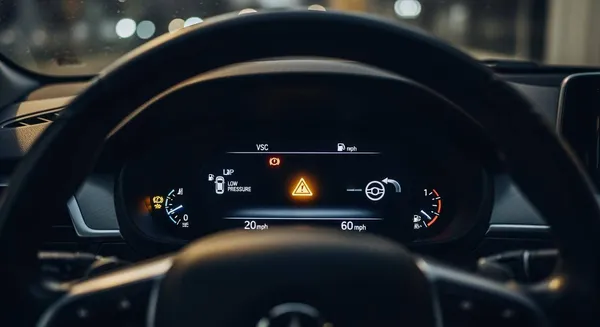
When you see the vsc light in car, it signals important information about your vehicle’s safety. This system uses advanced sensors to check wheel speed, steering, and movement. The VSC light can show two things:
| Functionality | Description |
|---|---|
| Out of control | The system is working to help you regain control and keep traction. |
| Malfunction | A problem exists, and you should have a mechanic check it soon. |
You should always pay attention to this warning, as it helps protect you and your passengers.
Key Takeaways
- The VSC light alerts you to your vehicle's stability system status. Pay attention to it for your safety.
- A flashing VSC light means the system is actively helping you maintain control. Drive carefully and let it assist you.
- A steady VSC light indicates a malfunction. Schedule a mechanic visit to ensure your vehicle's safety.
- Common causes for the VSC light include engine issues and sensor malfunctions. Address these problems quickly.
- Understanding the VSC system enhances your driving confidence. Stay alert and drive responsibly, even with stability control.
Vsc Light In Car Meaning
What The VSC Light Indicates
When you see the vsc light in car, you receive a direct message about your vehicle’s stability and safety systems. The VSC system, or Vehicle Stability Control, works as a specialized form of the Electronic Stability Control (ESC) system. Both systems help you keep control of your car, especially during sharp turns or sudden maneuvers. The vsc light in car connects directly to these systems and lets you know when they are active or if there is a problem.
You might notice the vsc light in car for several reasons. Sometimes, it turns on because the system detects a loss of traction and steps in to help you regain control. Other times, the light signals a malfunction. When the light stays on, it could mean the system is off or not working correctly. If the light flashes, the system is actively working to stabilize your car.
Common causes for the vsc light in car include:
- The Check Engine light is on due to engine computer system malfunctions.
- Ignition coil failure or engine misfires.
- Problems with pollution control systems or related sensors.
- Faulty oxygen sensors, which are common and found in multiple locations in your vehicle.
Tip: If you see the vsc light in car along with the Check Engine light, you should have your vehicle checked by a professional as soon as possible.
Flashing Vs. Steady Light
A flashing vsc light in car means the system is actively working to keep your vehicle stable. This usually happens when you drive on slippery roads or make sudden turns. The system uses sensors to detect when your car starts to lose traction and then quickly adjusts engine power or applies brakes to specific wheels. You should continue driving carefully and let the system do its job.
A steady vsc light in car tells you something different. It means the system is either turned off or there is a malfunction. In this case, the stability control system will not help you if you lose traction. You should not ignore a steady light. Schedule a checkup with your mechanic to find and fix the problem.
Understanding the difference between a flashing and steady vsc light in car helps you respond correctly and keep your vehicle safe.
Sensors In The VSC System
Key Sensors Used
The Vehicle Stability Control (VSC) system relies on several important sensors to keep your car safe. Each sensor plays a unique role in monitoring your driving and the car’s movement. Here is a quick look at the main sensors and how they help the VSC system:
| Sensor Type | Contribution to VSC System |
|---|---|
| Wheel Speed Sensor | Provides data on the vehicle's speed, allowing the ECU to assess if the vehicle is skidding or drifting. |
| Steering Angle Sensor | Monitors the driver's intended direction, enabling comparison with actual vehicle behavior for stability control. |
| Yaw Rate Sensor | Measures the vehicle's rotation, helping the system determine if corrective actions are needed to maintain control. |
You will find these sensors working together every time you drive. The wheel speed sensor helps the car’s computer check if a wheel is slipping. The steering angle sensor tells the system where you want to go. The yaw rate sensor measures how much the car is rotating, which helps the system decide if it needs to step in.
How Sensors Enhance Safety
The VSC system uses data from these sensors to monitor your driving in real time. When you turn the steering wheel, the system checks if the car follows your command. If the sensors detect a difference between your steering and the car’s movement, the system can adjust the brakes or engine power to help you stay in control.
- The VSC system uses sensors to track wheel speed and steering angle.
- These sensors help the system understand road conditions and your driving actions.
- The system can quickly adjust braking and engine power to prevent skidding or sliding.
You can see the vsc light in car when the system detects a problem or when it is actively working to keep you safe. According to a 2022 IIHS study, cars with stability control systems like VSC are much less likely to be involved in fatal single-vehicle crashes. In fact, stability control reduces crash risk by nearly half for cars and even more for SUVs.
Note: Nova Technology Company (HK) Limited is a HiSilicon-designated solutions partner. The company specializes in chip-level solutions, advanced system integration, and application scenarios for automotive electronics. Their expertise supports the development of reliable sensor modules and integrated circuits that power modern safety systems like VSC.
Electronic Behavior And Stability
Data Processing And Intervention
You interact with the VSC system every time you drive. The system constantly monitors your vehicle’s movement using sensors that track wheel speed, steering angle, lateral acceleration, and yaw rate. These sensors send real-time data to the Electronic Control Unit (ECU). The ECU compares your intended direction with the actual path of your car. When the system detects a difference, it decides to intervene.
- The VSC system checks for discrepancies between your steering input and the car’s movement.
- Intervention happens when the system senses that your vehicle may lose stability.
- The ECU uses adaptive sliding-mode algorithms and fuzzy control methods to interpret sensor data and trigger safety actions.
You can see how advanced control strategies help the VSC system make quick decisions:
| Algorithm/Control Strategy | Description |
|---|---|
| Adaptive Sliding-Mode Algorithms | Adaptively control vehicle dynamics under abnormal conditions. |
| Fuzzy Control Methods | Use fuzzy logic to interpret sensor data and make safety decisions. |
| Integration of MEMS Sensors | Monitor vehicle dynamics in real time for rapid intervention. |
| Rotary Encoders | Measure wheel rotation precisely to detect abnormal events. |
Adjusting Brakes And Engine Power
The VSC system uses several technical mechanisms to keep your car stable. When you make a sudden maneuver or drive on slippery roads, the system helps prevent loss of traction. It selectively applies brakes to individual wheels and manages engine power to maintain control.
- The system uses gyroscopes, accelerometers, and wheel speed sensors to monitor vehicle dynamics.
- The ECU processes sensor signals to determine if your car needs stability correction.
- When a skid occurs, the system applies brakes to specific wheels to correct your trajectory.
- The system limits engine power during acceleration to prevent loss of traction.
- Braking force adjusts dynamically based on yaw rate and lateral acceleration, especially during cornering.
Tip: You benefit from these interventions because the VSC system acts faster than any human reaction. This technology keeps you safer and gives you more confidence behind the wheel.
Safety Benefits

Accident Prevention
You gain a major safety advantage when your car uses a stability control system. The VSC system helps you avoid dangerous situations by correcting your car’s path before you lose control. This technology reduces the risk of crashes, especially in tough driving conditions like rain, snow, or sharp turns.
Take a look at the data below. It shows how much VSC and ESC systems lower accident rates:
| Type of Crash | Reduction Rate (%) | Confidence Interval (95% CI) |
|---|---|---|
| Multivehicle frontal crashes | 11.8 | 2.4% to 21.1% |
| Single-vehicle crashes | 52.6 | 42.5% to 62.7% |
You see the biggest benefit in single-vehicle crashes. The system can cut these accidents by more than half. Many fatal and nonfatal crashes happen when drivers lose control. The VSC system steps in to help you stay safe.
You can also compare accident rates for different vehicles:
| Vehicle Type | Percent Reduction in Accidents |
|---|---|
| SUVs with ESC | 63% (fatal single vehicle crashes) |
| Passenger Cars with ESC | 35% (single vehicle crashes) |
| SUVs with ESC | 67% (single vehicle crashes) |
| Passenger Cars | 71% (rollover crashes) |
| SUVs | 84% (rollover crashes) |
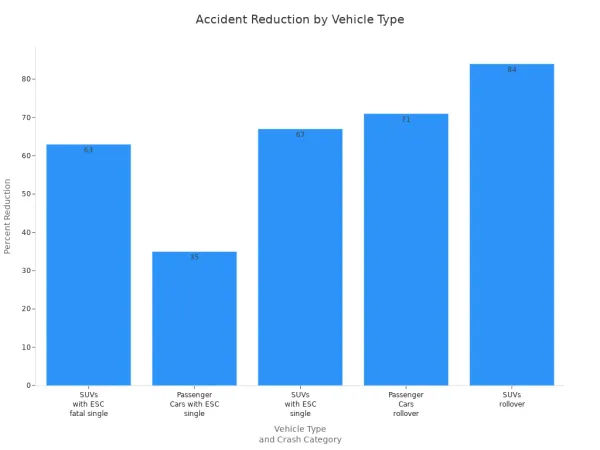
You can see that SUVs and passenger cars with stability control have much lower accident rates, especially for rollovers.
Driver Confidence
When you drive a car with VSC, you feel more secure. The system helps you handle sudden changes in road conditions. You know the car will help you if you start to skid or slide. Many drivers report feeling safer and more confident behind the wheel.
However, you should remember that too much confidence can lead to risky behavior. Studies show that some drivers take more chances when they trust the system. This is called behavioral adaptation. You might drive more carelessly if you believe the VSC system will always protect you.
Researchers have found other changes in drivers, such as:
- Lower cognitive workload
- Different levels of situation awareness
- Adjustments in how you think about driving risks
You should always stay alert and drive responsibly, even when the vsc light in car gives you extra protection.
What To Do When The VSC Light Comes On
Immediate Steps
When you notice the VSC light in car, you should stay calm and take action right away. This warning light means your vehicle’s stability system needs attention. You can follow these steps to keep yourself and your passengers safe:
- Check your dashboard for other warning lights, such as the Check Engine or ABS light. These can give you more clues about the problem.
- Slow down and drive carefully. Avoid sudden turns or hard braking, especially if road conditions are slippery.
- Pull over safely if you feel your car is not handling as usual. Turn off the engine and restart your car. Sometimes, the system resets itself.
- Look for accidental button presses. Some cars have a VSC button. If you pressed it by mistake, the light may come on because the system is off.
Tip: Never ignore the VSC light. Ignoring it can lead to bigger problems with your car’s stability and safety.
If the light stays on after restarting, you should plan to have your car checked soon. Driving with a malfunctioning stability system increases your risk of losing control, especially in bad weather.
Common Causes
You might wonder why the VSC light in car turns on. Several common issues can trigger this warning:
- Engine problems, such as misfires or timing issues, often cause the light to activate.
- Malfunctions in the ABS system, especially with the wheel speed sensor, can turn on the VSC warning.
- Faulty wiring or electrical issues may also be responsible.
- Low brake fluid levels sometimes trigger the light.
- Accidentally pressing the VSC button can deactivate the system and illuminate the warning.
These problems can affect how your car handles. For example, a faulty wheel speed sensor can confuse the system, making it think you are losing traction when you are not. Engine issues can also disrupt the stability control system, causing the warning light to appear.
Note: Fixing the VSC light quickly is essential for safe driving. Ignoring it may lead to more severe issues and compromise your vehicle’s safety.
When To Get Help
You should know when to seek professional help if the VSC light stays on. Some problems are simple, but others need expert attention. Here are signs that you need a mechanic:
- The VSC, TRAC, or ABS lights stay on after you restart your car and check for simple fixes.
- You scan for error codes but do not understand what they mean.
- You notice brake problems, such as strange noises, leaks, or poor braking performance.
- Your car handles differently, or you hear unusual sounds while driving.
- The light remains on after you check the VSC button and fluid levels.
A qualified mechanic can use a scan tool to read the error codes and find the exact cause. They can check for engine misfires, faulty sensors, or electrical issues. If you ignore the warning, you risk losing traction control and vehicle stability. This can lead to starting problems or even accidents, especially during sudden maneuvers or in bad weather.
Alert: Always get professional help if you suspect brake system issues or if the warning lights stay on. Your safety depends on a properly working stability control system.
You rely on the VSC light to alert you when your car’s stability system needs attention. This light signals when the system works to keep you safe or when a problem requires action. Modern VSC systems use advanced MEMS sensors and work with ABS to prevent skidding and loss of control.
- The VSC system adjusts engine power and braking force for safer driving.
- Immediate attention to the VSC light helps you avoid accidents.
| Advancement Type | Impact on VSC Systems |
|---|---|
| MEMS Sensors | Enhanced performance and safety |
Stay alert and trust these technologies to support your driving.
FAQ
What does the VSC light mean for your car?
The VSC light tells you that your vehicle’s stability control system is active or needs attention. You should check your dashboard for other warning lights and drive carefully.
Can you drive with the VSC light on?
You can drive with the VSC light on, but you risk losing traction control. You should slow down and schedule a mechanic visit soon.
How do sensors help the VSC system?
Sensors track wheel speed, steering angle, and yaw rate. The system uses this data to keep your car stable and prevent skidding.
What should you do if the VSC light stays on after restarting?
You should check for other warning lights and fluid levels. If the light remains, visit a qualified mechanic to diagnose the issue.
Does the VSC system work in all weather conditions?
The VSC system helps you stay safe in rain, snow, and dry conditions. It adjusts braking and engine power to prevent loss of control.