What AS6081 & AS9120 Mean for Your Electronic Component Supply Chain
Practical guide for buyers and engineers: What AS6081 & AS9120 Mean for Your Electronic Component Supply Chain. Sourcing, risk, and selection notes.

When Counterfeit Chips Hit Your Production Line: Why AS6081 and AS9120 Are Now Essential
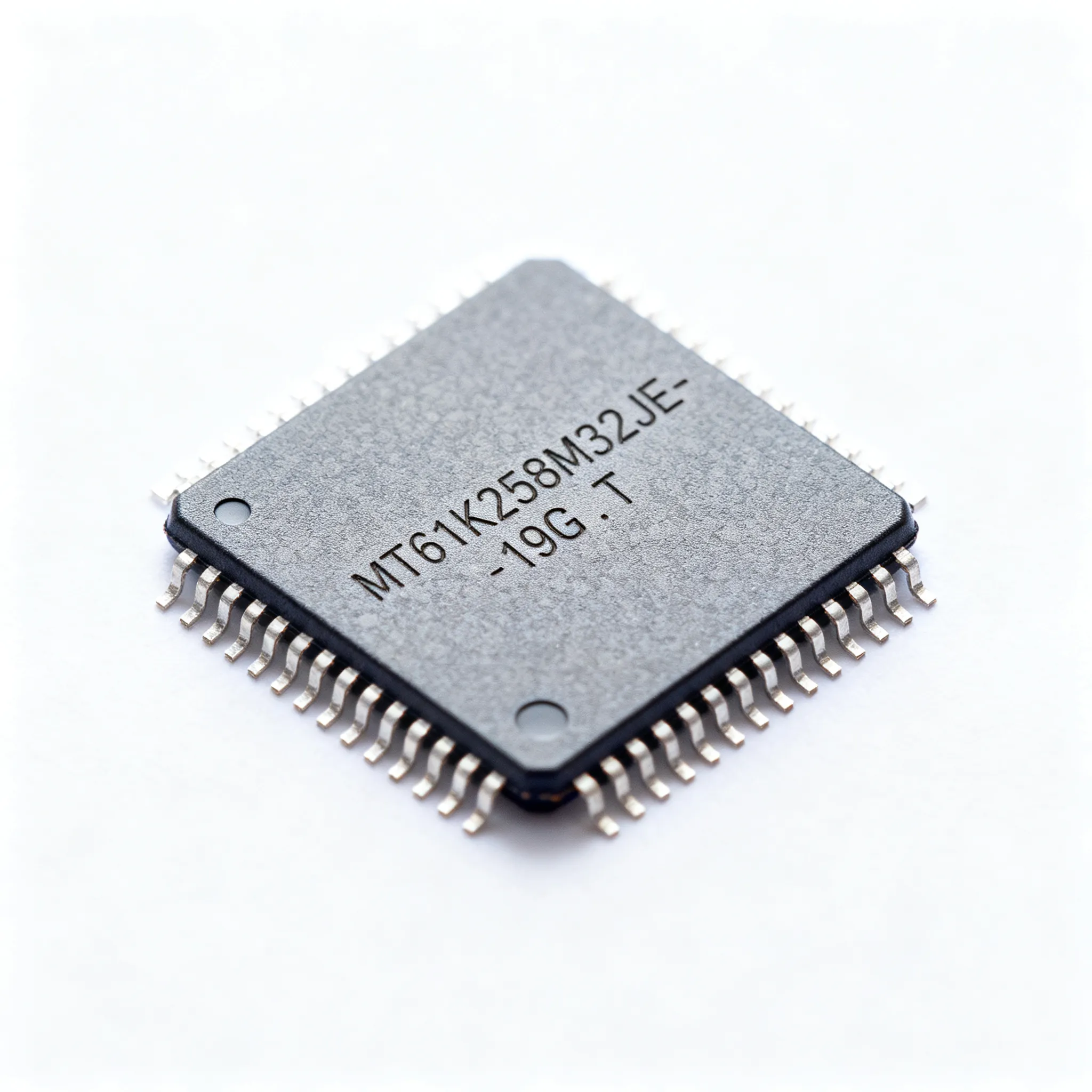
If you source electronic components for production—whether commercial IoT boards or flight-critical avionics—you already know the counterfeit problem has moved far beyond obvious blacktopping and remarking. Modern fakes can pass basic visual inspection, survive reflow, and even operate in-system for months before parametric drift triggers a field failure. The cost of that single escaped counterfeit part isn't just a line-down event; for aerospace and defense programs, it's a traceability catastrophe that can invalidate airworthiness certifications and trigger mandatory incident reporting.
ERAI, the industry's primary counterfeit reporting authority, continues to log thousands of suspect-part incidents annually across every component category—analog ICs, FPGAs, MIL-SPEC passives, and even basic connectors. Coverage by EE Times has documented how sophisticated counterfeit rings increasingly target allocation-sensitive and end-of-life parts, precisely the categories where procurement teams feel the most pressure to find stock outside authorized channels. When a long-lead-time FPGA suddenly shows up at an unfamiliar broker at half the authorized-distributor price, the counterfeit probability isn't theoretical—it's documented.
This is where AS6081 and AS9120 move from "nice-to-have certifications" to essential procurement filters. AS6081, published by SAE International, specifically addresses counterfeit electronic parts avoidance through rigorous inspection protocols—visual, X-ray, decapsulation, and solderability testing—applied at the distributor level. AS9120, the aerospace-distribution variant of AS9100, wraps a full quality management system around storage, handling, traceability, and configuration control. Together, they form the procurement community's most credible defense against a threat that grows more sophisticated every quarter. If your current supplier vetting stops at "they have an ISO 9001 certificate on the wall," this article explains what you're leaving exposed—and how to close the gap.
Key Takeaway: Counterfeit components are no longer a niche problem for military buyers. AS6081 and AS9120 provide structured, auditable protection that generic ISO 9001 simply doesn't address. The question isn't whether you need them—it's whether your current suppliers can demonstrate compliance when your next lot arrives.
What AS6081 and AS9120 Actually Require — A Side-by-Side Breakdown
Understanding what these two standards demand in practice is the difference between checking a box on a supplier questionnaire and genuinely reducing supply-chain risk. AS6081 and AS9120 serve complementary but distinct functions. One is a test-and-inspection standard aimed squarely at counterfeit detection; the other is a quality management standard governing how a distributor operates day to day. Confusing the two—or assuming one covers the other—is a common procurement mistake.
AS6081: Counterfeit Detection Through Structured Inspection
AS6081, formally "Counterfeit Electronic Parts; Avoidance, Detection, Mitigation, and Disposition," was developed by SAE's G-19 Counterfeit Electronic Parts Committee. It doesn't ask whether a distributor has a quality policy. It defines exactly what inspection steps must be performed on incoming electronic components to detect counterfeits before they ship to customers. The standard applies a risk-based approach: parts from authorized sources may require less invasive testing, while parts sourced through open market or brokered channels trigger progressively more rigorous inspection tiers.
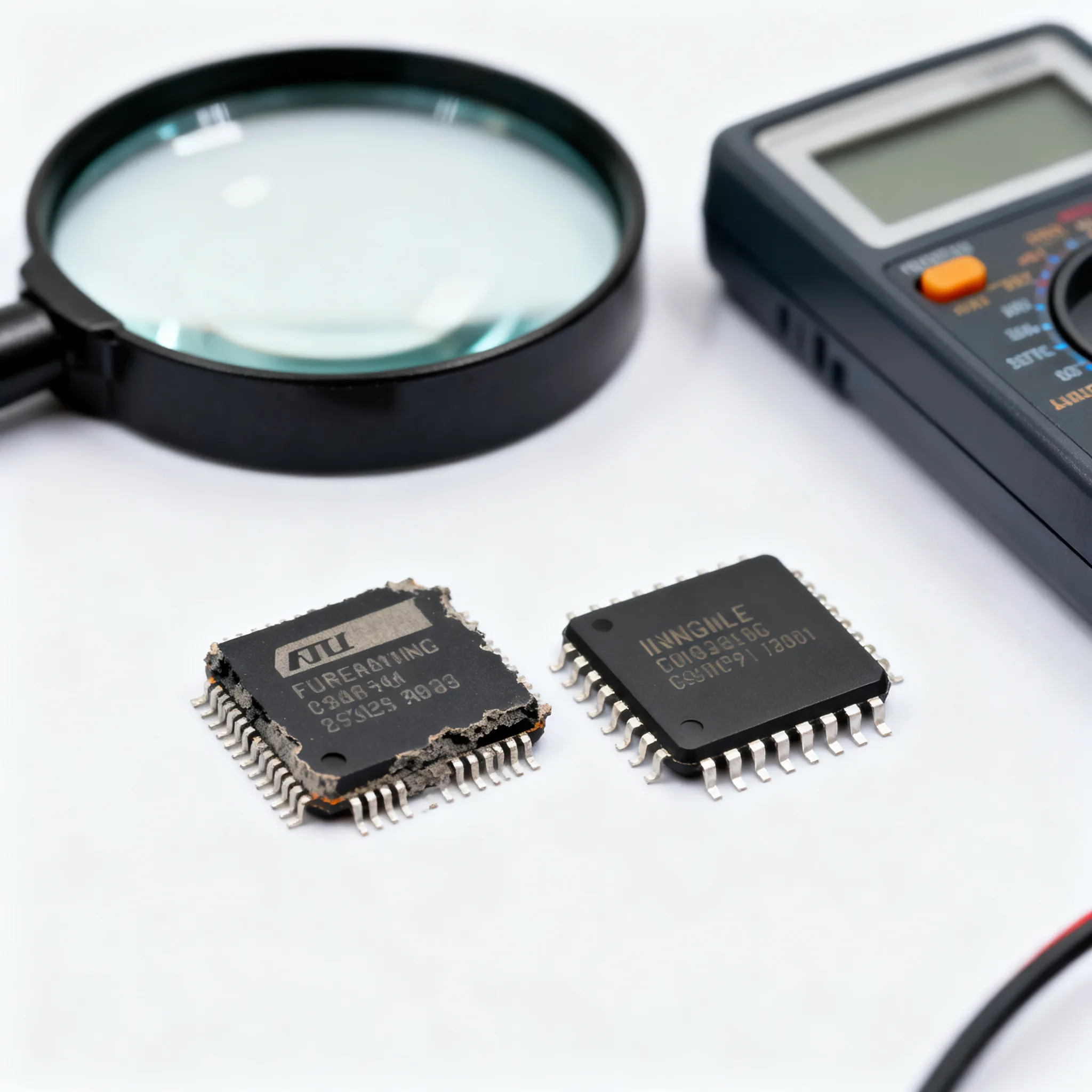
At minimum, an AS6081-compliant inspection plan includes external visual inspection under magnification (checking for marking inconsistencies, resurfacing evidence, and lead-condition anomalies), followed by marking permanency testing using solvents specified in MIL-STD-883 or equivalent. For higher-risk lots—obsolete, single-source, or allocation-constrained parts—the standard escalates to X-ray inspection (comparing internal lead-frame and die-attach geometry against a known-good reference), X-ray fluorescence (XRF) for material composition verification, and, where warranted, decapsulation with die-level comparison to manufacturer reference imagery. Solderability testing per J-STD-002 rounds out the electrical-integrity verification for parts destined for production boards.
AS9120: Quality Management for Aerospace Distribution
AS9120 adapts the AS9100 aerospace quality management standard specifically for distributors and stockists. Where AS9100 governs manufacturing processes, AS9120 governs the chain of custody after parts leave the factory: receiving inspection, electrostatic-discharge (ESD) protected storage, lot traceability maintenance, shelf-life management for moisture-sensitive and life-limited devices, and configuration control throughout warehousing and shipment. An AS9120-certified distributor must demonstrate documented procedures for handling nonconforming product, preventing commingling of traced and untraced lots, and maintaining full forward-and-backward traceability to the original component manufacturer.
Crucially, AS9120 itself does not mandate the specific counterfeit-detection tests that AS6081 prescribes. A distributor can hold AS9120 certification without performing X-ray or decapsulation on incoming parts—the standard's counterfeit-prevention clauses reference the need for a program but leave the specific inspection methodology to the organization's risk assessment. This is exactly why many aerospace primes now require both certifications: AS9120 for the operational infrastructure, AS6081 for the hands-on inspection protocols.
| Requirement Area | AS6081 Scope | AS9120 Scope | Procurement Implication |
|---|---|---|---|
| Counterfeit detection methodology | Core focus—specifies visual, X-ray, XRF, decapsulation, solderability testing tiers | Requires a counterfeit prevention program but does not prescribe specific tests | AS6081 is the standard that defines "how thoroughly you looked" |
| Traceability to OCM | Requires chain-of-custody documentation review as part of incoming inspection | Mandates full forward-and-backward traceability as part of QMS infrastructure | Both standards reinforce traceability; AS9120 makes it systemic |
| Storage and handling controls | Not addressed in depth—inspection-focused | Core element—ESD, moisture sensitivity (MSL), shelf-life, FIFO, segregation of lots | AS9120 ensures parts aren't degraded between incoming inspection and shipment |
| Nonconforming product process | Defines disposition: quarantine, report to ERAI and authorities, destruction or return | Requires documented nonconformance control, corrective action, and root cause analysis | AS9120 provides the closed-loop quality system; AS6081 defines counterfeit-specific disposition |
| Audit and certification body | ANAB-accredited bodies to AS6081; often combined with AS9120 surveillance audits | IAQG/ANAB-accredited certification bodies for AS9100-series standards | Verify both certificates through IAQG OASIS database for authenticity |
| Applicability to open-market sourcing | Designed specifically to address risk when authorized chain is unavailable | Applies to all distribution operations regardless of sourcing channel | Parts sourced outside authorized distribution benefit most from AS6081 rigor |
The table above makes one thing clear: these standards are designed to work together. AS9120 builds the quality infrastructure that ensures components remain genuine and undamaged throughout warehousing and logistics. AS6081 adds the forensic inspection layer that catches counterfeits that slip past paperwork-based verification. For procurement teams writing supplier qualification criteria, a distributor holding both certifications has demonstrated operational maturity that goes well beyond a generic ISO 9001 baseline.
AS6081 vs. AS9120 vs. ISO 9001: Which Certification Matters for Your Component Source
Walk into any electronics distributor's office and you'll probably see an ISO 9001 certificate prominently displayed. That certificate confirms the organization follows documented processes and pursues continuous improvement—valuable, but almost entirely silent on counterfeit electronic parts. ISO 9001 tells you a distributor has a quality manual. It doesn't tell you whether they can distinguish a genuine ADI converter from a sophisticated remark with a sanded and re-printed package. The gap between ISO 9001, AS9120, and AS6081 is where procurement risk actually lives.
ISO 9001:2015 is a generic quality management standard applicable to any industry. It asks: "Do you have documented procedures? Do you audit them? Do you fix things when they break?" For electronics procurement, this is table stakes—necessary but wholly insufficient. A distributor packing cookware could hold the same certificate. There is no requirement in ISO 9001 for component-level traceability, incoming electrical test, counterfeit detection, or even ESD-protected storage specific to semiconductor handling. When an ISO 9001-certified distributor sources from the open market, the buyer is relying entirely on that distributor's self-defined processes, which may be nothing more than a visual once-over and a prayer.
AS9120 builds directly on ISO 9001 but adds the entire aerospace-specific layer: documented configuration management, mandatory lot traceability to OCM, procedures for segregating and handling suspected unapproved parts, and requirements for notifying customers when nonconforming product has already shipped. It also requires the distributor to flow down quality requirements to sub-tier suppliers—so that a distributor buying from another distributor doesn't break the chain of accountability. For any component destined for an aircraft, spacecraft, or defense system, AS9120 is effectively the minimum bar that primes and government agencies expect.
AS6081 is different in kind. It's not a management-system standard at all—it's a technical inspection standard. Where AS9120 says "have a process for counterfeit prevention," AS6081 says "here is exactly how you inspect incoming product, and here's what you document, and here's when you escalate to destructive testing." For a procurement buyer, demanding AS6081 from a supplier means insisting on evidence that physical parts were actually examined to a published, auditable methodology—not just logged into a warehouse management system and picked into a box.
| Comparison Metric | ISO 9001:2015 | AS9120 (Aerospace Distribution QMS) | AS6081 (Counterfeit Inspection Standard) | Selection Criteria & Failure Boundary |
|---|---|---|---|---|
| Core focus | Generic quality management—any industry | Aerospace-specific distribution QMS; traceability, configuration control, customer notification | Counterfeit electronic parts detection—test methods, inspection tiers, disposition | ISO 9001 alone: insufficient for any high-reliability procurement |
| Counterfeit detection tests | None specified | Requires a program but doesn't mandate test methods | Prescribes visual, X-ray, XRF, decapsulation, solderability per defined risk tiers | AS6081 is the only standard that answers "how did you check these parts?" |
| Lot traceability to OCM | Not required | Mandatory—full forward and backward traceability | Chain-of-custody review required as part of inspection | AS9120 ensures traceability even before inspection begins |
| ESD and MSL controls | Generic infrastructure requirements | Specific requirements for semiconductor-appropriate storage and handling | Not in scope—inspection-focused | AS9120 prevents handling-induced latent damage |
| Audit rigor | Generic—auditor may have no electronics background | Aerospace-auditor qualifications; IAQG OASIS database registration | ANAB-accredited technical auditors with component inspection competence | Verify both AS certifications through IAQG OASIS; ISO 9001 alone tells you little |
Tip: When qualifying a new distributor, ask for their AS9120 certificate number and verify it through the IAQG OASIS database. Then separately request their AS6081 inspection procedure document—a real AS6081-certified organization will have a detailed, tiered inspection plan they can share under NDA. If the distributor hesitates on either, that's procurement-relevant information.
Procurement Scenarios Where AS6081 or AS9120 Compliance Becomes Non-Negotiable
Not every procurement scenario demands the full AS6081-plus-AS9120 rigor. A production run of commercial-grade voltage regulators from an authorized distributor with direct OCM shipment probably doesn't need X-ray inspection. But the moment you step outside the authorized franchise channel—or when the end application carries safety-of-life consequences—the calculus changes permanently. Below are the sourcing situations where skipping AS certification exposes your supply chain to unacceptable risk.
Long-Lead-Time FPGAs and SoCs for Avionics Upgrades
When you're sourcing an FPGA with a 52-week factory lead time for a cockpit display upgrade, and authorized distribution shows zero stock for six months, the temptation to buy from the open market is enormous. This is precisely the scenario counterfeits exploit. FP-GAs present a high-value target: complex BGA packages that are difficult to inspect without X-ray, firmware-loadable devices where the silicon may be genuine but remarked to a higher speed grade, and end-application environments where intermittent failure could be catastrophic. In this context, demanding AS6081 inspection—including X-ray comparison against a known-good reference and die verification where indicated—is not a commercial negotiation point; it's a technical requirement that should appear on your purchase order. An AS9120-certified distributor provides the additional assurance that the parts haven't been mishandled, moisture-exposed, or co-mingled with unverified lots during the months they waited for allocation.
Hard-to-Find MIL-SPEC Passives for Legacy Defense Systems
Defense sustainment programs regularly need small quantities of MIL-PRF-qualified resistors, capacitors, or connectors that haven't been in volume production for a decade. These parts are frequently sourced through surplus channels, independent brokers, and secondary-market aggregators—all paths where counterfeit and relabeled commercial-grade parts proliferate. ERAI incident reports consistently show MIL-SPEC passives among the most frequently counterfeited categories. An AS6081 inspection plan that includes XRF material analysis (to verify that a "MIL-SPEC" tantalum capacitor actually contains the specified dielectric and electrode materials) and marking permanency testing is the minimum defensible gate. Without it, a $2 capacitor could ground a $40 million platform.
End-of-Life Industrial ICs for Long-Lifecycle Equipment
Industrial equipment manufacturers often maintain 15-to-20-year field-service commitments. When an IC reaches end-of-life with the original manufacturer, procurement must either execute a last-time buy or resort to the aftermarket for future repairs. The aftermarket for EOL industrial ICs is flooded with pulls, refurbished parts with retinned leads, and outright counterfeits. IC-Online's BOM intelligence tools can help identify which franchise distributors still hold allocation, but when the only option is independent stock, AS6081 inspection—solderability testing in particular—becomes non-negotiable. Parts stored improperly for years may look fine but fail during board assembly due to oxidized leads or compromised internal bonds.
Allocation-Sensitive Analog and Power Management ICs
When a high-performance ADC or isolated gate driver goes on allocation, authorized distribution allocates supply to strategic accounts. Smaller buyers are forced toward the open market, where prices inflate and counterfeit risk spikes. In these situations, the procurement ask should shift from "can you find stock?" to "can you provide AS6081 inspection reports for the lot you're offering?" A legitimate independent distributor that has invested in AS6081 certification will have the in-house X-ray, XRF, and documentation capability to back up their supply. Those that deflect or offer only an ISO 9001 certificate are signaling that you're accepting risk they haven't measured.
| Procurement Scenario | Risk Without AS Certification | Recommended Standard | Verification Action |
|---|---|---|---|
| Long-lead-time FPGA for avionics | Remarked speed grades, package-level counterfeits escaping visual check | AS6081 + AS9120 | Require X-ray comparison report against known-good reference |
| MIL-SPEC passives for legacy defense | Commercial-grade parts relabeled as MIL-SPEC; material substitution | AS6081 minimum; AS9120 preferred | Require XRF composition report and ERAI database check |
| EOL industrial ICs for service | Pulls sold as new, oxidized leads, compromised internal wire bonds | AS6081 with solderability testing | Require solderability test report per J-STD-002, date-code verification |
| Allocation-sensitive analog ICs | Brokered parts with no traceability; price-gouged counterfeits | AS6081 + chain-of-custody documentation | Verify OCM authorization or request full inspection dossier |
These scenarios share a common thread: the further a component moves from authorized franchise distribution, the more the burden of verification shifts to the buyer. AS6081 and AS9120 certifications transfer that burden back to the distributor—and document that the verification was done before parts reached your receiving dock.
Specifying and Verifying AS-Compliant Parts: A Supplier Checklist for Engineers and Buyers
Specifying AS6081 or AS9120 compliance in a purchase order is only as effective as the verification process behind it. Certificates can be forged, inspection reports can be templated, and not every distributor claiming "AS-compliant processes" has actually passed a third-party audit. What follows is a practical, step-by-step framework for ensuring that the certification you specified is the certification you actually get.
Step 1: Validate Certificates Through Primary Sources
AS9120 certificates are registered in the IAQG OASIS database. Before accepting a supplier's claim, search OASIS for the certificate number and confirm it is active, within its expiration date, and issued by an ANAB-accredited certification body. For AS6081, certification is typically listed on the same OASIS profile or verifiable through the certification body directly. Do not accept a PDF certificate as sufficient proof—cross-reference it against the issuing body's public registry. A supplier that hesitates to provide the certificate number for verification should be treated as unverified regardless of what their website claims.
Step 2: Request the AS6081 Inspection Plan—Not Just the Certificate
An AS6081 certificate confirms the organization has a documented inspection methodology that passed audit. It doesn't confirm that your specific lot received anything beyond a visual check. For high-risk procurement, your purchase order should specify the inspection tier required—for example: "Lot shall be inspected per AS6081 with minimum of external visual, marking permanency, and X-ray comparison to known-good reference; inspection report to accompany shipment." A legitimate AS6081-certified distributor will have no issue providing the lot-specific inspection report. One that pushes back is telling you the inspection didn't happen.
Step 3: Audit the Documentation Package Before Accepting Shipment
For production-critical components, the documentation package should include—as a buyer-specified requirement—the following elements:
- Certificate of Conformance (CoC) that explicitly references the applicable AS6081 inspection criteria and lot traceability to OCM.
- Inspection report detailing each test performed: date-code and marking verification results, marking permanency solvent used, X-ray findings (with comparison imagery if high-risk), XRF readings with acceptance ranges, and solderability test outcomes where applicable.
- Chain-of-custody documentation tracing the lot from OCM through any intermediate distributors to the selling entity.
- Authorized distribution evidence if the parts were sourced through franchise channels—purchase order to OCM, packing slip, or authorized distributor certificate.
- ERAI or equivalent database check confirmation showing no open alerts for the date-code/lot-code combination.
Step 4: Use Platform-Level Filtering to Pre-Qualify Suppliers
Platforms like IC-Online aggregate inventory from global distributors and can surface supplier certification profiles—including AS6081 and AS9120 status—alongside real-time stock and pricing. Pre-filtering your BOM against suppliers that demonstrate AS certifications reduces the qualification burden before you ever send an RFQ. Instead of chasing individual supplier audits for every part on a 200-line BOM, you can concentrate verification effort on the highest-risk line items while letting platform-level certification filtering handle the commercial-grade passives and commodity logic where AS rigor may be disproportionate to the risk.
Tip: When uploading a mixed BOM to IC-Online for RFQ, annotate high-risk line items with "Require AS6081 inspection report" in the comments field. This signals to responding distributors that you expect more than a standard commercial quote—and eliminates suppliers who can't meet that bar before you invest time in technical review.
| Verification Action | When to Require | Red Flags If Missing |
|---|---|---|
| Verify AS9120 certificate in IAQG OASIS | Any aerospace/defense procurement; any supplier claiming AS9120 | Expired certificate; certificate not found in OASIS; supplier won't share certificate number |
| Request lot-specific AS6081 inspection report | High-risk parts: EOL, allocation-sensitive, open-market sourced, avionics, MIL-SPEC | "We inspect to AS6081 standards" without providing report; generic CoC with no test data |
| Require X-ray comparison imagery | FPGAs, ASICs, and complex BGA packages from non-authorized sources | "X-ray not performed for this lot"; imagery doesn't match known-good reference |
| Demand chain-of-custody documentation | Any part where traceability to OCM is a contractual requirement | Gaps in custody chain; intermediate entities without AS certifications |
| Cross-check date codes against ERAI alerts | All open-market purchases; any lot with unusually old date codes at "new" pricing | Date-code/lot-code combination flagged in ERAI database |
This verification framework turns "AS-compliant" from a marketing claim into an auditable procurement requirement. The distributors that have genuinely invested in AS6081 and AS9120 infrastructure will welcome the scrutiny—it differentiates them from competitors who haven't.
Senior-Level Questions About AS6081 and AS9120 in the Component Supply Chain
The following questions come directly from procurement leads and quality engineers who manage component supply chains for high-reliability programs. Each answer assumes the reader already understands basic certification concepts and needs actionable, specific guidance.
Q: What is the practical difference between AS6081 and AS9120, and can they be held together?
AS6081 focuses on physical inspection and testing to detect counterfeit components—it specifies the "how" of examining incoming parts through visual inspection, X-ray, XRF, decapsulation, and solderability testing, applied in risk-based tiers. AS9120 is a broader quality management standard for distributors serving aerospace, space, and defense; it addresses the operational infrastructure—traceability, storage, handling, nonconformance management, and customer notification. A distributor can—and often should—hold both, as they complement each other: AS9120 ensures the facility and processes maintain part integrity, while AS6081 ensures individual lots are forensically examined. The two certifications are frequently audited together by the same certification body, and holding both signals a level of organizational commitment to component quality that neither standard alone achieves.
Q: How does AS6081 certification actually reduce counterfeit risk when sourcing obsolete or allocated parts?
It requires a documented, tiered inspection plan that escalates with sourcing risk. For obsolete or allocated parts—where the authorized supply chain is unavailable and open-market sourcing becomes unavoidable—AS6081 mandates progressively invasive testing: external visual inspection under magnification, marking permanency testing with specified solvents, X-ray comparison against known-good reference imagery to verify internal construction, XRF analysis to confirm package and lead material composition, and, at the highest risk tier, decapsulation with die-level comparison. Chain-of-custody verification is also required, so a distributor cannot simply assert traceability—they must document it. This multi-layered approach makes it substantially harder for sophisticated counterfeits to slip through compared to a generic incoming inspection that may consist of little more than counting parts and checking for physical damage.
Q: Is AS9120 mandatory for every component we buy for aerospace or defense programs?
While AS9100/AS9120 requirements are often contractually mandated at the prime-contractor level, not every individual line item must come from an AS9120-certified distributor. The requirement typically flows down based on the end-item's criticality and the program's quality clauses. However, when components are destined for certified airframe, flight-critical, or safety-of-life applications, many primes and government agencies mandate that the distributor hold AS9120 to ensure traceability, configuration control, and proper handling throughout the supply chain. For commercial-off-the-shelf (COTS) parts used in non-critical subsystems, the requirement may be relaxed. The safest approach: review the specific contract quality clauses and, when in doubt, default to AS9120-certified sources—the cost differential is negligible compared to the cost of explaining why an uncertified distributor's parts ended up in a flight-critical assembly.
Q: What specific documentation should an AS6081-certified supplier provide for a lot of high-reliability ICs?
Look for a Certificate of Conformance that explicitly references AS6081 inspection criteria and the specific tests applied to the lot—not a generic "inspected to industry standards" statement. The supporting inspection report should detail: date-code verification results (with methodology—e.g., "date code checked against manufacturer format specification"), marking permanency test results (solvent used, duration, acceptance outcome), X-ray findings (preferably with comparison imagery against a known-good reference for BGA or complex packages), XRF readings for material composition where applicable, and solderability test outcomes per J-STD-002 for parts destined for production soldering. Where the distributor claims authorized sourcing, the package should include purchase-order-to-OCM evidence or an authorized distributor certificate. If any of these documents are missing, the lot has not been inspected to the full AS6081 standard as it applies to the part's risk tier.
Q: How does AS9120 interact with other aerospace QMS standards like AS9100, and why does it matter for procurement?
AS9120 is the distribution-specific variant of AS9100—both are part of the IAQG-sanctioned 9100-series family. AS9100 governs quality management for organizations that design and manufacture aerospace products; AS9120 governs organizations that stock, handle, and distribute those products after they leave the manufacturer. This distinction matters for procurement because an AS9100-certified manufacturer is audited for production quality, not for the distribution-specific controls—lot segregation, shelf-life management, ESD storage, and traceability maintenance across multiple customer shipments—that determine whether a part remains genuine and undamaged by the time it reaches your SMT line. When you source from an AS9120-certified distributor, you are relying on an organization whose quality system was specifically designed and audited for the handling of aerospace components between factory and production, closing a critical gap that AS9100 alone does not address.
Q: How can IC-Online's platform simplify the search for AS6081- and AS9120-qualified suppliers?
IC-Online aggregates global inventory and distributor profiles, allowing buyers to surface suppliers whose certification status—including AS6081 and AS9120—is documented on the platform. Instead of manually searching for certified distributors part-by-part, you can upload a complete BOM and use the platform's filtering and supplier-profile data to identify which line items can be sourced from AS-certified sources. The RFQ process then allows you to specify AS compliance requirements on a per-line basis, so that responding distributors understand the documentation and inspection expectations before quoting. This collapses what would otherwise be a multi-week supplier-qualification exercise into a structured sourcing workflow that maintains rigor without sacrificing speed. For procurement teams managing mixed BOMs—where some parts demand AS-level scrutiny and others don't—this granularity prevents over-specifying commodity parts while ensuring high-risk items get the certification-backed treatment they require.
References & Further Reading
- ERAI — Counterfeit Electronic Parts Reporting and Risk Intelligence
- EE Times — Electronics Engineering and Supply Chain News
- IC-Online — Electronic Component Sourcing and BOM Management Platform
- SAE International — AS6081: Counterfeit Electronic Parts; Avoidance, Detection, Mitigation, and Disposition
- SAE International — AS9120: Quality Management Systems — Requirements for Aviation, Space, and Defense Distributors
- IAQG OASIS — Online Aerospace Supplier Information System for 9100-Series Certificate Verification
- ANSI — American National Standards Institute; ANAB Accreditation Information
- SIA — Semiconductor Industry Association; Industry Data and Policy Resources
Conclusion: AS6081 and AS9120 are not interchangeable, and neither is a substitute for the other. AS9120 provides the quality management infrastructure—traceability, handling, configuration control—that ensures components remain genuine from receiving to shipment. AS6081 provides the forensic inspection protocols that detect counterfeits when documentation alone isn't enough. Together, they represent the most defensible approach to high-reliability component procurement available today. For engineers and buyers managing BOMs that include long-lead-time, allocation-sensitive, or aerospace-grade parts, the question has shifted from "should we require AS certification?" to "which tier of inspection does this specific lot demand?" The suppliers that have invested in both standards will have the documentation to prove it—and the ones that haven't are increasingly unable to compete in risk-aware supply chains.
Ready to source with AS6081 and AS9120 rigor? Upload your BOM or request a quote through IC-Online—specify your certification and inspection requirements per line item, and receive responses from pre-qualified global distributors who can meet your compliance bar.