What AS9120 Certification Means for OEMs Sourcing from Independent Electronic Component Distributors
Practical guide for buyers and engineers: What AS9120 Certification Means for OEMs Sourcing from Independent Electronic Component Distributors. Sourcing, risk, and selection notes.
When Unverified Components Can Ground a Production Line
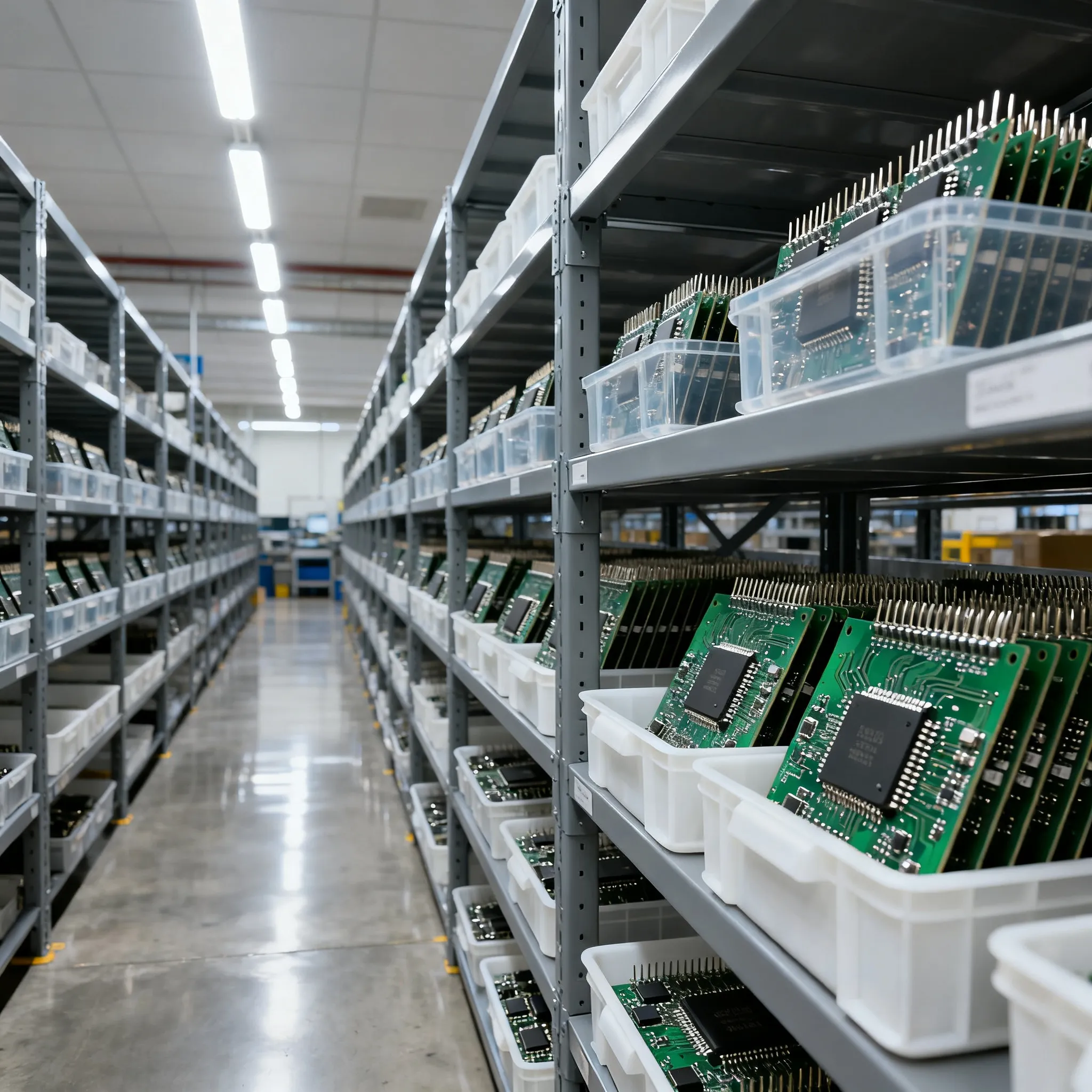
Electronics OEMs have spent the last three years navigating a supply landscape where the traditional franchise-distribution safety net no longer catches every bill-of-materials gap. When authorized channels show zero allocation on a microcontroller, a precision ADC, or a specialized power-management IC, procurement teams face a hard choice: halt the line or engage independent distributors who may operate outside the manufacturer's contractual orbit. The risk calculus changes the moment you step into the open market. A reel of parts that looks right, measures right on a sample pull, and arrives in what appears to be original packaging can still contain remarked, recovered, or outright counterfeit die—and one compromised lot reaching the pick-and-place machine can trigger a field-failure cascade that costs orders of magnitude more than the components themselves.
This is precisely why aerospace-grade quality management standards have migrated far beyond their original domain. The global electronics supply chain has become, in the words of Rand Technology's quality team, "increasingly complex, time-pressed, and more vulnerable to risk," and that vulnerability demands verifiable trust rather than assumed goodwill What AS6081 & AS9120 Mean for Your Supply Chain. AS9120—the SAE standard governing quality management systems for distributors who handle, store, and ship electronic components—has emerged as the de facto trust proxy that separates rigorous independent distributors from those operating with little more than a trading license and a packing bench.
The standard exists because component authenticity cannot be reliably verified by visual inspection alone. ThomasNet's certification glossary defines AS9120 as a standard to which organizations are "subjected to annual or regularly scheduled audits where the organization's compliance with the standard is evaluated by the certifying body" AS9120 Certification Definition. That ongoing audit obligation is what makes the certificate meaningful—it is not a one-time achievement but a recurring demonstration of operational discipline. When Amtivo notes that "many aerospace manufacturers, OEMs, and some government agencies require or strongly prefer their suppliers and distributors to be AS9120-certified as part of their approved supplier list," the operative word is prefer—because in practice, major primes have made it a contractual gate AS9120 Certification – Part Storage & Distribution QMS.
What drives this preference is chain of custody. Industrial Supply Company frames the standard's purpose succinctly: it was "developed to address matters such as chain of custody, traceability, and availability of records" AS9120 CERTIFICATION. When your incoming inspection team opens a box from an AS9120-certified distributor, they are not merely receiving parts—they are receiving a documented provenance trail that traces every handling step, storage condition, and inspection gate the components passed through. For an OEM that must answer to its own ISO or IATF auditors, that paper trail is worth the premium over uncertified spot-market sourcing. It transforms the independent distributor from a risk vector into a controlled extension of your own supply-chain quality system.
Sourcing from an AS9120-certified independent is no longer an aerospace niche practice. It has become a supply-chain immune response—a proactive defense against the counterfeit and substandard material that flourishes when allocation tightens and desperation drives buyers toward unvetted sources. The following sections unpack exactly what the certification demands of a distributor, how it interacts with related standards, what surveillance audits actually verify, and the questions you should ask before adding a new AS9120-certified source to your approved vendor list.
The Four Pillars of AS9120 That Change How Distributors Source and Store Parts
AS9120 is not a testing standard. It is a quality management system (QMS) that governs how a distributor operates—from the moment a purchase order is placed with a supplier to the moment sealed packaging leaves the shipping dock. Understanding its architecture helps buyers distinguish a certificate that reflects genuine operational rigor from one that sits in a drawer between annual surveillance visits. Serendipity Electronics describes the standard as empowering "distributors and manufacturers to maintain superior quality standards, enhance customer satisfaction, and confidently navigate the intricate regulatory landscape" AS9120 Certification: Ensuring Quality in Component Distribution. That empowerment rests on four operational pillars that collectively change how an independent distributor sources, inspects, stores, and ships every part number.
Pillar 1: Verified Source Identification. The QMS must define and document how the distributor qualifies its own suppliers. This means maintaining approved supplier lists with objective evidence of evaluation—not merely a Rolodex of brokers. An AS9120 auditor will look for criteria: Does the distributor verify that a source is authorized by the original component manufacturer (OCM) or a franchised chain? If the source is another independent, what risk-based vetting occurred before adding them to the approved list? The standard does not forbid purchasing from non-franchised sources, but it demands a documented, auditable rationale and a process for escalating scrutiny when sourcing from higher-risk channels.
Pillar 2: Risk-Based Assessment. Every incoming lot cannot be subjected to the same level of inspection—the economics do not work, and not every part carries equal consequence-of-failure. AS9120 requires a documented risk assessment methodology that assigns inspection depth based on factors including the source's approval status, the component's technology node, the end application's safety criticality, and the part's known counterfeit prevalence. A radiation-hardened FPGA destined for a satellite power system triggers a different inspection protocol than a passive pull-up resistor for a development board, and the QMS must show how that differentiation is applied consistently.
Pillar 3: Inspection and Testing Protocols. The standard mandates documented procedures for incoming inspection, including visual examination criteria, marking permanence tests, dimensional verification against manufacturer datasheets, and—where risk assessment demands it—electrical testing, X-ray inspection, decapsulation, or scanning acoustic microscopy. Critically, AS9120 does not prescribe a specific test for every part; it requires that the distributor has identified which tests apply at which risk thresholds and that those tests are performed by competent personnel using calibrated equipment. Amtivo reinforces that certification means the business has been "independently checked and approved as meeting all the AS9120 rules for safely handling, storing, and tracking aerospace parts" AS9120 Certification.
Pillar 4: Suspect and Counterfeit Control and Reporting. This is where AS9120 intersects most directly with AS6081. The QMS must define how suspect or confirmed counterfeit parts are identified, segregated from conforming inventory, quarantined in a controlled area, and reported to customers, authorities, and—where applicable—the OCM. A distributor without AS9120 might quietly return a suspicious lot to the source and try again. A certified distributor must have a documented containment and escalation process with records available for audit. Rand Technology emphasizes that the system must "define how a distributor must identify reliable sources, assess risk, verify parts (including testing), control suspect/counterfeit findings, and report incidents" What AS6081 & AS9120 Mean for Your Supply Chain.
The table below contrasts certified and non-certified practices across the operational dimensions that matter most when you are evaluating a new independent source.
| Operational Dimension | Non-Certified Distributor (Typical) | AS9120-Certified Distributor | Procurement Significance |
|---|---|---|---|
| Supplier qualification | Ad-hoc; sources selected on availability and price with limited documented vetting | Documented approved-supplier list with objective evidence of qualification, periodic re-evaluation | Reduces counterfeit ingress at the first point of procurement |
| Incoming inspection | Visual check of packaging and markings; may skip components that "look fine" | Risk-based inspection plan; documented criteria for visual, dimensional, and electrical testing thresholds | Catches remarked or substituted parts before they enter inventory |
| Lot-level traceability | Mixed-date-code reels may be combined; origin records often incomplete | Full lot traceability from receipt through storage to shipment; date codes, country of origin, and source documented | Enables pinpoint recall containment; satisfies customer and regulatory audit demands |
| ESD and humidity control | Basic ESD awareness; moisture-sensitive parts may not be tracked for floor-life exposure | Documented ESD protected area (EPA) controls; MSL tracking with humidity indicator cards and baking capabilities | Prevents latent damage that passes electrical test but fails prematurely in the field |
| Counterfeit containment | Returns suspect parts to supplier; no formal reporting or quarantine process | Segregated quarantine area; documented reporting to customers, authorities, and OCM; root cause analysis | Protects your production line from receiving the same suspect lot through another channel |
| Record availability | Limited to purchase orders and invoices; quality records may not exist | Test reports, certificates of conformance, and chain-of-custody documentation maintained and retrievable per retention policy | Provides the audit trail your own QMS requires for supplier qualification |
What this table underscores is that AS9120 certification is not a guarantee of perfect parts—no standard can promise that. What it provides is a systematic approach to catching problems before they reach your receiving dock, and a documented trail when questions arise later. For procurement leads accustomed to the franchise model where the OCM stands behind every reel, moving to an independent source can feel like stepping off a well-lit path. An AS9120-certified distributor extends that lighting into the open market by applying disciplined, auditable processes to every transaction.
Tip: When evaluating a new AS9120-certified source, ask for a sample quality record from a recent shipment—not a blank template but an actual redacted report. The substance and depth of that record tells you more about the distributor's operational culture than the certificate itself.
AS9100 vs. AS9120 vs. AS6081: Which Standard Should Be On Your Approved Vendor Checklist?
Procurement professionals and quality engineers often encounter all three standards on a supplier's credentials page and wonder whether they represent redundant certifications or distinctly different capabilities. The short answer: they are complementary but address different stages of the component lifecycle, and understanding the boundaries helps you write vendor qualification criteria that match your actual risk exposure.
AS9100 is the foundational aerospace quality standard for organizations that design and manufacture products. It incorporates all of ISO 9001 plus additional requirements specific to aviation, space, and defense—including configuration management, design verification, and product realization controls that only make sense in a manufacturing context. A PCB assembly house or a sensor manufacturer holds AS9100; a distributor who never touches a soldering iron should not be audited against it. QMS Learning notes that for most Tier 1 and Tier 2 suppliers, "certification isn't optional. It's a contractual gate to bidding on OEM work at all" AS9100 vs AS9120.
AS9120 adapts the AS9100 clause structure for organizations whose core process is procurement, storage, and distribution—not manufacturing. It drops the clauses related to design control and production process validation, and adds requirements governing traceability, handling of customer property, and the controls around splitting, reeling, or re-packaging components. This is the standard you want to see when sourcing from an independent distributor: it confirms the distributor's QMS is built around the specific risks of buying, storing, and reselling electronic components rather than manufacturing them.
AS6081 is different in kind. It is not a QMS standard but a test and inspection methodology standard that provides detailed procedures for detecting counterfeit electronic parts. Where AS9120 says "you must have a process for identifying suspect parts based on risk assessment," AS6081 specifies exactly how to perform marking permanence tests, how to interpret X-ray fluorescence results, what solvent mixtures reveal about blacktopping, and how to document the chain of evidence when a part is confirmed counterfeit. The latest revision, AS6081A (April 21, 2023), refined these protocols based on a decade of field experience with increasingly sophisticated counterfeit techniques What AS6081 & AS9120 Mean for Your Supply Chain.
In practice, the strongest independent distributors hold both AS9120 and AS6081 certification. AS9120 provides the management system that ensures consistency; AS6081 provides the technical procedures that make the inspection and testing credible. A distributor with AS9120 alone can have a well-documented risk assessment that directs them to test—but if the test procedures themselves are not standardized, you are relying on the distributor's internal lab competence without an external benchmark. A distributor with both certifications has had their QMS and their test methods independently audited.
| Comparison Metric | AS9100 | AS9120 | AS6081 | Selection Criteria for Independent Sourcing |
|---|---|---|---|---|
| Primary scope | Design and manufacturing organizations | Distributors, stockists, and pass-through suppliers | Test laboratories and distributors performing authenticity verification | Match the standard to the supplier's actual role in your supply chain |
| Audit focus | Design control, production processes, configuration management | Supplier qualification, traceability, storage conditions, suspect-part handling | Test equipment calibration, inspection procedures, reporting protocols | AS9120 for the distributor's QMS; AS6081 for their test lab credibility |
| Relevance for independent component distributors | Low—unless they also manufacture or perform value-add assembly | High—the standard designed specifically for component distribution | High—provides the technical backbone for counterfeit detection claims | Require AS9120 as baseline; prefer AS6081 when sourcing high-reliability or safety-critical parts |
| Audit frequency | Annual surveillance; full recertification every 3 years | Annual surveillance; full recertification every 3 years ThomasNet AS9120 glossary | Periodic per certifying body schedule; often aligned with AS9120 cycle | Confirm the last surveillance date—certificates older than 12 months without a current audit date are not valid |
| Contractual gate function | Required for manufacturing suppliers to aerospace primes | Required or strongly preferred for distributors on OEM approved supplier lists Amtivo AS9120 requirements | Increasingly specified in procurement contracts for high-value or safety-critical components | Check your own customer's quality clauses—they may mandate specific certifications in your supply chain |
The table makes one thing clear: for an OEM sourcing from an independent distributor, AS9120 is the non-negotiable floor. It confirms the distributor operates under a QMS built for the specific risks of component distribution, with mandatory annual audits that keep the certificate credible. AS6081 adds a layer of technical rigor to the testing claims—valuable for any component where a field failure carries safety, regulatory, or brand-reputation consequences. AS9100 on a distributor's wall is nice to have but does not address distribution-specific risks; do not accept it as a substitute for AS9120.
Practical guidance for your approved vendor checklist:
- Baseline requirement: AS9120 certification with a current surveillance audit date—verify on the certifying body's online register (e.g., OASIS) rather than accepting the certificate PDF at face value
- Elevated requirement (safety-critical, high-value, or long-lifecycle programs): AS9120 plus AS6081, with evidence that AS6081 procedures are actively used in incoming inspection, not merely filed in the quality manual
- Red flag: A distributor who claims "AS9120 compliant" but cannot produce a certificate number or audit report from an accredited certification body—"compliant" is often a self-declaration without independent verification
- Verification step: Before adding to your approved supplier list, request the last two surveillance audit reports and review for any non-conformances related to traceability, counterfeit control, or supplier qualification—the distributor's response to audit findings reveals more about their quality culture than a clean report does
What a Surveillance Audit Actually Verifies in a Distributor's Facility
An AS9120 certificate hanging in a distributor's lobby is only as current as the last surveillance audit. Understanding what auditors actually examine during these annual visits transforms the certificate from an abstract credential into a tangible risk-assessment tool—and helps buyers spot the difference between a distributor who treats the standard as a continuous operating discipline and one who treats it as an annual compliance exercise.
The surveillance audit is not a desk review of documents emailed to the certifying body. It is an on-site examination conducted by an accredited third-party auditor who walks the facility floor, pulls records, interviews personnel, and traces specific part lots from receipt to shipment. Amtivo describes the process as one where "your business has been independently checked and approved as meeting all the AS9120 rules for safely handling, storing, and tracking aerospace parts" AS9120 Certification – Part Storage & Distribution QMS. That independent checking covers five domains that directly affect the integrity of components shipped to your production line:
1. Walk-through inspection of incoming goods and quarantine areas. The auditor verifies that receiving inspection is actually performed as documented—not just that a procedure exists. They look at the physical layout: is the quarantine area clearly demarcated and secured? Are suspect parts segregated from conforming inventory with access controls that prevent accidental mixing? Are inspection workstations equipped with the magnification, lighting, and test tools specified in the quality manual? A distributor who passes this portion of the audit has demonstrated that incoming inspection is a real operational step, not a checkbox on a receiving form.
2. Review of test records and inspection logs. The auditor pulls a sample of recent receipts and traces them through the inspection process. They verify that the inspection level applied matches the risk assessment for that part—a high-reliability FPGA should show evidence of more intensive scrutiny than a commodity resistor network. They check that test equipment calibration is current, that inspectors are qualified and their training records are current, and that any non-conformances identified during inspection were dispositioned according to documented procedures. ThomasNet emphasizes that organizations are "subjected to annual or regularly scheduled audits where the organization's compliance with the standard is evaluated by the certifying body" AS9120 Certification Definition—this records review is where compliance or non-compliance becomes evident.
3. Counterfeit reporting log and incident review. One of the most revealing parts of the audit is the review of the distributor's counterfeit incident log. A clean log may indicate excellent sourcing practices—or it may indicate that suspect parts are being quietly returned to suppliers without documentation. The auditor looks for evidence that the reporting system works: were suspect parts properly quarantined, were customers notified if affected lots had already shipped, were authorities and OCMs informed per the documented procedure? A distributor who can show a well-handled incident—with root cause analysis, corrective action, and preventive measures—often demonstrates stronger quality maturity than one who claims to have never encountered a suspect part.
4. Traceability verification to original manufacturers. The auditor selects a sample of parts in inventory and traces the chain of custody backward—from the shelf location, through the receiving record, to the purchase order, to the supplier's certification, and ideally to the OCM's original documentation. Industrial Supply Company's framing of the standard as addressing "chain of custody, traceability, and availability of records" AS9120 CERTIFICATION is tested directly here. Gaps in the paper trail—a purchase from an unvetted intermediary, a missing certificate of conformance, a lot code that does not reconcile—are non-conformances that must be addressed before the certificate is renewed.
5. Personnel competence and training records. The best-documented QMS fails if the people executing it are not competent. The auditor verifies that inspectors, warehouse staff, and quality personnel have received training appropriate to their roles—ESD handling, counterfeit detection techniques, MSL management, and the specific procedures they are responsible for. Training records must show not just initial qualification but ongoing competency assessment. Serendipity Electronics notes that certification empowers distributors to "maintain superior quality standards" through continuous commitment, not one-time training events AS9120 Certification: Ensuring Quality in Component Distribution.
The key takeaway for procurement leads: a recent, clean surveillance audit report is the best defense against what the industry calls "certificate fatigue"—the proliferation of certifications that look impressive on a supplier registration form but reflect no current operational reality. Ask for the last audit report. Review the non-conformances. A distributor who shares the report willingly and discusses findings openly is demonstrating the transparency that the standard is designed to ensure.
The Questions Procurement Leads Ask Before Approving an AS9120-Certified Source
Adding an independent distributor to an approved vendor list is a decision that quality, engineering, and procurement stakeholders must get right—especially when the parts involved go into production hardware rather than lab prototypes. The following questions represent the due-diligence queries that senior engineers and buyers routinely raise during supplier qualification. The answers are designed to be actionable, grounded in the standard's actual requirements, and useful whether you are evaluating your first AS9120-certified source or refining an existing approved vendor program.
Q: How can I independently verify that a distributor's AS9120 certificate is current and valid?
Do not rely on the PDF certificate the distributor emails you—certificate fraud is real, and even legitimate certificates can lapse between surveillance cycles. Access the International Aerospace Quality Group's OASIS (Online Aerospace Supplier Information System) database at no cost. Search by the certificate number or the distributor's legal name. Verify that the certificate scope includes "distribution of electronic components" or similar language relevant to your purchase. Confirm the expiration date and, critically, that the last surveillance audit date falls within the past 12 months. A certificate whose last surveillance audit is older than 12 months is effectively expired, regardless of what the printed expiration date says. Also confirm that the certifying body is accredited by an IAF-recognized accreditation body—distributors sometimes use unaccredited registrars whose certificates carry no weight in a formal supplier audit.
Q: Does AS9120 guarantee that every component has been tested for authenticity?
No, and this is one of the most important nuances to understand. AS9120 mandates a risk-based process—the distributor must document how they assess the risk of each incoming lot and apply inspection and testing proportionate to that risk. A lot of commercial-grade resistors from a franchised source may pass through with visual and dimensional checks. A lot of high-value FPGAs from an unfamiliar broker must trigger deeper scrutiny. The standard ensures a documented, auditable system for making those decisions and for controlling suspect parts when testing raises flags. It does not impose 100% incoming authenticity testing, which would be economically infeasible and technically unnecessary. What it gives you is confidence that when testing is needed, it is applied systematically—not skipped because someone was in a hurry to ship.
Q: Is AS9120 only relevant for aerospace and defense supply chains?
Although the standard was created within the aerospace quality framework, its operational disciplines—traceability, risk-based inspection, suspect-part control, and record availability—are now demanded by medical device manufacturers, industrial automation OEMs, automotive tier-one suppliers, and any organization where a component failure could cause a safety incident or production-line stoppage. If your product carries regulatory liability or brand reputation risk from field failures, your procurement policies should strongly consider requiring AS9120-certified distribution regardless of your industry vertical. Many non-aerospace OEMs have adopted AS9120 as their approved-vendor-list criterion simply because it is the most rigorous, independently audited standard available for component distribution.
Q: What should I look for when a distributor claims 'AS9120 compliant' but isn't certified?
Treat the claim as unvetted until proven otherwise. "AS9120 compliant" is often a self-declaration meaning the distributor has read the standard and believes their processes align—without any third-party audit to confirm that belief. Request the certificate number, the issuing body, and the last two surveillance audit reports. If the distributor cannot produce these, they are not certified, and their "compliant" claim lacks independent verification. In practical terms, apply the same level of incoming inspection and source verification you would use for an uncertified source. A legitimate AS9120 certification is issued by an accredited registrar after a multi-day on-site audit—anything less is a marketing claim, not a quality credential.
Q: How does AS9120 interact with AS6081 for counterfeit avoidance?
Think of AS9120 as the management system and AS6081 as the technical toolkit. AS9120 requires the distributor to have a documented process for identifying, inspecting, testing, quarantining, and reporting suspect counterfeit parts—but it does not specify which solvent to use for marking permanence testing or how many X-ray views constitute an adequate internal inspection. AS6081 fills that gap with detailed, step-by-step test protocols developed and refined by the SAE G-19 Counterfeit Electronic Parts Committee. The latest revision, AS6081A (April 2023), represents the industry's consensus on best practices for counterfeit detection Rand Technology AS6081 & AS9120 overview. Many certified distributors hold both standards, using AS6081's procedures to fulfill AS9120's risk-assessment and verification requirements. When sourcing high-value, safety-critical, or long-lifecycle components, specifying both certifications on your approved vendor checklist provides the strongest available combination of management discipline and technical rigor.
Q: How long does it take for an independent distributor to get AS9120 certified, and how can I use that timeline to qualify a new supplier?
The typical timeline from initial gap analysis to certification audit completion is 6 to 12 months, depending on the maturity of the distributor's existing quality systems and the availability of resources to close gaps. A smaller distributor starting with minimal documentation may need the full 12 months; a larger one with an existing ISO 9001 foundation may complete the process in six. For procurement qualification purposes, a freshly issued certificate—less than one full audit cycle old—still represents higher risk than a certificate backed by multiple successful surveillance audits. The initial certification audit confirms the QMS is designed correctly; surveillance audits confirm it is being operated consistently. Prefer suppliers with at least two consecutive clean surveillance audit cycles. If you must qualify a newly certified independent distributor, supplement their AS9120 certificate with your own incoming inspection protocols, tighter lot-acceptance criteria, and a probationary period before granting full approved-vendor status.
The table below provides a practical decision framework for procurement leads navigating the process of qualifying an AS9120-certified independent distributor.
| Qualification Action | When to Apply | Trade-off or Limitation |
|---|---|---|
| Verify certificate on OASIS database | Before adding any AS9120-claiming distributor to your AVL—always the first step | OASIS access is free but requires registration; some smaller certifying bodies may not upload promptly |
| Request last two surveillance audit reports | When the certificate is confirmed valid; review non-conformances for traceability or counterfeit-control findings | Some distributors consider audit reports proprietary; willingness to share (even redacted) signals transparency |
| Require AS6081 certification in addition to AS9120 | When sourcing components for safety-critical, high-reliability, or long-lifecycle applications | Narrows the supplier pool; may increase component cost modestly relative to AS9120-only sources |
| Conduct your own source inspection of the first shipment | When qualifying a newly certified distributor or one without a track record with your organization | Adds receiving workload; reduces to sampling once the distributor demonstrates consistent performance |
| Set probationary AVL status with tighter lot-acceptance criteria | For distributors with less than two clean surveillance audit cycles | Increases internal inspection cost short-term; provides data to justify full AVL approval or disqualification |
These actions are not theoretical—they represent the minimum due diligence that a robust supplier qualification process demands when moving beyond franchised distribution into the independent channel. The AS9120 certificate opens the door; your own verification process determines whether the distributor walks through it.
For OEMs managing mixed bills of materials where franchised channels cannot fill every line item, the independent distribution sector is not optional—it is essential. But not all independents operate with the same discipline. AS9120 certification, properly verified and combined with AS6081 where risk demands it, gives procurement teams a defensible, auditable basis for qualifying independent sources. The standard does not eliminate supply-chain risk—nothing can—but it replaces guesswork with a structured, independently verified system that catches problems before they become production-line catastrophes.
When your next RFQ includes allocation-sensitive or hard-to-find part numbers, start with the quality infrastructure behind the quote. Request a BOM upload or RFQ through IC-Online, where certified independent distributors compete on both availability and verifiable quality credentials—not just price. Specify your certification requirements in the RFQ notes, and let the supplier's quality documentation do the talking before a single reel reaches your receiving dock.
References & Further Reading
- Rand Technology — What AS6081 & AS9120 Mean for Your Supply Chain
- ThomasNet — AS9120 Certification Definition and Glossary
- Amtivo — AS9120 Certification: Part Storage & Distribution QMS
- Industrial Supply Company — AS9120 Certification Overview
- Serendipity Electronics — AS9120 Certification: Ensuring Quality in Component Distribution
- QMS Learning — AS9100 vs AS9120 Comparison
- SAE International — AS9120C Standard (Current Revision)
- IAQG — OASIS Online Aerospace Supplier Information System