What Makes 8P8C Modular Connectors Essential for Modern Networks
8p8c modular connectors play a vital role in modern network reliability and speed. These connectors, commonly known as rj45,
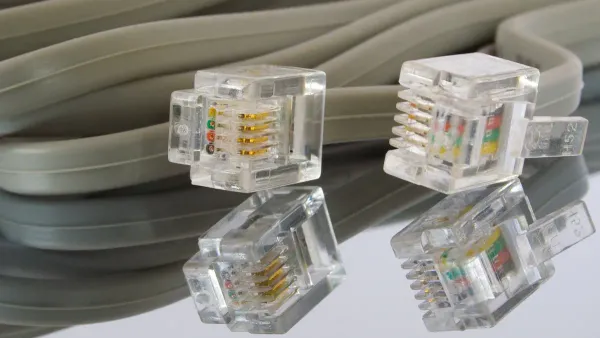
8p8c modular connectors play a vital role in modern network reliability and speed. These connectors, commonly known as rj45, have transformed networking by replacing older, bulky phone connectors with a flexible solution that supports both data and power transmission. The 8p8c connector design features eight positions and contacts, making it ideal for ethernet cables and a wide range of network applications. Modular connectors offer solderless assembly, easy customization, and off-the-shelf availability for home and industrial settings. Ruggedized versions provide shielding and integrated magnetics, enhancing performance in harsh environments. Their plug-in nature reduces downtime, simplifies field repairs, and supports scalable networking solutions. With long-standing standardization, modular connectors dominate network infrastructure for ethernet, voice, industrial controls, and smart devices.
Key Takeaways
- 8P8C connectors, also called RJ45, have eight contacts that support fast and reliable Ethernet connections up to 10 Gb/s.
- Their modular design allows easy network expansion, quick repairs, and compatibility with various cable types like Cat5e and Cat6.
- Durable construction with features like strain relief and shielding ensures stable performance in homes, offices, and harsh industrial environments.
- Shielded connectors protect against interference in noisy settings, while unshielded types suit low-interference areas, so choose based on your environment.
- Following proper installation steps and wiring standards guarantees strong connections and long-lasting network reliability.
8P8C Modular Connector Features
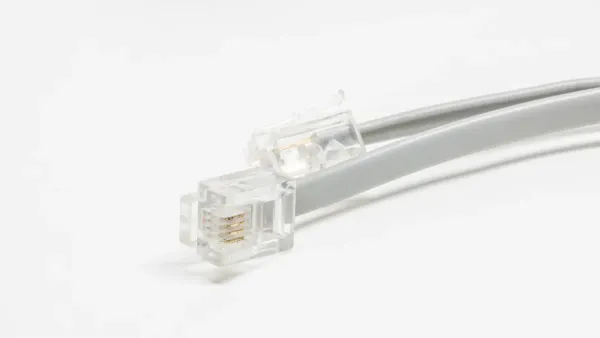
Eight Positions and Contacts
The 8p8c modular connector stands out for its eight-position, eight-contact design. Each connector contains eight metal contacts, spaced about one millimeter apart, which align with eight wires inside the cable. This arrangement supports four twisted pairs, allowing for simultaneous data transmission and reception. The contacts use 50 micro-inch gold plating, which resists corrosion and ensures long-term reliability. The three-prong contact design works with both solid and stranded copper conductors, making the modular plug 8p8c suitable for a wide range of cable types.
| Specification Aspect | Details |
|---|---|
| Positions and Contacts | 8 positions, 8 contacts (8P8C) modular plug |
| Cable Compatibility | CAT5e, 100Ω balanced twisted pair, 100 MHz cables |
| Contact Plating | 50 micro-inch gold plating on contact mating area for long-term reliability |
| Contact Design | Three-prong contacts for solid or stranded 24-26 AWG insulated copper conductors |
| Max Conductor Diameter | 0.042" (1.07 mm) |
| Max Cable Jacket Diameter | 0.270" (6.8 mm) |
| Connection Type | Permanent crimp connection, non-reusable once crimped |
| Strain Relief | Primary and secondary strain relief supports to retain cable jacket and minimize movement |
| Design Features | Non-feed through design to prevent shorts and RF signal leakage |
| Compliance | Meets industry standard mechanical and electrical specifications |
| Tool Compatibility | Compatible with IDEAL Telemaster™ and standard modular plug crimping tools |
The eight-contact configuration enables the rj45 connector to support Ethernet speeds up to 10 Gb/s. Each twisted pair reduces crosstalk and electromagnetic interference, which is essential for stable data transmission. The connector’s orientation tab prevents incorrect wiring, while the retaining latch secures the connection.
Modularity and Scalability
The modularity of the 8p8c modular connector allows for easy customization and network expansion. Keystone jacks snap into modular panels, wall plates, and surface mount boxes, making it simple to change or expand network layouts. Modular plug 8p8c types support Cat5e, Cat6, and Cat6a cables, enabling upgrades without replacing the entire infrastructure.
| Modular Feature | Description and Benefit |
|---|---|
| Keystone jacks | Snap into modular panels, wall plates, and surface mount boxes for easy network layout customization. |
| Category compatibility | Supports Cat5e, Cat6, Cat6a cables, enabling upgrades and scalability. |
| Easy replacement | Single keystone jacks can be replaced without disturbing other connections, aiding maintenance. |
| Snap-in design | Allows quick installation and removal, facilitating network expansion. |
| Panel mount connectors | Provide secure Ethernet access on equipment enclosures and racks, supporting multiple ports integration. |
| Shielded/unshielded options | Allow selection based on EMI protection needs, important for different environments. |
| Waterproof versions | Suitable for outdoor or harsh environments, expanding deployment options. |
| Robust construction | Protects connections in industrial/commercial settings, supporting network reliability. |
Tip: The modular plug 8p8c design reduces installation time and maintenance costs. Installers can quickly replace damaged components without disrupting the entire network. Clear labeling and documentation simplify troubleshooting and support future upgrades.
Durability and Build
Manufacturers use molded plastic housings and stamped metal contacts to give 8p8c modular connectors their strength. Insulating channels separate the contacts, providing both structural integrity and electrical isolation. Strain relief features, such as molded-in spring latches, secure the cable and prevent accidental disconnection. High-reliability versions include EMI/RFI shielding, which protects against interference and extends connector life.
- Molded plastic housings enclose the contacts for durability.
- Strain relief and spring latches keep cables secure.
- Shielded connectors absorb EMI/RFI and channel interference to ground.
- Keying features prevent incorrect insertion.
- Protective boots and ruggedized parts increase the number of insertion/removal cycles.
- Integrated magnetics inside the jack provide isolation, transient protection, and impedance matching.
- Multiple mounting options (panel, board, surface, through-hole) adapt to different environments.
These features make modular connectors suitable for both home and industrial networks, where reliability and longevity are critical.
Signal Integrity and Shielding
Signal integrity is a top priority in modern networks. Shielded rj45 connectors, also known as STP or FTP types, include metal shielding to block electromagnetic interference. This shielding is essential in environments with high interference, such as data centers and industrial sites. Shielded modular plug 8p8c types work with shielded Cat6 and Cat7 cables to maintain high-speed, stable data transmission.
- Shielded connectors prevent EMI and RFI from disrupting signals.
- Maintaining twisted pairs up to the termination point reduces crosstalk.
- Certifications like UL, RoHS, and ETL ensure product safety and compliance.
- Shielded keystone jacks and double-shielded cables offer extra protection in noisy environments.
- Proper installation and grounding are necessary for maximum shielding effectiveness.
Unshielded connectors are suitable for low-interference settings, such as homes and standard offices. Choosing the right type ensures reliable performance in any environment.
TIA/EIA Standards (T568A/B)
The 8p8c modular connector follows strict TIA/EIA standards, specifically T568A and T568B wiring schemes. These standards define the order of wire pairs inside the connector, ensuring compatibility and consistent performance across devices and manufacturers.
| Pin Number | T568A Wire Color | T568B Wire Color | Description/Notes |
|---|---|---|---|
| 1 | White/Green Stripe | White/Orange Stripe | Transmit + (TX+) in T568A; Data A+ (DA+) in T568B |
| 2 | Green Solid | Orange Solid | Transmit - (TX-) in T568A; Data A- (DA-) in T568B |
| 3 | White/Orange Stripe | White/Green Stripe | Receive + (RX+) in T568A; Data B+ (DB+) in T568B |
| 4 | Blue Solid | Blue Solid | Not used in 10/100BASE-T; DC+ in Gigabit Ethernet |
| 5 | White/Blue Stripe | White/Blue Stripe | Not used in 10/100BASE-T; DC- in Gigabit Ethernet |
| 6 | Orange Solid | Green Solid | Receive - (RX-) in T568A; Data B- (DB-) in T568B |
| 7 | White/Brown Stripe | White/Brown Stripe | Not used in 10/100BASE-T; DD+ in Gigabit Ethernet |
| 8 | Brown Solid | Brown Solid | Not used in 10/100BASE-T; DD- in Gigabit Ethernet |
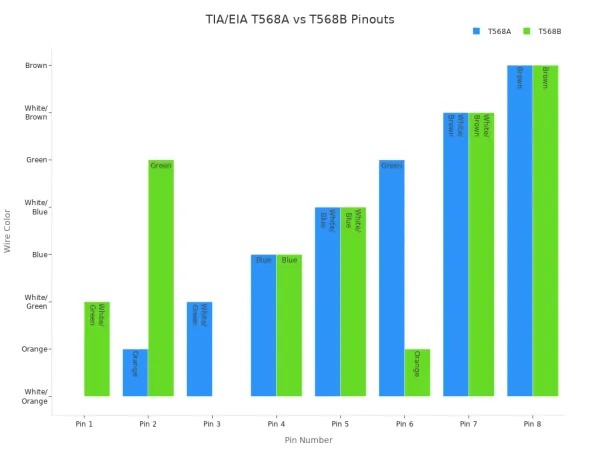
Both standards support Ethernet protocols, including Gigabit and 10G Ethernet. T568A is preferred for new installations and is required for U.S. government contracts, while T568B remains common in legacy systems. Consistent wiring prevents crosstalk and ensures proper network function. Adhering to these standards allows 8p8c modular connectors to deliver high performance and interoperability, supporting advanced applications like Power over Ethernet.
8P8C Connector Applications

Home and Office Networks
The 8p8c connector serves as the backbone of home and office networking. People use these connectors to link computers, routers, switches, gaming consoles, and smart TVs. This setup forms local area networks (LANs) that provide fast internet access and reliable data sharing. The 8p8c connector supports Ethernet standards such as Fast Ethernet, Gigabit Ethernet, and 10 Gigabit Ethernet. Its design allows for easy installation and custom cable lengths, making it a key component in structured cabling systems. Users benefit from stable connections for streaming, gaming, and video conferencing.
Tip: For home theaters, the 8p8c connector enables seamless streaming by connecting media devices directly to the network.
Common Home and Office Applications:
- Connecting routers to computers and smart TVs
- Linking multiple devices in business networks
- Supporting high-speed internet for gaming and streaming
Industrial and Factory Use
Industrial and factory environments present harsh conditions. Extreme temperatures, humidity, vibrations, dust, and chemical exposure challenge standard networking hardware. The 8p8c connector used in these settings features extra shielding, water resistance, and high-quality materials. Shielded twisted-pair cables terminated with shielded 8p8c connectors help reduce electromagnetic interference. Proper grounding prevents voltage differentials and ground loops, especially near high-voltage equipment. These robust connectors ensure reliable network performance in demanding industrial and telecom environments.
| Environmental Factor | 8P8C Solution |
|---|---|
| EMI | Shielded connectors |
| Moisture/Dust | Water-resistant housings |
| Vibration | Ruggedized construction |
Data Centers
Data centers rely on 8p8c connectors for high-speed, high-capacity data transmission. The modular design simplifies installation and maintenance, supporting efficient operations. Advanced connectors with improved shielding and bandwidth capabilities meet the growing demands of cloud computing and data storage. Regular inspection and cleaning maintain connector reliability. Upgrading to Cat6 or higher enhances bandwidth and reduces crosstalk, supporting stable network performance in datacom applications.
Note: Using high-quality 8p8c connectors in data centers reduces maintenance needs and improves overall network reliability.
Devices (Routers, Servers, Smart TVs)
Many devices depend on the 8p8c connector for network connectivity. Network switches, routers, servers, and computers use these connectors to establish Ethernet connections over twisted pair cables. The 8p8c connector also appears in telecommunications and datacom applications, including ISDN and T1 lines. Devices such as smart TVs and gaming consoles benefit from the connector’s robust design, which ensures stable and fast data transmission. The widespread adoption of 8p8c in networking devices highlights its importance for network expansion and compatibility.
Devices Commonly Using 8P8C Connectors:
- Network switches and routers
- Servers and computers
- Smart TVs and gaming consoles
Compatibility and Modular Plug 8P8C Types
Supported Cable Categories
8p8c modular connectors work with a wide range of ethernet cables. These include Cat5e, Cat6, Cat6a, Cat7, and even Cat8. The modular plug 8p8c design fits cables with different jacket and insulation diameters, making it versatile for many network setups. Cat7 cables often use a GG45 connector, but most installations still rely on the standard rj45. The table below shows key compatibility details:
| Feature | Details |
|---|---|
| Connector Type | RJ45 (8P8C) Modular Plug |
| Compatible Cable Types | CAT5E, CAT6, CAT6E, CAT6A, CAT7 |
| Cable Jacket Diameter | 0.224” – 0.335” (5.7mm – 8.5mm) |
| Cable Insulation Diameter | 0.037” – 0.041” (0.94mm – 1.05mm) |
| Conductor Gauge | 28 - 26 AWG |
| Shielding | Shielded with external ground |
| Performance Standard | Meets 10G performance standard |
| Compliance | ANSI/EIA/TIA/TAA, UL, RoHS, FCC |
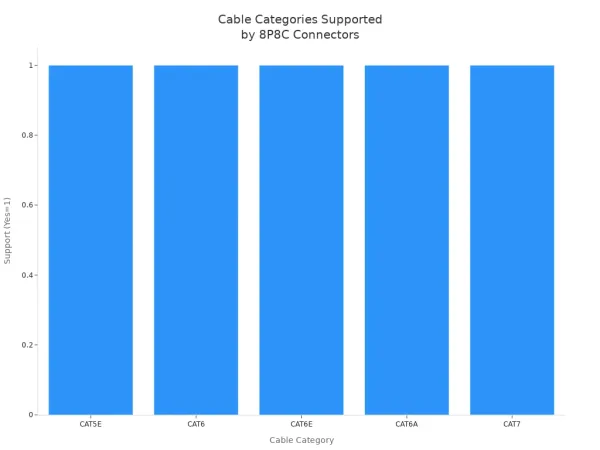
Most ethernet cables use the rj45 connector, making network upgrades and repairs simple.
Shielded vs Unshielded
Shielded modular plug 8p8c types protect against electromagnetic interference (EMI) and radio frequency interference (RFI). These connectors use metal shielding and require proper grounding. Shielded connectors work best in factories, data centers, or near heavy electrical equipment. Unshielded modular connectors have plastic housings and suit homes or offices with low interference. Shielded cables are heavier and cost more, but they keep signals stable in noisy environments. Unshielded types are easier to install and more affordable.
Note: Always match the connector type to the environment. Shielded connectors need correct grounding to avoid network problems.
Pass-Through and Field Termination
Pass-through modular plug 8p8c connectors let wires extend through the end, so installers can check the wire order before crimping. This design reduces mistakes and speeds up installation. Pass-through connectors need a special crimping tool. Field termination connectors require careful wire cutting and alignment before crimping, which takes more time but offers better long-term durability. Both types support solid and stranded cables, but pass-through connectors make setup easier for beginners.
RJ45 vs 8P8C
Many people use the term rj45 when talking about 8p8c connectors. Technically, 8p8c describes the physical layout—eight positions and eight contacts—while rj45 refers to a wiring standard. All rj45 connectors use the 8p8c format, but not all 8p8c connectors are rj45. The T568A and T568B wiring schemes define how wires connect inside the plug. Using the same scheme on both ends ensures compatibility and reliable data transmission. Mixing schemes creates crossover cables, which are only needed for special device-to-device links.
- RJ45 connectors follow T568A/B wiring for consistent pinout.
- Modular plug 8p8c types come in shielded, unshielded, pass-through, and toolless designs.
- Always use the same wiring scheme on both ends of ethernet cables for best results.
8P8C Installation Best Practices
Proper Termination
Proper termination is essential for reliable network installations. Installers should always use professional crimping tools to attach 8p8c connectors. Two-piece connectors with load bars help align wires and improve connection stability. Following the T568A or T568B wiring standards prevents connectivity problems. Installers must handle connectors carefully to avoid breaking the plastic latch, which secures the connection. Compatibility between connectors and cables ensures strong connections and reduces the risk of frequent disconnections. Regular inspections help detect wear or loose contacts before they affect network performance.
Best Practices for Termination:
- Use professional crimping tools for secure attachment.
- Choose two-piece connectors for easier wire alignment.
- Follow T568A or T568B wiring standards.
- Handle connectors gently to protect the latch.
- Match connectors to cable type and gauge.
- Inspect terminations regularly.
Tools and Equipment
Successful network installations depend on the right tools. Specialized crimping tools are necessary for installing 8p8c modular connectors. High-quality crimpers and testers, such as those from Platinum Tools, ensure accuracy and reliability. Precision wire strippers help remove cable jackets without damaging insulation. For field termination, toolless connectors can speed up the process in temporary or remote setups.
Essential Tools:
- Professional crimping tool
- Cable tester
- Precision wire stripper
- Toolless field termination connectors (for remote work)
Common Mistakes
Installers often make mistakes that can impact network performance. Incorrect wiring order, over-crimping, under-crimping, and misaligned wires are common issues. Breaking the plastic retaining tab can cause accidental disconnections. Using the wrong connector for the cable type leads to poor connections. Regular training and careful handling reduce these errors.
Tip: Always double-check the wiring sequence before crimping to avoid costly rework.
Ensuring Performance
Proper installation of 8p8c connectors directly affects long-term network performance. Secure, stable connections prevent signal loss and downtime. High-quality connectors with gold-plated contacts and durable latches resist corrosion and accidental unplugging. Regular maintenance and inspection help catch problems early. In areas with high electromagnetic interference, shielded connectors maintain signal quality. Field termination offers flexibility for temporary or remote network installations, especially when using stranded cables for frequent moves or changes.
| Installation Factor | Impact on Network Performance |
|---|---|
| Correct crimping technique | Stable, reliable connections |
| Wiring standard adherence | Prevents miswiring and failures |
| Quality connectors | Reduces corrosion, improves uptime |
| Regular inspection | Early detection of issues |
| Shielded connectors | Maintains signal in noisy areas |
8P8C modular connectors form the backbone of modern networking by supporting robust, scalable, and high-performance networks. Their universal interface, modular design, and compatibility with multiple cable categories allow easy upgrades and flexible layouts. High-quality connectors ensure reliable data transmission and long-term durability. As networking technology advances, the high-quality ethernet connector remains essential for both current and future needs. Industry trends show ongoing innovation, improved shielding, and eco-friendly manufacturing, keeping these connectors relevant in evolving networking environments.
For optimal results, organizations should always select high-quality connectors and follow best installation practices.
| Trend | Impact on Networking |
|---|---|
| Improved shielding | Better signal integrity |
| Miniaturization | Supports compact device integration |
| Eco-friendly design | Reduces environmental impact |
FAQ
What does 8P8C stand for?
8P8C means "eight positions, eight contacts." This describes the connector's layout. Each connector has eight slots and eight metal contacts. This design supports four twisted pairs for Ethernet networking.
Can 8P8C connectors work with all Ethernet cables?
Most 8P8C connectors support Cat5e, Cat6, Cat6a, and Cat7 cables. Users should always check the cable's diameter and conductor size. Using the correct connector ensures a secure fit and reliable performance.
How does a shielded 8P8C connector help in noisy environments?
Shielded 8P8C connectors block electromagnetic interference (EMI). The metal shield protects signals from outside noise. This feature keeps data transmission stable in factories, data centers, or near heavy equipment.
What is the difference between RJ45 and 8P8C?
Many people use "RJ45" and "8P8C" interchangeably. RJ45 refers to a wiring standard. 8P8C describes the connector's physical design. All RJ45 connectors use the 8P8C format, but not every 8P8C connector follows the RJ45 wiring scheme.