Why Hybrid Distributors Are Crucial to OEM Success for Component Engineers
Practical guide for buyers and engineers: Why Hybrid Distributors Are Crucial to OEM Success for Component Engineers. Sourcing, risk, and selection notes.
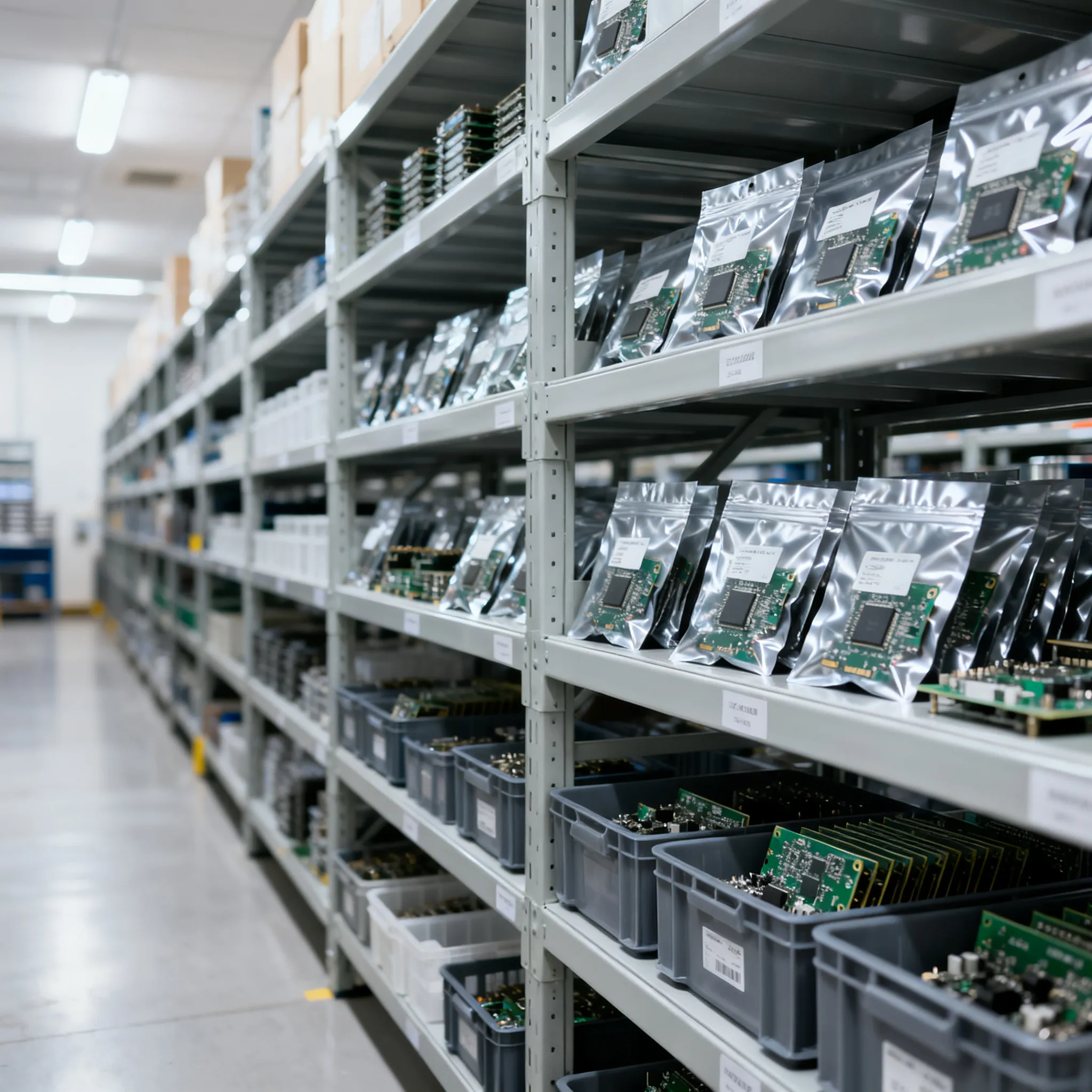
When Instrument Panels Go Dark: The Real Cost of Component Sourcing Failures
In 2025, Hyundai recalled 96,000 Tucson and Tucson Hybrid vehicles because a software error could blank the instrument panel display while driving Hyundai recall. Within months, Toyota issued a recall covering over 500,000 vehicles in the U.S. — including 2025 and 2026 Camry Hybrid models — after a dashboard malfunction traced to the 7-inch combination display Toyota recall. Both cases were software-related, but they expose a hard truth every component engineer knows: when a single electronic subsystem fails, the OEM brand takes the hit, not the silicon vendor.
For procurement teams, the question isn't whether the next disruption will arrive — it's whether your sourcing model can absorb it without halting production. As SensibleMicro argues, hybrid distributors offer OEMs the flexibility, sourcing power, and risk mitigation needed to succeed in today's volatile supply chain landscape SensibleMicro. A2 Global observes that post-pandemic purchasing has shifted decisively: customers are favoring a hybrid approach to supply management and procurement, blending the discipline of authorized channels with the agility of open market access A2 Global.
The instrument-panel recalls are a proxy for what happens when component continuity breaks. A display driver IC, a CAN transceiver, or a power management IC that suddenly becomes allocation-sensitive can cascade into line-down events, expedited air freight, and rework costs that erase margin on an entire production batch. Engineers and buyers who treat sourcing as a single-channel exercise — routing every BOM line through one authorized franchise — are betting their production schedules on a supply chain that may not have their back when allocation tightens.
Key Takeaway: Component sourcing failures don't announce themselves. They surface as recalls, production stoppages, and last-minute redesigns. A hybrid distribution strategy builds the optionality to respond before the instrument panel goes dark.
How a Hybrid Distributor Weaves Authorized Lines and Open Market Agility
A hybrid distributor is not simply a broker with a franchise agreement tacked on. It is a structured sourcing partner that maintains two distinct but complementary channels: authorized franchise lines with full manufacturer traceability, and a vetted open market network capable of locating hard-to-find, allocation-constrained, or end-of-life parts. The value proposition is the ability to toggle between these channels depending on the part, the urgency, and the risk profile the OEM is willing to accept.
As SensibleMicro explains, hybrid distributors build sourcing strategies tailored to the customer's actual needs — whether that means finding components in a shortage environment or consolidating fragmented vendor spend across multiple production lines SensibleMicro. Suntsu emphasizes that a hybrid distributor acts as an intermediary, leveraging its own authorized line card with top-tier brands — including sensor and connector manufacturers — while simultaneously drawing on a global network for parts outside the franchise scope Suntsu. Epec adds that technical and design resources are critical to the hybrid model's success: the best hybrid partners function as an extension of the customer's engineering department, not just a transactional supplier Epec.
The hybrid approach to solving component shortages, as described by SensibleMicro, can bypass traditional middlemen entirely — accessing the same supplier that the OEM uses, potentially yielding pricing advantages without compromising on specifications or compatibility SensibleMicro hybrid approach. This is not grey market sourcing; it is strategic channel diversification with provenance verification baked into the process.
For the component engineer, this means a single RFQ can return multiple fulfilment options: authorized stock with full traceability, open market stock with third-party test reports, and — where appropriate — candidate cross-reference parts that warrant evaluation. The engineer retains control over which path each BOM line takes.
Key Drivers Pushing OEMs Toward Hybrid Distribution
| Driver | Mechanism | Procurement Impact |
|---|---|---|
| Allocation constraints on high-demand MPNs | Authorized distributors receive limited factory allocations; excess demand must be fulfilled elsewhere | Single-source BOMs stall; hybrid channel provides relief without forcing a redesign |
| End-of-life (EOL) and obsolescence cascades | Manufacturers issue EOL notices with last-time-buy windows as short as 90 days | Open market channel locates EOL inventory; hybrid partner manages lifecycle buffer stock |
| Vendor fragmentation and maverick spend | Engineering teams source from multiple unauthorized vendors, creating traceability gaps | Hybrid consolidates spend under one partner with documented quality controls per channel |
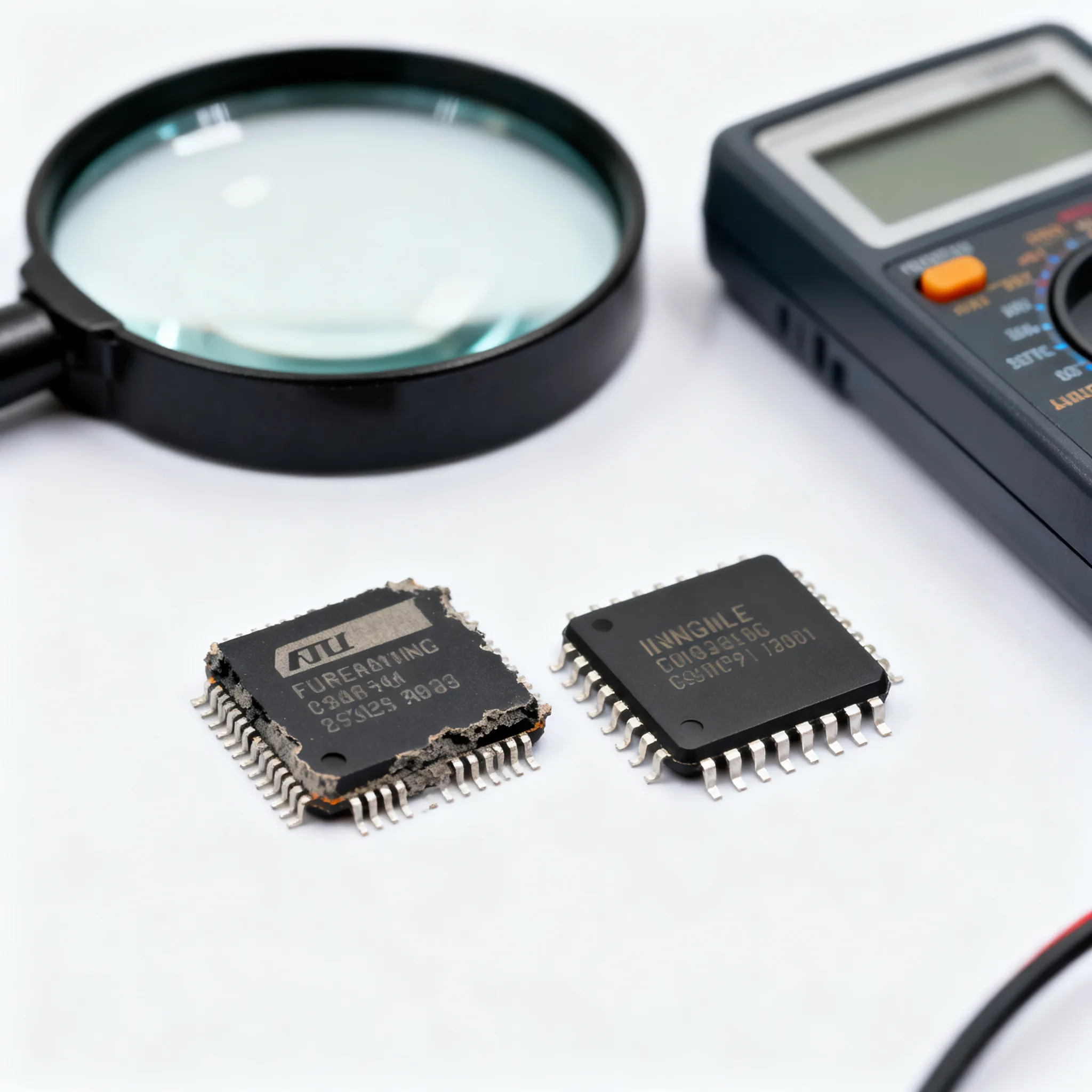
| Counterfeit infiltration risk | Unvetted open market sources introduce parts that fail electrical or environmental testing | Hybrid distributors with in-house labs perform X-ray, decapsulation, and electrical verification |
| New product introduction (NPI) acceleration | Prototype builds require small quantities fast; authorized channels may not support low MOQs | Hybrid model supplies low-volume, high-mix BOMs for prototyping while securing production allocation |
| Cost pressure on mature product lines | Authorized pricing on legacy parts may exceed market benchmarks as volumes decline | Hybrid sourcing can offer cost relief on non-safety-critical commodities while maintaining quality gates |
Each of these drivers represents a failure mode that component engineers and buyers have encountered — often more than once. The hybrid model doesn't eliminate the underlying market dynamics, but it provides a structured response that keeps production moving while risk is actively managed.
Authorized, Open Market, or Hybrid: A Sourcing Model Showdown
Choosing a sourcing model is not a one-time decision made at the corporate level. It is a line-by-line judgment call that plays out every time a BOM is uploaded for RFQ. Understanding the structural differences between the three dominant models — authorized, open market, and hybrid — is essential for making those calls correctly.
Authorized distributors offer full manufacturer traceability, warranty protection, and design support. But when allocation tightens, franchise agreements don't guarantee supply — they guarantee a place in the queue. Open market distributors, by contrast, can offer shorter lead times and significant pricing flexibility. IFL Manufacturing notes that aftermarket parts can cost 30–50% of OEM pricing when safety and quality requirements are met, though rigorous incoming inspection becomes non-negotiable IFL Manufacturing. A2 Global observes that leading open market distributors have inspection equipment and certifications that not only meet industry standards but exceed them, and they welcome customer audits — a mark of credibility that separates professional operations from transactional brokers A2 Global.
The hybrid model occupies the intersection. SensibleMicro argues that hybrid distributors offer proactive solutions that optimize cost, quality, and availability — empowering OEMs to solve immediate sourcing issues while guiding customers toward better long-term alternatives, including cost-effective cross-references SensibleMicro. Suntsu frames it as a strategic advantage: whether you're an engineer working to save a design, a buyer negotiating better margins, or an operations manager focused on on-time delivery, the hybrid model gives you leverage that single-channel sourcing cannot Suntsu.
Sourcing Model Comparison
| Comparison Metric | Authorized Distributor | Open Market Distributor | Hybrid Distributor | Selection Criteria & Failure Boundary |
|---|---|---|---|---|
| Traceability | Full manufacturer chain of custody | Varies; requires verification per lot | Segregated: full traceability on authorized lines; verified provenance on open market stock | High-reliability BOM lines should route through authorized or verified-open-market only |
| Lead time flexibility | Constrained by manufacturer allocation; confirm via RFQ | Can be shorter; confirm allocation-backed lead time with the supplier | Best of both: authorized for predictable demand, open market for urgent gaps | Verify that expedited open market stock passes your incoming inspection protocol |
| Pricing | Contract pricing for franchised lines; may be higher on allocated parts | 30–50% of OEM pricing achievable when quality is assured | Optimized per line: authorized pricing where available, market pricing where speed matters | Total cost of ownership includes rework risk from unverified parts |
| Quality assurance | Manufacturer warranty; no additional inspection typically required | Requires third-party test reports; X-ray, decapsulation, electrical test recommended | In-house lab capability for open market stock; manufacturer warranty on authorized stock | Insist on test reports within 90 days for any open market fulfilment |
| Counterfeit risk | Near-zero from authorized channel | Elevated without rigorous vetting; facility audits recommended | Managed through documented counterfeit mitigation process per channel | Red flag: distributor unwilling to disclose sourcing origin or share test data |
The table reveals a pattern: authorized channels win on traceability and warranty, open market wins on speed and cost, and the hybrid model wins on optionality. For component engineers, the operational question is whether the hybrid partner's quality infrastructure is robust enough to make the open market leg of the model acceptable for production use. That question is answered during vetting — before the first PO is cut.
Vetting a Hybrid Partner: What Engineers and Buyers Need to Ask
Not every distributor that calls itself "hybrid" operates with the rigor required for production BOMs. Some are simply brokers with a franchise or two; others are authorized distributors dabbling in open market fulfilment without the inspection infrastructure to back it up. Vetting a hybrid partner requires probing both sides of the house.
A2 Global stresses that top-tier open market operations offer 24/7 customer support and welcome their customers to tour facilities or conduct audits — transparency that should be considered table stakes A2 Global. When a hybrid partner suggests a substitute part, cross-reference it using a parts database like Datasheets360 to confirm package, pinout, and electrical specifications before accepting the recommendation Datasheets360. SensibleMicro's hybrid approach to solving shortages emphasizes getting components from the same supplier the OEM uses — a claim that can and should be validated by requesting supplier documentation SensibleMicro hybrid approach. Epec confirms that a strong hybrid partner provides technical resources that act as an extension of your engineering team, not merely a transactional sourcing desk Epec.
Tip: Before sending your first RFQ, ask the hybrid distributor to walk you through a recent case where they fulfilled a BOM line through the open market channel. Request the full documentation package: certificate of conformance, test report, and lot traceability records. If they hesitate, keep looking.
Action Checklist for Vetting a Hybrid Distributor
- Request ISO 9001 or AS9120 certification documents. These are minimum baselines for quality management in electronic component distribution. Absence of either is a disqualifier for production sourcing.
- Tour the inspection facility or request a virtual audit. Confirm that the distributor maintains in-house X-ray, decapsulation, and electrical test equipment — not outsourced or ad-hoc inspection.
- Ask for a documented counterfeit mitigation process. The process should cover incoming inspection, suspect part quarantine, and reporting protocols. A verbal assurance is not sufficient.
- Request a sample test report for a recent open market fulfilment. The report should be dated within 90 days and include visual inspection, electrical test, and authenticity verification results.
- Verify how the distributor segregates authorized and open market inventory. Commingled stock without clear provenance boundaries is a red flag for production buyers.
- Ask for three references from OEMs in your industry vertical. Contact them and ask about line-down events, quality escapes, and how the distributor handled problems.
- Evaluate technical support depth. Can the distributor's FAE review your BOM and suggest verified alternatives, or is the team purely transactional? Epec's observation that hybrid partners should be an extension of your engineering department is the standard to measure against.
Mitigation Actions and When to Deploy Them
| Action | When to Use | Trade-off |
|---|---|---|
| BOM upload with dual-channel RFQ | At NPI and quarterly for production BOMs; flags allocation risk early | Requires engineering time to review alternative part candidates; avoids line-down surprises |
| Facility audit of hybrid partner | Before first production PO; annually thereafter for high-volume programmes | Travel cost or virtual audit logistics; validates inspection capability claims |
| Cross-reference verification via Datasheets360 | Every time a hybrid partner proposes an alternative MPN | Time spent verifying pinout, package, and firmware compatibility; prevents costly re-spins |
| Quality agreement with segregated stock requirements | Before routing production BOM lines through open market channel | Adds contractual complexity; establishes clear liability boundaries and test requirements |
| Buffer stock programme for EOL and allocation-sensitive parts | When manufacturer issues EOL notice or allocation tightens on critical MPNs | Carrying cost and cash flow impact; ensures production continuity during last-time-buy gaps |
Each action above addresses a specific failure mode. Taken together, they form a procurement framework that treats the hybrid distributor as a managed resource rather than a transactional vendor. The goal is not to eliminate all sourcing risk — that's impossible — but to contain it within boundaries that the engineering and procurement teams understand and accept.
Hybrid Distributor FAQs: Tough Questions from Senior Engineers and Buyers
Senior engineers and procurement leads who have been burned by counterfeit parts, missed deliveries, or opaque sourcing practices tend to ask the sharpest questions when evaluating a hybrid model. The answers below reflect the standard that a credible hybrid distributor should meet — not the minimum that the market will tolerate.
Q: How can I verify the authenticity of components sourced through a hybrid distributor's open market channel?
Request certificates of conformance, full lot traceability documentation, and third-party test reports for every open market shipment. Top hybrid distributors, as A2 Global notes, maintain inspection laboratories with X-ray, decapsulation, and electrical testing capabilities, and they welcome customer audits of those facilities A2 Global. Cross-reference part numbers using Datasheets360 to confirm that the electrical specifications, package dimensions, and marking conventions match the manufacturer's published data Datasheets360. If a distributor cannot produce a test report dated within 90 days for the specific lot being shipped, treat the shipment as unverified and quarantine it until your own incoming inspection is complete.
Q: What red flags should I watch for when evaluating a hybrid distributor?
Lack of ISO 9001 or AS9120 certification is a hard disqualifier for production sourcing. Beyond certifications, watch for unwillingness to disclose sourcing origins, no documented counterfeit mitigation process, and a history of unexplained price fluctuations on repeat orders. A reliable hybrid partner will transparently separate authorized stock from open market stock on every quote and packing slip — commingled inventory without clear provenance boundaries is a serious red flag. Also be wary of distributors who claim to have "everything in stock" without providing specific lot codes or date codes at the RFQ stage. Credible partners confirm current availability and allocation status via RFQ; they do not make blanket inventory claims.
Q: Can a hybrid distributor really shorten lead times for allocated parts?
Yes, by tapping into global open market networks and excess inventory positions that authorized channels cannot access. The hybrid approach described by SensibleMicro allows access to the same components an OEM uses, often with shorter fulfilment timelines, without compromising on specifications — because the parts are identical, just sourced through a different channel SensibleMicro hybrid approach. However, "shorter" is relative: confirm allocation-backed lead time with the supplier on every quote. The hybrid model improves your odds of finding stock when authorized channels are dry, but it does not guarantee availability. Treat every open market fulfilment as subject to verification before it reaches the production line.
Q: How do I compare total cost of ownership between a hybrid distributor and a purely authorized source?
Unit price is the starting point, not the conclusion. Factor in expedited shipping costs when authorized lead times threaten production schedules, line-down risk costs (which can run into tens of thousands of dollars per hour in automotive or industrial settings), and the potential rework cost from a counterfeit or substandard part escaping detection. Authorized sources typically carry higher unit prices but near-zero authenticity risk. Hybrid models can offer savings of 30–50% on certain commodities when safety and quality requirements are met, as IFL Manufacturing notes, but those savings must be weighed against the cost of your own incoming inspection and the residual risk of a quality escape IFL Manufacturing. For high-reliability applications — medical, defense, aerospace — the risk-adjusted cost calculation almost always favors authorized-only sourcing for critical BOM lines.
Q: When is it appropriate to use a hybrid distributor for prototypes versus full production?
For prototypes and low-volume pilot builds, the hybrid model's speed and flexibility are clear advantages. Engineering teams can secure small quantities of hard-to-find parts quickly, enabling design validation without waiting for authorized allocation. For full production, the calculus shifts. A hybrid partner with a strong authorized line card, documented quality systems, and a proven track record in your industry can absolutely support production volumes — but you should establish a stable supply agreement that specifies which BOM lines are fulfilled through which channel, and implement continuous monitoring of part provenance. Some OEMs choose to use hybrid for production on non-safety-critical commodities while reserving authorized-only for microcontrollers, power management ICs, and safety-related components. The key is making the decision line by line, not blanket-applying one sourcing model to the entire BOM.
Q: Does the hybrid model compromise traceability for defense or medical applications?
It can, if not managed properly — but it doesn't have to. For high-reliability sectors, insist on full lot traceability for every component, regardless of channel. Critical BOM lines — processors, FPGAs, isolated power supplies, anything touching a safety function — should be routed through the authorized channel exclusively. The hybrid distributor should provide a clear firebreak between authorized and open market inventory in their ERP system, on quotes, and on shipping documentation. Many hybrid distributors hold the necessary certifications (AS9120, AS6081 for counterfeit avoidance) to meet stringent defense and medical requirements. The burden is on the buyer to verify that the distributor's quality management system is certified and that the specific parts being shipped carry the required traceability. Do not assume that because a distributor holds a certification, every part they ship meets the standard — verify per lot.
References & Further Reading
- Why Hybrid Distributors Are Crucial to OEM Success — SensibleMicro
- Advantages of Working with a Hybrid Distributor in 2026 — Suntsu
- The Hybrid Approach to Solving Your Components Supply Shortage — SensibleMicro
- Open Market Distributors of Electronic Components Can Offer Shorter Lead Times and Pricing Flexibility — A2 Global
- Becoming a Hybrid Supplier in the Electronics Industry — Epec
- OEM Electrical Replacement Parts: Complete Sourcing Guide — IFL Manufacturing
- Datasheets360 — Electronic Component Search and Supplier Information
- 2025–2026 Hyundai Tucson Hybrid Recall: 96K Instrument Panel Malfunction — Pickup Truck Talk
- Toyota Issues Recall for Over 500,000 Vehicles in the U.S. Due to Dashboard Malfunction — Cuba Headlines
The hybrid distribution model is not a compromise between authorized and open market sourcing — it is a deliberate strategy for managing the reality that no single channel can cover every BOM line at every point in the product lifecycle. For component engineers, the operational advantage is clear: one RFQ, multiple fulfilment options, and the ability to choose the right channel for each part based on risk, urgency, and cost. What makes the model work — or fail — is the rigor of the distributor behind it. Vet the lab. Demand the test reports. Verify the traceability. And when you're ready to put the model to work, upload your BOM and request a quote through IC-Online — a platform built for mixed-BOM procurement with flexible MOQs and the channel transparency that hybrid sourcing demands. Confirm current availability and allocation via RFQ; do not assume stock. Your production schedule is too valuable to bet on a single channel.