

XARR-10VF Obsolescence Risk Checklist: Verify Lifecycle Status and Secure Supply
XARR-10VF lifecycle and obsolescence risk checklist. What to verify before redesign or last-time-buy — without assuming drop-in replacements.
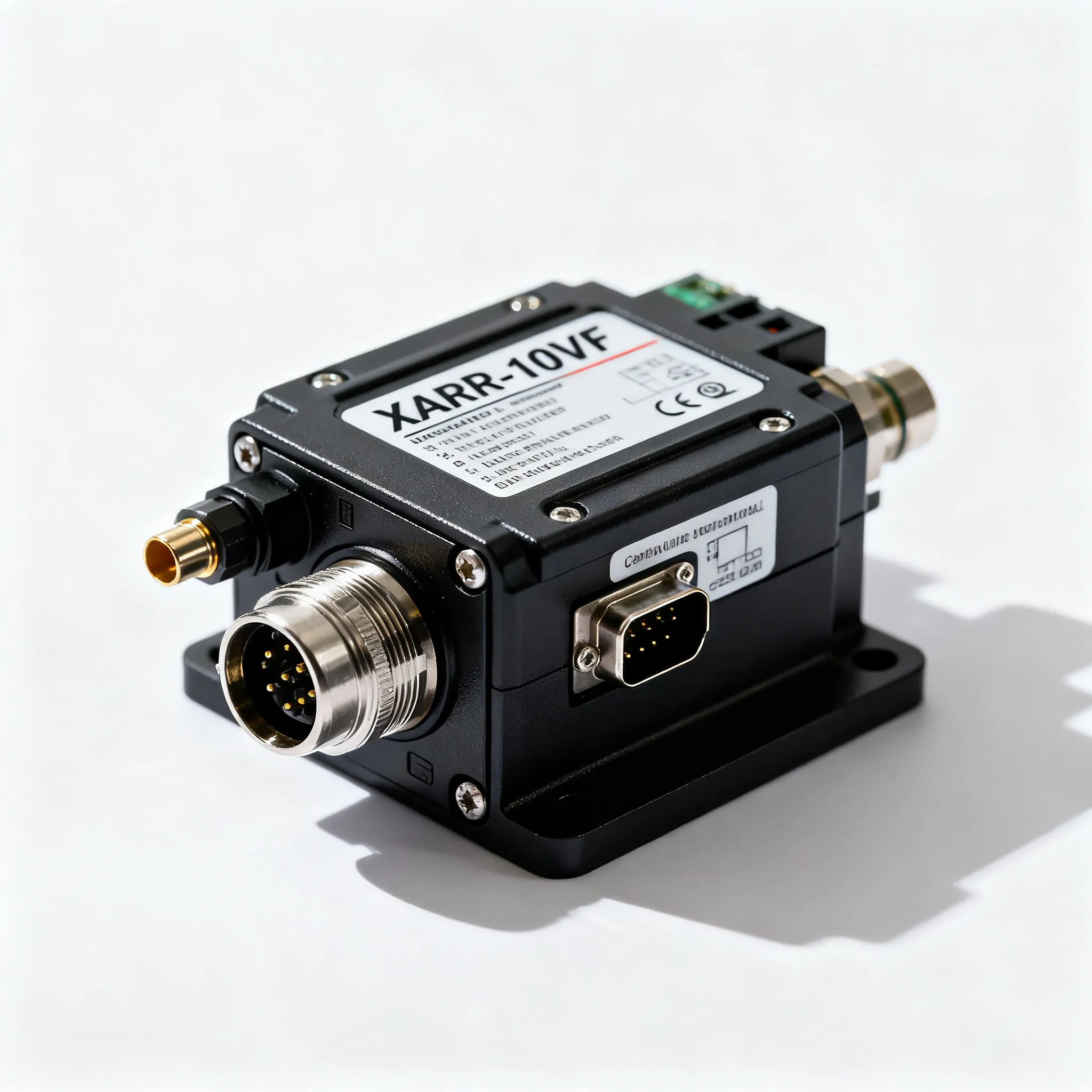
Why a ‘Standard’ Connector Like the XARR-10VF Can Catch You Off Guard
Connectors are the unglamorous workhorses of electronic design. They carry power, route signals, and mate boards to wiring harnesses without fanfare—until one of them vanishes from the approved vendor list. Then the panic starts. The XARR-10VF, a 10-position rectangular connector housing from JST's XAR series, exemplifies this risk perfectly. It appears in countless industrial, automotive, and consumer builds precisely because it is reliable, proven, and widely stocked. That ubiquity breeds complacency. Engineers assume a part this common cannot possibly go end-of-life without years of warning. History says otherwise.
Component obsolescence isn't a niche problem confined to exotic ASICs or legacy microcontrollers. Luminovo's lifecycle management guide documents how even high-volume passives and connectors drive costly redesigns and production shortages when their EOL transitions catch teams unprepared. A connector housing that costs pennies can hold up a $50,000 production run when it suddenly shifts to NRND (Not Recommended for New Design) without the procurement team noticing. The pain compounds quickly: expedited re-qualification, PCB layout changes, tooling modifications for an alternative housing, and weeks of engineering time burned on a problem that proactive monitoring could have flagged months earlier.
The Canadian Centre for Cyber Security, in its guidance on identifying and managing obsolete products, emphasizes that obsolescence risks "are not always obvious." A part may still appear on distributor shelves, still carry an "Active" label on a manufacturer portal, and still ship on existing purchase orders—while behind the scenes, the manufacturer has already stopped allocating new wafer starts or mold cycles for it. The XARR-10VF sits in a connector family with multiple position counts and configurations, and JST can shift production priorities within that family without issuing a formal PCN (Product Change Notification) the moment demand for one variant dips. By the time the EOL notice lands, competing buyers may have already snapped up the remaining pipeline inventory.
Z2Data's lifecycle status platform addresses this blind spot by tracing every status change back to its source—a manufacturer PCN, a distributor notice, or primary research—and preserving a full history so teams can see how and when a part moved through each stage. This kind of audit trail is invaluable for a part like the XARR-10VF, where the gap between "no news" and "last-time-buy announced" can shrink to weeks. SiliconExpert's obsolescence management platform reinforces the same lesson: reactive processes that rely on manual distributor checks lead to chaos, human error, and excessive costs. The organizations that stay ahead of connector obsolescence are those that treat lifecycle monitoring as a continuous process, not a quarterly review.
Key Takeaway: "Standard" and "safe" are not synonyms in component lifecycle management. Assume every part in your BOM—including connector housings like the XARR-10VF—can drift toward obsolescence silently, and build your supplier intelligence accordingly.
Lifecycle Stages vs. Real-World Signals: What the Datasheet Won't Tell You
Every component travels through a predictable lifecycle arc. The industry-standard stages—Active, NRND (Not Recommended for New Design), EOL (End of Life), and Obsolete—appear straightforward on paper. In practice, the transitions between them are murky, and the signals that precede a formal stage change are easy to misinterpret or miss entirely. For the XARR-10VF, understanding these stages and their real-world indicators is the difference between a controlled last-time-buy and a production line stoppage.
Relying solely on a datasheet to gauge lifecycle health is a mistake. A datasheet tells you what a part does; it doesn't tell you whether the manufacturer is still committed to producing it. Ersa Electronics' product page for the XARR-10VF provides current inventory signals and technical details, but inventory alone is a lagging indicator—stock can persist long after a part enters NRND. Avaq's XAR-series datasheet library offers parametric context across the broader connector family, helping engineers compare mating configurations and pitch when evaluating alternatives. Yet neither replaces the forward-looking intelligence that dedicated lifecycle tools provide.
| Lifecycle Stage | Manufacturer Definition | Real-World Signal for XARR-10VF | Procurement Action Required |
|---|---|---|---|
| Active | Full production; recommended for new designs | Stable multi-distributor inventory; regular PCN activity for the XAR series; JST datasheet revisions published | Monitor quarterly; verify allocation status with authorized distributors via RFQ |
| NRND | Still produced but not recommended for new designs; may have recommended replacement | Gradual stock decline across 2+ distributors; lead-time stretching beyond typical norms; PCN silence on this specific position count while other XAR variants remain active | Initiate alternate-part validation; lock BOM revision with procurement; request PCN subscription confirmation from JST |
| EOL / Last-Time-Buy | Official discontinuance notice issued; final purchase window open (typically 6–12 months) | Formal PDN (Product Discontinuance Notice) from JST; inventory spike at authorized distributors as remaining stock floods market; price volatility appears | Calculate lifetime demand immediately; place LT-buy order; qualify alternative housing; secure buffer stock |
| Obsolete | Production ceased; no further manufacture | Only excess/aftermarket inventory remains; no manufacturer support; risk of counterfeit or relabeled parts increases | Execute redesign with validated alternative; audit supply chain for unauthorized sources; retire BOM line item |
The gap between "Active" and "NRND" is where most teams get blindsided. A connector housing like the XARR-10VF can appear active on JST's website while distributors slowly deplete their stock without replenishment. Z2Data's lifecycle history feature captures these subtle shifts by preserving a full timeline of status changes, linking each to its originating PCN or distributor notice. When a part moves from Active to NRND, the platform records when and why—turning what would otherwise be a silent drift into a documented event that triggers procurement alerts. This capability transforms reactive firefighting into proactive planning, especially for multi-source BOMs where a single connector can hold up an entire assembly.
Tip: Don't wait for a formal PDN. If you observe two or more of these signals—declining distributor inventory, lengthening lead times, reduced position-count availability in the XAR series—treat the XARR-10VF as allocation-sensitive and begin alternate validation immediately, even if the official lifecycle status still reads "Active."
Proactive Obsolescence Scouting: Luminovo, SiliconExpert, and Z2Data Compared
Not all obsolescence management tools are built for the same use case. A design team managing a 50-line BOM with one XARR-10VF housing has different needs than a procurement organization tracking thousands of parts across multiple programs. The decision to invest in a dedicated platform versus relying on free manufacturer portals hinges on volume, risk tolerance, and the cost of a single missed EOL event. Below, we compare four approaches—three dedicated platforms and one BOM screening service—that can forecast obsolescence risk months or even years before a formal PCN drops.
Luminovo's Design to Source and Configure Price Quote modules analyze availability and multi-source risk early in the design phase, flagging PDN or EOL timelines before the part ever lands on a BOM. SiliconExpert takes a broader view, covering semiconductors, passives, and electromechanical components with multi-sourcing analysis and environmental compliance data baked in. Z2Data's part comparison engine layers proprietary lifecycle forecasting—validated at 90%+ accuracy against real EOL outcomes—on top of traditional parametric search, so a part that looks attractive on unit price can reveal a worse obsolescence outlook at a glance. Finally, PCBCart's BOM screening service offers an engineering-team-reviewed risk summary tailored to test equipment programs, though the methodology applies broadly to any BOM carrying single-source connector risk.
| Comparison Metric | Luminovo (Design to Source + CPQ) | SiliconExpert | Z2Data (Part Risk Manager) | PCBCart BOM Screening |
|---|---|---|---|---|
| Core Capability | Early-design availability and multi-source risk analysis; CPQ integration for quoting | Multi-sourcing, lifecycle status, inventory aggregation, and environmental compliance in one platform | Proprietary lifecycle forecasting (90%+ accuracy); part-to-part comparison with risk scoring; full PCN history audit trail | Engineering-reviewed BOM risk summary; tailored for ATE programs but extensible to general BOMs |
| Best For | Design teams wanting obsolescence prediction during component selection, before BOM freeze | Procurement groups managing large BOMs across mixed commodity types (ICs, passives, connectors) | Organizations needing defensible lifecycle forecasts in design reviews; deep PCN traceability | Teams with smaller BOMs seeking a one-time risk assessment without a recurring subscription |
| How It Flags XARR-10VF Risk | Analyzes XAR-series availability trends and flags multi-source gaps during design-in | Aggregates distributor inventory, PCN notices, and environmental data for the XAR family | Generates a lifecycle risk score; shows side-by-side comparison with alternative JST housings and forecasted EOL timeline | Manual BOM submission; engineering team screens for single-source exposure and alternate-part availability, returns ranked risk summary |
| Forecasting Approach | Supply-and-demand analytics integrated with design-to-procurement workflow | Manufacturer-direct data plus multi-source intelligence; reactive and predictive elements | Proprietary machine-learning model validated against real EOL outcomes; 90%+ accuracy claimed | Manual engineering review; no automated forecasting model |
| Cost Model | Subscription-based; integrated with design and quoting tools | Annual subscription; tiered by BOM size and feature set | Subscription-based; pricing scaled to BOM complexity and user count | Per-BOM screening fee; no ongoing subscription required |
| Limitations | Strongest when adopted across the full design-to-procurement workflow; may be overkill for single-part checks | Breadth can overwhelm users seeking a focused connector-obsolescence answer | Proprietary model means customers cannot inspect the underlying algorithm; trust in validation data required | Not real-time; turnaround depends on engineering team workload; best as a periodic audit, not continuous monitoring |
The right tool depends on how central the XARR-10VF is to your BOM and how many other parts share its risk profile. For a single connector housing, manual checks on JST's portal and distributor cross-references may suffice—provided someone owns that process with discipline. For a team managing dozens of JST connectors across multiple product lines, the subscription cost of a platform like Z2Data or SiliconExpert amortizes quickly against the avoidable cost of one missed EOL window. The critical insight from all four approaches is the same: a part's unit cost on paper often hides a worse lifecycle outlook, and the delta between "cheapest option" and "lowest risk" becomes visible only when you compare parts side-by-side with obsolescence data overlaid—which is exactly what Z2Data's comparison engine was built to reveal.
Your 6-Point XARR-10VF Supply Security Checklist
Waiting for a formal EOL notice before acting on obsolescence risk is a losing strategy. By the time the PDN arrives, authorized distributor stock may already be depleted, alternative qualification hasn't started, and your negotiating leverage evaporates. The following six steps create a proactive defense that catches warning signs early and preserves options. Each step can be executed starting today, without waiting for a quarterly review cycle or a management mandate.
- Verify JST's Official Lifecycle Status via PCN Subscriptions
Start with JST's official product page and registered distributor portals. Subscribe to PCN alerts specifically for the XAR series—not just for the XARR-10VF individually, since series-wide changes often precede individual part-number notices. Cross-check the Ersa Electronics product listing for current stock-level signals, but treat inventory as a trailing indicator. Platforms like Z2Data and SiliconExpert aggregate PCNs with earlier visibility than manufacturer portals alone, often flagging NRND shifts weeks before they propagate publicly. - Cross-Reference Three Distributor Inventory Levels
Monitor stock at three independent authorized distributors monthly. A steady, synchronized decline across all three—without corresponding replenishment—is a forward obsolescence indicator stronger than any single data point. Request allocation-backed lead-time confirmations via RFQ from each distributor rather than relying on website stock counters, which may show residual inventory that doesn't reflect future availability. Buyers should require maximum date-code disclosures and test reports dated within 90 days for any inventory sourced outside authorized channels. - Run the Part Through a Lifecycle Forecaster
Submit the XARR-10VF through Z2Data's or SiliconExpert's risk-scoring engine to obtain a quantified obsolescence risk score. A part that returns a high risk score—even while still technically "Active"—warrants immediate alternate qualification. Z2Data's comparison feature adds particular value here: run the XARR-10VF alongside two or three alternative JST housings to see whether any carry a markedly better lifecycle forecast before committing engineering resources to qualification. - Identify and Validate an Alternate Using XAR-Series Datasheet Resources
The XAR series includes several compatible housing variants with different position counts and configurations. Use Avaq's free XAR-series datasheet library to compare mating configuration, pitch, wire gauge compatibility, and mechanical envelope across candidates. Evaluate JST's other series housings as candidates—but verify package, pinout, and mechanical fit before locking in a replacement. A candidate that matches on paper may still require PCB footprint validation and environmental qualification before it can serve as a true second source. Never assume compatibility must be verified case by case compatibility without physical testing. - Map Out a Last-Time-Buy Protocol with Procurement
Don't wait for the EOL notice to calculate lifetime demand. Luminovo's EOL management guide recommends having a pre-defined LT-buy protocol in place, including demand-forecasting formulas, budget authorization thresholds, and storage/security provisions for buffer stock. For the XARR-10VF, work with procurement now to establish: total lifetime units across all active SKUs, minimum buffer percentage, and authorized storage conditions. When the LT-buy window opens—frequently 6 to 12 months—you execute, not deliberate. - Set a PCN Alert Trigger in Your PLM or ERP System
Integrate PCN monitoring into your existing engineering and procurement workflow. Many PLM and ERP platforms support automated alert triggers for manufacturer change notifications. Configure alerts not just for the exact MPN but for the broader XAR series and JST connector division. A series-wide process change or factory relocation often precedes individual part-number discontinuances by months. Catching that signal early gives you time to validate alternatives without rush charges or line-down pressure.
| Checklist Step | Frequency | Owner | Red-Flag Trigger |
|---|---|---|---|
| 1. Verify JST lifecycle status + PCN subscription | Monthly | Component Engineer | Series-wide PCN filed without this MPN listed |
| 2. Cross-reference 3 distributor inventories | Monthly | Buyer / Procurement | Synchronized decline across 2+ sources without replenishment |
| 3. Lifecycle forecaster risk score | Quarterly or at BOM review milestones | Supply Chain / Engineering | Risk score elevated above baseline; forecast horizon shortened |
| 4. Alternate-part validation | At first NRND signal; annually otherwise | Design Engineering | No candidate passes mechanical/environmental qualification |
| 5. LT-buy protocol documentation | Annually; update with each BOM revision | Procurement Manager | LT-buy window opens without approved demand forecast ready |
| 6. PCN alert trigger in PLM/ERP | Set once; verify quarterly | IT / PLM Administrator | Alert fails to fire on a known XAR-series PCN |
Each checklist step ties directly to a real-world consequence of missing an EOL window. A skipped PCN subscription means the LT-buy window opens without your knowledge. A neglected alternate qualification means you're shopping on the gray market—with all the counterfeit and quality risks that entails. The six steps are not busywork; they are the minimum viable process for securing supply continuity on a connector that may represent a fraction of your BOM cost but 100% of your ability to ship finished product.
XARR-10VF Lifecycle Questions Engineers Ask Before Finalizing a BOM
These five questions surface repeatedly in design reviews and procurement discussions where the XARR-10VF appears. The answers draw on manufacturer documentation, platform capabilities, and industry best practices—not on transient stock information or unverified claims.
Q: How can I confirm JST's current lifecycle status for the XARR-10VF without relying on third-party tools?
Start with JST's official product page and registered distributor portals. Most authorized distributors provide PCN alert subscriptions at no cost—register for notifications on the XAR series specifically, not just the individual part number, since series-level changes often precede single-MPN notices. Cross-check current inventory availability on sites like Ersa Electronics, but understand that inventory reflects past production, not future commitment. Manufacturers may delay public lifecycle updates by weeks or months relative to what dedicated platforms detect. Z2Data and SiliconExpert aggregate PCNs from multiple sources and often flag NRND shifts before they appear on manufacturer portals, making them a worthwhile investment if the XARR-10VF is critical to your BOM.
Q: Are there candidate for evaluation (verify pinout and firmware) alternatives for the XARR-10VF if it goes end-of-life?
The XAR series includes several compatible housing variants, and JST maintains other connector series that may serve similar applications. Avaq's free XAR-series datasheet library provides a starting point for comparing mating configuration, pitch, and wire gauge compatibility. However, a true drop-in replacement requires verifying the PCB footprint, mechanical envelope, wire-gauge range, and environmental ratings—none of which can be assumed identical across series. Evaluate candidates from JST's other housing series, obtain samples, and test mechanical retention, contact resistance, and thermal cycling before locking in a replacement. Treat every alternative as a candidate to evaluate, never as guaranteed-compatible, and build qualification lead time into your obsolescence timeline accordingly.
Q: How reliable are distributor stock levels as an obsolescence indicator?
Distributor stock levels are useful but noisy signals. A steady, synchronized decline across multiple authorized distributors over two or more quarters is a legitimate early-warning indicator, particularly when accompanied by stretched lead times and reduced package-variant availability. False positives do occur—demand can shift regionally or by industry without a lifecycle change. To filter noise from genuine EOL trends, combine stock monitoring with PCN history tools. Z2Data's lifecycle history preserves a timeline of every status change and its source document, while Luminovo's supply analysis contextualizes inventory shifts against broader market dynamics. Stock-level monitoring alone is insufficient; it works best as one input in a multi-signal obsolescence detection strategy.
Q: What's the typical lead time for executing a last-time-buy on connectors like the XARR-10VF?
Once a formal EOL notice is issued, last-time-buy windows for connector housings typically span 6 to 12 months, though this varies by manufacturer and product family. The clock starts when the PDN is published—not when your team becomes aware of it. Immediately upon notification, contact JST or authorized distributors to confirm the LT-buy deadline, calculate total lifetime demand across all active SKUs that use the XARR-10VF, and add buffer stock for forecast uncertainty and attrition. Luminovo's EOL management guide recommends having a pre-defined LT-buy protocol so that demand calculations, budget approvals, and storage logistics are already in place when the window opens—avoiding the rushed, error-prone decisions that inflate costs and expose the organization to shortages.
Q: Can I use lifecycle forecasting tools without a subscription?
Some platforms offer limited free searches or trial access for single-part lookups, but full BOM risk analysis, automated PCN alerts, and historical lifecycle tracking generally require a paid subscription. For a single part like the XARR-10VF, manual checks on JST's manufacturer portal and monthly cross-references across three distributor inventories can serve as a starting point—though they demand more vigilance from your team and carry a higher risk of delayed detection. The subscription cost of a platform like Z2Data or SiliconExpert amortizes quickly when you consider the engineering time and production risk associated with a missed EOL window. If the XARR-10VF is one of several JST connectors in your BOM, or if your product lifecycle spans years, the economics strongly favor a dedicated tool over manual monitoring.
References & Further Reading
Related Articles
- Blog
XARR-10VF Obsolescence Risk Checklist: Verify Lifecycle Status and Secure Supply
XARR-10VF lifecycle and obsolescence risk checklist. What to verify before redesign or last-time-buy — without assuming drop-in replacements.
 Blog
BlogCounterfeit IC Risk Mitigation for Procurement Teams: A Guide to Authenticity, Inspection, and Traceability
Procurement checklist: authenticity, traceability, and quality documentation to request with your component RFQ.
 Blog
BlogMT61K256M32JE-19G:T Datasheet and Pinout: Specs for Design and Sourcing
MT61K256M32JE-19G:T datasheet essentials, pinout overview, key specs, and design/sourcing checks for engineers and buyers. Request a quote on IC-Online.
 Blog
BlogFlipper Zero 2026 What It Does in Plain Electronics Language
What can Flipper Zero do? It reads, copies, and emulates wireless signals like RFID, NFC, and infrared. Test only your own devices legally.
 Blog
BlogHow to Sell Your Excess Electronic Components Inventory for Maximum Return
Practical guide for buyers and engineers: How to Sell Your Excess Electronic Components Inventory for Maximum Return. Sourcing, risk, and selection notes.
 Blog
BlogUnderstanding DC Circuits and Their Practical Uses
What is a dc circuit? It's a closed loop with constant voltage and unidirectional current, powering everyday electronics. See its practical uses in electronics.