

Varistors, MOVs7 Products
| Image | Part Number | Manufacturer | Description | Actions | |
|---|---|---|---|---|---|
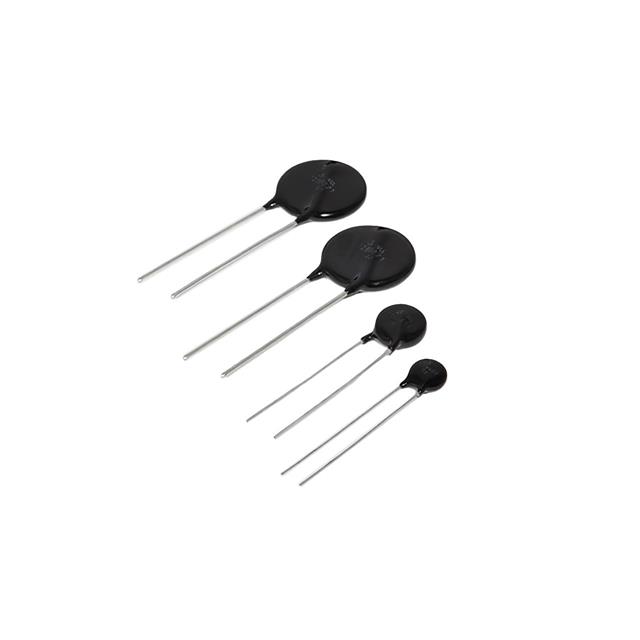 PDF | Z15D121 | Semitec USA Corp | VARISTOR 120V 4.5KA DISC 14MM | MOQ: 1 Hover to quote | |
PDF | Z21D391 | Semitec USA Corp | VARISTOR 390V 10KA DISC 20MM | MOQ: 1 Hover to quote | |
PDF | Z7D390 | Semitec USA Corp | VARISTOR 39V 250A DISC 7MM | MOQ: 1 Hover to quote | |
PDF | Z10D471 | Semitec USA Corp | VARISTOR 470V 2.5KA DISC 10MM | MOQ: 1 Hover to quote | |
PDF | Z7D431 | Semitec USA Corp | VARISTOR 430V 1.75KA DISC 7MM | MOQ: 1 Hover to quote | |
PDF | Z15D391 | Semitec USA Corp | VARISTOR 390V 4.5KA DISC 14MM | MOQ: 1 Hover to quote | |
PDF | Z15D151 | Semitec USA Corp | VARISTOR 150V 4.5KA DISC 14MM | MOQ: 1 Hover to quote |
A varistor, also known as a Metal Oxide Varistor (MOV), is an electronic component with a variable resistance that changes with applied voltage. This nonlinear semiconductor device functions as a protective element in electronic circuits by responding to voltage transients and surges that exceed normal operating levels. When exposed to typical circuit voltages, varistors maintain high resistance, allowing them to remain essentially invisible in the circuit. However, when voltage spikes occur, the varistor's resistance dramatically decreases, creating a low-resistance path that diverts excess energy away from sensitive components. MOVs are widely used in surge protectors, power supplies, and industrial equipment where protection from overvoltage conditions is critical, with zinc oxide (ZnO) being the most common material used in their construction. When a varistor fails, it typically does so in one of two ways: it may fail as an open circuit after absorbing multiple surges over time that gradually degrade its structure, or more catastrophically, it may fail as a short circuit, potentially causing overheating, smoke, or even fire if not properly fused. While varistors are indeed surge protectors, they represent just one component within comprehensive surge protection systems. Other characteristics that define varistors include: 1) fast response times typically measured in nanoseconds, 2) voltage ratings that must be selected to match the circuit's normal operating conditions, 3) energy absorption capabilities measured in joules that determine how much transient energy they can safely dissipate, and 4) leakage current specifications that indicate how much current passes through the device during normal operation.