Integrated Circuit Types: Classifications and Applications in Modern Electronics
You use integrated circuits every day. They are in your phone and car. These small chips run almost all modern electronics. They help new ideas grow in many fields. In 2023, the global integrated circuit market was about USD 617 billion.
You use integrated circuits every day. They are in your phone and car. These small chips run almost all modern electronics. They help new ideas grow in many fields. In 2023, the global integrated circuit market was about USD 617 billion. Experts think it will be three times bigger by 2032. This fast growth shows how important integrated circuits are. It also shows their many good uses. To see how Integrated Circuit Types change our world, look at how they are grouped:
-
By level of integration
-
By application
Key Takeaways
-
Integrated circuits (ICs) are small chips. They help almost all modern electronics work. ICs make devices smaller and faster. They also help devices use less energy.
-
There are three main types of ICs. Analog ICs handle smooth signals like sound. Digital ICs work with on and off signals for data. Mixed-signal ICs use both types for smart devices.
-
Different ICs have special jobs. Microprocessors do hard computing. Microcontrollers do simple tasks. Memory chips store data. Interface ICs help devices talk to each other.
-
New things like smaller transistors help ICs get better. 3D stacking and new materials also help. These changes make ICs faster and use less power. They also let ICs have more features in small spaces.
-
ICs are very important in many areas. They are used in electronics, cars, medical devices, and factories. ICs help shape the future of technology and our daily lives.
Integrated Circuits Overview
What Are Integrated Circuits?
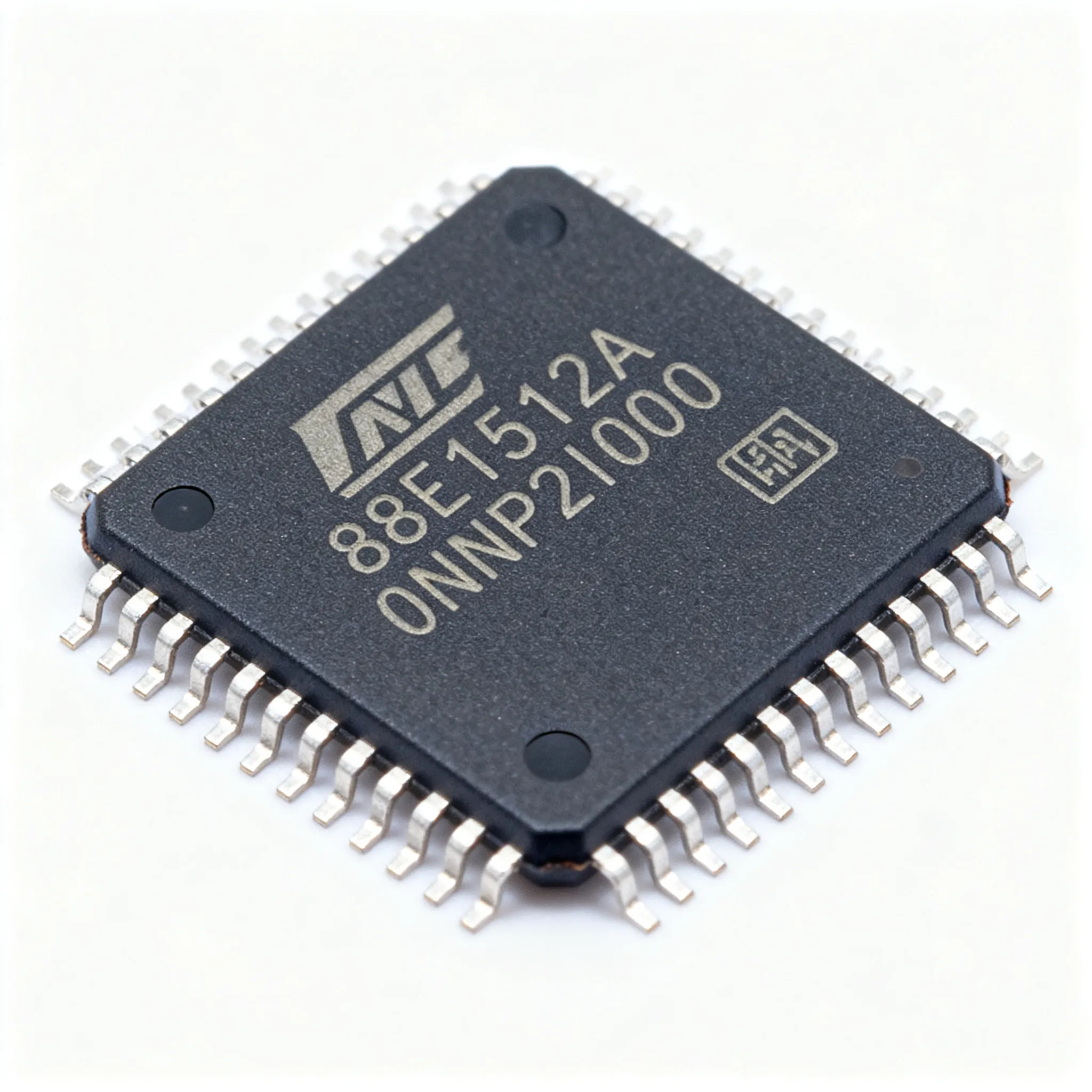
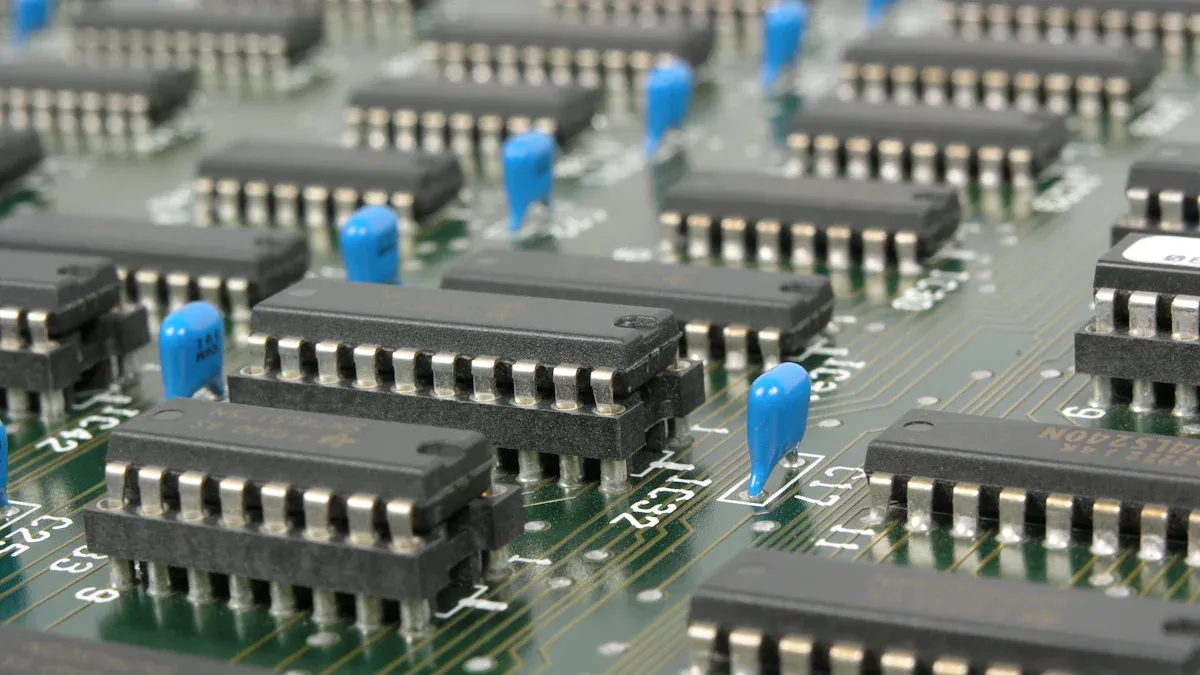
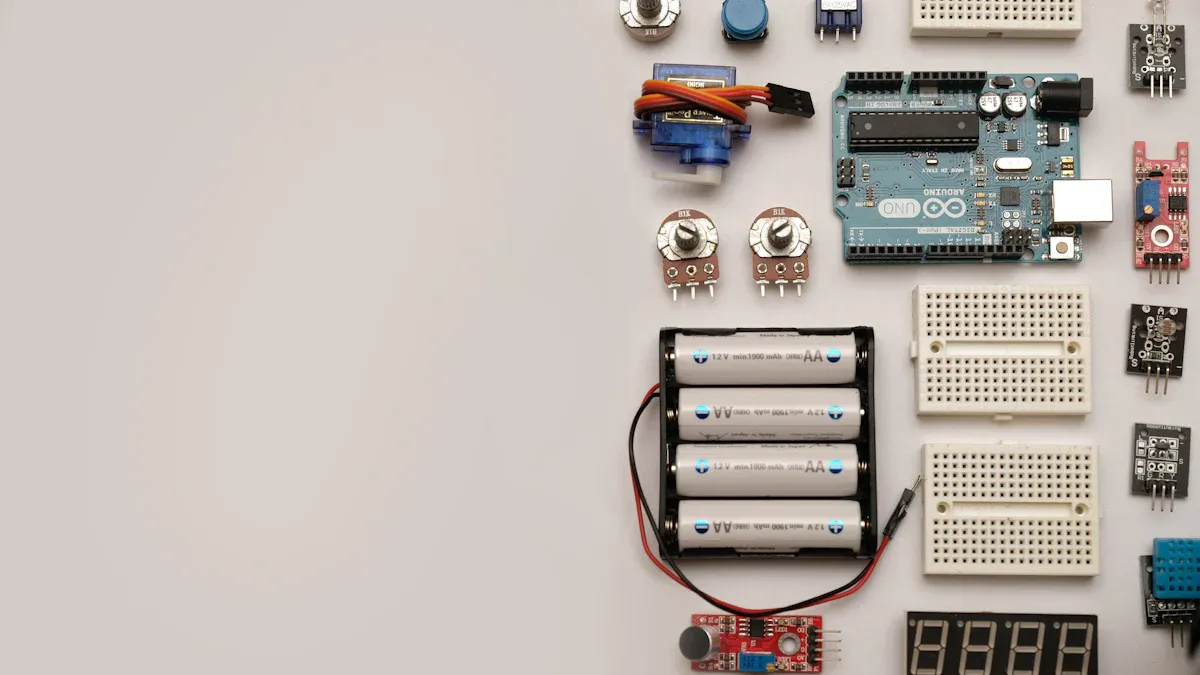
Integrated circuits are found in many things you use. These small chips are very important in electronics today. An integrated circuit, or IC, is a tiny device. It has many electronic parts on one chip. Inside an IC, there are transistors, resistors, capacitors, and diodes. These parts work together in one place. This makes electronics strong and small.
ICs have different layers. Each layer does something special:
-
Semiconductor layer: This is the bottom layer. It is made of silicon.
-
Doping layer: Special stuff is added here. It helps current move.
-
Metal interconnect layer: Thin metal lines connect the parts.
-
Insulation layer: This layer keeps parts apart and safe.
-
Passivation layer: This top layer keeps the chip safe from harm.
ICs can also be grouped by how they work. The smallest parts are transistors. Transistors act like switches. These switches make logic gates. Logic gates build bigger parts and systems. Old ICs used BJTs. Now, most ICs use MOSFETs. MOSFETs save power and work faster.
Importance in Modern Electronics
ICs made electronics much better. Before ICs, people used many single parts. Devices were big and slow. Now, ICs help make things smaller, faster, and stronger. You see ICs in almost all technology. They are in phones and cars.
Here is a table that shows the difference:
|
Aspect |
Discrete Electronic Components |
Integrated Circuits (ICs) |
|---|---|---|
|
Performance |
Longer signal paths, slower operation |
Shorter paths, higher performance, faster operation |
|
Power Efficiency |
Higher power use |
Lower power use, less energy loss |
ICs help technology in many ways:
-
In telecommunications, ICs make data fast and signals clear.
-
In consumer electronics, ICs add smart features to TVs and appliances.
-
In medical devices, ICs help make things more accurate and safe.
-
In cars, ICs control engines and safety systems.
You use ICs every day. They make modern electronics work. ICs help new technology grow.
Integrated Circuit Types
You can find many integrated circuit types in electronics today. Each type of IC does something special. ICs are grouped by how they use signals and what jobs they do. There are three main types: analog, digital, and mixed-signal. Knowing these types helps you see how chips work in your devices.
Analog Integrated Circuits
Analog integrated circuits work with signals that change smoothly. These ICs help with real-world things like sound, light, or heat. Analog ICs make weak signals stronger and remove noise. They help devices sense what is around them.
Some common ICs here are operational amplifiers, voltage regulators, and comparators. You see analog ICs in audio systems and power circuits. For example, an operational amplifier makes a small microphone signal louder. Voltage regulators keep the power steady in your phone.
Tip: Analog ICs help sound quality, lower distortion, and keep devices working well.
Here are the main jobs of analog integrated circuits:
-
Amplification: Make weak signals stronger.
-
Active filtering: Remove noise from signals.
-
Power management: Control and share power safely.
-
Frequency mixing: Mix signals to make new ones.
Engineers face problems when making analog ICs. They must stop noise, save power, and make sure the IC works everywhere. Good design and smart materials help fix these problems.
Digital Integrated Circuits
Digital integrated circuits use signals that are only on or off. You find digital ICs in computers, phones, and many other things. These ICs handle data, store info, and control devices.
The most common ICs here are logic ICs, memory chips, and micro components. Logic ICs use digital signals to make choices. Memory chips keep data for your apps and games. Micro components, like microprocessors and microcontrollers, are the brains of your devices.
|
Type of Digital ICs |
Market Share (by 2037) |
Key Characteristics and Drivers |
|---|---|---|
|
Logic ICs |
Handle digital input signals; used in electronics, telecom, automotive, consumer electronics; driven by miniaturization, IoT, 5G, EVs, renewable energy |
|
|
Memory Chips |
Growing rapidly |
Includes NAND Flash, DRAM, EPROM; critical for data storage in consumer electronics; fastest growth due to demand in smartphones, laptops |
|
Micro Components |
Significant sub-segment |
Includes microprocessors, microcontrollers, digital signal processors; microprocessors drive market growth |
Digital ICs make electronics smaller and faster. You see them in smartwatches, cars, and more. These ICs help computers process data and store info. They also help with networks and communication.
-
Digital ICs make devices small and efficient.
-
They support memory, microprocessors, and microcontrollers.
-
They help send signals and code data in communication.
-
You find them in electronics, healthcare, cars, and factories.
Designers keep making digital ICs better. They use new materials and build special chips for AI. These changes help your devices run faster and use less power.
Mixed-Signal Integrated Circuits
Mixed-signal integrated circuits have both analog and digital parts. You use these ICs when a device needs to sense and process data together. Mixed-signal ICs make building complex devices easier and cheaper.
You find mixed-signal ICs in many places:
-
Mobile phones (Wi-Fi, Bluetooth, GPS)
-
Medical devices (heart monitors, imaging)
-
Automotive systems (driver help, sensors)
-
Power management (smart charging, energy saving)
-
Consumer electronics (TVs, radios, smart speakers)
Mixed-signal ICs help devices talk to sensors and manage power. They also help with wireless connections. These ICs make devices faster, more accurate, and save power. More people want these ICs every year. Experts think the mixed-signal IC market will grow by 7% each year for ten years. This is because of more IoT devices, electric cars, and new wireless tech.
Note: Mixed-signal ICs make devices smarter and more connected by joining analog and digital parts.
When you look at all integrated circuit types, you see each one does something special. The right design helps you build strong and efficient devices. By knowing the types of integrated circuits, you can pick the best IC for your project.
Types of Integrated Circuits by Application
Integrated circuits are in almost every device today. You see different ICs in many things. Each type of IC does a special job in your electronics. Let’s look at the most common ICs by what they do.
Processors and Microcontrollers
Processors and microcontrollers are like the brains of devices. You find these ICs in computers, phones, cars, and home gadgets. They control how your devices work and react.
Here is a table that shows the main groups of processors and microcontrollers:
|
Category |
Description |
Examples / Types |
|---|---|---|
|
Microprocessors |
General-purpose CPUs with ALU, control unit, registers, cache, cores, and I/O modules. |
General-purpose microprocessors, DSPs, ASICs, GPUs, Network processors, Coprocessors |
|
Microcontrollers |
Small computers on a chip with CPU, RAM, ROM, and peripherals for embedded use. |
8-bit, 16-bit, 32-bit microcontrollers, RISC microcontrollers, ARM microcontrollers, PIC, FPGA-based |
You see microprocessors in laptops, desktops, and servers. These ICs do hard computing jobs and run software. Microcontrollers are best for simple systems. You find them in washing machines, microwaves, and smart thermostats. They do easy tasks and use less power.
Let’s compare microprocessors and microcontrollers:
|
Feature |
Microcontroller (µC) |
Microprocessor (µP) |
|---|---|---|
|
Architecture |
CPU, memory, and peripherals on one chip |
Mainly a CPU, needs external memory and peripherals |
|
Memory |
Built-in RAM and flash for specific tasks |
Uses external memory, supports large capacity |
|
Peripherals |
On-chip timers, ADC, UART, GPIO |
External peripherals, more flexibility |
|
Size and Integration |
Compact, fits embedded and space-limited applications |
Larger, for complex systems |
|
Clock Speed |
Lower (up to ~80 MHz), saves power |
Higher (hundreds of MHz to GHz), for performance |
|
Power Consumption |
Low, ideal for battery-powered devices |
Higher, for high-performance computing |
|
Application Focus |
Embedded systems, IoT, sensor reading, actuator control |
PCs, servers, data processing |
You pick a microprocessor for fast and flexible jobs. You use a microcontroller for simple, low-power needs. Both ICs are important in modern electronics.
🧠 Tip: Microcontrollers help your smart gadgets work quietly. Microprocessors do the heavy work in computers and tablets.
Memory ICs
Memory ICs keep data in your devices. You use these ICs in phones, cars, and more. There are two main types: volatile and non-volatile.
Volatile memory, like RAM, only keeps data when the device is on. RAM has two kinds: SRAM and DRAM. SRAM is fast and used as cache. DRAM is common as main memory for quick work. Non-volatile memory, like ROM and Flash, keeps data even when power is off. ROM stores important code. Flash memory, like NAND and NOR, saves photos, apps, and files.
Here is a table that shows the differences:
|
Memory Type |
Volatility |
Density |
Access Speed |
Power Consumption |
Cost per Bit |
Typical Role in Systems |
|---|---|---|---|---|---|---|
|
SRAM |
Volatile |
Low |
Very Fast |
Medium-High |
High |
Cache memory, high-speed buffers |
|
DRAM |
Volatile |
High |
Fast |
Medium |
Medium |
Main system memory, temporary data storage |
|
NOR Flash |
Non-volatile |
Medium |
Medium |
Low |
Medium-High |
Firmware storage, boot code, code execution |
|
NAND Flash |
Non-volatile |
Very High |
Slow |
Low |
Low |
Mass storage, SSDs, large data retention |
You need memory ICs for quick access and saving data. SRAM and DRAM help your computer run fast. Flash memory keeps your photos and music safe. These ICs are used in games, medical tools, and more.
Input/Output and Interface ICs
Input/output (I/O) and interface ICs help devices talk to other things. These ICs let your gadgets connect to sensors, screens, and more. You use I/O ICs to read switches, turn on lights, and run motors.
General-purpose input/output (GPIO) ICs work as digital pins. They control or check other circuits. You use GPIOs to light LEDs, read buttons, or send signals. GPIOs also help ICs talk to each other, like with I²C or SPI.
Interface ICs help different systems share data. They give safe and cheap ways to send info. You find these ICs in cars, medical tools, and game controllers. They help your devices share info easily.
Here are some main jobs of I/O and interface ICs:
-
Match CPU speed with input-output devices.
-
Pick the right device for each signal.
-
Give control and timing signals.
-
Hold data in the data bus.
-
Find errors.
-
Change serial data to parallel and back.
-
Switch digital data to analog and back.
Interface ICs work with many standards, such as:
-
RS232, RS422, RS485, serial 1-wire, 2-wire, 3-wire
-
CANbus, SPI, SMBus, USB, PCI/PCI Express
-
Wireless: Wi-Fi, Bluetooth, ZigBee, 4G, 5G
-
I2C, SCSI, Ethernet, FireWire, AS-i
-
HDMI, DVI, LVDS, DSL, ISDN
You see these ICs in smart homes, factories, and medical monitors. They make sure your devices can send and get data without trouble.
💡 Note: Interface ICs help your devices link to networks, sensors, and other electronics. This makes modern gadgets work.
ASICs and DSPs
ASICs and DSPs are special ICs for tough jobs. You use these chips when you need fast or real-time work.
ASICs are made for one job only. You find them in phones, routers, and payment cards. ASICs put many jobs on one chip, saving space and power. They work best and are safe for their job. You see ASICs in full-custom, semi-custom, and programmable types. Full-custom ASICs are made from the start for one job. Semi-custom ASICs use standard parts. Programmable ASICs let you change some things after they are made.
DSPs are for real-time signal work. You use DSPs in audio, video, wireless, and medical tools. DSPs do things like remove noise, filter images, and shrink data. They can do many jobs at once. DSPs often have ADCs and DACs to work with both digital and analog signals.
Here is a table that compares ASICs and DSPs:
|
Aspect |
ASICs |
DSPs |
|---|---|---|
|
Design |
Custom-built for specific tasks |
Programmable for many tasks |
|
Performance |
Highly optimized for one operation |
Flexible, but less efficient |
|
Power Consumption |
Lower, no extra parts |
Higher, due to flexibility |
|
Flexibility |
Limited programmability |
High programmability |
|
Integration |
Many functions on one chip |
Usually separate components |
|
Application Focus |
High-volume, performance-critical tasks |
Real-time signal processing |
|
Cost Efficiency |
Best for large scale after design cost |
Good for low to medium volumes |
You see ASICs in crypto mining, network switches, and security systems. DSPs are in wireless, audio, video, satellites, and medical tools. For example, DSPs help with noise canceling in headphones and health checks in monitors.
🚀 Alert: Artificial intelligence and machine learning now use DSPs for smart, real-time work. You see this in noise canceling, smart repairs, and fast filtering. Cloud DSPs also help edge computing and remote checks.
ASICs and DSPs show how ICs can be made for special jobs. You get the best results when you pick the right IC for your needs.
ICs by Structure and Fabrication
Integrated circuits can be made in different ways. You can sort ICs by how they are built and what they are made of. Each kind has its own good points for design, how well it works, and how long it lasts. Here is a table that shows the main ways to make ICs:
|
IC Type |
Fabrication Process |
Materials Used |
Advantages |
Applications |
|---|---|---|---|---|
|
Monolithic |
Built on one silicon wafer with special steps like photolithography and doping |
Silicon wafer, metals |
Small size, lots of parts together |
General electronics, microprocessors |
|
Thin Film |
Adds very thin layers by heating or spraying |
Metals, silicon oxide, semiconductors |
Very exact, good for fast signals |
Military, aerospace, medical devices |
|
Thick Film |
Prints thick paste layers on ceramic or glass, then heats and covers them |
Conductive pastes |
Strong, not expensive |
Industrial, automotive |
|
Hybrid |
Puts monolithic ICs and single parts on one base |
ICs, discrete components |
Can be changed, handles lots of power |
Spacecraft, high-performance systems |
|
3D ICs |
Stacks many IC layers using bonding and TSVs |
Silicon layers, copper TSVs |
Lots of parts in a small space, works fast |
Memory, advanced computing |
Monolithic ICs
Monolithic integrated circuits are the most used type. You find these ICs in almost every electronic thing. Engineers make them on one piece of silicon. They use special steps like photolithography and metal layers. Monolithic ICs let you put many parts in a tiny space. They work well and do not cost much. These ICs are great for microprocessors and other electronics. Silicon is the main material and helps the IC work well in a small chip.
Thin Film and Thick Film ICs
Thin film ICs use vacuum tools to add very thin metal or semiconductor layers. These ICs are very exact and work well for fast signals. You see them in planes and medical machines. Thick film ICs use printing to put thick paste on ceramic or glass. After heating, you get a strong and cheap circuit. These ICs are used in factories and cars. Both types use special materials to help the IC work better.
Hybrid ICs
Hybrid ICs mix monolithic ICs and single parts on one base. You connect them with wires or solder. This makes the design flexible and able to handle more power. Hybrid ICs are good for space and fast computers. You can use different parts to get the best result. Using many kinds of materials lets you make custom ICs.
3D ICs and SoCs
3D ICs use new ways to stack IC layers on top of each other. Engineers use bonding and TSVs to link the layers. This makes the IC smaller and helps it stay cool. You see 3D ICs in memory and fast computers. System-on-chip, or SoC, puts many jobs on one chip. SoCs have processors, memory, and I/O all together. This saves space and adds more features. In AI and fast computers, 3D ICs and SoCs make things faster and use less power. For example, new GPUs and car systems use these ICs for better speed and small size. Engineers use special tools to make sure 3D ICs are strong and ready for new tech.
Scale of Integration in ICs
SSI, MSI, LSI, VLSI
When you look at ics, you see that not all chips are the same. The scale of integration tells you how many transistors fit on a single chip. This scale shapes the power, size, and performance of your devices. Here are the main levels:
-
SSI (Small Scale Integration):
SSI ics have only a few transistors, usually just tens, on each chip. These ics give you basic logic gates. In the 1950s, engineers used SSI ics in early computers and aerospace. You can find examples like the Plessey SL201. SSI ics made simple digital functions possible. -
MSI (Medium Scale Integration):
MSI ics pack hundreds of transistors, so you get 30 to 300 logic gates per chip. These ics became popular in the late 1960s. You use MSI ics for things like multiplexers, counters, and registers. The 555 timer ic is a famous example. MSI ics let you build more complex systems with better performance and smaller boards. -
LSI (Large Scale Integration):
LSI ics hold thousands of transistors. In the 1970s, LSI ics changed how you use technology. These ics gave you better performance, lower cost, and sometimes less power use. You see LSI ics in cell phones and network chips. LSI ics made it possible to add more features to your devices. -
VLSI (Very Large Scale Integration):
VLSI ics have millions of transistors on one chip. This level started in the late 20th century. VLSI ics let you have microprocessors and memory all in one place. Today, VLSI ics drive computers, phones, and smart devices. You get high performance, low cost, and more technology in a small space.
As ics moved from SSI to VLSI, you saw huge changes in technology. Devices became smaller, faster, and more powerful. You now use ics in everything from medical tools to cars. Each new scale of integration brings better performance and new ways to use technology. Ongoing advances, like 3D stacking, keep pushing the limits of what ics can do.
💡 Tip: The more transistors you fit on a chip, the better the performance and the more features you get in your devices.
IC Applications Across Industries
Consumer Electronics
Integrated circuits are in almost all electronics you use. ICs help your phone, laptop, and TV work well. These chips let your devices handle data and show good pictures. They also help you get on the internet. Here are some ways ICs are used:
-
Smartphones and tablets use ICs for quick data work and nice screens.
-
Laptops and computers need ICs for memory, storage, and running programs.
-
TVs and home systems use ICs to make video and sound clear for streaming.
-
Home appliances use ICs to control heat, motor speed, and save energy.
-
Smartwatches use ICs for heart checks, GPS, and wireless tools.
-
Cameras use ICs for better pictures, focus, and steady shots.
ICs make your electronics stronger and save energy. These uses show how ICs help your devices do more and work better.
Automotive
ICs are very important in today’s cars. You find them in safety, electric cars, and fun systems. ICs use data from sensors, cameras, and radar. This helps with things like cruise control and emergency stops. ICs also run batteries, power parts, and motors in electric cars. These uses make cars safer, better, and easier to drive.
ICs help with music, phone links, and voice helpers in cars. They let cars talk to each other and to traffic lights. This helps traffic move and stops crashes. Strong ICs in electric cars use safety rules to lower danger and follow laws. You get safe and steady rides because of these ICs.
Medical Devices
You need ICs for many health tools. ICs change signals into digital data for fast and clear images. In CT scans, ICs turn x-rays into pictures so doctors can see inside you. MRI machines use ICs to make strong magnets and turn radio waves into images. Ultrasound tools use ICs to send and read sound for live pictures.
Biosensors use ICs to find sickness like cancer and diabetes. ICs give health tools the power and speed for sharp images and quick answers. These uses help doctors find problems and make good choices.
Industrial and Communications
ICs help run factories and networks. Microprocessors are the brains for robots and control systems. Microcontrollers do special jobs to make machines work well and save money. New ICs help with fast work and hard jobs in factories and networks.
You see ICs in network systems, where they move data and keep links strong. Some ICs, like FPGAs, can change to fit new needs in industry and networks. These uses let machines work smarter, faster, and better in important places. ICs give you many uses in lots of areas, making today’s electronics possible.
Trends in Integrated Circuits
Miniaturization and Performance
ICs keep getting smaller and faster each year. Miniaturization means engineers make transistors tinier on every chip. Some chips now have transistors as small as 3nm or 5nm. Smaller transistors let more parts fit on a chip. This makes devices work better and saves space.
-
3D stacking uses TSVs to put chip layers on top of each other. This makes chips smaller and helps them run faster.
-
System-on-Chip (SoC) puts CPUs, GPUs, memory, and more on one chip. This gives your device more power and uses less energy.
-
More transistors in a chip mean higher speeds and faster clocks.
-
Adaptive voltage scaling and mixed computing help ICs use less power but still work fast.
-
NPUs add AI and machine learning to your gadgets for smart features.
-
Engineers use EUV lithography and FinFETs to make switching quicker and save power.
-
Microfluidic cooling systems help keep new ICs from getting too hot.
These changes help you use smaller, quicker, and more energy-saving devices. You see these new ICs in phones, cars, medical tools, and satellites.
Emerging IC Technologies
New technology keeps changing how ICs are made and used. Nanotechnology uses atomic layer etching and carbon nanotubes. These make parts even smaller and work better. EUV lithography and FinFETs help make tiny transistors that use less power.
Engineers now use materials like graphene and silicon carbide. These help ICs handle heat and electricity better. Printed electronics let you have bendy and light devices. This is good for wearables and smart packages.
Keeping ICs cool is still hard. Microfluidic cooling is a new way to stop chips from overheating. Making ICs smaller gives you faster speeds, better power use, and easier-to-carry devices.
You see these new ICs in many places:
|
Application Area |
Example Use of ICs |
|---|---|
|
Consumer Electronics |
Smartphones, tablets, smartwatches |
|
Healthcare |
Implantable devices, monitors |
|
Automotive |
ADAS, battery management |
|
Aerospace |
CubeSats, navigation systems |
|
IoT |
Smart sensors, connected devices |
You get better devices because of these new ideas. As ICs get smaller and smarter, your gadgets become stronger and more dependable. New designs and materials will keep making ICs better.
You now see how integrated circuits shape technology. When you learn about different ics, you unlock new ways to solve problems. You use ics in almost every device, from phones to cars. By understanding integrated circuits, you make better choices in your work or studies. You should watch for new trends in ics. These changes will bring smarter and faster devices. In the future, integrated circuits will help you build a more connected world.
FAQ
What is the main difference between analog and digital ICs?
Analog ICs handle signals that change smoothly, like sound or light. Digital ICs work with signals that switch between on and off. You use analog ICs for audio and sensors. You use digital ICs for computers and memory.
How do you choose the right IC for your project?
You should look at what your device needs. Think about speed, power, size, and cost. Check if you need analog, digital, or mixed-signal ICs. You can also ask an engineer for advice.
Why do ICs keep getting smaller?
Smaller ICs let you fit more parts on one chip. This makes devices faster and saves energy. You get smaller phones, better computers, and smarter gadgets because of this trend.
Can you repair a broken IC?
You cannot fix most ICs if they break. You usually replace the whole chip. Some experts can repair special ICs, but it costs a lot and takes time.
Where do you see ICs in daily life?
You find ICs in phones, cars, TVs, and even kitchen appliances. They help your devices work faster, save power, and add smart features. ICs are everywhere in modern electronics.