Level 4 ESD Protection for Local Electronics Shops
Level 4 ESD protection sets a high standard for guarding sensitive electronic components in your shop. Electrostatic dischar

Level 4 ESD protection sets a high standard for guarding sensitive electronic components in your shop. Electrostatic discharge can damage integrated circuits, even if you do not notice it right away. You face real risks when static electricity builds up and releases suddenly. Shops that use level 4 ESD protection get much stronger defense, with contact discharge up to ±8 kV and air discharge up to ±15 kV. This level of care helps protect your products, keeps customers happy, and builds trust in your business.
Key Takeaways
- Level 4 ESD protection safeguards sensitive electronic components from high-voltage static shocks, reducing the risk of product failures.
- Implementing ESD-safe materials and devices lowers the chance of hidden damage, leading to fewer returns and repairs.
- Using ESD protection builds customer trust, as it shows commitment to quality and reliability in your products.
- Regular training and maintenance of ESD systems are essential for keeping your shop safe and compliant with industry standards.
- Investing in Level 4 ESD protection not only protects your products but also enhances your shop's reputation and profitability.
Level 4 ESD Protection Overview
What Is Level 4 ESD Protection
Level 4 ESD protection gives your shop the highest standard for defending electronic components from static electricity. You use this level when you want to keep sensitive parts, like integrated circuits, safe from sudden shocks. The IEC 61000-4-2 standard sets the rules for this protection. It tells you how much static electricity your systems must handle. At Level 4, your equipment must withstand up to 8,000 volts from direct contact and up to 15,000 volts from the air. The standard also requires your system to handle a maximum ESD current of 30A.
You can see the main technical requirements for Level 4 ESD protection below:
- The IEC 61000-4-2 standard outlines all ESD protection levels.
- Level 4 means your system must resist a maximum ESD current of 30A.
- ESD classes include 2kV, 4kV, 6kV, and 8kV, based on test conditions.
- Modern electronics must resist at least Level 3 or Level 4 discharge voltages.
When you follow these rules, you give your shop strong protection against ESD events. This helps you avoid damage to your products and keeps your business running smoothly.
Why It Matters
Electrostatic discharge can cause big problems for your shop. Even a small static shock can damage an integrated circuit or other sensitive part. Sometimes, you do not see the damage right away. Later, the device might fail or show strange errors, called soft-errors. These failures can hurt your reputation and cost you money.
Shops that use level 4 esd protection see fewer problems with their products. You protect your inventory and make sure your customers get reliable devices. Compliance with IEC 61000-4-2 also helps you find weak spots in your products. You can add shielding to enclosures, place ferrite beads on power lines, or improve your grounding. These steps make your devices stronger and more reliable.
Tip: ESD testing is not just for factories. You can use it in your shop to check if your setup meets the standard. This helps you catch problems before they reach your customers.
Here is a table showing real-world consequences of ESD events in electronics shops and related industries:
| Incident Description | Consequences | Lessons Learned |
|---|---|---|
| Catastrophic Failure in Semiconductor Manufacturing | Over 20% failure rate in integrated circuits, substantial financial losses, delays in product delivery | Implement stringent ESD training programs and ensure proper ESD controls |
| Medical Device Malfunctions | Recall of thousands of units, risk to patient safety due to sporadic device failures | Adopt a robust ESD control program and ensure personnel understand ESD prevention |
| Aerospace Component Failures | Costly repairs and replacements due to unexpected failures in avionic components | Update ESD control measures and train employees on the latest techniques |
You can see that protection against esd events is not just about saving money. It also keeps your customers safe and happy. By using level 4 esd protection, you show that your shop cares about quality and reliability.
Key Features
Maximum Voltage Protection
You need strong features to protect your shop’s electronic components from static electricity. Level 4 ESD protection stands out because it can handle very high voltages. According to IEC 61000-4-2, Level 4 ESD protection can withstand up to ±30 kV for both air discharge and contact discharge. This means your integrated circuits and high-speed interfaces stay safe even during severe static events. These features help prevent soft-errors and permanent damage, which often occur when static electricity finds vulnerabilities of advanced ics.
- Level 4 ESD protection can withstand up to ±30 kV for both air and contact discharge.
- This high level of protection keeps your sensitive devices safe from unexpected shocks.
TVS Diodes and Devices
TVS diodes are essential esd protection devices for your shop. You place them on signal lines between connectors and integrated circuits. During normal operation, TVS diodes act like an open circuit and do not affect the signal. When an ESD event happens, they quickly short and shunt the energy to ground, protecting your valuable components from soft-errors.
| Functionality | Description |
|---|---|
| Inactive State | Below a certain voltage, TVS diodes do not conduct, allowing normal operation. |
| Breakdown | When voltage exceeds a threshold, the diode conducts and redirects excess current. |
| Reset | After the event, the diode returns to its non-conducting state. |
These features make TVS diodes reliable for embedded esd detection and protection in your shop.
Compliance Standards
You must follow strict standards to ensure your shop’s ESD protection features meet industry requirements. The most common standards include:
| Standard | Description |
|---|---|
| ANSI/ESD S20.20 | Covers ESD control programs, grounding, packaging, training, and environmental controls. |
| IEC 61340-5-1 | Offers guidelines for creating electrostatic protective areas for your shop. |
| JEDEC JESD625B | Focuses on ESD control in semiconductor manufacturing, including ESD-safe materials. |
| MIL-STD-1686 | Military standard for ESD control in defense electronics, covering safety throughout lifecycle. |
Following these standards ensures your features protect integrated circuits and help you avoid soft-errors.
ESD-Safe Materials
You need the right materials to build a safe environment for your electronics. ESD-safe work surfaces, floor tiles, anti-static smocks, gloves, and ESD packaging all play a role. These features help with embedded esd detection and keep static away from sensitive parts.
| Material Type | Description |
|---|---|
| Conductive | Allows charges to move freely, used for grounding. |
| Dissipative | Slowly discharges static electricity to a grounded point. |
| ABS | Optimized base material with additives for ESD safety. |
| PLA | Biodegradable plastic used in ESD-safe applications. |
| PET-G | Strong, impact-resistant, suitable for ESD-safe products. |
| PC | Durable polycarbonate with ESD properties. |
| Additives | Carbon black and nanotubes enhance ESD safety in materials. |
You can easily add these features to your shop. Many ESD-safe materials come ready to use, so you do not need special skills to set them up.
Benefits for Shops
Product Safety
You want your products to work every time a customer uses them. Level 4 ESD protection keeps integrated circuits safe from static shocks. This protection is important for devices with high-speed interfaces or those used in automotive applications. When you use ESD-safe materials and devices, you lower the risk of hidden damage. Real-time monitoring tools can help you check for static buildup and prevent problems before they start. Your shop can offer reliable products that last longer and perform better.
Fewer Returns and Repairs
Returns and repairs can hurt your business. Static electricity often causes problems that you cannot see right away. Damaged integrated circuits may fail after the customer leaves your shop. Level 4 ESD protection reduces these failures. You will see fewer returns and spend less time fixing products. This means you can focus on helping more customers and growing your business.
Customer Trust
Customers notice when you care about quality. Using electrostatic dissipative packaging shows that you protect every product. When customers receive well-protected items, they trust your shop more. This trust leads to repeat business and a stronger reputation.
- Customers see your commitment to product integrity.
- Well-protected products build trust in your brand.
- Positive experiences encourage customers to return.
- You set high standards for quality in electronics.
- ESD protection lowers the chance of defects in integrated circuits.
- Reliable products make customers happy and build trust.
Cost Savings
Level 4 ESD protection helps you save money. You spend less on repairs and replacements. You also avoid losing sales from unhappy customers. In automotive applications, ESD protection prevents costly failures in sensitive parts. By investing in strong ESD controls, you keep your shop profitable and efficient.
Implementing Level 4 ESD Protection
Practical Steps
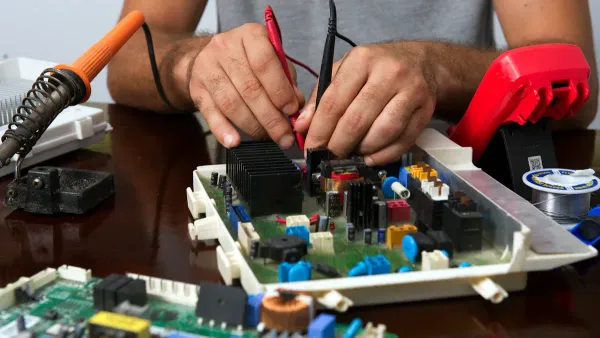
You can set up level 4 esd protection in your shop by following a clear plan. Start by learning the ANSI/ESD S20.20-2016 standard. This document gives you the rules for protecting electronic components and integrated circuits. Use it as your guide when building your ESD control program.
Create an ESD protected area in your shop. This space should have anti-static flooring and ESD-safe workstations. These features help prevent static buildup and protect sensitive devices. Make sure you connect all conductive surfaces to a common ground. Proper grounding and bonding stop static charges from building up on workbenches, tools, and equipment.
Install embedded esd detection systems in your workspace. These systems help you spot static problems before they cause damage. Use real-time monitoring to check for static buildup on surfaces and in the air. This approach lets you fix issues quickly and keep your shop safe.
Always use anti-static wrist straps when handling integrated circuits. These straps connect you to ground and stop static from your body from reaching the components. Place ESD mats on workbenches and floors. These mats safely move static charges away from your workspace.
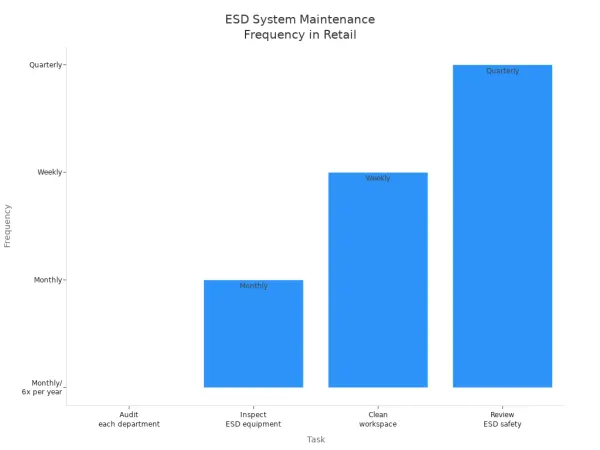
Keep your ESD protected area clean and organized. Remove dust and debris every week. Inspect your ESD equipment each month to make sure it works. Review your ESD safety guidelines every quarter. The table below shows a simple maintenance schedule:
| Task | Frequency |
|---|---|
| Audit each department | Monthly or at least six times per year |
| Inspect ESD equipment | Monthly |
| Clean workspace | Weekly |
| Review ESD safety guidelines | Quarterly |
If you follow these steps, you will build a strong defense against static electricity. Your shop will protect electronic components and integrated circuits from hidden damage.
Recommended Products
You need the right tools to keep your shop safe from static. Here are some top-rated products for level 4 esd protection:
- ESD Mats: Place these on workbenches and floors. They safely move static charges away from sensitive devices.
- Grounding Wrist Straps: Wear these when handling integrated circuits. They stop static from your body from reaching the parts.
- ESD Bags: Store and transport electronic components in these bags. They shield devices from static during movement.
- Anti-Static Storage Bins: Use these bins to organize and protect your inventory.
- Ionizing Air Blowers: Set these up in your workspace. They remove static from the air and surfaces.
You should also use embedded esd detection tools. These devices check for static buildup in real time. They help you spot problems before they damage your products.
TVS diodes play a key role in protecting integrated circuits. These diodes clamp high voltages during an ESD event. They quickly move extra energy away from sensitive parts. TVS diodes respond fast and handle high surge currents. You should install them on signal lines and near connectors.
Other helpful products include:
- Antistatic wrist straps
- Antistatic floor mats
- Grounding workbenches
- Ion blowers
Each product has a special job. ESD mats and wrist straps protect work areas and people. TVS diodes guard the circuits inside your devices. Embedded esd detection and real-time monitoring keep your shop safe every day.
Staff Training
Your staff must know how to use ESD protection tools and follow safety rules. Start with hands-on training. Set up practice workstations with ESD-safe equipment. Let your team learn by doing.
Hold regular refresher courses. These sessions help everyone remember the rules and stay alert. Make ESD safety part of your shop’s culture. Encourage your team to remind each other about best practices. No one should feel bad for pointing out a mistake.
Choose an ESD safety ambassador. This person checks that everyone follows the rules and helps new employees learn. Ask your team for feedback. Use regular audits to see how well your training works.
- Inadequate training and awareness
- Neglecting personal grounding
- Improper workstation setup
- Using non-ESD safe materials
- Ignoring environmental controls
- Inconsistent testing and maintenance
- Relying solely on visual inspections
You can solve these problems by giving thorough training, using the right equipment, and checking your systems often.
To measure how well your level 4 esd protection works, use these methods:
| Measurement Technique | Description |
|---|---|
| Measuring Electrical Field | Detects the presence of an electric field associated with electrostatic charges. |
| Using a Static Field Meter | Measures surface voltage and polarity, helping identify items that can accumulate charge. |
| Counting ESD Events | Provides data for before-and-after analysis to assess the effectiveness of ESD control measures. |
| Surface Resistance Measurement | Assesses a material's ability to conduct electricity, crucial for compliance with ESD standards. |
You should check your systems often. Use embedded esd detection and real-time monitoring to keep your shop safe. This approach helps you catch problems early and protect your products.
Safeguarding Automotive Electronics

ESD Risks in Automotive Applications
You face unique challenges when working with automotive applications. Modern vehicles rely on electronic components and integrated circuits for safety, performance, and comfort. Even a small electrostatic discharge can cause a malfunction in systems like engine control units, airbag sensors, or automotive interfaces. These failures can lead to safety risks and costly repairs.
ESD events may cause sudden errors or long-term damage. You might see a system fail during a test, or a customer could report problems after installation. The IEC 61000-4-2 and ISO 10605 standards help you test automotive electronics for ESD resistance. These standards simulate real-world conditions, so you can design systems that withstand static shocks. When you follow these guidelines, you improve reliability and protect your customers.
Note: ESD protection is not just about passing tests. You need to build strong defenses into every step, from handling parts to installing them in vehicles.
Best Practices for Protection
You can take several steps to safeguard automotive electronics in your shop. Start by using proper grounding techniques. Make sure you and your staff wear grounding wrist straps and anti-static footwear. Place anti-static mats on all work surfaces. Avoid using cosmetics or lotions in protected areas, since they can increase static buildup.
Here are some best practices you should follow:
- Use anti-static materials and ESD-safe workstations to lower the risk of static discharge.
- Store sensitive components in ESD-safe containers.
- Perform routine audits to check compliance with ESD control measures.
You should also use ESD-safe packaging, such as anti-static bags and foam, when storing or shipping parts. Regular employee training helps everyone understand ESD risks and how to prevent them.
| Best Practice | Description |
|---|---|
| Implement proper grounding | Use wrist straps and anti-static mats to safely dissipate static charges. |
| Ensure ESD-safe packaging | Utilize anti-static bags and ESD foam for component protection during storage. |
| Conduct regular employee training | Provide training on ESD risks and best practices to maintain protection standards. |
When you select ESD protection devices, look for those with AEC-Q101 qualification. These devices meet strict automotive safety standards. System-level protection, such as discrete ESD protection devices, improves reliability more than just using capacitors. SEED simulation helps you match integrated circuits with the right ESD protection. You should also compare TLP curves to make sure protection devices trigger before the internal protection of the PHY.
By following these steps, you keep automotive applications safe and reliable. You protect your shop’s reputation and help customers avoid costly failures.
Level 4 ESD protection gives your shop a strong advantage. You keep electronic components and integrated circuits safe, which means fewer returns and happier customers. The table below shows how these measures help your business:
| Benefit | Explanation |
|---|---|
| Improved system reliability | You design more robust systems with detailed ESD information. |
| Reduced field failures and returns | Better protection leads to fewer failures and returns. |
| Increased customer satisfaction | Meeting design needs boosts satisfaction and loyalty. |
| Enhanced product value | Reliable products increase sales and revenue. |
| Competitive advantage | Strong ESD protection sets your shop apart. |
You should act now. Work with ESD experts or suppliers to analyze your shop, identify problem areas, and get clear recommendations for improvement. This step helps you build a safer, more trusted electronics business.
FAQ
What is the main benefit of Level 4 ESD protection for your shop?
You protect sensitive electronic components from high-voltage static shocks. This keeps your products safe and reduces costly returns. Customers trust your shop when you use strong ESD protection.
How do TVS diodes help prevent ESD damage?
TVS diodes react quickly during an ESD event. They redirect excess voltage away from integrated circuits. You keep your devices safe by installing these diodes on signal lines.
Which materials should you use for ESD-safe workstations?
You should use conductive mats, dissipative floor tiles, and anti-static wrist straps. These materials help control static electricity. Your shop stays safe for handling integrated circuits.
How often should you inspect ESD equipment in your shop?
You should inspect ESD equipment every month. Regular checks help you find problems early. This keeps your protection strong and your products reliable.
Can Level 4 ESD protection help with automotive electronics?
Yes. You protect automotive integrated circuits from static shocks. This reduces failures in engine control units and sensors. Your customers get safer and more reliable vehicles.