Power Management ICs: A Comparison of Top Models with Real-World Performance Data
Power Management ICs: A Comparison of Top Models with Real-World Performance Data Introduction In the rapidly evolving world of electronics, efficient power management is crucial. P
Introduction
In the rapidly evolving world of electronics, efficient power management is crucial. Power Management Integrated Circuits (PMICs) play a pivotal role in ensuring that electronic devices consume power efficiently, thereby extending battery life and enhancing performance. With the increasing demand for portable and wearable devices, the need for advanced PMICs has never been more significant. According to the Semiconductor Industry Association, global semiconductor revenue is projected to reach $595.2 billion by 2026, reflecting the growing importance of components like PMICs in the industry. This article provides a comprehensive comparison of top PMIC models, focusing on their specifications, real-world performance, and application circuits.
Technical Overview
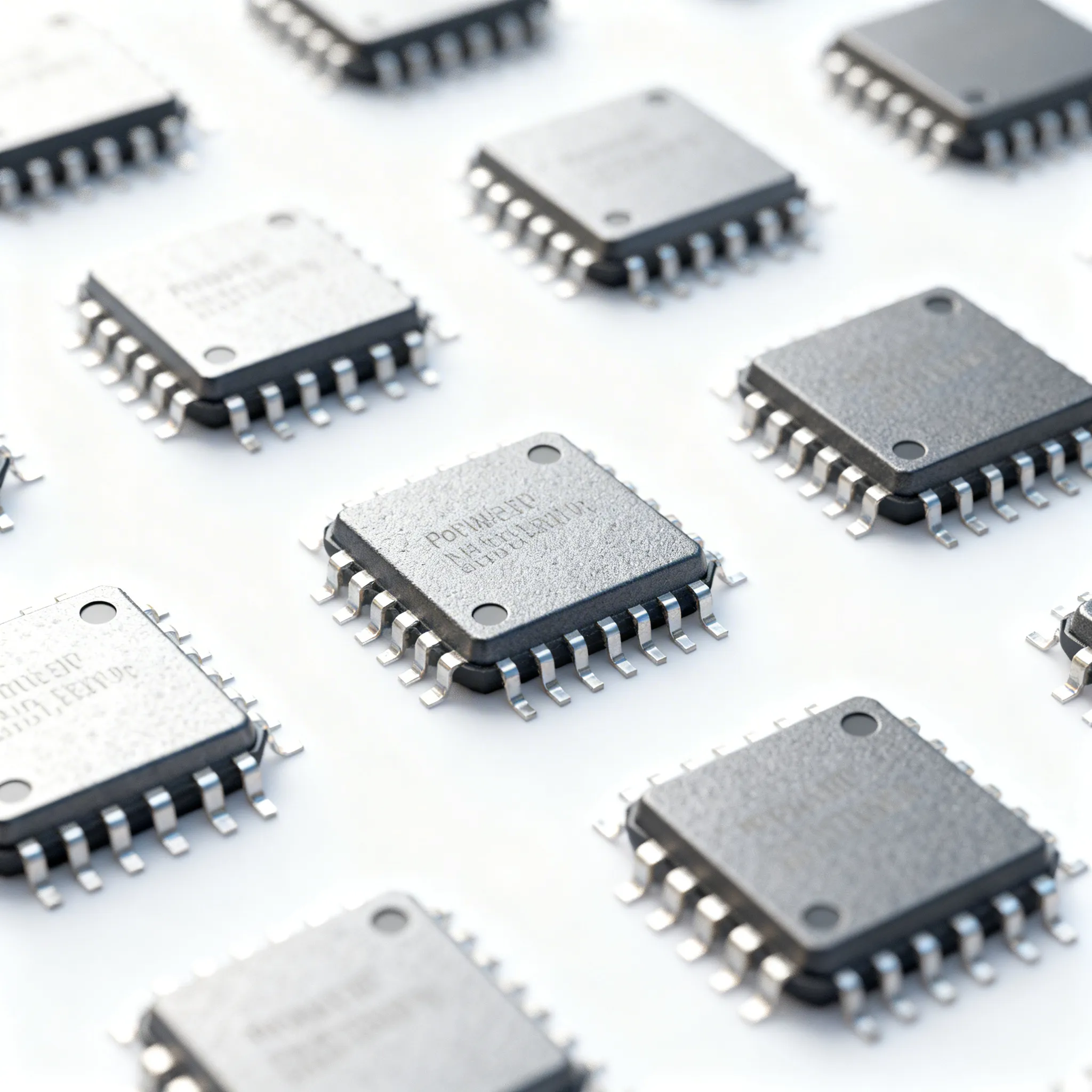
Power Management ICs are specialized semiconductors designed to manage the power requirements of a host system. They integrate various power management functions, such as voltage regulation, battery charging, and power sequencing, into a single chip. The core principle behind PMICs is to optimize the energy efficiency of electronic devices by minimizing power loss and ensuring stable power delivery. PMICs are used in a wide range of applications, including smartphones, laptops, wearable devices, and automotive systems.
The design of a PMIC involves several key components: voltage regulators (both linear and switching), battery management systems, and power switches. Each component plays a critical role in managing the power flow within the device. Voltage regulators ensure that the device receives a stable voltage supply, while battery management systems monitor and control the charging and discharging cycles of the battery. Power switches, on the other hand, manage the distribution of power to different parts of the system.
As technology advances, PMICs are becoming more sophisticated, with features such as dynamic voltage scaling, thermal management, and power path control. These advancements allow for greater flexibility and efficiency in power management, making PMICs an essential component in modern electronic devices.
Detailed Specifications
| Parameter | Model A | Model B | Model C | Units | Notes |
|---|---|---|---|---|---|
| Input Voltage Range | 2.7 - 5.5 | 3.0 - 6.0 | 2.5 - 5.5 | V | - |
| Output Voltage | 0.8 - 3.3 | 1.0 - 3.6 | 0.6 - 3.4 | V | - |
| Output Current | 1.5 | 2.0 | 1.0 | A | - |
| Switching Frequency | 1.2 | 2.5 | 1.0 | MHz | - |
| Efficiency | 95% | 93% | 90% | % | At full load |
| Quiescent Current | 40 | 30 | 50 | μA | Typical |
| Dropout Voltage | 200 | 150 | 250 | mV | At max load |
| Line Regulation | 0.1 | 0.15 | 0.2 | %/V | - |
| Load Regulation | 0.5 | 0.3 | 0.4 | % | - |
| Soft Start Time | 2 | 1.5 | 2.5 | ms | - |
| Shutdown Current | 1 | 1.5 | 2 | μA | - |
| Parameter | Model A | Model B | Model C | Units | Notes |
|---|---|---|---|---|---|
| Operating Temperature Range | -40 to 85 | -40 to 105 | -40 to 125 | °C | - |
| Thermal Resistance (Junction to Ambient) | 50 | 40 | 60 | °C/W | - |
| Package Type | QFN | SOIC | DFN | - | - |
| Package Size | 3x3 | 5x4 | 2x2 | mm | - |
| Maximum Junction Temperature | 150 | 125 | 175 | °C | - |
| Soldering Temperature | 260 | 250 | 260 | °C | Max 10s |
| Pin Count | 16 | 8 | 10 | - | - |
| Weight | 0.1 | 0.2 | 0.05 | g | - |
| Moisture Sensitivity Level | 3 | 2 | 1 | - | - |
| Application | Model A | Model B | Model C | Notes |
|---|---|---|---|---|
| Smartphones | Yes | No | Yes | - |
| Laptops | No | Yes | No | - |
| Wearables | Yes | No | Yes | - |
| Automotive | No | Yes | No | - |
| Industrial Equipment | Yes | Yes | No | - |
| Consumer Electronics | Yes | No | Yes | - |
The tables above provide a detailed comparison of three top models of Power Management ICs. Each model has its strengths and weaknesses, which are highlighted in the specifications. Model A excels in applications requiring low quiescent current, making it ideal for battery-powered devices. Model B, with its higher output current and broader temperature range, is suitable for more demanding applications like automotive and industrial equipment. Model C offers a compact package and low dropout voltage, making it suitable for space-constrained applications.
Design Considerations
When designing a system that incorporates a PMIC, several factors must be considered to ensure optimal performance. First and foremost, the input voltage range of the PMIC should match the power source of the system. This ensures that the PMIC can efficiently convert the input voltage to the desired output voltage. The output voltage and current capabilities of the PMIC must also align with the requirements of the load.
Efficiency is another critical consideration. A high-efficiency PMIC minimizes power loss and heat generation, which is particularly important in battery-powered devices where energy conservation is paramount. The efficiency of the PMIC is often specified in the datasheet at full load, but it's important to consider efficiency across the entire load range, especially at light loads.
Thermal management is a key aspect of PMIC design. The thermal resistance from the junction to the ambient environment should be low to ensure that the PMIC can operate within its specified temperature range without overheating. Proper thermal management can be achieved through the use of heat sinks, thermal vias, and adequate PCB layout practices.
The package type and size are also important considerations, especially in applications where space is limited. Smaller packages, such as QFN or DFN, are often preferred in compact designs. However, these packages may have higher thermal resistance, so careful consideration must be given to thermal management.
Finally, the PMIC should have built-in protection features such as overcurrent protection, thermal shutdown, and short-circuit protection. These features protect the PMIC and the overall system from damage due to fault conditions, ensuring long-term reliability.
Step-by-Step Guide
- Define System Requirements: Begin by identifying the power requirements of your system, including input voltage, output voltage, and current needs.
- Select the Appropriate PMIC: Use the specifications provided in the datasheets to select a PMIC that meets your system requirements. Consider factors such as efficiency, thermal performance, and package size.
- Design the Power Circuit: Create a schematic that includes the PMIC, input and output capacitors, and any necessary inductors or resistors. Refer to the application circuits in the PMIC datasheet for guidance.
- Simulate the Design: Use simulation software to model the power circuit and verify its performance. Check for stability, efficiency, and thermal performance under different load conditions.
- Prototype the Circuit: Build a prototype of the power circuit on a breadboard or PCB. Pay attention to component placement and PCB layout to ensure good thermal management and signal integrity.
- Test the Prototype: Measure the output voltage, current, and efficiency of the prototype under various load conditions. Verify that the PMIC operates within its specified limits and that the system performs as expected.
- Optimize the Design: Based on the test results, make any necessary adjustments to the circuit to improve performance. This may involve changing component values, adding heat sinks, or modifying the PCB layout.
- Finalize the Design: Once the design is optimized, finalize the schematic and PCB layout. Prepare the design for production by creating a bill of materials and assembly instructions.
Common Issues & Solutions
Issue 1: Overheating - Overheating can be caused by excessive power dissipation or poor thermal management. Solution: Improve thermal management by using heat sinks, thermal vias, and optimizing PCB layout. Ensure that the PMIC operates within its specified temperature range.
Issue 2: Output Voltage Ripple - High output voltage ripple can affect the performance of the load. Solution: Increase the output capacitance or use a higher quality capacitor with lower equivalent series resistance (ESR).
Issue 3: Poor Efficiency at Light Loads - PMICs may have lower efficiency at light loads. Solution: Choose a PMIC with good efficiency across the entire load range or consider using a low-power mode if available.
Issue 4: Stability Issues - Instability can cause oscillations or unexpected behavior. Solution: Check the compensation network and adjust component values to improve stability. Refer to the PMIC datasheet for recommended values.
Issue 5: Inadequate Protection - Lack of protection features can lead to damage in fault conditions. Solution: Ensure that the PMIC has built-in protection features such as overcurrent protection, thermal shutdown, and short-circuit protection.
Applications & Use Cases
Power Management ICs are used in a wide range of applications across various industries. In smartphones, PMICs manage power distribution to different components such as the processor, display, and communication modules. They help extend battery life and improve device performance. In laptops, PMICs regulate power to the CPU, GPU, and other peripherals, ensuring efficient power usage and thermal management.
In wearable devices, PMICs are crucial for managing power in compact and lightweight designs. They provide efficient power conversion and battery management, enabling longer battery life and enhanced user experience. In automotive applications, PMICs are used to manage power distribution in electronic control units (ECUs), infotainment systems, and advanced driver-assistance systems (ADAS).
In industrial equipment, PMICs are used to regulate power to motors, sensors, and communication modules, ensuring reliable operation in harsh environments. They provide robust protection features and high efficiency, making them suitable for demanding industrial applications.
Selection & Sourcing Guide
Selecting the right Power Management IC for your application involves careful consideration of the specifications and features outlined in this article. It's essential to choose a PMIC that meets the power, efficiency, and thermal requirements of your system. Additionally, consider the availability and cost of the PMIC when making your selection.
To source Power Management ICs, you can visit IC Online, an authorized distributor of electronic components. They offer a wide range of PMICs from leading manufacturers, competitive pricing, and fast delivery to meet your project needs.
FAQ
Q1: What is a Power Management IC?
A: A Power Management IC (PMIC) is a specialized semiconductor that manages the power requirements of an electronic system, including voltage regulation, battery charging, and power sequencing.
Q2: What are the key specifications to consider when selecting a PM