The Capacitor Formula Explained Simply
A capacitor has two key formulas. One describes its physical build, but we will focus on the practical capacitor formula: C

A capacitor has two key formulas. One describes its physical build, but we will focus on the practical capacitor formula: C = Q/V. This capacitance formula shows how a capacitor works.
- Capacitance (C): A capacitor's ability to store energy.
- Charge (Q): The amount of electrical energy stored.
- Voltage (V): The electrical pressure pushing the charge.
You find this tiny component in all your gadgets. The demand for better energy and performance is why the capacitor market is booming.
| Metric | Value |
|---|---|
| Estimated Market Value (2025) | USD 843.2 million |
| Projected Market Value (2035) | USD 1,426.7 million |
| CAGR (2025-2035) | 5.4% |
Understanding what does a capacitor do reveals how its capacitance is key to powering modern technology.
Key Takeaways
- The formula C = Q/V shows how capacitors work. Capacitance (C) is the ability to store energy. Charge (Q) is the stored energy. Voltage (V) is the electrical pressure.
- Capacitors store and release energy quickly. This helps power things like camera flashes. They can also smooth out bumpy electrical power for devices.
- Capacitors act like smart gates for electricity. They block direct current (DC) but let alternating current (AC) pass through. This skill helps filter audio signals.
- Capacitors are important in many gadgets. They help manage power and filter signals. This makes our electronics work better and more reliably.
Understanding the Capacitor Formula
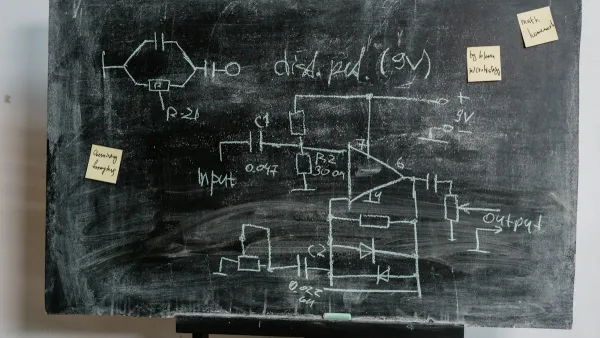
The C = Q/V capacitor formula is simpler than it looks. To make sense of it, you can use a helpful analogy. Imagine you have a water bucket. The relationship between the bucket's size, the water inside it, and the pressure filling it is just like how a capacitor works. This section will help you in understanding capacitance and its role in storing energy.
C is for Capacitance
Capacitance (C) is the size of your bucket. A bigger bucket holds more water. Similarly, a capacitor with higher capacitance holds more charge. Capacitance is a physical property of a capacitor that measures its ability to store energy.
Physics textbooks define capacitance as the ratio of the maximum charge (Q) a capacitor can store to the applied voltage (V). It represents the largest amount of charge per volt the device can hold.
You measure capacitance in a unit called the farad (F), named after scientist Michael Faraday. The International System of Units (SI) defines one farad as the capacitance that stores one coulomb of charge when one volt of electrical pressure is applied.
A one-farad capacitor is actually enormous. You will not find one in your phone. Instead, engineers use much smaller units. Capacitors in gadgets like smartphones and laptops often have capacitance values measured in:
- Microfarads (µF): One-millionth of a farad.
- Picofarads (pF): One-trillionth of a farad.
Understanding capacitance is the first step to mastering the capacitance formula. It is the fixed capacity for energy storage in any given capacitor.
Q is for Charge
Charge (Q) is the amount of water in your bucket. You can fill a bucket halfway or all the way to the top. Likewise, you can store a small or large amount of electrical charge in a capacitor, up to its maximum capacitance.
Electric charge is a fundamental property of matter. It causes matter to feel a force inside an electromagnetic field. This charge can be positive or negative. You can think of it as a surplus or shortage of tiny charged particles called electrons. The unit for electric charge is the coulomb (C). One coulomb represents the total charge of approximately 6.24 quintillion (6.24 x 10^18) electrons. It is a huge amount of charge, which is why a capacitor often stores just a fraction of a coulomb.
| Formula Variable | Water Bucket Analogy | Unit |
|---|---|---|
| C (Capacitance) | Size of the bucket | Farad (F) |
| Q (Charge) | Amount of water | Coulomb (C) |
| V (Voltage) | Water pressure | Volt (V) |
This charge is the actual electrical energy that the capacitor holds.
V is for Voltage
Voltage (V) is the water pressure filling your bucket. Higher pressure fills the bucket with water faster. In electronics, voltage is the electrical pressure that pushes charge into the capacitor.
Voltage is formally known as electric potential difference. It describes the amount of work or energy needed to move a unit of charge from one point to another.
- Voltage is always a measurement between two points.
- It represents the change in potential energy a charge experiences.
- Its unit is the volt (V), where one volt equals one joule of energy per coulomb of charge (1 V = 1 J/C).
Looking at the capacitor formula, C = Q/V, you can see how voltage affects the charge. For a capacitor with a fixed capacitance, applying a higher voltage allows you to push more charge (Q) into it. This stored energy is what makes a capacitor so useful in electronic circuits.
What Does a Capacitor Do in Your Gadgets?
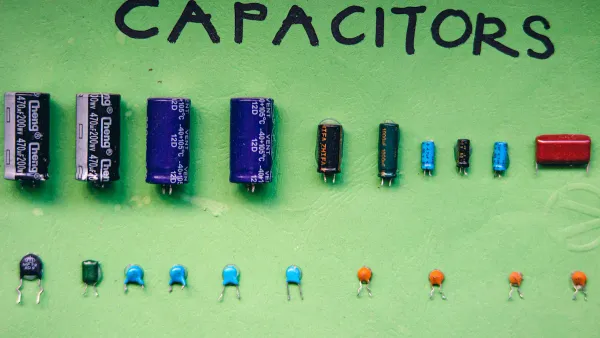
You now understand the C = Q/V formula. Let's explore the practical applications of this principle. The humble capacitor is a hero inside your favorite electronics. Its ability in storing energy and managing voltage is essential. This section shows you what does a capacitor do in the gadgets you use every day. From your camera to your phone charger, the capacitor plays many critical capacitor roles.
The Energy Stored in a Capacitor for a Flash
Have you ever wondered how a camera flash produces such a bright light so quickly? The secret is the energy stored in a capacitor. Your camera's battery cannot release a large amount of energy fast enough. Instead, it slowly charges a capacitor.
- Charging Time: A few seconds.
- Discharging Time: A tiny fraction of a second.
This process is a perfect example of a capacitor's primary function: energy storage and rapid release. The battery's resistance slows down the charging process. An older battery has higher resistance, making the charge time even longer. Once you press the shutter button, the capacitor dumps all its stored energy into the flashbulb instantly.
How much energy can a capacitor store? A typical flash capacitor in a DSLR camera has a capacitance between 100µF and 300µF and is rated for 330V. This allows for an energy storage density of about 1 joule per cubic centimeter, packing a powerful punch in a small space.
The energy stored in a capacitor is what creates the brilliant burst of light. This rapid discharge is one of the most visible practical applications of a capacitor.
Smoothing Voltage with a Capacitor
Your phone charger plugs into an AC wall outlet, but your phone needs stable DC power. The charger converts AC to DC, but the initial DC output is bumpy and unstable. This is where a capacitor comes in for noise suppression.
A smoothing capacitor, also known as a filter capacitor, works to level out these bumps.
- The AC to DC converter produces a fluctuating voltage.
- You connect a capacitor in parallel with the output.
- As voltage rises, the capacitor charges and stores energy.
- As voltage drops, the capacitor discharges, releasing its stored energy to fill the gap.
This action significantly reduces the voltage ripple, providing a smooth and stable DC supply for your device's sensitive circuits. This is a key function for noise suppression. A capacitor used this way is often called a bypass capacitor, as it gives AC noise a path to ground. A decoupling capacitor performs a similar job, isolating one part of a circuit from noise in another.
| Capacitor Type | Typical Capacitance in a USB Charger |
|---|---|
| Primary Filter Capacitor | 47µF – 470µF |
| Output Terminal Capacitor | 100µF – 1000µF |
Advanced power solutions, like those developed by HiSilicon-designated (authorized) solutions partners such as Nova Technology Company (HK) Limited, rely on high-capacitance components for miniaturization and efficiency in modern consumer electronics. These applications show what does a capacitor do for power quality.
Filtering Audio with Capacitance
A capacitor also acts as a smart gatekeeper for electrical signals. Its ability to block DC while letting AC pass makes it perfect for audio filters. An audio signal is a complex AC waveform. Different frequencies in this AC signal correspond to different sounds (bass, treble).
A capacitor's opposition to current flow, called impedance, changes with frequency.
- It has low impedance to high-frequency AC.
- It has high impedance to low-frequency AC.
Engineers use this property to build filters. When you combine a capacitor with a resistor, you can create circuits that separate frequencies.
- High-Pass Filters: These filters let high-frequency sounds pass through while blocking low-frequency bass.
- Low-Pass Filters: These filters do the opposite, letting bass pass while blocking treble.
These simple filters are the building blocks of audio equalizers in your stereo or phone. They allow you to adjust the sound to your liking by controlling which frequencies get a boost. This is one of the most common practical applications for a capacitor in audio equipment.
A Capacitor's Special Skill: Blocking DC
A capacitor has a unique talent that makes it essential in electronics. It can stop direct current (DC) in its tracks while letting alternating current (AC) pass through. This ability allows you to separate different types of signals and protect sensitive components. You can think of a capacitor as a smart gate for electrical energy.
Why DC Current Stops
You can understand why a capacitor blocks DC by looking at its construction. A capacitor contains two metal plates separated by an insulating material called a dielectric. This material creates a physical gap that electrons cannot cross.
When you connect a capacitor to a DC power source like a battery:
- Charge builds up on the plates, storing potential energy.
- The dielectric insulator prevents the DC current from flowing through the capacitor.
- Once the capacitor is full, the voltage across it equals the source voltage, and the flow of energy stops completely.
The capacitor now acts like an open switch. It holds its stored energy and blocks any more DC from passing. This blocking of DC is a fundamental behavior of every capacitor.
Letting AC Current Pass
A capacitor behaves very differently with an AC signal. An alternating current (AC) constantly changes its direction. This continuous change prevents the capacitor from ever fully charging with DC.
Instead, the capacitor enters a cycle of storing and releasing energy. As the AC voltage rises, the capacitor charges. As the AC voltage falls and reverses, the capacitor discharges its energy back into the circuit. This rapid back-and-forth flow of energy makes it seem as if the AC current is passing right through the capacitor. The capacitor's opposition to AC is called reactance, and it depends on the AC frequency and the device's capacitance. For high-frequency AC, this opposition is very low, allowing energy to flow easily. For low-frequency AC, the opposition is high, restricting the flow of energy. This is why a capacitor blocks DC, which has a frequency of zero.
Application in Audio Crossovers
This special skill of blocking DC while passing AC is perfect for audio filters. An audio signal is a complex AC waveform containing different frequencies of energy. Speaker systems use this property in a circuit called a crossover to direct the right sounds to the right speakers.
Fun Fact: A simple crossover uses a capacitor and another component called an inductor to split the audio signal. The capacitor sends high-frequency energy (treble) to the small tweeter, while the inductor sends low-frequency energy (bass) to the large woofer.
- A high-pass filter uses a capacitor to block low-frequency DC and bass, letting only high-frequency treble pass.
- A low-pass filter does the opposite, blocking high frequencies.
A capacitor used in this way is often called a coupling capacitor. It connects two different parts of an audio circuit, allowing the AC audio signal to pass while blocking any stray DC voltage. This ensures different circuit stages do not interfere with each other, giving you clean, crisp sound. These audio filters are a great example of a capacitor in action. A coupling capacitor is essential for clean signal transfer.
The capacitor formula, C = Q/V, is the key to understanding what does a capacitor do. You now see how this simple relationship governs the storage and release of energy in your gadgets. A capacitor uses its capacitance to smooth power, filter signals, and deliver quick bursts of energy. Its special skill is blocking DC energy while letting AC energy pass, a vital function in circuit design. Understanding this capacitance formula provides a foundational insight into modern technology, from your camera's flash to future renewable energy systems.
FAQ
What are the main types of capacitors?
You will find many different types of capacitors. Common types include ceramic, electrolytic, and film capacitors. Each of these types of capacitors has unique properties. Engineers choose specific types for different jobs in a circuit, like handling high voltage or filtering certain signals.
How does a capacitor handle AC?
A capacitor appears to let alternating current (ac) pass through it. The ac voltage constantly changes direction. This makes the capacitor charge and discharge repeatedly. This rapid cycle of energy flow allows the ac signal to continue through the circuit, unlike a DC signal.
Why are there so many types of capacitors?
Different electronic jobs require different tools. The various types of capacitors exist for specific tasks. Some types are small for mobile devices. Other types of capacitors handle high power. The material and design determine its best use, from filtering ac noise to storing large amounts of energy.
Can a capacitor block all AC signals?
No, a capacitor does not block all ac signals equally. Its opposition to ac current, called reactance, depends on the ac frequency. It strongly resists low-frequency ac but allows high-frequency ac to pass easily. This behavior is key for creating audio filters.