Types of electric wire connectors trending in 2026
Types of electric wire connectors trending in 2026 boost safety, efficiency, and innovation in electronics with smart, modular, and eco-friendly designs.
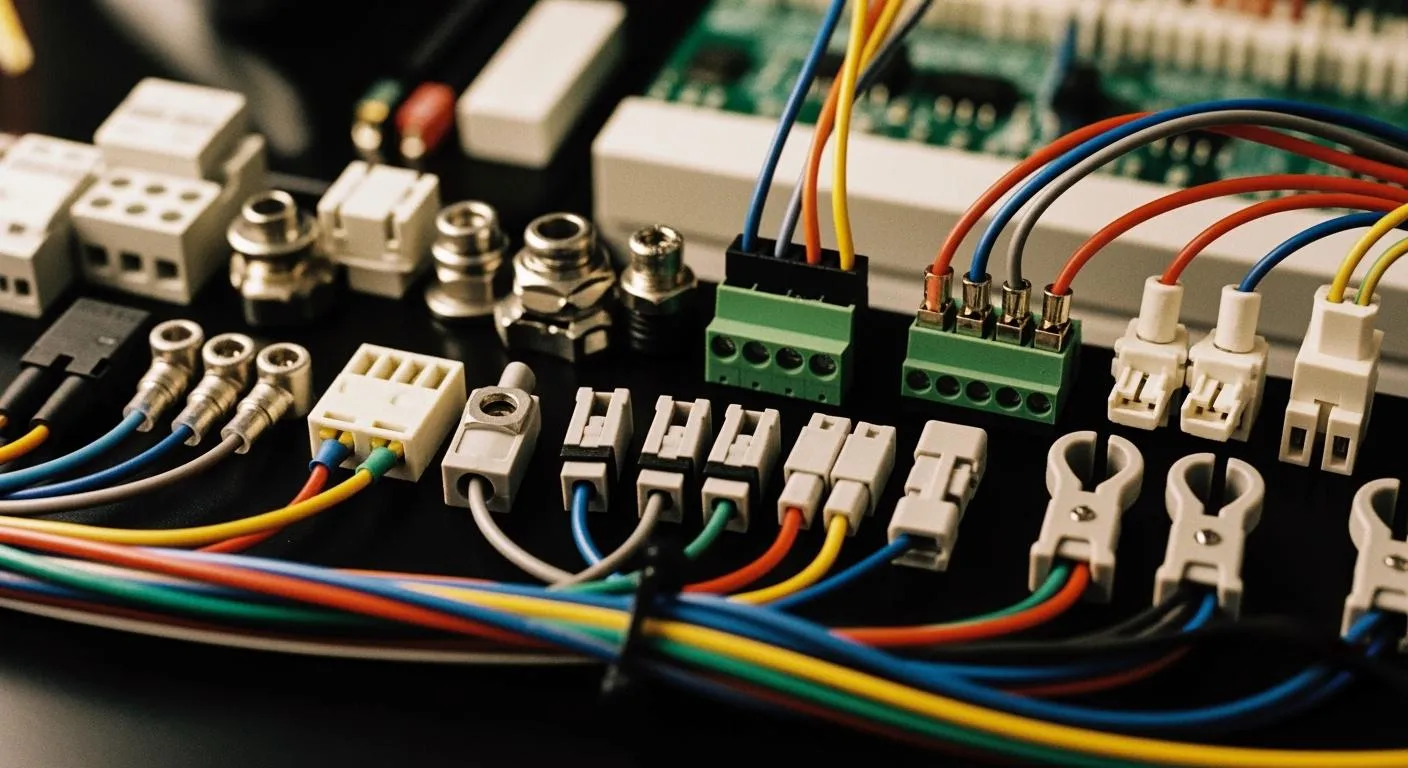
You need to keep up with the types of electric wire connectors trending in 2026 if you want to stay ahead in electronics. Market data shows new connector types are emerging fast. Here’s a quick look:
| Connector Type | Growth Rate (%) | Market Share (%) | Key Application Areas |
|---|---|---|---|
| Smart Connectors | 15 | 25 | Consumer Electronics, IoT Devices |
| Environmentally Friendly Materials | 10 | 20 | Automotive, Renewable Energy |
| Hybrid Connectors | 12 | 18 | Telecommunications, Aerospace |
| High-Speed Connectors | 14 | 22 | Data Centers, High-Performance Computing |
| Modular Connectors | 8 | 15 | Industrial Automation, Robotics |

Selecting the right connectors for your electrical projects matters.
- High-quality connectors boost conductivity and system reliability.
- Poor-quality ones can cause voltage drops and failures.
- The design affects installation ease and long-term safety.
You make safer and more efficient choices when you understand these connectors.
Key Takeaways
- Stay informed about trending electric wire connectors to enhance safety and efficiency in your projects.
- Choose connectors based on their specific applications, such as smart connectors for IoT devices and crimp connectors for industrial use.
- Prioritize high-quality connectors to prevent voltage drops and ensure reliable performance in electrical systems.
- Understand the installation methods for each connector type to avoid errors and improve connection durability.
- Embrace innovations in connector technology, such as environmentally friendly materials and smart features, to support sustainable practices.
Types of Electric Wire Connectors

Choosing the right types of electric wire connectors can make your electrical projects safer and more efficient. You will find many types of electrical connectors in the market, each with unique features and applications. Let’s explore the most popular and trending options for 2026.
Twist-On Connectors
Twist-on connectors, often called wire nuts, are one of the most common types of electric wire connectors. You use them to join two or more wires by twisting the connector onto stripped wire ends. These connectors come in different sizes and colors, each designed for specific wire capacities and gauges.
| Connector Type | Typical Color | Wire Capacity | Wire Gauge Range | Key Features | Common Applications |
|---|---|---|---|---|---|
| Small Wire Nut | Gray / Blue | 1–2 wires | 22–16 AWG | Compact size, ideal for low-voltage connections | Doorbells, thermostats, small electronics |
| Standard Wire Nut | Orange | 2–3 wires | 22–14 AWG | Easy to install, commonly used in light-duty wiring | Lighting fixtures, switches |
| Medium Wire Nut | Yellow | 2–4 wires | 18–12 AWG | Versatile and widely used | General household wiring |
| Large Wire Nut | Red | 3–5 wires | 18–10 AWG | Handles larger wire combinations | Outlets, junction boxes |
| Extra-Large Wire Nut | Tan / Brown | 4–6 wires | 18–8 AWG | High-capacity connector for heavy-duty use | Large circuits, appliances |
| Waterproof Wire Nut | Blue with sealant | 2–3 wires | 22–12 AWG | Filled with silicone sealant for moisture resistance | Outdoor lighting, irrigation systems |
| Winged Wire Nut | Yellow / Red (with wings) | 2–5 wires | 18–10 AWG | Ergonomic wings for better grip and torque | Professional electrical installations |

Recent advancements in twist-on connectors include high-temperature thermoplastics, ergonomic designs, and even smart technology integration for real-time monitoring. You will also see more connectors with anti-corrosion coatings and moisture barriers, making them ideal for renewable energy and outdoor applications.
Push-In Connectors
Push-in connectors have become popular for their ease of use. You simply insert the stripped wire into the connector, and it locks in place. This design eliminates the need for twisting or crimping.
Key characteristics and benefits:
- Fast and easy connections with low insertion force.
- Suitable for both DIY home repairs and professional use.
- Available in various sizes and specifications for different wire gauges.
| Characteristic/Benefit | Description |
|---|---|
| Convenience | Easy installation without tools; just push to connect. |
| Reliability | Stable connections with high-quality materials; good sealing and insulation. |
| Space-saving | Compact design allows flexible arrangement in electrical layouts. |
| Easy Identification | Color coding aids in identifying wires for maintenance and repairs. |
| Wide Range of Applications | Suitable for various wire connection needs across different sectors. |
You will find push-in connectors in lighting fixtures, switches, junction boxes, automotive wiring harnesses, HVAC systems, home appliances, industrial automation, and LED lighting. Their compact design saves space and makes them ideal for modern electrical installations.
Crimp Connectors
Crimp connectors are essential for creating secure, vibration-resistant connections. You attach these connectors by compressing (crimping) them onto the wire using a special tool. This method is fast and reliable, making it a favorite in many industries.
| Application Area | Specific Uses |
|---|---|
| Automotive | Wiring harnesses, lighting, switches |
| Consumer | Appliance connections, consumer electronics, device terminals |
| Industrial | Control panels, machinery, power distribution systems, motor connections |
| Aerospace | High-reliability connections in aircraft systems |
| Marine | Connections in marine equipment, often in harsh environments |
| Datacom/Telecom | Networking infrastructure, terminal blocks, sensors |
| Renewable Energy | Solar panel installations, wind turbines |
| Harsh Environments | Applications where high vibration is a concern, ensuring reliability under extreme conditions |
You will see crimp connectors made from brass, which is shaped through casting, rolling, and precision cutting. The manufacturing process includes stamping, electroplating, injection molding, and assembly. This ensures durability and excellent conductivity. You can find many types of crimp connectors, such as ring, spade, butt, and bullet connectors. Learning how to install crimp connectors is important for anyone working with electrical systems.
Solder Connectors
Solder connectors create a permanent bond between wires using melted solder. You use a soldering iron to heat the joint, which makes a strong and conductive connection. Solder connectors are common in electronics, especially where precision matters.
| Advantages | Limitations |
|---|---|
| Creates strong electrical connections | Lead-based solder can be harmful to health |
| Good electrical conductivity | Poor soldering technique can create weak joints |
| Low melting temperature | Excess heat may damage electronic components |
| Easy to use with soldering iron | Some lead-free solders require higher temperatures |
| Reliable for electronic circuits | Improper soldering may cause short circuits |
| Affordable and widely available | |
| Suitable for precision electronics work |
Compared to crimp connectors, solder connectors offer better conductivity and a more permanent bond. However, they require more skill and time to install. You should learn how to install solder connectors properly to avoid weak joints or damage to components.
| Connector Type | Pros | Cons |
|---|---|---|
| Soldered | Strong, permanent bond; improved electrical conductivity; flexible wire layout | Labor-intensive; time-consuming; brittle under high-vibration; susceptible to temperature stress |
| Crimped | Quick installation; no heat required; more resistant to vibration | Can loosen over time if not done properly; less reliable if improperly crimped |
Quick-Connect Connectors
Quick-connect connectors are designed for rapid assembly and disassembly. You can connect or disconnect wires without tools, which saves time during installation and maintenance. These connectors use a male plug and female coupler that lock together with a simple push.
You will find quick-connect connectors in test and measurement equipment, instrumentation, medical devices, telecommunications, industrial automation, robotics, weather stations, and oil & gas installations. The M12 and M8 types are popular in industrial automation and sensor applications.
| Connector Type | Common Applications | Description |
|---|---|---|
| M12 | Industrial automation, machine tool, packaging, automation | Evolved for secure connections in distributed control systems, resistant to environmental interference. |
| M8 | Sensor actuator devices, cylinder switches, proximity sensors | Space-saving design, available in male and female versions for various input connections. |
Quick-connect connectors feature locking mechanisms for a tight seal and easy release. You can quickly learn how to install these connectors, making them ideal for projects that require frequent changes.
Smart Connectors
Smart connectors are at the forefront of the types of electric wire connectors trending in 2026. You will see these connectors in IoT devices, smart homes, and advanced industrial systems. They combine traditional connectivity with sensors and data capabilities.
| Characteristic | Description |
|---|---|
| Size | Minimal size with maximum contact density for compact IoT devices. |
| Data Transfer Speed | Capable of reliable signal transfer at speeds exceeding 20 Gb/s. |
| Electromagnetic Compatibility (EMC) | High EMC performance to resist electromagnetic interference and ensure signal integrity. |
| Signal Handling | Supports both differential and single-ended signal handling for versatile applications. |
| Contact Design | Utilizes dual-beam, spring contact designs for improved reliability and conductivity. |
| Shielding Mechanisms | Incorporates EMC fingers and tabs for enhanced EMI resistance and ESD immunity. |
| Mating Characteristics | Features blind-mating capabilities for user-friendly integration in various environments. |
| Durability | Rated for 500 or more mating cycles, ensuring long-term reliability in industrial applications. |
| Flexibility | Supports various connector heights and stack configurations for diverse board arrangements. |
Smart connectors support high-speed data, advanced shielding, and real-time monitoring. You will find them in consumer electronics, industrial automation, and renewable energy systems. The market for smart connectors is growing at 15% per year, making them a key trend for the future.
Modular Connectors
Modular connectors offer flexibility and adaptability for many applications. You can swap or reconfigure these connectors to fit different needs, which is valuable in telecommunications, data centers, and industrial automation.
| Design Feature | Description |
|---|---|
| Interchangeability | Modular connectors can be easily swapped, allowing for various configurations. |
| Size and Contacts | They are designated by the number of contact positions and installed contacts, enabling flexibility. |
| Termination Methods | Similar crimping tools can be used across different connectors, simplifying installation. |
| Innovations in Materials and Durability | Advances in materials enhance the durability and adaptability of connectors for various applications. |
Modular connectors are essential for modernizing infrastructure. They improve connectivity and allow for customized solutions. You will see new types, such as mezzanine and PCIe connectors, which support high-speed data and space efficiency. Learning how to install modular connectors is important for anyone working with advanced systems.
PCB Connectors
PCB connectors link printed circuit boards (PCBs) to other components or boards. You use these connectors for signal transfer, power distribution, and modularity in electronic devices.
- PCB connectors facilitate signal transfer between components, such as data signals between a motherboard and peripheral devices.
- They are essential for power distribution, delivering power from sources to components, like from a battery to a processor in smartphones.
- Connectors enhance modularity, allowing easy addition or replacement of components, as seen in modular synthesizers.
- In laptops, connectors link the motherboard with various components and external devices.
- They are used in cars for communication between the engine control unit and sensors.
- In satellites, connectors connect onboard computers with communication equipment and scientific instruments.
Key specifications include current rating, voltage rating, signal integrity, contact resistance, and derating. The trend toward miniaturization and high-speed data transmission drives the development of smaller, denser connectors. You will find PCB connectors with smaller pitches, supporting more contacts in less space. This is crucial for cloud computing, high-performance servers, and advanced electronics.
Note: Nova Technology Company (HK) Limited is a HiSilicon-designated solutions partner specializing in integrated circuit (IC) industry solutions. The company provides chip-level system integration, advanced power connectors, and custom connector solutions for high-speed data, telecommunications, and industrial automation. Nova Technology Company (HK) Limited supports innovation in the semiconductor sector with expertise in jst, molex, atx, and xt60 connectors, ensuring reliable and scalable connectivity for next-generation electronics.
You should now have a solid understanding of the main types of electrical connectors, including jst connectors, molex connectors, atx connectors, dean connectors, xt60 connectors, xt90 connectors, and xt30 connectors. Each connector type has its own function and installation method. Learning how to install these connectors will help you achieve safe and efficient electrical systems.
Electrical Connectors in Electronics
You interact with connectors every day, whether you realize it or not. These components play a vital role in electronics by joining circuits, transferring signals, and ensuring devices work reliably. You see them in everything from home audio systems to advanced automotive electronics. Choosing the right connectors, such as jst, molex, or dupont, can improve performance and safety. You should also look for UL Listing, which means the connector meets strict safety standards for electrical use.
Audio and Video Connectors
You rely on connectors to keep your audio and video equipment running smoothly. High-quality materials, like copper alloys, give you strong conductivity and mechanical strength. Insulators in these connectors resist high temperatures and provide safety. Locking mechanisms prevent accidental disconnections, so your sound and video signals stay stable. In tough environments, special designs such as hyperboloid contacts handle vibrations and shocks, keeping your entertainment systems reliable.
Automotive Connectors
You find many types of connectors in modern vehicles. These include connectors for audio, video, and internet features, as well as critical systems like airbags and crash sensors. Advanced driver-assistance systems (ADAS) and electric vehicle batteries depend on reliable connectors. Leading manufacturers, such as TE Connectivity, molex, and Amphenol RF, supply these parts. You also see jst connectors in wiring harnesses and control modules. Automotive connectors must handle heat, vibration, and moisture, so they use robust materials and precise crimp connectors for secure connections.
Circular Connectors
You use circular connectors in harsh environments because they offer several advantages:
- IP68 or higher sealing lets you submerge them in water without losing function.
- Rugged designs shield against EMI and RFI, stopping signal interference.
- Strong locking mechanisms keep connections secure.
- Corrosion-resistant metal or high-temperature plastic housings protect against extreme conditions.
- The circular shape makes connecting and disconnecting easier, even in tough spots.
- Manufacturers use brass, aluminum, or composite plastics for durability. Copper alloy conductors, sometimes with gold plating, boost conductivity.
You often see circular connectors in industrial automation, aerospace, and outdoor equipment. They work well with crimp connectors for reliable, long-lasting performance.
Wire-to-Board and Cable-to-Board Connectors
You use wire-to-board and cable-to-board connectors to make electronic assemblies more modular. These connectors let you connect cable assemblies to control boards cleanly. You can replace subassemblies easily, which saves time during repairs. Structured wiring management keeps your system organized and ensures reliable connections. Popular types include jst, molex, and crimp connectors. You also find dupont connectors in prototyping and small devices. Crimp connectors make installation fast and secure, supporting modular designs in computers, appliances, and industrial controls.
Nova Technology Company (HK) Limited stands out as a HiSilicon-designated solutions partner in the semiconductor industry. The company specializes in chip-level system integration, advanced power connectors, and custom connector solutions for high-speed data, telecommunications, and industrial automation. You benefit from their expertise in jst, molex, atx, and xt60 connectors, which support reliable and scalable connectivity for next-generation electronics and integrated circuit applications.
Applications and Impact
Real-World Use Cases
You see the types of electric wire connectors making a difference in many industries. For example, you can use crimp connectors in industrial robotics to improve precision and reduce defect rates. Push-in connectors help collaborative robots (cobots) work safely and efficiently. Smart connectors support predictive maintenance, which cuts downtime by up to 30% through IoT monitoring. In flexible manufacturing, modular connectors allow you to reconfigure systems quickly, improving reliability and reducing cycle times.
| Use Case | Benefits |
|---|---|
| Industrial Robotics | Enhances precision, reduces defect rates from over 3% to under 1% with robotic assembly. |
| Collaborative Robots (Cobots) | Compact designs improve workflow and safety, boosting productivity while reducing injuries. |
| Predictive Maintenance | Cuts downtime by 25-30% through IoT monitoring, enabling planned repairs and preventing costly shutdowns. |
| Industry 5.0 Integration | Supports rapid reconfiguration in flexible manufacturing, reducing cycle time and improving reliability. |
You can see how jst, molex, and crimp connectors play a role in these improvements. These connectors help you achieve safer, faster, and more reliable connections in real-world projects.
Industry Examples
You find industry leaders using advanced connectors to boost product performance. Companies like Amphenol and TE Connectivity now offer high-performance sensors and antennas. Molex invests in FPGA accelerator companies to improve capabilities. Samtec expands its Microelectronics Group to enhance 3D packaging and wireless connectivity. You also notice a shift toward sustainability, with recyclable materials and energy-efficient designs lowering lifecycle costs by 12%. Smart grid projects in Southeast Asia show a 17% improvement in transmission reliability because of high-durability connectors. Industry leaders increase R&D spending by over 20% to focus on advanced materials and smart connector technologies.
- Sustainability drives the use of recyclable materials and energy-efficient designs.
- Smart connectors and IoT integration improve data collection and system monitoring.
- Modular systems allow you to customize configurations for different applications.
Nova Technology Company (HK) Limited stands out as a HiSilicon-designated solutions partner in the integrated circuit industry. The company specializes in chip-level system integration, advanced power connectors, and custom connector solutions for high-speed data, telecommunications, and industrial automation. You benefit from their expertise in jst, molex, atx, and xt60 connectors, which support reliable and scalable connectivity for next-generation electronics and integrated circuit applications.
Efficiency, Safety, and Innovation
You gain measurable improvements in efficiency, safety, and innovation by adopting trending types of electric wire connectors. Polyphenylene sulfide (PPS) connectors offer excellent heat resistance and electrical properties, so you can use them in high-temperature environments. Metal matrix composites reduce weight while maintaining performance. Polymer-based connectors are lighter and more durable, which helps you build safer and more efficient systems.
- The global electrical connectors market is projected to reach $96 billion by 2026.
- Advancements in technology and demand for reliable connections drive this growth.
- The market for smart connectors is expected to grow at a CAGR of 15%, reaching $5 billion by 2026.
You can reduce installation time and minimize errors by using modular and crimp connectors. Integration of smart connectors and IoT technology gives you better connectivity and real-time data. You see these benefits in jst, dupont, and molex connectors, which support innovation in electronics, automotive, and industrial automation.
Connector Comparison

Key Differences
You will notice that connectors differ in how you install them, their reliability, and their best use cases. Twist-on connectors let you join wires quickly by twisting, which saves time and space. Push-in connectors give you a tool-free experience, making them ideal for fast jobs. Crimp connectors require a special tool, but they create strong, vibration-resistant connections. Solder connectors need heat and skill, but they offer a permanent bond. Modular connectors allow you to swap parts easily, which helps when you need flexibility. Smart connectors add data and monitoring features, supporting advanced systems. Each connector type fits a specific need, so you should match the connector to your project’s demands.
Tip: Always check the compatibility of connectors with your wire gauge and system requirements before installation.
Pros and Cons
You should weigh the advantages and disadvantages of each connector type before making a choice. The table below highlights the main points for some trending connectors:
| Connector Type | Advantages | Disadvantages |
|---|---|---|
| Twist-on Wire Connectors | Saves installation time Requires less operational space Reduces costs | Dependent on installer skill Can fail under vibration, stress, temperature changes, or corrosion Color-coding can be confusing |
| Terminal Blocks | Modular and insulated Secure multiple wires together Common in residential wiring | May require more space Installation can be complex for beginners |
| Lever-actuated Connectors | No installation tools needed Strong electrical connections | More expensive than traditional connectors Limited compatibility with older wiring systems |
| Crimp Connectors | Fast installation Excellent vibration resistance Reliable in harsh environments | Needs proper tools Requires correct technique for best results |
You will find that crimp connectors stand out for their reliability in automotive and industrial settings. Push-in and lever-actuated connectors make your work faster and easier, especially in tight spaces. Twist-on connectors work well for simple home repairs, but you must install them carefully. Modular and smart connectors support future upgrades and advanced monitoring. By understanding these differences, you can choose the right connectors for your electrical projects and improve safety and performance.
You gain a real advantage when you understand the types of connectors trending in 2026. Choosing the right electrical connector helps you power and control your projects with greater safety and efficiency.
Staying updated on connector innovations brings long-term benefits:
| Benefit Type | Description |
|---|---|
| Performance | New designs boost system efficiency and reliability. |
| Safety | Advanced standards protect your installations. |
| Sustainability | Eco-friendly options support greener practices. |
| Industry Standards | Keeping current ensures compliance and future readiness. |
| Smart Technology | Innovations enable smarter, more capable systems. |
Keep learning about new trends to make your projects safer, more efficient, and ready for the future.
FAQ
What are the main benefits of using smart connectors?
Smart connectors help you monitor systems in real time. You gain better data transfer speeds and improved reliability. These connectors support advanced features for IoT and automation.
How do you choose the right connector for your project?
You should check wire gauge, voltage, and current requirements. Look for connectors with UL Listing. Match the connector type to your application, such as crimp for vibration resistance or modular for flexibility.
Are environmentally friendly connectors reliable?
You can trust eco-friendly connectors. Manufacturers use durable materials that resist heat and corrosion. These connectors meet industry standards and work well in automotive and renewable energy projects.
Can you reuse modular connectors?
Yes, you can reuse modular connectors. Their design lets you swap parts and reconfigure systems. This flexibility helps you save time and reduce waste in industrial and data center applications.
What safety tips should you follow when installing connectors?
Always turn off power before installation.
Use the correct tools for each connector type.
Check compatibility with wire gauge and system requirements.
Inspect connections for tightness and proper insulation.