Why DIP Integrated Circuits Still Matter in Modern Electronics
DIP Integrated Circuits are still very important in electronics today. Engineers and students like them because they are easy to use. They help with building and testing new ideas.
DIP Integrated Circuits are still very important in electronics today. Engineers and students like them because they are easy to use. They help with building and testing new ideas. They are simple to handle and fix when broken. Many factories still use them because they are strong. For many years, DIP Integrated Circuits have helped the electronics industry grow. You can find them in schools and factories, which shows they are still needed.
Key Takeaways
-
DIP Integrated Circuits are simple to use and very strong. They are great for learning, testing, and fixing electronics. Their through-hole design makes them tough and easy to connect. This is perfect for building new things and for hard places. Schools, hobbyists, and factories still use DIP ICs. They help beginners learn and work with old systems. DIP ICs work well in rough places like factories, cars, and military gear. Even with new technology, DIP packaging is still important. It is strong, easy to use, and many people still need it.
What Are DIP Integrated Circuits
Definition and Features
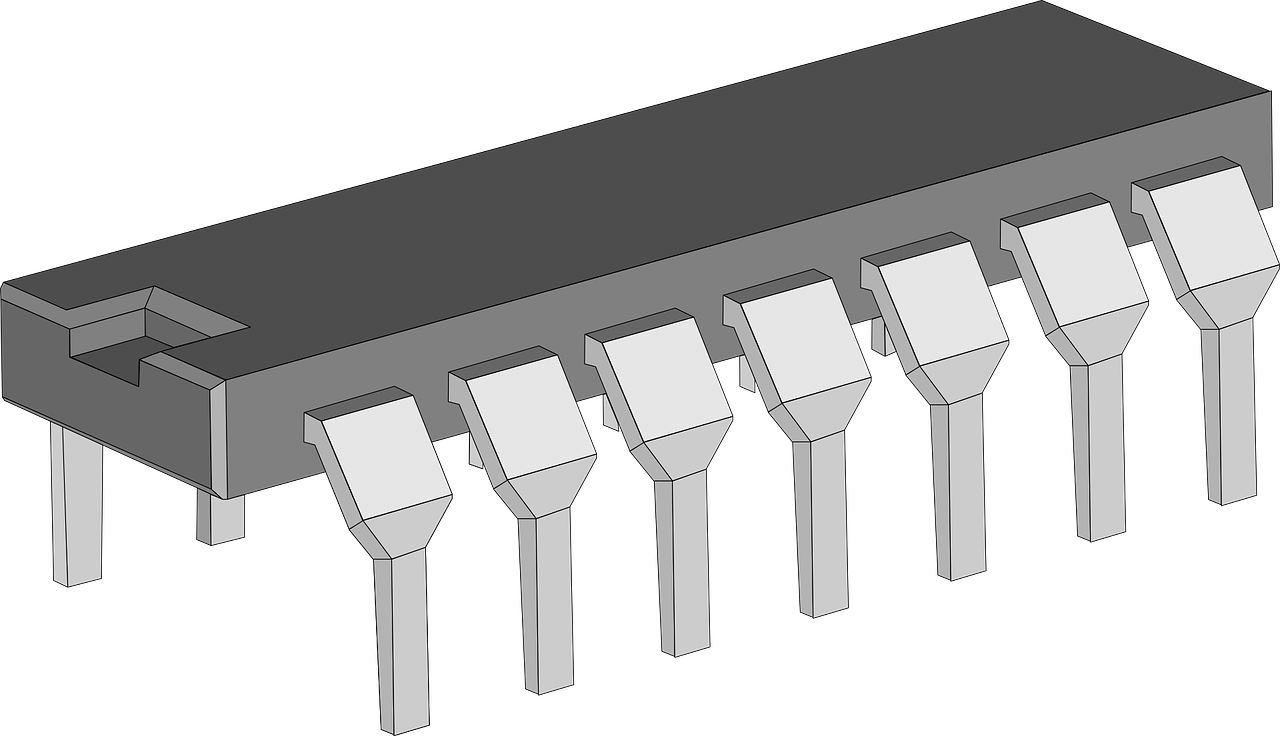
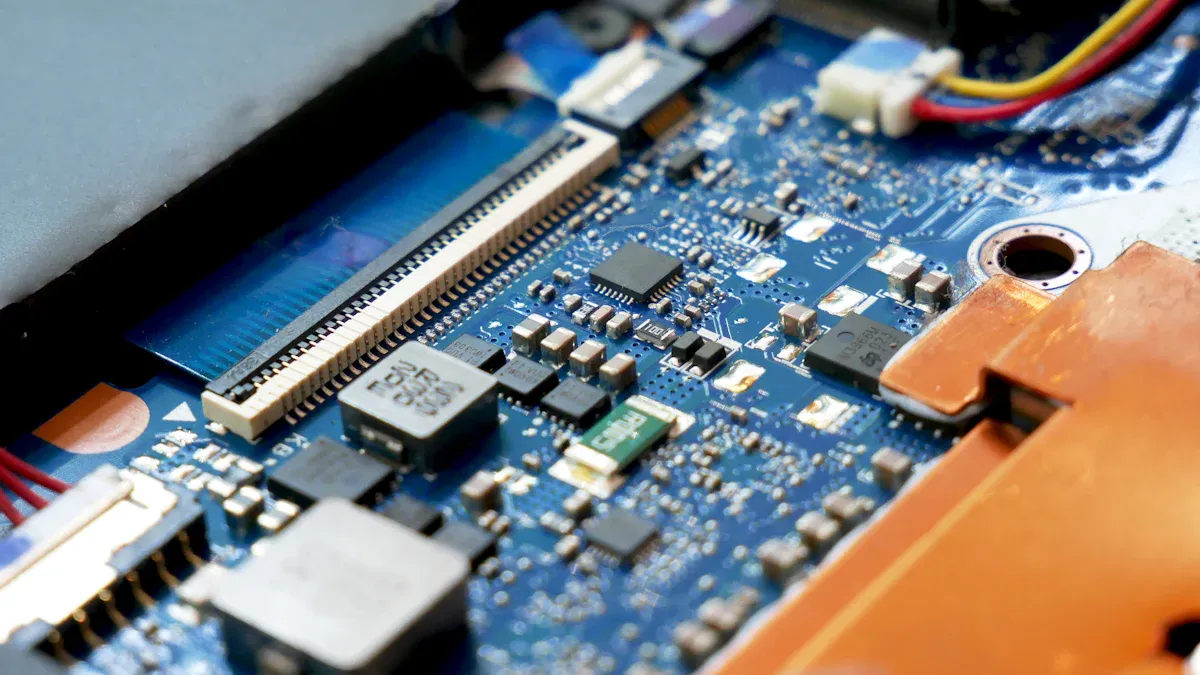
DIP Integrated Circuits have a rectangle body. They are made from plastic or ceramic. There are two rows of metal legs on each side. These legs are called pins. The pins go into holes on a printed circuit board. This way of connecting is called through-hole mounting. Each pin is spaced 2.54 mm apart. This makes them easy to use with breadboards and sockets. DIP packages can have 8 to 64 pins. Their bigger size helps people handle them by hand. It is also easier to solder and check them.
The table below shows how DIP packages are different from other types:
|
Feature |
DIP (Dual In-line Package) |
Other Packages (SOP, QFP, BGA, CSP) |
|---|---|---|
|
Mounting Type |
Through-hole with two parallel rows of metal legs |
Surface-mount (SOP, QFP), solder balls (BGA), or chip-scale (CSP) |
|
Shape and Footprint |
Rectangular, larger footprint |
Smaller footprint, more compact designs |
|
Lead Pitch |
2.54 mm (0.1 inches) |
Smaller pitch (0.4 mm to 1.27 mm) |
|
Pin Count Range |
8 to 64 pins |
Higher pin counts (up to 1000+ for BGA) |
|
Mechanical Connection |
Sturdy through-hole connection, easy manual handling |
Surface-mount requires specialized assembly |
|
Application Suitability |
Low-density, low-frequency, prototyping, legacy systems |
High-density, high-frequency, modern consumer and industrial electronics |
DIP Integrated Circuits are best for simple and slow projects. Their strong pins make them good for testing and fixing.
Historical Role
DIP Integrated Circuits started in the 1960s. Engineers wanted to fit more parts in less space. In 1965, the dual in-line package was made. This new shape made building and fixing electronics easier.
-
DIP packages were very popular in the 1970s and 1980s.
-
Most small devices used DIP format in the 1990s.
-
The rectangle shape and pin layout helped pack parts closer together.
-
DIP packages made circuit boards easier to design and cheaper to make.
-
Even after new technology came, DIP was still used for testing and learning.
-
Programmable devices like EPROMs used DIP because they could be taken out and changed.
Jack Kilby invented the integrated circuit in 1958. This changed electronics a lot. Robert Noyce made the design better and easier to make. The first products were calculators and computers. The Intel 4004 microprocessor in 1971 used DIP packaging. This started the age of personal computers. DIP Integrated Circuits helped make electronics smaller, cheaper, and better.
Today, many engineers and students still use DIP Integrated Circuits. They are easy to use, easy to hold, and work well.
DIP ICs in Modern Use
Prototyping and Development
Engineers like to use DIP ICs when starting new projects. These parts are easy to hold and put on breadboards. Their bigger size and strong pins make them simple to move. You do not need special tools to use them. With DIP ICs, people can test circuits and change things fast. This helps people learn and try new ideas.
-
Old packaging types like DIP are still used because they save money and use old ways to make things.
-
DIP packaging is strong, so it works well in factories, the military, and cars.
-
People like DIP ICs because they are easy to fix and connect well.
-
Even though surface mount technology is popular, DIP ICs are still important for new projects.
-
More integrated circuits are needed for IoT, cars, and healthcare, so DIP ICs are used for testing because they are tough and easy to use.
-
Through-hole packaging like DIP is best for hard places like defense and space.
-
Surface mount is used for making lots of things, but DIP ICs are still good for testing and old systems.
Education and Hobbyists
Schools and hobbyists use DIP ICs because they are easy to learn. Students can see the pins and learn how to connect circuits. Teachers use DIP ICs to teach basic electronics. Hobbyists like building with DIP ICs because they can use breadboards and do not need fancy tools. The simple shape and easy use help beginners feel sure of themselves.
TIP: Many beginner kits have DIP ICs. These kits help students and hobbyists build and test circuits safely and fast.
Industrial and Legacy Systems
DIP Integrated Circuits are still used in factories and old machines. Many places need these parts for older equipment. DIP ICs are strong and can handle shaking and stress. Their bigger size helps them stay cool, so machines last longer. The table below shows why DIP ICs are still good for these jobs:
|
Performance Metric |
Description |
Relevance to Industrial Control and Legacy Systems |
|---|---|---|
|
Mechanical Robustness |
Very strong against shaking and stress, so parts stay safe. |
Good for factories with lots of movement and bumps. |
|
Heat Dissipation |
Bigger size helps keep heat away, so parts do not get too hot. |
Helps machines work well for a long time. |
|
Ease of Testing & Troubleshooting |
Pins are easy to reach, so checking and fixing is simple. |
Makes fixing old and factory machines faster. |
|
Electrical Characteristics |
DIP switches work at 25mA at 24VDC with good contact. |
Makes sure devices work right in many uses. |
|
Soldering Simplicity |
Pins fit in board holes, so soldering is easy by hand or machine. |
Makes testing and fixing old and factory machines simple. |
|
Versatility in Pin Counts |
Has 8 to 64 pins, so it can do easy or hard jobs. |
Used in many things from sensors to microcontrollers. |
|
Continued Use in Legacy Systems |
Even though SMT is common, DIP is still used in old, school, and factory panels. |
Shows DIP is still needed where strong and easy parts matter. |
Repair and Maintenance
Technicians like DIP Integrated Circuits for fixing things. These parts are easy to take out and put back in. This saves time and keeps machines working. For example, old game consoles like the NES used DIP ICs so repairs were fast. In factories and cars, DIP ICs are strong and easy to replace. Their strong pins and good soldering help them last in hard places. This makes repairs simple and keeps things running well.
DIP vs. SMT

Mechanical and Assembly Differences
DIP and SMT represent two main ways to mount integrated circuits on a circuit board. DIP Integrated Circuits use through-hole mounting. Their long leads go into holes in the board. This method creates a strong physical bond. It works well for parts that face a lot of shaking or stress, such as in cars or airplanes. The larger solder joints in DIP help resist damage from heat and movement. Manual assembly of DIP parts allows careful control over how each part is placed and soldered. Workers can bend the leads to reduce stress and trim them after soldering. This process improves the strength and life of the connection.
SMT, or surface-mount technology, attaches parts directly to the surface of the board. SMT parts have smaller solder joints. These joints can break more easily if the board bends or heats up. SMT works best for making small, dense, and light devices. Factories use machines to place and solder SMT parts quickly. However, SMT may need extra steps, like adding glue or coatings, to make the parts stronger in tough conditions.
|
Feature |
DIP (Through-Hole) |
SMT (Surface-Mount) |
|---|---|---|
|
Mounting Method |
Leads through PCB holes |
Leads on PCB surface |
|
Mechanical Strength |
High |
Moderate to Low |
|
Assembly |
Manual or automated |
Mostly automated |
|
Repairability |
Easy |
Hard |
|
Use in Harsh Settings |
Excellent |
Needs extra steps |
When DIP Is Preferred
Engineers choose DIP when they need strong and reliable connections. DIP Integrated Circuits work well in places with lots of vibration or heat changes. Factories, cars, and airplanes often use DIP for this reason. DIP also makes it easy to replace or repair parts. People can remove and swap out a DIP chip without special tools. This saves time during repairs.
Prototyping is another area where DIP shines. Students and engineers can use breadboards with DIP chips to test ideas quickly. The larger size and clear pin layout help beginners learn and avoid mistakes. Many modern boards use both DIP and SMT parts together. This mix lets designers get the best of both worlds—strong connections where needed and small size where possible.
Note: DIP and SMT often appear together on the same board. This approach helps balance strength, size, and cost in modern electronics.
Future of DIP Integrated Circuits
Ongoing Demand
DIP Integrated Circuits are still very important today. Factories, schools, and repair shops use them a lot. These parts are strong and easy to handle. Many companies use DIP packaging in machines, cars, and medical tools. People like DIP parts because they last a long time and work well. DIP switches are still used in network devices and control panels.
The table below shows how DIP products are still growing:
|
Evidence Aspect |
Details |
|---|---|
|
Market Size & Growth |
Global DIP Switches market is $434.6M in 2024 and may reach $488.9M by 2030 (CAGR 2.0%). |
|
Segment Growth |
Slide DIP Switches may reach $193M by 2030 (CAGR 1.6%), Rotary DIP Switches grow at 1.4% CAGR. |
|
Regional Demand |
U.S. market is $118.4M in 2024; China may grow at 3.8% CAGR to $91.5M by 2030. |
|
Industry Applications |
Used in factories, phones, military, planes, cars, and old systems. |
|
Key Drivers |
Reliable, easy to set by hand, tough, and last a long time. |
Schools and training centers use DIP Integrated Circuits for teaching. Students can see and touch the pins to learn electronics. Repair shops like DIP parts because they are easy to test and change.
Industry Trends
Many new ideas help DIP packaging stay useful. Companies make better DIP sockets and use stronger materials. These changes help DIP parts last longer and work in hard places. Factory robots make DIP parts faster and cheaper. DIP technology changes to fit new needs, like smaller size and more uses.
-
Better materials help DIP parts stay cool and last longer.
-
Robots in factories make DIP parts faster and cost less.
-
DIP packaging now works with surface-mount and smaller designs.
-
DIP parts are used more in factories, cars, home electronics, medical, and defense.
The global IC packaging market, including DIP, may grow from $42.59 billion in 2024 to $64.19 billion by 2033. This growth is because people want cheap, strong, and small parts. DIP packaging helps electronics by being strong, low-cost, and flexible.
DIP ICs are still very useful in electronics today. They are easy to hold and put into boards. These parts are strong and do not break easily. Many engineers pick them for testing, learning, and fixing things. The table below shows how DIP and SMT ICs are different and good for different jobs:
|
Aspect |
DIP ICs |
SMT ICs |
|---|---|---|
|
Handling |
Easy for hands-on work |
Needs machines |
|
Durability |
Strong and reliable |
More delicate |
|
PCB Space |
Uses more space |
Saves space |
|
Applications |
Prototyping, legacy, education |
High-performance, compact |
Knowing about both types helps people choose the right one for each project.
FAQ
What does DIP stand for in electronics?
DIP means Dual In-line Package. This kind of integrated circuit has two rows of pins. Engineers use DIP ICs because they are easy to hold. They also make strong connections.
Why do engineers still use DIP ICs for prototyping?
DIP ICs fit well on breadboards and in sockets. Their big pins help people test and change circuits by hand. Many engineers pick DIP ICs for quick and safe testing.
Can DIP ICs be used with modern circuit boards?
Yes. Many new boards work with both DIP and surface-mount parts. Designers use both types to get strong parts, easy repairs, and save space.
Are DIP ICs easy to replace during repairs?
Technicians can take out and put in DIP ICs with simple tools. The strong pins and clear shape help make repairs faster in many devices.
What are common applications for DIP ICs today?
|
Application Area |
Example Use |
|---|---|
|
Education |
Student kits, lab boards |
|
Prototyping |
Breadboard circuits |
|
Industrial |
Control panels, PLCs |
|
Repair |
Legacy equipment fixes |
DIP ICs are still important in these areas.