Why Modern Robotics Depend on Magnetic Position Sensors
You see magnetic position sensors everywhere in robotics today. These sensors give robots precise and reliable movement. Po
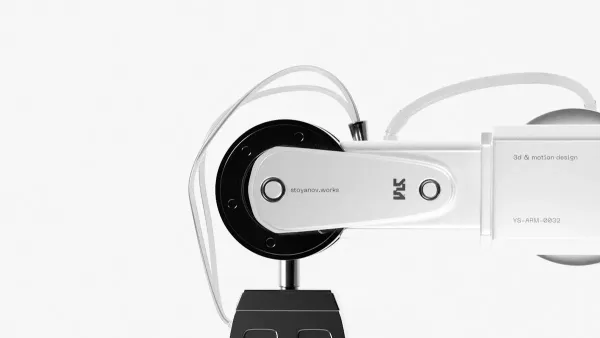
You see magnetic position sensors everywhere in robotics today. These sensors give robots precise and reliable movement. Position sensor robotic magnetic encoders help you track location and speed with great accuracy. You can trust them in tough conditions because they last longer and work well in many environments. Their versatility and durability set them apart from other options.
Key Takeaways
- Magnetic position sensors provide high accuracy for tracking position, speed, and direction in robotics, making them essential for precise movement.
- These sensors offer real-time feedback, allowing robots to react quickly and maintain smooth operation, which enhances overall performance.
- The non-contact design of magnetic sensors reduces wear and tear, leading to longer lifespan and lower maintenance costs for robotic systems.
- Magnetic position sensors are durable and reliable in harsh environments, resisting dust and moisture, which makes them suitable for various applications.
- Their compact size and adaptability allow for easy integration into different robotic designs, ensuring flexibility across multiple industries.
Precision in Robotics
Magnetic Encoders Accuracy
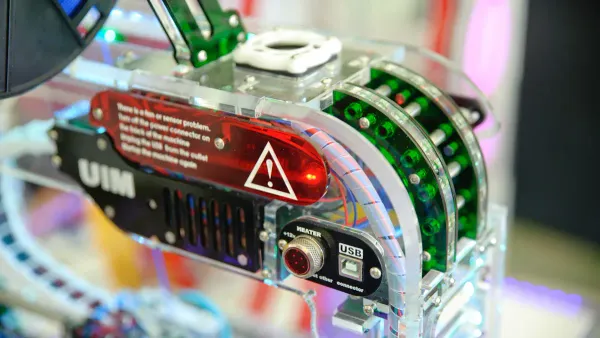
You need high accuracy when you want robots to move exactly as planned. Magnetic encoders help you track position, speed, and direction with great detail. These encoders use magnetic fields to sense movement, so you get reliable data for every robotic task. You can see how different magnetic encoders compare in the table below:
| Specification | ECA 4000 | ECI 4000 | WMR |
|---|---|---|---|
| Resolution | 29 bits | 20 bits | Depends on the subsequent electronics |
| System accuracy | ±2“ | ±25“ / ±40“ | ±3“ per meter of arc length |
You may notice that magnetic encoders do not always match the precision of optical encoders. Optical encoders work best for laboratory robots or machines that need the highest accuracy. Magnetic encoders, however, give you a strong balance between cost, durability, and performance. They work well for most robotics tasks, especially when you need robust sensors that can handle tough environments.
Tip: Magnetic encoders are less sensitive to dust and dirt, so you can use them in places where optical encoders might fail.
Real-Time Feedback
You want your robot to react quickly and move smoothly. Magnetic position sensors give you real-time feedback, which means your robot always knows its exact position and speed. This feedback helps you control the robot’s movement with precision. For example, engineering students at Tokyo Denki University used a rotary magnetic encoder to keep a self-balancing robot upright. The encoder’s 12-bit resolution let them monitor and adjust the robot’s motors instantly.
- Real-time feedback from magnetic encoders improves the accuracy of robotic movements.
- These sensors give you important data about position, velocity, and orientation.
- Magnetic encoders use a non-contact design, so they last longer and reduce wear.
- You can measure both linear and rotational movement, which is important for dynamic robotic control.
- Accurate, real-time data helps prevent mistakes and keeps your robot safe.
You can trust position sensor robotic magnetic encoders to deliver the performance you need for advanced robotics. Their high accuracy and fast feedback make them a top choice for position sensing in many robotic systems.
Reliability of Magnetic Position Sensors
Non-Contact Design
You want your robots to work for a long time without frequent repairs. Magnetic position sensors use a non-contact design, which means the moving parts do not touch each other. This design removes friction, so you do not see the same wear and tear that happens with contact-based sensors. When there is no friction, the sensors last longer and keep working well, even after many cycles. You can trust these sensors to give you accurate position data over time. This feature makes them a smart choice for robots that need long-term reliability.
Note: Non-contact sensors help you avoid breakdowns and reduce maintenance costs. You get more uptime and better performance from your robotic systems.
Durability in Harsh Environments
Robots often work in places filled with dust, moisture, or other contaminants. Magnetic position sensors keep performing well in these tough conditions. You do not have to worry about dirt or water getting inside and causing problems. These sensors resist dust and moisture, so you can use them in factories, outdoors, or even in wet environments. The table below shows how magnetic position sensors compare to ultrasonic sensors:
| Feature | Magnetic Position Sensors | Ultrasonic Sensors |
|---|---|---|
| Durability in harsh environments | High | Moderate |
| Resistance to dust and moisture | Excellent | Poor |
| Maintenance requirements | Low | High |
You also want your robots to work in places with extreme temperatures or strong vibrations. Magnetic position sensors use special design features to keep their reliability high in these situations. The table below explains how these features help:
| Design Feature | Description |
|---|---|
| IC Circuitry Integration | Makes the sensor immune to magnetic stray fields. |
| Z Field Measurement | Measures only the Z field component, rejecting X and Y fields. |
| Differential Operation | Cancels out homogeneous magnetic stray fields in the Z direction. |
These features help the sensors keep working, even when the environment changes quickly. You can count on stable position sensing and reliable feedback for your robots.
However, you should know that magnetic position sensors have some limits. Strong external magnetic fields or nearby metal objects can affect their accuracy. For example, reinforced concrete or large metal parts may distort the magnetic field. You need to plan for these challenges when you design your robotic system.
When you use position sensor robotic magnetic encoders, you get sensors that deliver long-term reliability and strong performance. They help your robots keep working, even in the toughest places.
Versatility of Position Sensor Robotic Magnetic Encoders
Linear and Rotational Measurement
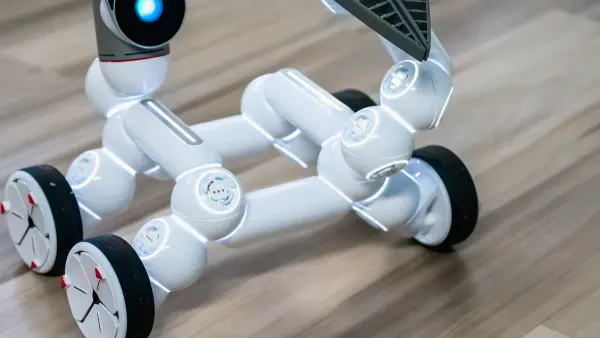
You need robots that can move in many ways. Magnetic encoders help you measure both linear and rotational movement. This means you can track how far a robot arm moves in a straight line or how much it turns. These encoders use magnetic fields to sense changes in position. You get accurate feedback for every type of motion.
Here is a quick look at how magnetic encoders work for both types of movement:
| Type of Encoder | Measurement Type | Description |
|---|---|---|
| Magnetic Encoder | Linear & Rotational | Utilizes magnetic fields to detect position changes, works for both motions. |
- Magnetic encoders detect rotational position by sensing changes in magnetic fields.
- You can use them in places where dust or moisture might stop other sensors.
- These encoders give you reliable data, even in tough environments.
You will find magnetic encoders in high-precision robotic arms, high-speed packaging robots, and surgical robots. They help you control joint angles, measure linear extension, and manage gripper position. High-resolution encoders give you the detail you need for delicate tasks.
Adaptability to Applications
You want your robots to work in many settings. Position sensor robotic magnetic encoders adapt to different robotic applications and environments. You can use them in factories, cars, or even small robots with limited space. These sensors fit into many designs because they come in different shapes and sizes.
| Application Type | Description |
|---|---|
| High-precision robotic arms | Used in PCB assembly for installing components with accuracy. |
| High-speed robotic packaging | Robots pick products from conveyor belts and package them with speed and precision. |
| Surgical robotics | Enables precise control during delicate procedures in robot-assisted surgery. |
| General robotic arm functions | Supports joint positioning, speed feedback, linear extension measurement, rotary positioning, and gripper control. |
You can also choose from different sensor types. Hall-effect switches work well for open and close detection. 1D linear Hall sensors track straight-line movement. 2D angle position sensors give you smooth motor control. 3D sensors help with complex movements, like those in joysticks.
| Sensor Type | Application/Functionality | Benefits |
|---|---|---|
| Hall-effect switches | Limit switch or open/close detection applications | Solid-state sensing solution, stable performance across temperature, low-power options |
| Hall-effect latches | Used in motors or rotating applications | Requires alternating magnetic poles, enhances motor control efficiency |
| 1D linear Hall sensor | Tracks position along a single-axis, useful for slide-by or head-on travel | Powerful solution when used in arrays for longer distances |
| 2D angle position sensors | Provides low-latency angle outputs for smoother motor control | Enhances efficiency in motor control |
| 3D sensors | Applicable in rotary applications and complex 3D motion like joysticks | Supports complex movements, adaptable to various robotic tasks |
| Magnetic encoders | Used for feedback in servo motors, evolving to achieve higher accuracy | Lower current consumption, smaller size, withstands harsh conditions |
Position sensor robotic magnetic encoders give you the flexibility to design robots for almost any job. You can trust their performance in many environments, from electronics factories to electric cars. These sensors help you build robots that move with precision and adapt to new challenges.
Design Flexibility in Robotics
Compactness and Integration
You want your robotic systems to be small and efficient. Magnetic position sensors help you achieve this goal. These sensors are compact and fit easily into tight spaces. You can use them in robots where space is limited, such as robotic arms or mobile robots. Their small size does not reduce their performance. You still get accurate readings for motion control and position tracking.
Magnetic sensors use a non-contact design. This feature reduces wear and tear, so your robots last longer. You do not need to worry about frequent repairs. You also get real-time feedback, which is important for dynamic motion control. You can measure both linear and rotational movements with these sensors. This flexibility lets you design robotic systems for many tasks.
Magnetic sensors make integration simple. You can add them to complex robotic systems without increasing size or complexity. This advantage helps you build robots for industries like automotive and industrial automation. The table below shows how magnetic position sensors compare to other sensor types:
| Feature | Magnetic Position Sensors | Other Sensor Types |
|---|---|---|
| Accuracy | High | Varies |
| Reliability | High | Varies |
| Integration Complexity | Low | High |
| Non-contact Sensing | Yes | No |
| Size and Cost Reduction | Yes | No |
You also get extra benefits:
- Enhanced navigation capabilities
- Improved orientation tracking
- Better environmental interaction
- Increased safety in human-robot interactions
No Line-of-Sight Requirement
You need sensors that work in many environments. Magnetic position sensors do not need a clear line of sight to operate. You can use them in places with dust, moisture, or obstacles. These sensors give you accurate readings even when the environment is not clean. Optical sensors need a clear path to work well, but magnetic sensors do not. You reduce errors from contamination and keep your robotic systems running smoothly.
Position sensor robotic magnetic encoders help you design robots that work in tough conditions. You get reliable performance and flexible motion control. You can trust these sensors to deliver accurate data for your robotic systems, no matter where you use them.
Magnetic position sensors give you the precision, reliability, and flexibility that modern robotics need. You can use them for real-time feedback, dynamic control, and long-lasting performance. Experts say these sensors are essential for next-generation robots. Looking ahead, you will see exciting trends:
- 3D magnetic sensors are getting smaller and more sensitive.
- AI and IoT features improve accuracy and data processing.
- Hybrid sensors and advanced algorithms boost performance.
- The market for these sensors is growing fast as more industries use automation.
FAQ
What makes magnetic position sensors better than optical sensors?
You get more durability and less maintenance with magnetic sensors. Dust and dirt do not affect them as much as optical sensors. You can use them in harsh environments without losing accuracy.
Can you use magnetic position sensors in outdoor robots?
Yes, you can. Magnetic position sensors resist moisture and dust. You can trust them to work in rain, mud, or even snow. They keep giving you accurate feedback outside.
How do magnetic encoders help with robot safety?
Tip: Real-time feedback from magnetic encoders helps your robot avoid mistakes.
You get instant position data. Your robot can stop or change direction quickly if something goes wrong.
Do magnetic position sensors need a lot of space?
No, you do not need much space. These sensors come in small sizes. You can fit them into tight spots in your robot. You keep your design compact and efficient.