Why Every Technician Should Know the Amps Symbol
The symbol for amps on multimeter is 'A'. Knowing this symbol ensures safe, accurate current measurement and protects electronic devices from damage.
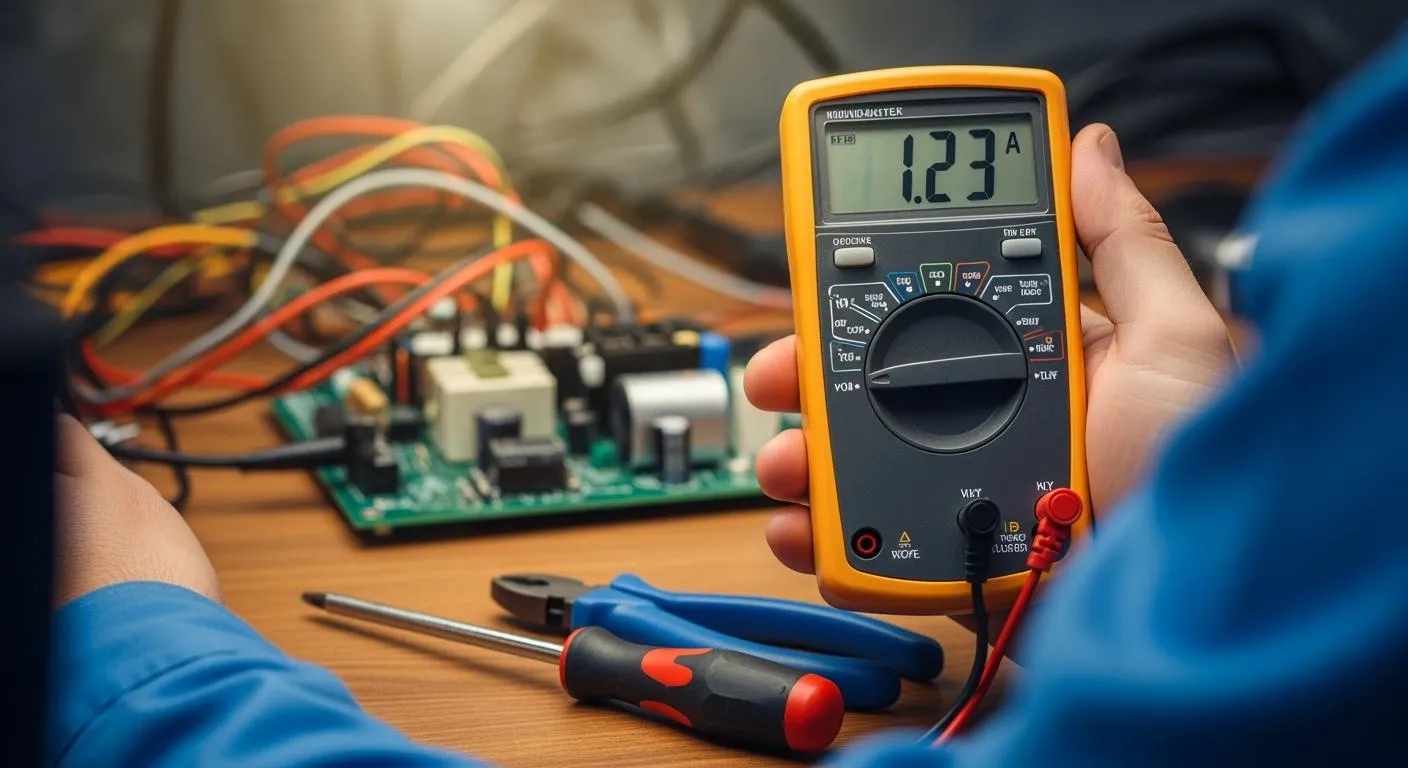
Imagine you select the wrong setting on your multimeter and misread the symbol for amps on multimeter. This simple mistake could damage a sensitive circuit or put your safety at risk. You must know what the "A," "mA," and "μA" symbols mean and how to spot the difference between AC and DC amps. Understanding these symbols helps you take accurate measurements and protect both your devices and yourself.
Key Takeaways
- Recognize the amps symbol ('A') on your multimeter to measure electrical current accurately and avoid confusion with voltage or resistance.
- Understand the difference between AC ('A~') and DC ('A⎓') current symbols to select the correct setting and protect sensitive circuits.
- Use 'mA' for milliamps and 'μA' for microamps when measuring small currents in sensitive devices, ensuring accurate diagnostics.
- Always connect your multimeter leads in series when measuring current to prevent damage to your equipment and ensure safety.
- Regularly review multimeter symbols and practice their identification to reduce errors and improve your troubleshooting efficiency.
Symbol for Amps on Multimeter

What the Amps Symbol Means
When you use a multimeter, you often see the symbol for amps on multimeter dials and screens. This symbol represents amperes, the standard unit for measuring electrical current. Amperes show how much electrical charge moves through a conductor over time. You need to recognize this symbol to measure current accurately and avoid confusion with other multimeter symbols.
The symbol for amps on multimeter devices usually appears as a capital "A." This "A" tells you that the setting or reading relates to current, not voltage or resistance. You will find this symbol on the dial, near the input jacks, and on the digital display when you select current measurement. Knowing this basic feature on your multimeter helps you avoid mistakes and ensures you use the correct function.
AC vs DC Amps Symbols
You must also know the difference between AC and DC current symbols. Multimeter symbols for current include special marks to show if you are measuring alternating current (AC) or direct current (DC). The symbol for amps on multimeter dials changes slightly for each type.
Here is a table that shows the common symbols and their meanings:
| Symbol | Meaning | Typical applications |
|---|---|---|
| A~ | AC current | Mains current in appliances |
| A⎓ | DC current | Motor drive current, DC power supplies |
You will often see "A~" for AC current and "A⎓" for DC current. Some multimeters use "AC" or "DC" next to the "A" to make it even clearer. On some models, you may see a wavy line (~) for AC or a straight line with dots (⎓) for DC. These visual cues help you select the right mode and avoid damaging sensitive circuits.
You can also spot these differences in other multimeter symbols. For example:
- V~ means AC voltage.
- A~ means AC current.
- mA~ means low-level AC current.
- Some meters use "VAC" or just "~" for AC settings.
- Look for display indicators like "AC" or a wavy line for AC measurements.
Always check the symbol for amps on multimeter dials before taking a measurement. This habit keeps your readings accurate and your devices safe.
Milliamp and Microamp Symbols
Sometimes, you need to measure very small currents. Multimeter symbols for these measurements use different prefixes. The symbol for milliamps is "mA," and the symbol for microamps is "μA." These are basic features on your multimeter that let you test low-current circuits, such as those found in sensors or integrated circuits.
Here is a quick list of the standard symbols:
- The symbol for milliamp is mA.
- The symbol for microamp is μA.
You will find these symbols on the dial and near the red test lead input. The table below shows where you can locate them and what they do:
| Symbol | Location | Function |
|---|---|---|
| mA | Red test lead input | Current measurements of 0 μA to 400 mA |
| μA | Red test lead input | Current measurements of frequency and duty cycle |
When you select the mA or μA setting, your multimeter becomes sensitive enough to measure tiny currents. This feature is essential for troubleshooting modern electronic devices, especially in the semiconductor and chip-level industries. If you work with integrated circuits, you will use these settings often.
Understanding the symbol for amps on multimeter devices, along with milliamp and microamp symbols, is one of the most basic features on your multimeter. It helps you avoid errors, ensures safety, and supports accurate diagnostics in every project.
Understanding Multimeter Symbols
Common Multimeter Symbols Explained
You encounter many multimeter symbols when you work with electronic devices. Each symbol helps you identify the correct measurement mode. The amps symbol stands out, but you also see symbols for voltage, resistance, continuity, and more. Recognizing these symbols prevents mistakes and keeps your measurements accurate.
Here is a table that shows the most common multimeter symbols and their descriptions:
| Symbol Type | Description |
|---|---|
| AC Voltage (V~) | Measures alternating current from outlets and equipment. |
| Resistance (Ω) | Checks electrical paths and components. |
| Kilohm (kΩ) | Measures mid-range resistance values. |
| Megaohm (MΩ) | Tests insulation and high resistance parts. |
| Continuity Test | Shows if a circuit is open or closed, often with a sound. |
| Diode Test | Checks diode function and voltage drop. |
| Capacitance Test | Measures energy stored in capacitors. |
| Temperature | Uses probes to measure °C and °F. |
Tip: Always check the multimeter symbols before you start measuring. This habit helps you avoid errors and protects sensitive circuits.
Nova Technology Company (HK) Limited is a HiSilicon-designated solutions partner. The company specializes in chip-level solutions, system integration, and advanced application scenarios for the semiconductor industry. If you work with integrated circuits, you rely on accurate multimeter readings to diagnose and optimize system performance.
How to Read a Multimeter for Current
You need to know how to read a multimeter for current to test circuits safely. First, set the dial to the correct amps symbol. Choose between AC or DC current based on your application. Insert the test leads into the proper jacks, usually marked with "A," "mA," or "μA." Place the leads in series with the circuit. The display shows the current value. If you select the wrong setting, you risk damaging the circuit or getting incorrect readings.
Follow these steps for accurate current measurement:
- Identify the correct multimeter symbols for current.
- Set the dial to the amps, milliamps, or microamps range.
- Insert the leads into the right input jacks.
- Connect the leads in series with the circuit.
- Read the value on the display.
Note: Never measure current across a component in parallel. Always connect in series.
Distinguishing Amps from Volts and Ohms
You must distinguish amps from volts and ohms to avoid confusion. The amps symbol ("A") measures current. The volts symbol ("V") measures electrical potential. The ohms symbol ("Ω") measures resistance. Each symbol appears on the multimeter dial and display. Quick identification prevents mistakes and ensures you select the right function.
Here are some tips to help you spot the correct multimeter symbols:
- Look for "A" when measuring current.
- Find "V" for voltage measurements.
- Use "Ω" for resistance checks.
- Check for prefixes like "mA" or "μA" for small current values.
Block Quote: You improve your troubleshooting skills by mastering multimeter symbols. This knowledge keeps your devices safe and your measurements reliable.
Importance of the Amps Symbol in Electronic Devices

Understanding the amps symbol plays a key role in your work with electronic devices. You need to measure current accurately to keep circuits safe and functioning. When you select the correct setting, you protect both your equipment and yourself from harm. This section explains why you must recognize the amps symbol and how it supports your work in electronics.
Accurate Current Measurement
You must measure current with precision. The amps symbol guides you to the right setting on your multimeter. If you work with integrated circuits or advanced electronics, you often deal with small or large currents. The load and resistance in a circuit decide how much current flows. For example, a starter motor uses more current than a window motor because it has a heavier load. When you know the amps symbol, you can compare current flow, just like comparing speed in a race. Higher current means faster movement of charge.
Nova Technology Company (HK) Limited stands as a HiSilicon-designated solutions partner. The company provides chip-level solutions, system integration, and advanced application scenarios for the integrated circuit industry. You rely on accurate current measurement to diagnose and optimize these complex systems.
Preventing Mistakes and Ensuring Safety
You must avoid mistakes when measuring current. The importance of correct function selection cannot be overstated. If you choose the wrong setting, you risk damaging sensitive components or blowing a fuse. Many multimeters have internal fuses for low-amp and 10-amp circuits to protect your device during testing. Some models use inductive probes to measure higher currents safely. Always check the amps symbol before you begin.
Tip: Always connect your multimeter in series with the circuit when measuring current. This practice keeps you and your devices safe.
Impact on Troubleshooting and Diagnostics
You improve your troubleshooting skills when you understand the amps symbol. Accurate current readings help you find faults and test components like diodes, capacitors, and circuit continuity. Many multimeters record minimum and maximum values for current, voltage, and resistance. This feature helps you track changes and spot problems quickly.
Here is a table showing how multimeter features support diagnostics:
| Feature | Description |
|---|---|
| Minimum/Maximum Recording | Shows lowest and highest current, voltage, and resistance values |
| Circuit Testing | Tests diodes, capacitors, and continuity |
| Current Measurement | Measures up to 10 amps directly in DC circuits |
| Fuse Protection | Protects low-amp and 10-amp circuits during testing |
| Inductive Probes | Measures higher currents safely |
When you master the amps symbol, you make better decisions and solve problems faster in electronic repair.
Avoiding Common Mistakes with Multimeter Symbols
Misreading the Amps Symbol
You can make mistakes if you misread the amps symbol on your multimeter. Many technicians confuse the "A" for amps with the "V" for volts or the "Ω" for ohms. This confusion often leads to selecting the wrong setting. When you do not select the correct function and range, you risk damaging your equipment or getting false readings. You must always check the dial and display before measuring current. A quick double-check helps you avoid costly errors.
Tip: Pause for a moment and confirm you have selected the correct function and range before you start any test.
Incorrect Multimeter Settings
Using the wrong settings on your multimeter can cause serious problems. If you do not select the correct function and range, you may expose yourself to electric shock or destroy sensitive components. The table below shows the main risks you face when you use incorrect settings:
| Risk Type | Description |
|---|---|
| Electric shock | Working with live circuits without proper precautions can lead to electric shocks, which can be severe or fatal. |
| Damage to equipment | Incorrect settings or connections can cause the multimeter or other equipment to malfunction or become permanently damaged. |
| Inaccurate measurement | Using a damaged multimeter due to incorrect settings can result in inaccurate readings, leading to potential hazards. |
You must always select the correct function and range for your test. This habit protects both you and your devices. When you measure current, always connect the leads in series and never across a component.
Best Practices for Technicians
You can improve your skills and safety by following best practices. Ongoing training in multimeter symbol recognition reduces mistakes and saves time. Studies show that ambiguous symbols increase mental workload by 31%. Incorrect dial adjustments waste over 14 seconds for every 12 measurements. Selecting the wrong symbol causes 73% of incorrect readings, which leads to expensive rework.
| Impact Dimension | Evidence |
|---|---|
| Cognitive Load | Ambiguous symbols increase mental workload by 31%. |
| Physical Friction | Incorrect dial adjustments waste 14.2 seconds over 12 measurements. |
| Error Propagation | 73% of incorrect readings from selecting wrong symbols, causing $210 avg. rework cost. |
You should always review the multimeter symbols before starting a job. Practice helps you select the correct function and range quickly. You build confidence and accuracy with every test. When you master these habits, you keep your work safe and reliable.
You gain reliable data and improve troubleshooting when you master the amps symbol on your multimeter. Recognizing this symbol helps you avoid hazards and ensures electrical safety.
- Accurate measurements support maintenance and diagnostics.
- Quick symbol identification reduces errors and saves time.
- Understanding amps, milliamps, and microamps expands your skills.
| Evidence Type | Statistic/Fact |
|---|---|
| Diagnostic Task Time Reduction | Mastery of multimeter symbols reduces diagnostic task time by 42%. |
| Miswiring Errors | Cuts miswiring errors by 68%. |
| Avoidable Probe-Related Incidents | Prevents 91% of avoidable probe-related incidents. |
You can explore guides that explain multimeter symbols and current types. Ongoing learning builds your confidence and keeps your work safe.
FAQ
What does the "A" symbol mean on a multimeter?
You see the "A" symbol when you measure electrical current. This symbol stands for amperes, which show how much electric charge flows through a circuit. Always select "A" for current tests.
How do I know if I am measuring AC or DC amps?
Look for extra marks near the "A" symbol. A wavy line (~) means AC. A straight line with dots (⎓) means DC. Check your multimeter dial and display for these symbols before testing.
Why do some settings show "mA" or "μA"?
You use "mA" for milliamps and "μA" for microamps. These settings help you measure small currents in sensitive circuits. Always pick the right range for your test.
Can I use the amps setting to measure voltage or resistance?
No, you cannot. The amps setting only measures current. Use "V" for voltage and "Ω" for resistance. Choosing the wrong setting can damage your device or give false readings.
What happens if I connect the leads incorrectly when measuring current?
If you connect the leads in parallel instead of series, you risk blowing a fuse or damaging the multimeter. Always connect in series with the circuit for safe and accurate current measurement.