Actuators and Their Impact on Electronic Innovation
What is a actuator? It converts energy into motion, powering smart devices and driving innovation in electronic systems.
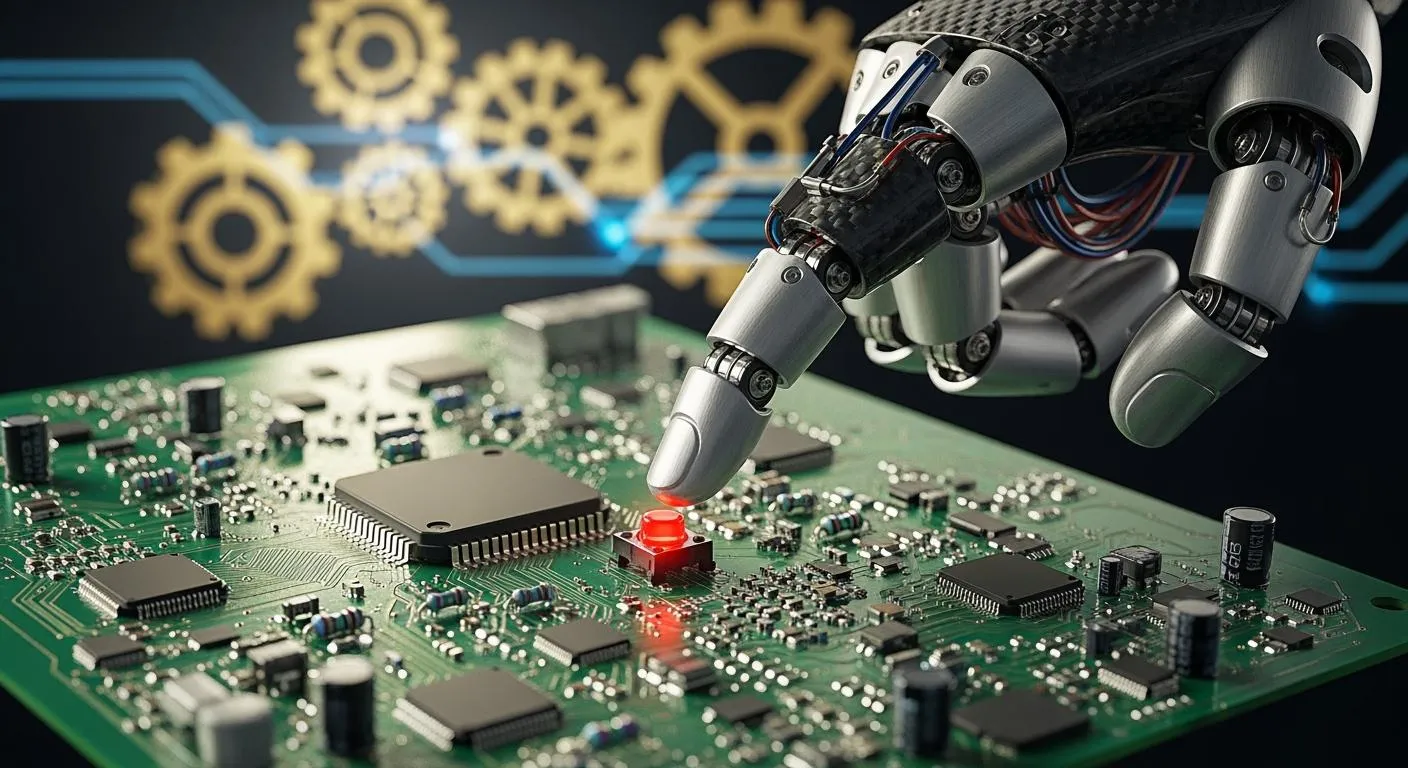
Actuators reshape how you interact with technology every day. For example, when you use your smartphone’s haptic feedback or trust your car’s anti-lock braking system, you rely on actuator technology. The global actuator market reached $44.67 billion in 2020 and continues to grow at a 6.7% annual rate, showing how vital this technology has become. You see actuator advancements in everything from biomedical devices to aerospace controls. If you want to understand what is a actuator and how it powers smart devices, you need to explore this essential technology.
| Application Area | Example Use Case | Description |
|---|---|---|
| Automotive | Anti-lock Braking Systems (ABS) | Electric actuators control brake pressure to prevent wheel lockup during sudden stops. |
| Consumer Devices | Haptic Feedback in Smartphones | Vibration motors provide tactile notifications to users without visual or auditory cues. |
| Biomedical | Surgical Tools | Piezoelectric actuators enable precise needle placement in minimally invasive procedures. |
Key Takeaways
- Actuators convert energy into controlled movement, enabling precise actions in devices like smartphones and cars.
- Integration with IoT technologies enhances actuator capabilities, allowing for real-time communication and predictive maintenance.
- Smart actuators automate processes in homes and industries, improving convenience and operational efficiency.
- Miniaturization of actuators supports the development of compact and efficient devices, crucial for modern electronics.
- Sustainability in actuator design focuses on using eco-friendly materials and energy-efficient mechanisms to reduce environmental impact.
How Actuators Drive Innovation
Role in Modern Electronics
You experience the impact of actuators every time you interact with modern electronics. Actuators convert electrical energy into controlled movement, which allows devices to perform precise actions. In robotics, actuators provide the motion needed for arms, grippers, and wheels. You see actuators in control system designs for everything from industrial robots to consumer electronics. These components enable miniaturization and improved performance, making devices smaller and more efficient.
Actuators work closely with sensors and control electronics. Sensors collect data from the environment, and the control system processes this information. The actuator then responds by moving or adjusting a part of the system. For example, in robotics and automation systems, actuators adjust motor speeds, open or close valves, and move robotic arms for assembly tasks. This integration leads to higher performance and flexibility in automation systems.
You benefit from actuators in life sciences, where they provide precise control for laboratory instruments. In industrial automation, actuators help achieve accurate and repeatable movements. The integration of microelectronics into actuators has improved their controllability and efficiency. Smart actuators now communicate in real-time across networks, which supports advanced control system strategies and predictive maintenance.
- Actuators enable miniaturization and improved performance in electronic systems.
- They are essential for precise control in applications like life sciences and industrial automation.
- Integration with IoT technologies enhances connectivity and predictive maintenance capabilities.
Automation and Smart Devices
You rely on actuators for the automation of smart devices in your daily life. In smart homes, actuators allow you to open windows, adjust blinds, or operate entertainment systems with a simple command. These devices use actuators to interact with their environment, making your home more convenient and energy efficient.
In robotics, actuators play a central role in automation systems. They execute actions based on sensor data, such as moving robotic arms or controlling conveyor belts. Smart actuators can be pre-programmed to automate processes, reducing the need for manual intervention. This capability is vital for improving operational efficiency in industries and homes.
Electrostatic actuators offer ultra-low power operation and silent functionality, which makes them ideal for battery-powered smart home devices. Electric linear actuators provide precise control for opening and closing mechanisms. You see these technologies in security systems, climate control, and automated lighting.
- Actuators execute actions based on data from sensors.
- They control temperature by activating heating or cooling systems.
- Actuators move equipment for tasks like assembly and material handling.
- They turn machines on or off for automated operations.
The growth of the electric actuator market comes from the rise of IIoT and Industry 4.0 technologies. Greater integration with smart technologies creates new opportunities for actuators in industrial and consumer settings. As you adopt more smart devices, actuators will continue to drive innovation in control system design and automation.
What Is a Actuator
Definition and Core Principles
When you ask what is a actuator, you explore a key component in every modern control system. An actuator is a mechanical device that transforms energy—such as electrical, hydraulic, or pneumatic—into mechanical motion. This motion can be linear or rotary, allowing the actuator to position objects, apply force, or create movement in a system. You find actuators at the heart of many control systems, where they serve as the "muscles" that turn digital commands into real-world actions.
In electronics, what is a actuator often comes down to how it enables precise control. You see actuators in robotics, automotive systems, and industrial automation. Each actuator receives signals from a control system and responds by moving a part or adjusting a mechanism. For example, in a feedback control system, the actuator adjusts its output based on sensor data, ensuring the system operates within desired parameters.
The core principles behind actuator operation depend on the energy source and the type of system. For pneumatic actuators, you see compressed air stored in tanks and distributed through pipes. The actuator contains a cylinder and piston, with valves controlling the airflow. The piston moves in response, creating either linear or rotary motion. Control valves, flow restrictors, and sensors help you achieve precise control over speed, position, and force.
You also encounter electric actuators, which use motors to convert electrical energy into motion. Hydraulic actuators rely on pressurized fluid, while pneumatic actuators use compressed air. Each type of actuator supports different control system requirements, from high-speed automation to heavy-duty industrial tasks.
Note: Nova Technology Company (HK) Limited stands as a HiSilicon-designated solutions partner in the integrated circuit industry. You benefit from their expertise in chip-level solutions, system integration, and advanced actuator applications for electronic systems. Their semiconductor technology enables reliable and efficient control in a wide range of smart devices and industrial systems.
To summarize, when you consider what is a actuator, you recognize its role as the bridge between digital commands and physical action. The actuator ensures your control system can interact with the real world, making technology responsive and dynamic.
- An actuator converts energy into controlled mechanical motion.
- It acts as the muscle of a system, executing commands from the control system.
- The energy conversion process varies by actuator type, supporting different applications and control needs.
Actuators as Transducers
You often hear the term "transducer" in electronics. When you ask what is a actuator, you learn that actuators are a special type of transducer. While all transducers convert one form of energy into another, actuators specifically convert energy into mechanical motion. This unique function sets actuators apart in control systems, where you need physical movement to complete a task.
In electronic systems, actuators receive energy from electrical, hydraulic, or pneumatic sources. They then produce mechanical actions such as positioning, gripping, or propulsion. The table below shows how different energy types result in specific mechanical actions:
| Energy Type | Mechanical Action |
|---|---|
| Electrical | Linear displacement, rotation, torque generation |
| Hydraulic | Force application |
| Pneumatic | Movement of components |
You use actuators in systems that require precise control. For example, in robotics, the actuator positions an arm or rotates a joint. In manufacturing, actuators grip and move materials. In smart devices, actuators adjust screens, open valves, or provide haptic feedback.
Actuators play a vital role in control system design. You rely on them to execute commands, maintain system stability, and respond to feedback. This makes actuators essential in feedback control systems, where real-time adjustments keep your technology operating smoothly.
- Actuators enable positioning, gripping, and propulsion in electronic systems.
- They convert energy into motion, making them indispensable in control applications.
- Their unique ability to create movement distinguishes them from other transducers.
When you understand what is a actuator, you gain insight into how modern technology achieves intelligent, responsive behavior. Actuators empower your control systems to interact with the physical world, driving innovation in every field from consumer electronics to industrial automation.
Types of Actuator and Mechanisms

Linear Actuator vs Rotary Actuator
You often choose between a linear actuator and a rotary actuator based on the type of movement your system needs. A linear actuator creates straight-line motion, which you measure in inches or millimeters. This type of actuator is perfect for applications that need controlled linear motion, such as lifting a table or moving a component in industrial equipment. You see linear actuators in computers, robotics, and many automation systems.
A rotary actuator, on the other hand, provides rotational movement. You measure this movement in degrees. Rotary actuators work well in systems that need angular positioning, like opening and closing valves or driving conveyor belts. Some rotary actuators can rotate continuously, while others move to specific angles.
- Linear actuators use mechanisms like ball screws and belts to convert the motor’s rotation into linear movement.
- Rotary actuators convert electrical signals directly into rotational motion.
- Linear pneumatic actuators have distance limits, but some rotary pneumatic actuators do not.
You select a linear actuator for precise distance movement. You use a rotary actuator when your system requires controlled rotation or torque.
Electromechanical and Electric Actuators
You encounter both electromechanical actuators and electric actuators in modern systems. An electromechanical actuator is an electromechanical device that uses a screw mechanism powered by a motor. This design allows you to achieve high precision in position, speed, and force. You find electromechanical actuators in automotive presses, heavy manufacturing, timber cutting, injection molding, and motion simulation systems.
Electric actuators use electrical energy to create motion. They offer efficient and precise control, clean operation, and flexible design. You benefit from their low maintenance and long lifespan. However, electric actuators may have higher initial costs and limited force output.
| Feature | Electromechanical Actuators | Electric Actuators |
|---|---|---|
| Precision Control | High | Moderate |
| Maintenance | Low | Moderate to High |
| Programmability | Yes | Limited |
| Application Flexibility | Wide range | Limited |
| Integration Capabilities | Excellent | Moderate |
You choose electromechanical actuators for applications that demand high accuracy and flexibility. Electric actuators suit systems that need energy efficiency and clean operation.
Energy Sources and Motion Types
You power actuators with different energy sources, depending on your system’s requirements. Electric actuators use electrical energy and appear in robotics, consumer electronics, and smart home devices. Hydraulic actuators rely on pressurized fluid, making them ideal for heavy machinery and aerospace systems. Pneumatic actuators use compressed air and are common in packaging lines and medical devices.
| Actuator Type | Energy Source | Applications |
|---|---|---|
| Electric Actuators | Electrical | Automotive, automation, industrial machinery |
| Hydraulic Actuators | Hydraulic | Heavy machinery, aerospace systems |
| Pneumatic Actuators | Pneumatic (compressed air) | Packaging lines, material handling, medical devices |
The type of motion also affects actuator performance. A linear actuator provides backlash-free operation, making it ideal for precision tasks. Rotary actuators deliver controlled angular rotation and accurate positioning, which you need in robotics and automation systems. Piezoelectric actuators offer fast response and ultra-precision for tasks like atomic force microscopy.
You select the right actuator by considering the energy source, motion type, and the specific needs of your system. This choice ensures your systems operate efficiently and reliably.
Actuator Applications in Electronics

Industrial Applications
You see actuator applications everywhere in industrial automation. Actuators help you achieve precise control in assembly lines, robotics, and heavy machinery. In manufacturing, actuators position components accurately, improving productivity and reducing errors. Robotic arms rely on actuators for movement and control, allowing you to automate complex tasks. Heavy machinery uses actuators to handle large loads, providing stable and powerful movement.
Nova Technology Company (HK) Limited serves as a HiSilicon-designated solutions partner in the integrated circuit industry. You benefit from their expertise in chip-level solutions and system integration, which supports advanced actuator applications in industrial automation systems. Their semiconductor technology enables reliable control and efficient operation in demanding industrial environments.
You notice that actuator advancements boost efficiency and productivity in industrial applications. The table below shows how these improvements impact your systems:
| Advancement Type | Impact on Efficiency and Productivity |
|---|---|
| Torque Efficiency Improvements | Achieve optimal power-to-torque ratios with precise control. |
| Smart Control Systems | Optimize efficiency in real time based on operational parameters. |
| Transition to Electric Actuators | Enhance precision, reduce maintenance, and lower costs. |
| Condition Monitoring | Enable predictive maintenance and reduce downtime. |
| Adaptive Control Strategies | Maximize efficiency across duty cycles. |
| Cleaner Operation | Meet hygiene standards in food processing. |
| High Torque Output | Ensure productivity in heavy-duty industrial applications. |
Consumer and Healthcare Applications
Actuator applications extend to consumer electronics and healthcare devices. You experience haptic feedback in smartphones, which uses vibration motors for notifications. Wearables use soft actuators for gesture control, making interfaces flexible and responsive. Healthcare devices rely on piezoelectric actuators for high precision and fast response, especially in surgical robots and minimally invasive procedures. Haptic actuators in prosthetics improve dexterity and control for users.
| Application Area | Actuator Type | Key Features |
|---|---|---|
| Healthcare Devices | Piezoelectric Actuators | High precision, fast response, compact size; used in surgical robots. |
| Haptic Actuators | Provide sensory feedback in prosthetics. | |
| Consumer Electronics | Vibration Motors | Used in smartphones for haptic notifications. |
| Soft Actuators | Used in wearables for gesture control. |
You benefit from actuator applications in smart devices and medical wearables. These systems improve health monitoring and fitness tracking. Materials used in actuators enhance flexibility and compatibility with skin, making devices comfortable and usable. Active materials respond to external stimuli, improving device functionality.
- Smart devices improve adherence measurements.
- Flexible actuators allow comfortable wear.
- Biocompatible materials enhance user experience.
Evolution and Case Studies
You witness the evolution of actuator technology through historical milestones. The First Industrial Revolution introduced automation with inventions like the spinning jenny and power loom. The steam engine enabled factories to operate continuously, leading to more advanced machinery. Programmable control logic in the mid-20th century marked a shift toward modern automation.
You see actuator applications progress from basic mechanical systems to integrated electric actuators with electronic controls. Explosion-proof enclosures improve safety in hazardous environments. Advanced sealing solutions and electronic controls enhance monitoring and safety. Wireless actuators simplify installation and improve communication in modern systems.
Actuator applications continue to evolve, driving innovation in industrial automation, consumer electronics, and healthcare devices. You benefit from improved control, efficiency, and user experience as technology advances.
Future Trends in Actuator Technology
Miniaturization and Integration
You see miniaturization changing the landscape of actuator technology. Smaller and lighter components help you design medical devices that offer comfort and portability. Compact actuators support 5G technology, making devices more efficient and functional. Information technology benefits from miniaturized processors, which enhance device performance. You notice compact designs becoming more common, with controls integrated directly into actuators. This reduces complexity and improves reliability in your automation projects.
- Miniaturization is essential for medical equipment and industrial applications.
- Affordable and efficient components drive innovation in actuator design.
- Connectivity for iot capabilities is growing, as seen in products like Moog Animatics SmartMotor.
Current research focuses on electrostatic actuators with lightweight designs. These actuators improve portability and energy efficiency in electronic devices. MEMS-based sensors play a key role in miniaturizing circuits, allowing your system to perform complex tasks with greater accuracy. As you demand higher precision, actuator miniaturization shapes the future of linear actuation technology.
Nova Technology Company (HK) Limited stands as a HiSilicon-designated solutions partner in the integrated circuit industry. You benefit from their expertise in chip-level solutions and system integration. Their advanced actuator applications support automation in smart devices and industrial systems, helping you achieve reliable and efficient operation.
Smart Actuators and IoT
You rely on smart actuators to enable new functionalities in iot devices. These actuators convert sensor data into actions, improving automation in smart homes and cities. You see low-level power switching, which lets you control devices with minimal energy. Dynamic braking enhances positioning accuracy, while end-of-stroke indication confirms actuator position for safety. Improved position feedback allows precise monitoring of actuator movements.
- Condition monitoring provides self-health checks and fault detection.
- Real-time communications integrate actuators into larger automation systems.
- Smart actuators automate processes and boost energy efficiency in urban environments.
Emerging trends include AI-driven urban management and blockchain for data security. You experience the benefits of smart actuators in the internet of things, where automation and connectivity transform your daily life. The future of linear actuation technology depends on these advancements, making your system smarter and more responsive.
Sustainability and New Materials
You see sustainability becoming a priority in actuator development. Manufacturers use biodegradable materials and energy-efficient actuation mechanisms. Closed-loop pneumatic systems and renewable energy sources reduce environmental impact. Fewer components and eco-friendly manufacturing processes make actuators greener.
| Material Type | Properties | Applications |
|---|---|---|
| Plastics | Low friction, wear resistance, self-lubricating | Gears, bearings, seals |
| Composites | High strength-to-weight ratio, stiffness | Casings, structural elements |
| Elastomers | Flexibility, elasticity, shock absorption | Seals, gaskets, diaphragms |
New materials improve actuator performance and sustainability. Graphene-enhanced polymer composites boost electrical conductivity and efficiency. Hydrogel-based systems offer biocompatibility and energy conversion. Multi-functional composites integrate sensing, actuation, and energy storage, reducing system complexity. Bio-inspired structures enhance toughness and longevity.
| Aspect | Traditional Systems | Soft Pneumatic Actuators (SPAs) |
|---|---|---|
| Energy Consumption | 10-15% of industrial electricity consumption | 30-45% energy savings in comparable applications |
| CO2 Emissions | 2.5-3.5 kg CO2 equivalent per functional unit | 1.2-2.0 kg CO2 equivalent for similar functionality |
| Water Usage | 50-70 liters per kg of finished product | 40-60% reduction in water consumption |
You drive the adoption of sustainable materials and energy-saving technologies in automation. The internet of things and iot devices benefit from these improvements, making your system more efficient and environmentally friendly.
You see actuators as the driving force behind electronic innovation and automation. These devices power smart homes, advanced robots, and medical tools.
- You benefit from ongoing advancements in miniaturization, smart integration, and sustainable materials.
- You shape the future of electronics by understanding actuator technology.
Actuators will continue to evolve, opening new possibilities for the next generation of electronic devices.
FAQ
What is the main function of an actuator?
You use an actuator to turn energy into movement. It lets your electronic device perform tasks like opening a valve, moving a robotic arm, or creating vibration.
How do actuators work with sensors in smart devices?
Sensors collect data. You use actuators to respond to that data. For example, a sensor detects temperature, and the actuator turns on a fan to cool the room.
Which types of actuators are common in electronics?
You often find electric, hydraulic, and pneumatic actuators. Electric actuators use motors. Hydraulic actuators use fluid. Pneumatic actuators use air.
Can actuators improve energy efficiency?
Yes! You use smart actuators to control devices more precisely. This reduces wasted energy and helps your system run efficiently.
Where do you see actuators in daily life?
You see actuators in smartphones, cars, home automation, and medical devices. They make technology interactive and responsive.