Air Conditioner Run Capacitor Insights for Electronic Product Design
Air conditioner run capacitor principles boost reliability and efficiency in electronic product design, offering ideas for stable power and long-lasting devices.
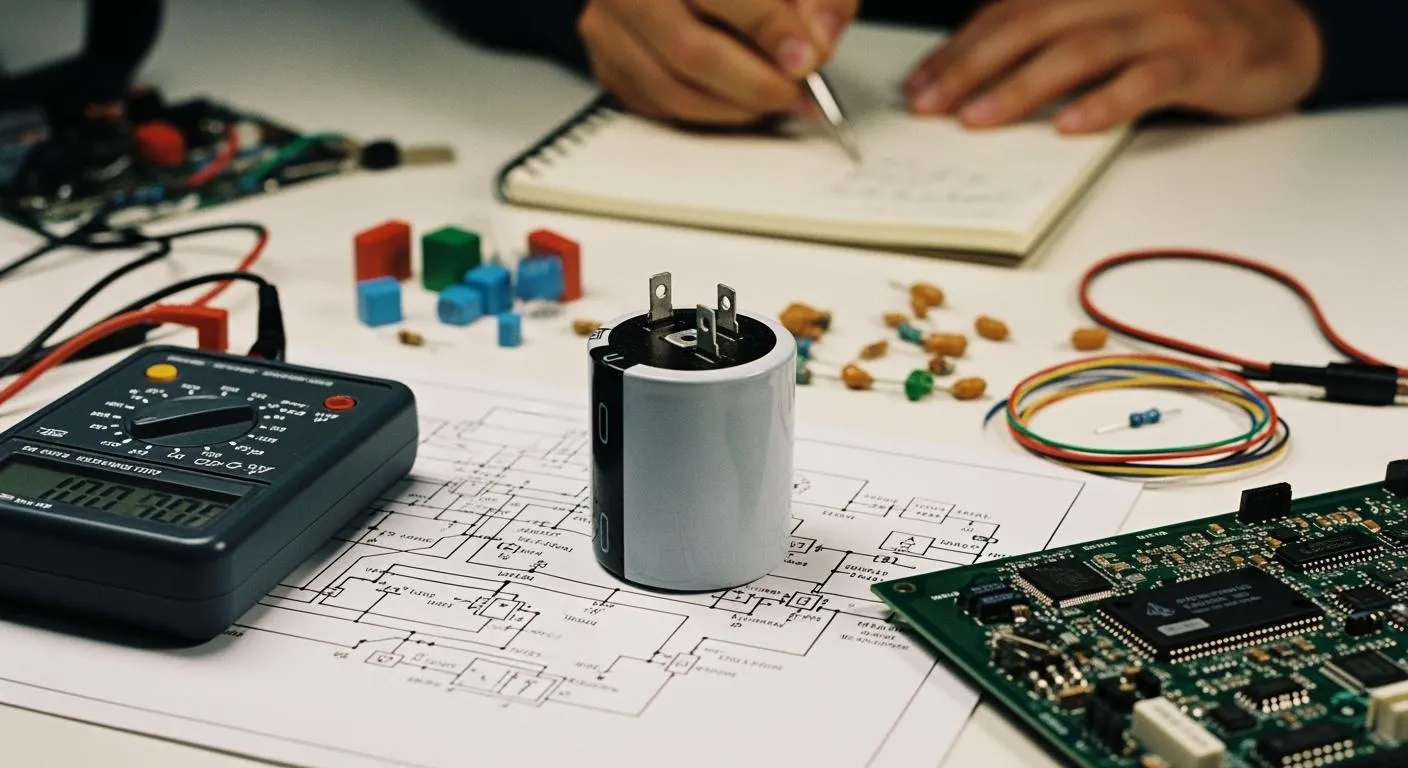
You can learn valuable design strategies from the air conditioner run capacitor. This component helps you improve reliability and efficiency in your electronic products. Many engineers look to the run capacitor for ideas that boost performance and extend device life. You can take inspiration from air conditioner systems to create innovative solutions for a wide range of electronics.
Key Takeaways
- Learn from air conditioner run capacitors to enhance reliability and efficiency in your electronic designs.
- Select the right capacitor by considering capacitance, voltage rating, and equivalent series resistance for optimal performance.
- Focus on durability by choosing high-quality materials and planning for regular maintenance to extend product lifespan.
- Implement efficient power management strategies to reduce energy waste and improve overall system performance.
- Stay updated on trends in capacitor technology to innovate and create smarter, more sustainable electronic products.
Air Conditioner Run Capacitor Basics

What Is a Run Capacitor
You encounter the air conditioner run capacitor in almost every modern AC system. This component regulates power to the motor and acts as a buffer and booster. It ensures a steady flow of electricity, especially during the start-up phase. You see the capacitor provide the energy needed to get the motor running. Once the air conditioner operates, the run capacitor manages smaller, variable power needs. This steady control helps the motor run smoothly and efficiently.
Tip: Understanding how a capacitor works in an air conditioner gives you practical ideas for designing electronic products that require stable power delivery.
How Run Capacitors Work in AC Units
You rely on the run capacitor to create a phase shift in the voltage supplied to the motor’s windings. This phase shift generates a rotating magnetic field, which is essential for motor operation. The capacitor improves starting torque, so the motor starts smoothly and uses less energy. You also benefit from reduced power consumption and voltage stabilization. The capacitor minimizes energy losses and keeps voltage levels steady, which protects the motor and improves efficiency.
- Phase shift enables smooth motor operation.
- Improved torque helps the motor start reliably.
- Reduced power consumption saves energy.
- Voltage stabilization prevents performance issues.
Types of Run Capacitors
You find several types of capacitors in AC systems. Each type serves a specific purpose and has unique features. The table below shows the main types used in HVAC systems:
| Type of Capacitor | Features |
|---|---|
| Start Capacitors | Deliver high initial energy to start AC motors; rated 70 mfd and above; identified by black plastic exterior. |
| Run Capacitors | Provide consistent energy for motor operation; usually have a metal or gray plastic case with two terminals; designed for continuous duty. |
| Dual Capacitors | Include two mfd ratings for compressor and fan motor; provide both initial energy and consistent energy for operation. |
You can apply these concepts to electronic product design. When you select a capacitor for your circuit, you improve reliability and efficiency. You learn from air conditioner systems to create better solutions for electronics that need stable power and long-lasting performance.
Run Capacitor Design Principles

Durability and Longevity
You want your electronic products to last as long as possible. The air conditioner run capacitor sets a strong example for durability. In most ac systems, a run capacitor can last from 5 to 20 years. Industrial models often last even longer. Regular maintenance helps extend the lifespan to nearly two decades. However, you should watch for common issues:
- Age and wear can cause breakdowns over time.
- Heat exposure may lead to overheating and failure.
- Electrical overload from power surges can shorten the life of the capacitor.
- Lack of maintenance allows small problems to grow into major failures.
- Frequent use and high temperatures increase wear.
When you design electronic products, focus on capacitor quality. Choose materials and construction methods that resist heat and electrical stress. Plan for easy maintenance and regular inspections. These steps help you build devices that last.
Efficiency and Power Management
You need efficient power management in every ac or air conditioner system. The run capacitor improves energy use by providing steady power to the motor. This reduces wasted energy and keeps the system running smoothly. In your own designs, select capacitors with the right capacitance and voltage ratings. This ensures your circuits use power wisely and avoid unnecessary losses.
A good capacitor supports power factor correction. This means your device uses less electricity for the same performance. You also protect sensitive components from voltage swings. By following these principles, you create products that save energy and lower costs.
Reliability in Continuous Operation
Reliability matters most in systems that run for long periods, like ac units. The run capacitor must handle high voltages, wide temperature ranges, and constant use. You can see the key features that support reliability in the table below:
| Feature | Description |
|---|---|
| Voltage Rating | 250V – Handles high voltage for robust performance in demanding environments |
| Capacitance | 60 µF – Delivers strong power factor correction for efficient operation |
| Construction | Durable, high-quality materials reduce maintenance and extend lifespan |
| Temperature Range | Works well in many temperatures, ensuring stable operation |
| Compliance | Meets safety and performance standards for broad compatibility |
When you design electronic products, use these features as a checklist. Select capacitors that match your system’s needs. Test your designs in real-world conditions to ensure stable operation. By learning from the air conditioner run capacitor, you build reliable, efficient, and long-lasting electronics.
Run Capacitor and Electronics
Circuit Design Parallels
You can find many similarities between the air conditioner run capacitor and capacitors in other electronic products. In both ac systems and general electronics, the capacitor manages energy flow, smooths voltage, and supports stable operation. For example, you use capacitors in timing circuits, noise filtering, and power management. These roles mirror how the run capacitor helps an air conditioner motor start and run efficiently. When you design circuits, you can apply these same principles to improve performance and reliability.
Energy Storage Applications
You rely on capacitors for energy storage in many electronic devices, not just in ac or air conditioner systems. Capacitors store electric energy and release it when needed, acting like a temporary battery. You see this in car audio systems, where large capacitors provide power to amplifiers on demand. In power supplies, reservoir capacitors smooth out the output and help charge pump circuits generate higher voltages. You often connect capacitors in parallel with DC power circuits to smooth current fluctuations. This setup acts as a local reserve for the power source and keeps your devices running smoothly.
- Capacitors store and release energy as needed.
- Car audio systems use large capacitors for amplifier power.
- Reservoir capacitors smooth power supply output.
- Parallel capacitors stabilize current in DC circuits.
Voltage and Current Stability
You depend on capacitors to maintain voltage and current stability in electronic circuits. Capacitors reduce electromagnetic noise by directing high-frequency interference away from sensitive components. You can use inductors and capacitors together to create filters that control frequency behavior, which is key for stable voltage and current. Bypass capacitors divert noise and AC components to ground, ensuring a steady voltage supply to transistors. Decoupling capacitors isolate power supply fluctuations, which helps keep your circuits stable and reliable.
- Capacitors reduce electromagnetic noise.
- Filters made with capacitors manage frequency and stability.
- Bypass capacitors keep voltage steady for sensitive parts.
- Decoupling capacitors prevent power supply fluctuations.
When you focus on capacitor quality and apply these concepts, you improve the reliability and efficiency of your electronic products. The lessons you learn from the air conditioner run capacitor help you design better ac systems and a wide range of electronic devices.
Design Lessons for Electronics
Choosing the Right Capacitor
You need to select the right capacitor for your electronic product to ensure reliable and efficient operation. The process involves more than just picking a value from a datasheet. You must consider several criteria that affect performance, durability, and cost. The table below summarizes the most important factors:
| Criteria | Description |
|---|---|
| Capacitance | The ability of the capacitor to store charge. |
| Maximum Voltage | The highest voltage the capacitor can handle without failure. |
| Equivalent Series Resistance (ESR) | Affects the efficiency and performance of the capacitor in circuits. |
| Equivalent Series Inductance (ESL) | Influences the capacitor's behavior at high frequencies. |
| Longevity | The expected lifespan of the capacitor under operational conditions. |
| Size | Physical dimensions that may affect placement in the design. |
| Price | Cost considerations for budget constraints. |
| Temperature-related Parameters | Performance changes with temperature variations. |
You should also pay attention to how different specifications impact your circuit. Capacitance determines how much charge the capacitor can store, which affects filtering and timing. The voltage rating ensures the capacitor can handle the voltage in your ac or air conditioner circuit without failing. Tolerance tells you how much the actual capacitance can vary, which influences reliability. The table below shows these effects:
| Specification | Effect on Circuit Performance |
|---|---|
| Capacitance | Determines the amount of charge stored, affecting filtering, timing, and energy storage capabilities. |
| Voltage Rating | Ensures the capacitor can handle the circuit's voltage without failure, impacting reliability and longevity. |
| Tolerance | Indicates the permissible variation in capacitance, influencing circuit reliability and performance consistency. |
When you design with these factors in mind, you create circuits that perform well and last longer. You can look to the air conditioner run capacitor as a model for making careful, informed choices.
Tip: Nova Technology Company (HK) Limited, a HiSilicon-designated solutions partner, provides advanced chip-level solutions and system integration services. You can leverage their expertise for applications in smart home devices, industrial automation, and consumer electronics, ensuring your designs meet the highest standards in the semiconductor and IC industry.
Optimizing for Longevity
You want your electronic products to last as long as possible. To achieve this, you must optimize the longevity of every capacitor in your design. Here are some proven strategies:
- Prioritize low ESR. Select capacitors with low equivalent series resistance to manage power dissipation and heat, especially in fast-switching ac circuits.
- Group capacitors in parallel. Place capacitors of different values in parallel near critical components. This improves frequency response and reduces noise.
- Check ripple and placement. Make sure capacitors can handle expected ripple currents. Position them close to power devices to minimize inductance.
- Select low-leakage types. Use low-leakage MLCCs or solid tantalum capacitors to reduce self-discharge.
- Pair with voltage regulators. Combine capacitors with low-dropout regulators to stabilize voltage.
- Seal against moisture. Use moisture-resistant enclosures to protect capacitors from environmental factors.
Premature capacitor failure often results from excessive voltage, current, or temperature. You can prevent these issues by operating capacitors within their rated limits and managing ambient temperatures. For example, a power adapter manufacturer reduced breakdown failures by 92% by switching to UL-certified capacitors and adding EMI filters. This shows the value of quality components and thoughtful design.
Ensuring Stable Operation
You must ensure stable operation of capacitors in your electronic circuits, especially under varying load conditions. Follow these best practices:
- Voltage Rating Compliance: Measure voltage across each capacitor to confirm it stays within the rated value.
- Capacitance Matching: Use capacitors with closely matched values for uniform voltage distribution.
- Safety Procedures: Discharge capacitors before handling to avoid hazards.
- Pre-Charge Control: Gradually apply voltage to limit inrush current during startup.
- Polarity Considerations: Use non-polarized capacitors in circuits where polarity may reverse.
- Regular Inspection: Check for signs of degradation and replace faulty capacitors.
- Controlling Leakage Current: Test for leakage current to prevent self-heating and early failure.
You can also apply lessons from the air conditioner run capacitor to your designs. Capacitors stabilize voltage and current, which increases the longevity and reliability of your products. They filter out unwanted electrical noise, ensuring smoother operation and fewer interruptions. In ac and air conditioner systems, capacitors store excess energy and release it when needed, which helps maintain a stable power supply. You can use these same principles to improve stability in a wide range of electronic devices.
Note: By focusing on quality, proper selection, and careful placement, you can build electronic products that match the reliability and efficiency of the best air conditioner systems.
Innovative Uses of Run Capacitor Concepts
Inspiring New Features
You can use the principles behind the run capacitor to create new features in electronic products. In an ac system, the run capacitor keeps the motor running smoothly and efficiently. You can apply this idea to devices that need stable power, such as smart home controllers or portable medical equipment. For example, you can design a backup power feature that uses a capacitor to provide energy during short power interruptions. This helps prevent data loss and keeps your device working.
Advancements in materials science have made capacitors more powerful and reliable. You now see innovations in electrode materials, such as advanced carbons and conducting polymers. These materials allow capacitors to store more energy and last longer. New electrolytes, like ionic liquids, let capacitors work at higher voltages. Engineers also use nano-structuring to improve performance. These changes help you design ac and air conditioner systems that are smaller, lighter, and more efficient.
- Advanced carbons and polymers boost energy storage.
- New electrolytes increase voltage range.
- Nano-structuring improves reliability and efficiency.
Future Trends in Capacitor Design
You will see several trends shaping the future of capacitor technology. These trends will influence how you design ac and air conditioner products, as well as other electronics. The table below highlights some of the most important trends:
| Trend | Description |
|---|---|
| Higher Energy Density | Capacitors store more energy in smaller spaces, which is vital for compact devices. |
| Advanced Materials | High-k and organic dielectrics improve performance and efficiency. |
| Integration with Power Electronics | Capacitors work directly with power systems for better reliability, especially in renewable energy. |
| Intelligent Capacitors | Smart capacitors use sensors to monitor health and predict failures. |
| Environmental Sustainability | Eco-friendly materials and solid-state designs reduce environmental impact. |
You can use these trends to create smarter, greener, and more reliable ac and air conditioner systems. By learning from the run capacitor, you help shape the next generation of electronic products.
You gain valuable lessons from air conditioner run capacitors for your electronic product designs. By understanding capacitance ratings and the difference between start and run capacitors, you improve reliability and performance. You see how leading companies use these principles to meet high standards and support innovation. Cross-disciplinary learning helps you create better solutions. For more on advanced capacitor applications, explore these topics:
- Capacitor types and their roles in electronics
- Selecting capacitors for power supply, audio, and RF systems
- Advances in energy storage and supercapacitors
FAQ
What does a run capacitor do in an air conditioner?
You use a run capacitor to keep the motor running smoothly. It stores and releases energy, helping the motor maintain steady speed and efficiency. This prevents overheating and reduces energy waste.
How do you choose the right capacitor for your electronic design?
You check the capacitance, voltage rating, and ESR. You match these values to your circuit’s needs. You also consider size, price, and expected lifespan. Testing in real conditions helps you confirm reliability.
Can you use run capacitor principles in other electronics?
You apply these principles to devices needing stable power, like audio systems or smart home controllers. Capacitors manage energy, filter noise, and support reliable operation in many electronic products.
What causes a run capacitor to fail?
You see failures from heat, electrical overload, or age. Moisture and poor maintenance also lead to breakdowns. Using quality materials and regular inspections helps you prevent most issues.
How do you test if a run capacitor works?
You use a multimeter to measure capacitance. You check for swelling or leaks. If the value is much lower than rated, you replace the capacitor. Testing ensures your device stays reliable.