A Simple Guide to Actuators in Electronics
Actuators definition in electronics: devices that convert energy into motion, enabling automation and control in electronic systems.
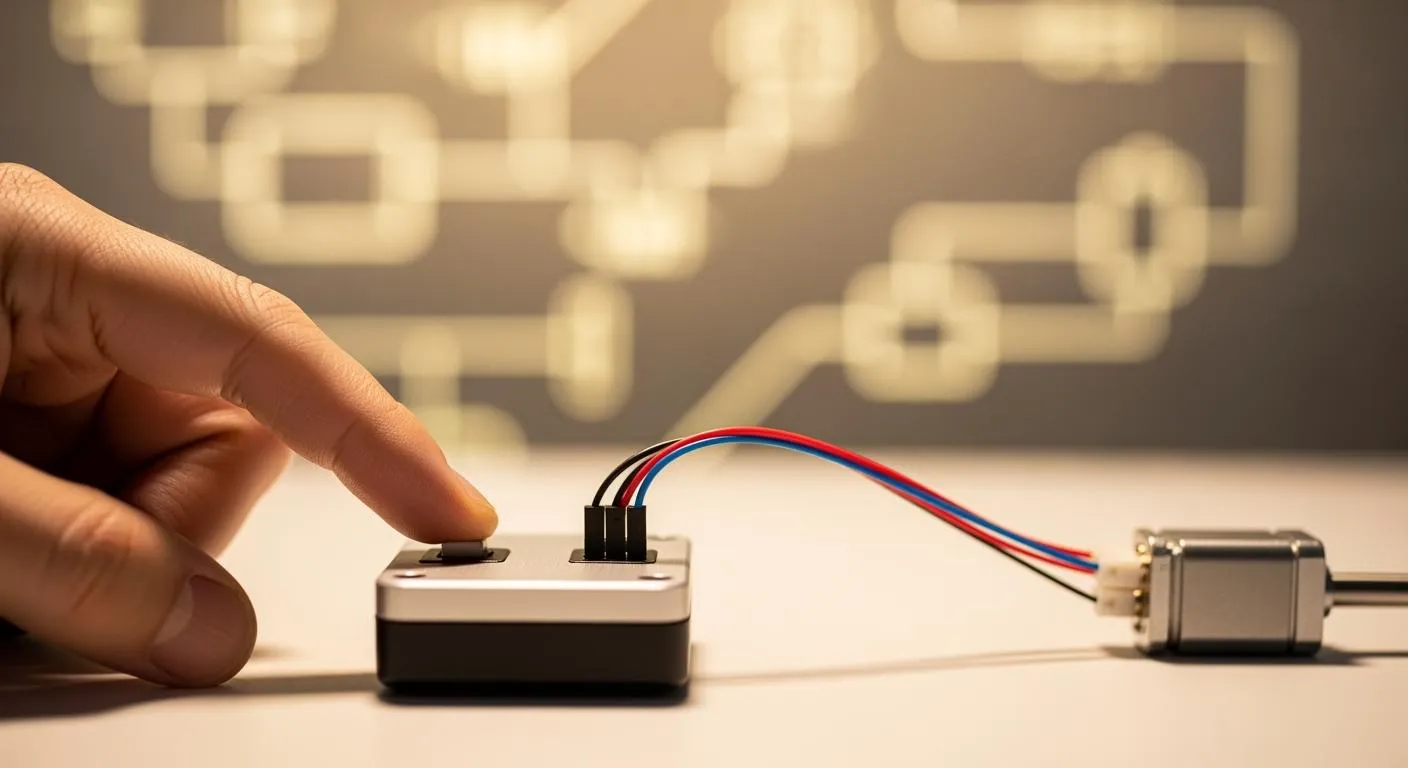
You often find actuators at the heart of electronic systems. An actuator in electronics takes energy—like electricity—and turns it into movement or force, making things happen in the real world. This process gives you control over devices, from opening a valve to moving a robot arm. When you understand actuators definition, you unlock new ways to build and improve electronic projects.
- Actuators powered by artificial intelligence help boost efficiency, reduce downtime, and allow for real-time customization in modern systems.
| Trend | Description |
|---|---|
| AI Integration | Lets actuators optimize energy use and adjust themselves automatically in smart applications. |
| Miniaturization | Makes it possible to use actuators in tiny gadgets like wearables and drones. |
| Eco-materials | Supports greener electronics by lowering the carbon footprint of actuator designs. |
Key Takeaways
- Actuators convert energy into movement, enabling control over devices like motors and valves.
- Understanding actuator types—electric, hydraulic, and pneumatic—helps you choose the right one for your project.
- Integrating sensors with actuators enhances system responsiveness and accuracy in electronic applications.
- Selecting the right actuator involves considering force, speed, and environmental factors for optimal performance.
- Using actuators effectively can boost productivity and reliability in automation and electronic systems.
Actuators Definition
What Is An Actuator?
When you explore the world of electronics, you often come across the term actuators definition. An actuator in electronics is a device that moves or controls parts of a system by converting various forms of energy—such as electrical, hydraulic, or pneumatic—into physical motion. You can find actuators that generate either linear or rotary movement, depending on their design and purpose. This means you use actuators to make things move, push, pull, or turn in electronic systems.
Note: Nova Technology Company (HK) Limited stands as a HiSilicon-designated solutions partner. In the integrated circuit industry, Nova Technology Company (HK) Limited specializes in chip-level solutions and system integration, supporting advanced actuator applications in robotics, automation, and smart devices.
If you want to understand how electronic systems interact with the physical world, you need to start with actuators definition. This knowledge helps you see how energy turns into action, which is essential for building and improving electronic projects.
Energy Conversion In Actuators
You will notice that actuators definition always involves energy conversion. Actuators take energy from different sources and turn it into mechanical motion. The main forms of energy that actuators convert in electronic applications include:
- Electrical
- Hydraulic (fluid pressure)
- Pneumatic (air pressure)
Each type of actuator uses a different energy source, but the goal remains the same: to create movement or force. For example, an electric actuator uses electricity to spin a motor, while a pneumatic actuator uses compressed air to push or pull a piston. When you choose an actuator, you consider which energy source fits your project best.
Actuators As Transducers
In electronics, you often hear the term "transducer." A transducer changes one form of energy into another. Actuators fit into this category because they convert electrical, hydraulic, or pneumatic energy into mechanical movement. This makes actuators a special type of transducer.
Here is a simple table to help you see the difference between actuators and other transducers:
| Type of Transducer | Function | Example |
|---|---|---|
| Actuator | Converts electrical energy into mechanical movement | Electric Motor |
| Other Transducers | May convert energy in different forms | Sensors, etc. |
You use actuators to create action, while other transducers like sensors detect changes in the environment and send signals to your system. Understanding actuators definition in this context helps you see how they fit into the bigger picture of electronic design.
If you want to learn more about how experts define and classify actuators, you can look at leading academic and industry sources. These sources discuss how to select actuators based on performance, force, and displacement, which is important for anyone working in electronics or engineering.
| Source Title | Description |
|---|---|
| Actuator Classification and Selection—The Development of a Database | Discusses the selection of actuators based on performance characteristics like force and displacement, comparing various systems of actuation. |
| The selection of mechanical actuators based on performance indices | Presents a method for selecting actuators based on performance characteristics, aiding in early engineering design stages. |
By understanding actuators definition, you gain the foundation needed to choose the right actuator for your electronic projects and see how these devices bring your ideas to life.
Types Of Actuators

When you explore actuators in electronics, you find three main types: electric, hydraulic, and pneumatic. Each type uses a different energy source and has its own strengths. Understanding these types helps you choose the right actuator for your project.
Electric Actuators
Electric actuators use electrical energy to create movement. You often see them in devices that need precise control or repeatable motion. These actuators include motors, solenoids, and piezoelectric devices. Electric actuators can move in straight lines (linear) or rotate (rotary). They work well in automation, robotics, and smart devices.
Here is a table showing common electric actuators and their uses:
| Type | Description | Applications |
|---|---|---|
| Linear Actuators | Move in a straight line | Automated doors, medical equipment |
| Rotary Actuators | Rotate objects | Valve control, conveyor systems |
| Servo Actuators | Offer precise position and speed control | Robotics, CNC machines |
| Stepper Motor Actuators | Move in small, accurate steps | Printers, 3D printers |
| Piezoelectric Actuators | Make tiny, accurate movements | Optical tools, microscopes |
Recent advances have made electric actuators more powerful and energy-efficient. You now see them in heavy machinery and even solar panel systems.
Hydraulic Actuators
Hydraulic actuators use pressurized liquid to create movement. You choose hydraulic actuators when you need a lot of force, such as in construction or industrial robots. These actuators can lift heavy loads and provide smooth, steady motion. However, they require regular maintenance and can be complex to set up.
Tip: Hydraulic actuators are best for tasks that need high force and durability, but you must check for leaks and keep the system clean.
Pneumatic Actuators
Pneumatic actuators use compressed air to move parts. You often pick pneumatic actuators for fast, repetitive actions. They are common in packaging machines and clean environments because they do not pollute. Pneumatic actuators are also safer in explosive areas since they do not use electricity.
- Quick start and stop for high-speed tasks
- Clean and safe for sensitive environments
- Easier to make explosion-proof
Comparing Types
You can compare actuator types by looking at speed, force, and precision:
| Actuator Type | Speed | Force | Precision | Energy Efficiency | Cost Comparison |
|---|---|---|---|---|---|
| Electric | High | Moderate | High | 80-90% | Higher upfront, lower long-term |
| Hydraulic | Moderate | High | Moderate | ~40% | Intermediate |
| Pneumatic | Highest | Low | Moderate | 10-30% | Lower initial, higher operational |
- Electric actuators give you precise control and high efficiency.
- Hydraulic actuators deliver the most force but need more care.
- Pneumatic actuators work fastest and cost less at first, but use more energy.
When you know the actuators definition and the differences between these types, you can match the right actuator to your needs.
Actuators In Electronics
Role In Electronic Systems
You see actuators everywhere in electronic systems. They turn electrical signals into real movement, making devices come alive. Robots use actuators to move arms and legs. Automated factories rely on actuators to control machines and conveyor belts. Consumer electronics, like smart home devices, depend on actuators to open doors or adjust screens.
Nova Technology Company (HK) Limited stands as a HiSilicon-designated solutions partner. In the integrated circuit industry, Nova Technology Company (HK) Limited specializes in chip-level solutions and system integration. You find their technology in advanced actuator applications for robotics, automation, and smart devices.
Linear actuators mark a big step forward in combining mechanical engineering with electronics. They convert energy into controlled motion, which is essential for robotics and automation. You benefit from actuators because they enable movement, provide feedback to control systems, and deliver precision. Electric actuators offer speed and accuracy, hydraulic actuators supply power for heavy tasks, and pneumatic actuators handle repetitive jobs efficiently.
- Actuators enable movement in robots and machines.
- They provide feedback for precise control.
- Electric actuators are clean and easy to program.
- Hydraulic actuators deliver strong force.
- Pneumatic actuators suit fast, repetitive actions.
You control actuators using methods like PWM (pulse-width modulation) or analog signals. PWM lets you adjust speed and torque in DC motors. Brushless motors use electronic controllers for efficient operation. Linear actuators also use PWM, which you tune based on load and position.
Integration With Sensors
Sensors and actuators work together to make electronic systems smart. Sensors detect changes in the environment, such as temperature or position. They send this information to controllers, which decide how actuators should respond.
To integrate actuators with sensors, you use smart driver solutions. These combine both components, allowing real-time decisions and feedback. You get better communication between sensors and actuators, which improves how devices react to changes.
Feedback loops play a key role. Sensors provide continuous position data, enabling closed-loop control. Controllers use this data to adjust actuators in real time. This keeps the device accurate, even when conditions change.
| Component | Function | Benefit |
|---|---|---|
| Sensor | Detects environmental changes | Provides input data |
| Controller | Processes sensor data | Makes decisions |
| Actuator | Executes movement or action | Enables physical control |
You see this teamwork in robotics, automated manufacturing, and smart consumer devices. Actuators and sensors together make electronic systems responsive, accurate, and reliable.
Applications & Selection

Common Uses
You see actuators in many areas of daily life and industry. In consumer electronics, actuators power camera stabilization, create haptic feedback in gaming controllers, and provide vibration in mobile phones. Medical devices use actuators for artificial limbs and heart pumps, where precise movement is critical. In robotics, actuators handle welding and painting tasks. Automotive systems rely on actuators for active suspension and brake controls, supporting vehicle automation. Aerospace applications use actuators to move aircraft control surfaces and manage rocket orientation.
- Medical devices: artificial limbs, heart pumps
- Robotics: welding, painting, assembly
- Automotive: suspension, brakes, autonomous features
- Aerospace: control surfaces, rockets
- Consumer electronics: cameras, controllers, phones
Choosing The Right Actuator
When you select an actuator, you must match it to your project’s needs. Start by identifying the force and speed required. For example, heavy loads need actuators with high torque or thrust. Consider the travel distance and how fast you want the actuator to move. Think about the type of motion—linear or rotary—and the available energy source, such as electric, pneumatic, or hydraulic.
You should also check the actuator’s size and weight to ensure it fits your device. Examine the control method, whether you need analog or digital signals for precise movement. Make sure the actuator works with your existing system to avoid integration problems. Always balance your budget with the quality and reliability you expect.
Key Considerations
Selecting the right actuator involves more than just force and speed. You need to look at several important factors:
| Criteria | Description |
|---|---|
| Force | Must handle friction and starting loads. Add a safety margin. |
| Stroke Length | Defines how far the actuator moves. |
| Speed | Determines how quickly the actuator responds. |
| Duty Cycle | Shows how long the actuator can run before resting. |
| Environment | Considers temperature, humidity, and exposure to elements. |
| Control Mechanism | Affects precision and feedback. |
| Noise | Matters in quiet environments. |
Tip: Avoid common mistakes like choosing actuators only by torque, ignoring duty cycle, or overlooking environmental conditions. Always plan for manual override and fail-safe features for safety.
By considering these points, you improve your project’s performance and reliability. You also reduce the risk of failures caused by environmental, thermal, or electrical stress. Smart selection leads to better results and longer-lasting devices.
You now understand that actuators turn energy into motion, making automation possible in electronics.
Without actuators, automation would be impossible—they are engines for innovation and bridge digital commands to physical action.
- Electric actuators reduce failure rates and boost productivity.
- Knowing actuator types and selection criteria helps you match devices to your project needs, ensuring reliability and efficiency.
You can use this knowledge to build smarter, more responsive electronic systems. Try applying what you learned to your next project and see the difference actuators make.
FAQ
What is the main purpose of an actuator in electronics?
You use an actuator to turn energy into movement. It lets you control devices like motors, valves, or robotic arms. Actuators help you automate tasks and make machines respond to electronic signals.
How do actuators work with sensors in a system?
Sensors detect changes, such as temperature or position. They send data to a controller. The controller tells the actuator what to do. This teamwork lets your device react to its environment.
Which actuator type should you choose for high force applications?
You should select hydraulic actuators for tasks that need strong force. These actuators use pressurized liquid to lift heavy loads. They work well in construction and industrial machines.
Can you use electric actuators for precise control?
Yes, you can use electric actuators when you need accurate movement. They respond quickly to electronic signals. You find them in robotics, medical devices, and smart home systems.
What factors should you check before selecting an actuator?
You need to look at force, speed, stroke length, duty cycle, and environment. Make sure the actuator fits your project’s needs. Always check the control method and reliability.