Beyond Automotive: The Sourcing Case for AEC-Q Semiconductors in Industrial and Medical Electronics
Practical guide for buyers and engineers: Beyond Automotive: The Sourcing Case for AEC-Q Semiconductors in Industrial and Medical Electronics. Sourcing, risk, and selection notes.
The $260,000-per-Hour Wake-Up Call for Industrial and Medical Buyers
When a semiconductor fails in a vehicle, the cost is measured in recalls. A single component failure can trigger multimillion‑dollar recalls that rip through Tier‑1 balance sheets and brand reputations. But that same failure mode inside a factory automation controller or a medical imaging gantry doesn’t stay on the road—it stops a production line or delays a diagnostic procedure, and the meter runs just as fast. Industry benchmarks indicate that unplanned downtime in electronics‑intensive manufacturing costs between $125,000 and $260,000 per hour. That figure alone explains why procurement leads who once dismissed “automotive grade” as overkill are now actively sourcing AEC‑Q semiconductors for industrial drives, surgical robots, and high‑reliability power infrastructure.
Industrial and medical programs share two traits that make AEC‑Q components a strategic fit: long intended service lives—often 10 to 15 years—and environments where a latent defect is far more expensive than the silicon that causes it. Yet the puzzle that frustrates many engineers is that two chips might share an identical base part number while only one carries the full AEC‑Q qualification pedigree. The sourcing case for AEC‑Q semiconductors beyond automotive is not about chasing a logo; it’s about locking in predictable reliability, change‑control discipline, and a supply chain that can keep a twenty‑year medical assay platform or a continuous‑process chemical plant running without a six‑figure interruption.
Decoding AEC-Q100: What Those Temperature Grades and Stress Tests Actually Deliver
AEC‑Q100 is not a single test—it is a family of stress‑based qualification methods designed to expose design‑, process‑, and package‑related weaknesses before a single reel ships. For ICs, the parent standard is AEC‑Q100; for discrete semiconductors, AEC‑Q101 applies; and for passive components, AEC‑Q200 sets the bar. The framework’s statistical underpinning is the zero‑defect guideline AEC‑Q004, which drives per‑lot screening methods like Part Average Testing (PAT) and Short‑Term Reliability Monitoring (STRM)—techniques that operate well beyond the basic qualification gate.
Understanding the stress levels matters because most industrial analog‑front‑ends and medical power supplies are not sitting in a benign 25 °C office. Motor drives cycle from freezing warehouses to full‑load junction temperatures above 100 °C within minutes. Medical sterilisation‑adjacent boards see repeated thermal shock. Standard industrial components rated for –40 °C to +85 °C can degrade quickly under those cycles, while a Grade‑1 AEC‑Q100 device with a –40 °C to +125 °C envelope and a controlled qualification baseline will deliver far lower drift and a longer wear‑out phase.
| AEC‑Q100 Grade | Ambient Operating Temperature Range | Typical Non‑Automotive Application Context |
|---|---|---|
| Grade 0 | –40 °C to +150 °C | Down‑hole instrumentation, combustion controls, high‑temperature MEMS interface |
| Grade 1 | –40 °C to +125 °C | Motor‑drive gate drivers, surgical‑robot motor controllers, outdoor power conversion |
| Grade 2 | –40 °C to +105 °C | Indoor industrial PLC I/O banks, medical‑bed control units, laboratory automation |
| Grade 3 | –40 °C to +85 °C | Cabin/interior‑like environments; overlaps with conventional extended‑industrial range |
Reading the table against your own BOM: A standard industrial‑temperature IC is typically characterised from –40 °C to +85 °C, with no requirement for the accelerated lifetime testing, biased humidity stress, or PPM‑level lot validation that an AEC‑Q100 Grade‑1 part endures. When a VFD drive’s ambient soaks at 115 °C during a summer outage free‑air restart, the industrial part is already beyond its design envelope, while the Grade‑1 device still has a 10 °C margin. That margin translates to years of additional service life, and it’s exactly why more procurement teams are substituting AEC‑Q offerings into long‑lifetime industrial designs even when an “automotive” label isn’t on the production ticket.
Grades 2 and 3 still provide value when the thermal envelope is moderate but the zero‑defect screening and change‑control discipline are what matter. These four temperature ranges all start at –40 °C and climb progressively to 150 °C, but the qualification tail beyond the temperature number—the powered temperature cycling, the high‑temperature gate stress, the wire‑bond shear tests—is what separates a genuine AEC‑Q‑compliant component from a commercially‑branded part with a wider claimed range.
Industrial, Medical, or Automotive Grade? Sorting Through the Sourcing Trade‑Offs
The comparison that matters for a BOM manager isn’t between a Chevy and a BMW; it’s between a standard commercial‑industrial IC, a medical‑specific vetted part, and an AEC‑Q‑qualified device that might come from a supplier’s automotive product line. Each bucket brings a different mix of reliability evidence, supply stability, and cost, and the choice often hinges on whether a field failure can cause patient harm or a factory‑wide shutdown.
| Parameter | AEC‑Q100 Grade 1 (e.g. isolated gate driver) | Standard Industrial (–40 to +85 °C) | Impact on Medical / High‑Reliability Industrial BOM |
|---|---|---|---|
| Qualification baseline | Full AEC‑Q100 stress suite + PAT/STRM | JEDEC commercial qualification | AEC‑Q provides a ready‑made reliability dossier for safety‑case documentation |
| Operating temperature margin | –40 °C to +125 °C | –40 °C to +85 °C | Elevated ambient tolerance reduces forced‑air cooling dependency and extends electrolytic capacitor life |
| Change‑control discipline | Strict PCN lead‑time; wafer‑fab/package requalification required | Commercial PCN; risk of unannounced die revision | Lowers qualification re‑spend in medical platforms with a 10‑year lifecycle |
| Traceability & documentation | Lot‑level traceability with date/batch codes; track‑and‑trace available | Basic reel‑/tube‑level traceability | Essential for FDA‑regulated complaint handling and CAPA investigations |
| Cost premium (rule of thumb) | 10 % to >40 % over equivalent commercial grade | Baseline | Justified by a single avoided line‑stop costing $125k–$260k/hour |
| Supply allocation priority | Historically weighted toward automotive Tier‑1s during shortages | Open‑market availability; more second‑source options | Requires allocation‑backed RFQ and broker‑assisted second‑source validation |
The table makes clear that a pure commercial‑industrial device can look cheaper on a line‑item spreadsheet but leaves the entire system exposed to undetected fab‑change drift and limited temperature headroom. Medical device buyers face an additional pressure: instrument volumes are often too low to influence semiconductor supplier pricing, yet the expectation of a fifteen‑year assured supply is non‑negotiable. Adopting an AEC‑Q component—where the supplier already makes multi‑million‑unit commitments for automotive ECU platforms—brings that supply assurance through the back door.
What you must never skip, however, is the datasheet check. The official datasheet must state “AEC‑Q100 Qualified” and list the temperature grade explicitly—phrases such as “automotive grade” or “suitable for automotive” are ambiguous and often signal a marketing claim rather than a verifiable qualification. Ask for the qualification summary report if the device is being designed into a Class II or Class III medical instrument; the extra paperwork this side of CE‑marking is worth the procurement man‑hours.
Beyond the ‘AEC‑Q Qualified’ Logo: A Sourcing Playbook for Verifiable Automotive‑Grade Parts
Procurement teams that have been burned by grey‑market counterfeits know that the logo on the distributor’s search page is not a birth certificate. Turning an AEC‑Q listing into production‑ready inventory requires a disciplined, document‑driven approach that starts the moment the component is shortlisted and continues through every delivery lot.
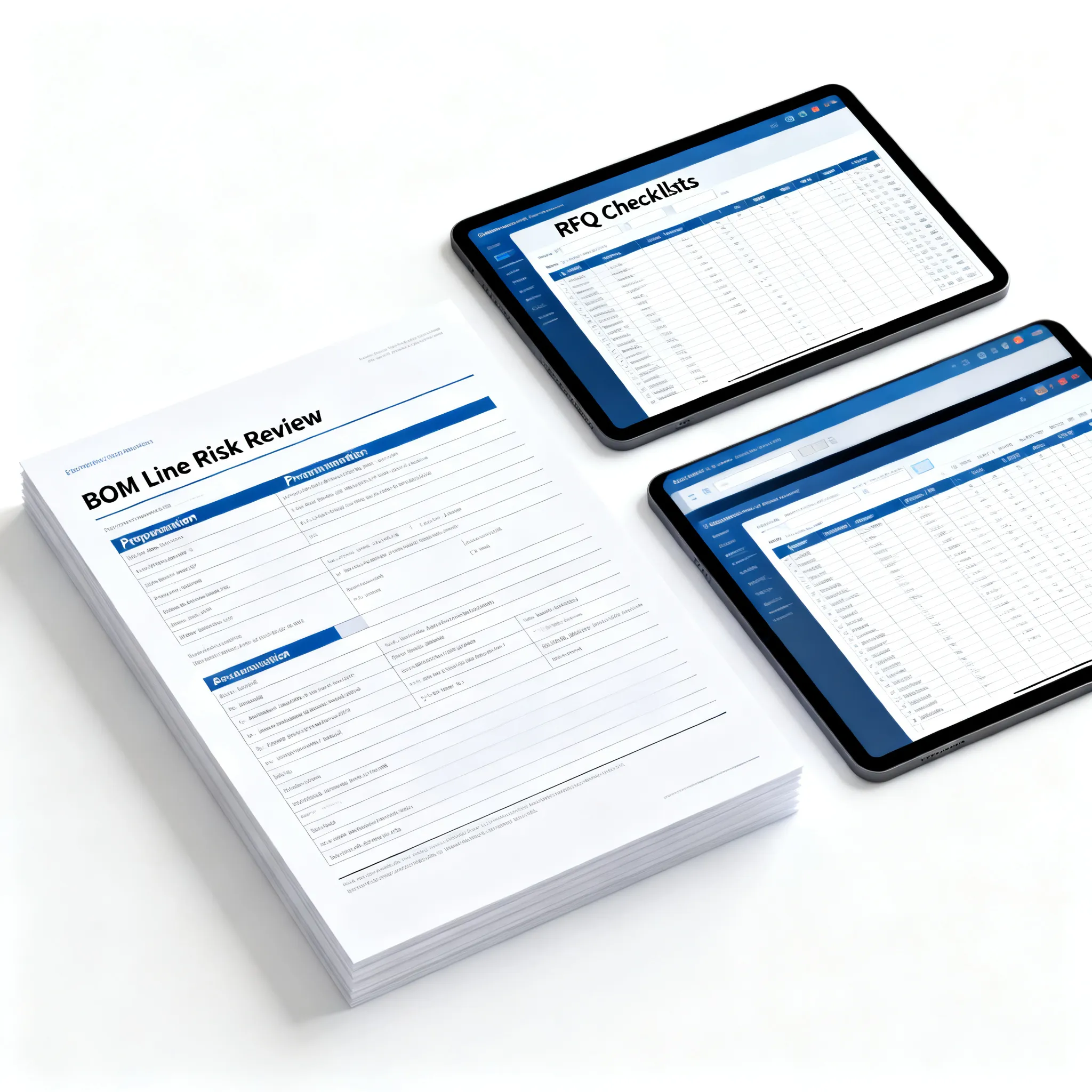
Before issuing an RFQ, ensure your team has asked for, and received, at least the following verification assets. Treat any supplier that cannot provide them as an unmitigated source risk, especially for medical or safety‑loop industrial channels.
| Verification Document / Requirement | What It Confirms | Why It Matters for Non‑Automotive Users |
|---|---|---|
| Datasheet with explicit “AEC‑Q100 Qualified” and temperature‑grade statement | Part meets an official AEC‑Q100 grade; not a marketing-only claim | Regulatory auditors will treat the datasheet as the primary evidence |
| Production Part Average Test (PAT) or Short‑Term Reliability Monitoring (STRM) report | Ongoing lot‑level conformance beyond one‑time qualification | Validates zero‑defect intent, essential for ISO 13485 and functional‑safety documentation |
| Full chain‑of‑custody documentation (date/lot codes, shipping origin, authorised distributor path) | Provenance from OEM‑authorised channel; no grey‑market interpolation | Prevents insertion of recycled or re‑marked components into long‑life medical devices |
| Track‑and‑trace inspection reports (high‑magnification photos, X‑ray, decapsulation if applicable) | Physical construction matches the original lot | Counterfeit avoidance in safety‑critical applications |
When the market tips into allocation mode—as it has repeatedly done for power‑management ICs and microcontrollers—plan for periods where automotive‑allocated stock stretches lead‑time expectations to 12–18 months. This does not mean you will wait that long today, but it means your RFQ must explicitly request an allocation‑backed lead‑time quote from the franchised distributor. If the line is constrained, specialist independent brokers that focus on AEC‑Q inventory can surface validated second sources and deliver the same lot‑level traceability as the primary channel—provided they can supply the documentation listed above. For non‑automotive programs with a decade‑long lifecycle, locking in a second source early, even if it means evaluating a GD32‑ or APM32‑class alternative alongside an established automotive MCU, is prudent risk management. But remember: any alternative must be verified pin‑for‑pin, firmware‑compatible, and qualified to the same AEC‑Q grade; treat those families as evaluation candidates and never as guaranteed drop‑in replacements without complete validation.
Playbook summary for the purchasing desk:
- Build your RFQ around documentation requirements, not just part numbers; ask for PAT/STRM data and a lot‑date‑code statement.
- Insist on an allocation‑backed lead‑time confirmation from the authorised distributor, not a generic website ETD.
- For single‑source AEC‑Q items, commission a qualified second‑source assessment through an independent broker that specialises in automotive‑grade parts and can supply full provenance reports.
- Require track‑and‑trace imagery for any lot sourced outside the direct franchise network—inspection reports must be dated within 90 days of shipment.
- Plan your last‑time‑buy buffer: even if current supply looks comfortable, secure an LTB or lifetime‑buy quantity early for medical platforms that cannot be redesigned without regulatory re‑submission.
AEC‑Q in Non‑Automotive: Questions Your Engineering and Procurement Teams Are Asking
Q: Can an AEC‑Q100 IC be used directly in a Class II or III medical device, or do we still need IEC 60601‑level evidence?
AEC‑Q qualification demonstrates robust intrinsic reliability and a low ppm defect density, but it is not a substitute for IEC 60601 isolation, leakage‑current, and risk‑management requirements. You must still provide the safety‑case evidence mandated by your notified body. However, using an AEC‑Q part can significantly reduce the burden of lifetime‑reliability analysis and strengthen the argument that the component will not become a single‑point failure during the expected service life of the device.
Q: Does specifying AEC‑Q always reduce lead time, or can it make allocation worse?
It depends on the product cycle. During severe shortage periods, AEC‑Q rated silicon is often allocated preferentially to automotive Tier‑1 contracts, which means non‑automotive buyers may face allocation‑pushed windows that stretch to 12–18 months—confirm the current allocation picture with your distributor. Conversely, in a stable supply environment, the high‑volume automotive commitment stabilises wafer starts and can yield more predictable output than a niche industrial line. That swing is precisely why second‑source planning and a relationship with a broker that actively monitors AEC‑Q allocation can protect your build schedule.
Q: How do we verify AEC‑Q status beyond the marketing logo on a distributor site?
Always pull the official manufacturer datasheet and look for the exact wording “AEC‑Q100 Qualified” alongside the specific temperature grade (e.g., Grade 1: –40 °C to +125 °C). Ambiguous language such as “suitable for automotive” or “automotive grade” is a red flag. For high‑risk industrial or medical programs, request the production PAT data or STRM summary report; reputable suppliers will provide it under NDA.
Q: What is the typical cost premium of an AEC‑Q part over an equivalent industrial‑grade IC?
Premiums generally range from 10 % to over 40 % depending on the function, package, and temperature grade. The delta pays for tighter process‑capability screening, extended burn‑in, and the change‑control overhead that keeps die revisions transparent. The economic argument flips when you account for a single production‑line stoppage: one hour of downtime can easily exceed the lifetime premium of every AEC‑Q component on the board.
Q: Are there hidden traceability gaps when buying AEC‑Q parts through independent brokers?
Yes, if the broker cannot supply verifiable date/lot codes and a complete chain‑of‑custody record back to the original manufacturer. A specialist broker that understands AEC‑Q requirements will offer detailed inspection reports and full provenance—without that, the risk of inserting recycled, re‑marked, or unqualified devices into a medical or safety‑linked BOM is unacceptably high. Always require a track‑and‑trace documentation package before accepting any shipment.
Q: Do AEC‑Q200 passives actually matter for industrial power supplies?
Absolutely. AEC‑Q200 qualification imposes vibration, thermal‑shock, and biased‑humidity stress tests that far exceed standard commercial passive ratings. In high‑vibration motor‑drive cabinets, outdoor inverter enclosures, or factory‑automation hardware that endures frequent temperature swings, AEC‑Q200 resistors and MLCCs dramatically reduce field failures caused by cracked terminations or moisture ingress. For a 48‑V bus converter that must survive a decade in an uninsulated enclosure, the extra few cents per passive is a cheap insurance policy.
References & Further Reading
- Decoding AEC‑Q100: A Sourcing Guide to Automotive Grade Semiconductor Qualification and Temperature Ratings – Utmel
- The case for AEC‑Q semiconductors in non‑automotive uses – Power Electronic Tips
- Automotive semiconductors: AEC‑Q and lead times – J2 Sourcing
- What Are Automotive‑Grade Chips (AEC‑Q100)? A Sourcing Guide – Kynix
- AEC‑Q Components for Automotive Electronics: Selection Guide – Hitop Tech
- Component Standards for Automotive Grade Electronics – Altium
Integrating AEC‑Q semiconductors into industrial and medical BOMs is a procurement strategy that shifts the cost‑of‑failure equation in your favour. The key is to treat every AEC‑Q line item as a bundle of reliability evidence, supply‑chain discipline, and documented provenance—not as an automotive‑only curiosity. When your next design review questions the cost premium, run the calculation with $125,000–$260,000 per hour of unplanned downtime. The AEC‑Q option rarely looks expensive after that conversation.
Ready to source AEC‑Q parts beside your industrial and medical line‑items? Upload your complete BOM—mixed grades, flexible MOQ—via IC‑Online and request an allocation‑backed quote that includes verification documentation. Our procurement desk will confirm current availability, lead‑time expectations, and traceability without generic ETD promises.