EPM240T100C5N Supply Risk Assessment: What to Ask Before You Buy
Assess EPM240T100C5N sourcing risks before you buy. RFQ questions on traceability, date codes, testing, alternatives, and supply continuity for procurement...
Lead Time Warning Signs: Why the EPM240T100C5N Is Back on the Procurement Radar
Procurement teams working with mature logic families are once again staring at allocation pressure they thought had subsided. Recent capacity shifts at major foundries have forced a re‑prioritization of legacy process nodes, creating bottlenecks for established CPLDs and FPGAs. Industry reports from EE Times detail extended lead‑time swings for MAX® II devices, with some lines stretching beyond 26 weeks as fabs repurpose 300 mm capacity for higher‑margin products. In this environment, a well‑proven, non‑volatile CPLD like the EPM240T100C5N is suddenly attracting renewed sourcing urgency.
The EPM240T100C5N sits inside countless industrial controllers, communication line cards, and legacy medical instruments—designs that cannot be re‑spun in a quarter. When allocation tightens, even a modest pull‑in of demand can drive spot prices up and force buyers to evaluate grey‑market sources. Engineering and procurement must therefore treat every RFQ as a risk‑assessment exercise, not a simple buy. The first signal: when an authorized distributor moves a part from “in stock” to “allocation only,” a structured inquiry becomes essential. Ask for proof of Intel‑authorized channel traceability, confirm that the part is not from a cancellation return, and verify that re‑bake procedures meet MSL‑3 handling thresholds per IPC/JEDEC J-STD-020 before any reflow process.
The rising interest in the EPM240T100C5N is driven by three factors: the long qualification cycle of industrial equipment, the scarcity of drop‑in CPLD replacements, and the fact that many MAX II designs remain in active production with no scheduled end‑of‑life. Understanding the lead‑time warning signs prepares you for the detailed specification and alternative comparison that follow.
EPM240T100C5N in Plain Specs: What You're Actually Designing Around
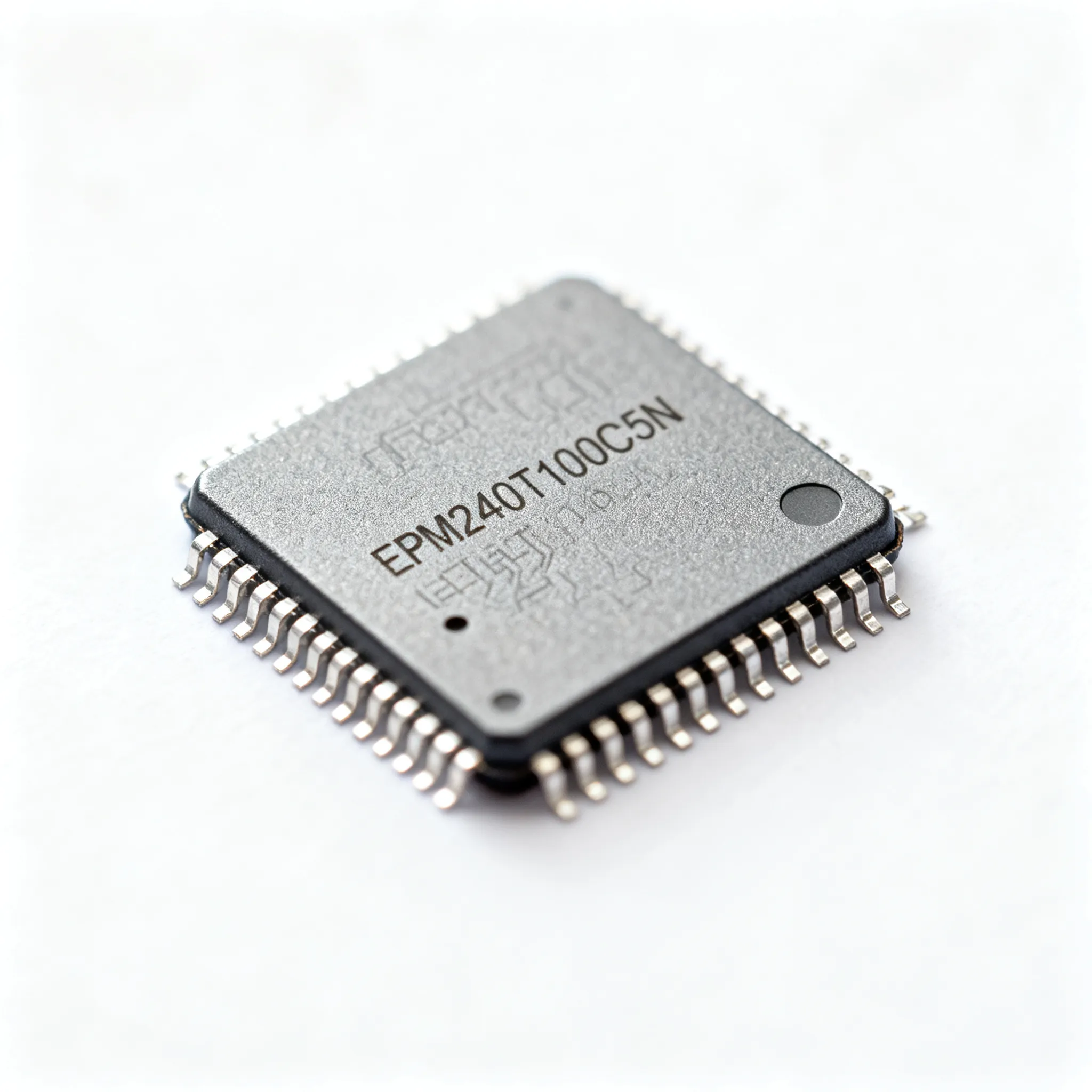
Before you can assess supply risk, you must anchor the conversation in the parameters that constrain any re‑design or second‑source search. The EPM240T100C5N is a member of Intel’s (formerly Altera’s) MAX II instant‑on, non‑volatile CPLD family, fabricated in a 0.18 µm embedded flash process. It packs 240 macrocells into a 100‑pin TQFP package with a 0.5 mm pitch, supported by an internal oscillator and a user flash memory block. Its 3.3 V core voltage and multi‑volt I/O capability (1.8 V, 2.5 V, 3.3 V) allow it to interface with mixed‑voltage logic without external level shifters, a key factor in legacy board substitution.
The table below distills the parameters that procurement and engineering must cross‑check when evaluating availability, drop‑in potential, and alternative devices. Every value is sourced from the official Intel MAX II device handbook.
| Parameter | Value | Notes |
|---|---|---|
| Device family | Intel MAX II (Instant‑on, non‑volatile) | 0.18 µm embedded flash technology |
| Macrocells / Logic Elements | 192 macrocells (240 LEs) | Suitable for glue logic, I/O expansion, state machines |
| Package | 100‑pin TQFP (Thin Quad Flat Pack) | 0.5 mm pitch, 14 mm × 14 mm body |
| Temperature grade | Commercial (0 °C to 85 °C) | ‑C suffix; industrial variant is ‑I |
| Speed grade | ‑5 (5.4 ns pin‑to‑pin) | Faster grade ‑C4 available |
| Supply voltage (VCCINT) | 3.0 V – 3.6 V | Single 3.3 V core, internal regulator optional |
| I/O voltage support | 1.8 V, 2.5 V, 3.3 V (bank selectable) | Multi‑volt I/O eliminates level translators in many designs |
| User flash memory | 8 Kbits | Non‑volatile storage for serial numbers, calibration data |
| Configuration scheme | Internal flash; instant‑on < 200 µs | No external configuration device needed |
| JTAG / ISP support | IEEE 1149.1 JTAG boundary scan | In‑system programming via USB‑Blaster or Intel FPGA Download Cable |
These parameters matter most when a buyer is asked to “find an equivalent” under time pressure. The 100‑pin TQFP footprint and multi‑volt I/O banks are not universally matched by other vendors, so any swap must be evaluated on a pin‑by‑pin basis. Similarly, the embedded flash configuration eliminates the need for an external SPI memory, which saves board space and reduces BOM complexity—a detail easily overlooked in a quick parametric search.
If Not the EPM240T100C5N: CPLD Alternatives Worth Evaluating
When allocation tightens, you need a short list of candidates that can serve a similar logic function—even if they are not pin‑compatible. The table below maps the EPM240T100C5N against Intel’s own industrial‑grade variant, as well as two devices from competing families that are frequently discussed in sourcing forums: the Xilinx CoolRunner‑II series and the Lattice MachXO2 series. The comparison highlights macrocell density, I/O voltage flexibility, package footprint, and typical procurement considerations. This is not a drop‑in claim; every alternative requires a thorough pinout and timing verification before ordering samples.
| Comparison Metric | EPM240T100C5N (Baseline) | Intel EPM240T100I5N (Industrial) | Xilinx XC2C256‑7VQ100C | Lattice LCMXO2‑256HC‑4TG100C | Selection Criteria & Failure Boundary |
|---|---|---|---|---|---|
| Macrocells/LEs | 192 macrocells (240 LEs) | 240 | 256 | 256 LUT4 + 128 sysMEM | Must cover design logic plus 15 % headroom |
| I/O voltage tolerance | 1.8 V, 2.5 V, 3.3 V | 1.8 V, 2.5 V, 3.3 V | 1.5 V – 3.3 V | 1.2 V – 3.3 V (dual‑rail) | Bank voltage mapping must match existing PCB |
| Speed grade (typical) | 5.4 ns (‑5) | 5.4 ns (‑5) | 7.5 ns (‑7) | 6.5 ns (‑4) | Verify critical path timing closure |
| Package | 100‑TQFP | 100‑TQFP | 100‑VQFP | 100‑TQFP | VQFP vs TQFP pin‑1 and body size must match |
| Pin pitch / body | 0.5 mm / 14×14 mm | 0.5 mm / 14×14 mm | 0.5 mm / 14×14 mm | 0.5 mm / 14×14 mm | Mechanical footprint identical; pin‑out differs |
| Configuration memory | Internal flash | Internal flash | Internal flash | Internal flash + optional external SPI | External SPI requirement changes BOM cost |
| Supply voltage (core) | 3.3 V | 3.3 V | 1.8 V | 1.2 V (VCC) + 3.3 V or 2.5 V VCCIO | Board regulator must be re‑evaluated |
| Temperature range | 0 °C to 85 °C | ‑40 °C to 100 °C | 0 °C to 85 °C | 0 °C to 85 °C | Industrial requirement forces ‑I variant or alternative |
| Typical allocation context | Commercial lead times vary; RFQ‑confirm | Often held at distributors as a wider‑grade alternative | Mature, allocation‑sensitive; verify stock | Active production, but check package lead times | Authorized channel verification mandatory |
| Pin‑compatible drop‑in | Baseline | Yes (same footprint, same pin‑out) | No | No | Re‑design or adapter required for cross‑vendor |
The EPM240T100I5N is the closest internal safety net: identical silicon, identical footprint, and the same pin‑out, only rated for the industrial range. If supply of the commercial grade dries up, many designs can accept the ‑I variant without any board change—provided the system‑level qualification tolerates the wider temperature rating. Procurement should ask the supplier to confirm that the ordering code “EPM240T100I5N” is not on a separate allocation list.
The Xilinx XC2C256‑7VQ100C offers slightly more logic capacity and a lower core voltage, but its I/O structure and JTAG pin‑out differ significantly. Lattice’s LCMXO2‑256HC‑4TG100C brings more flexible dual‑rail I/O and a richer fabric but demands a 1.2 V core rail. Both alternatives require a board spin, or at minimum an interposer adapter, and full regression testing. The selection notes in the last column make it crystal clear: no cross‑vendor part is a drop‑in substitute; every alternative must pass functional and timing verification on your specific board.
Seven Questions Every Buyer Should Ask Before Committing to EPM240T100C5N Stock
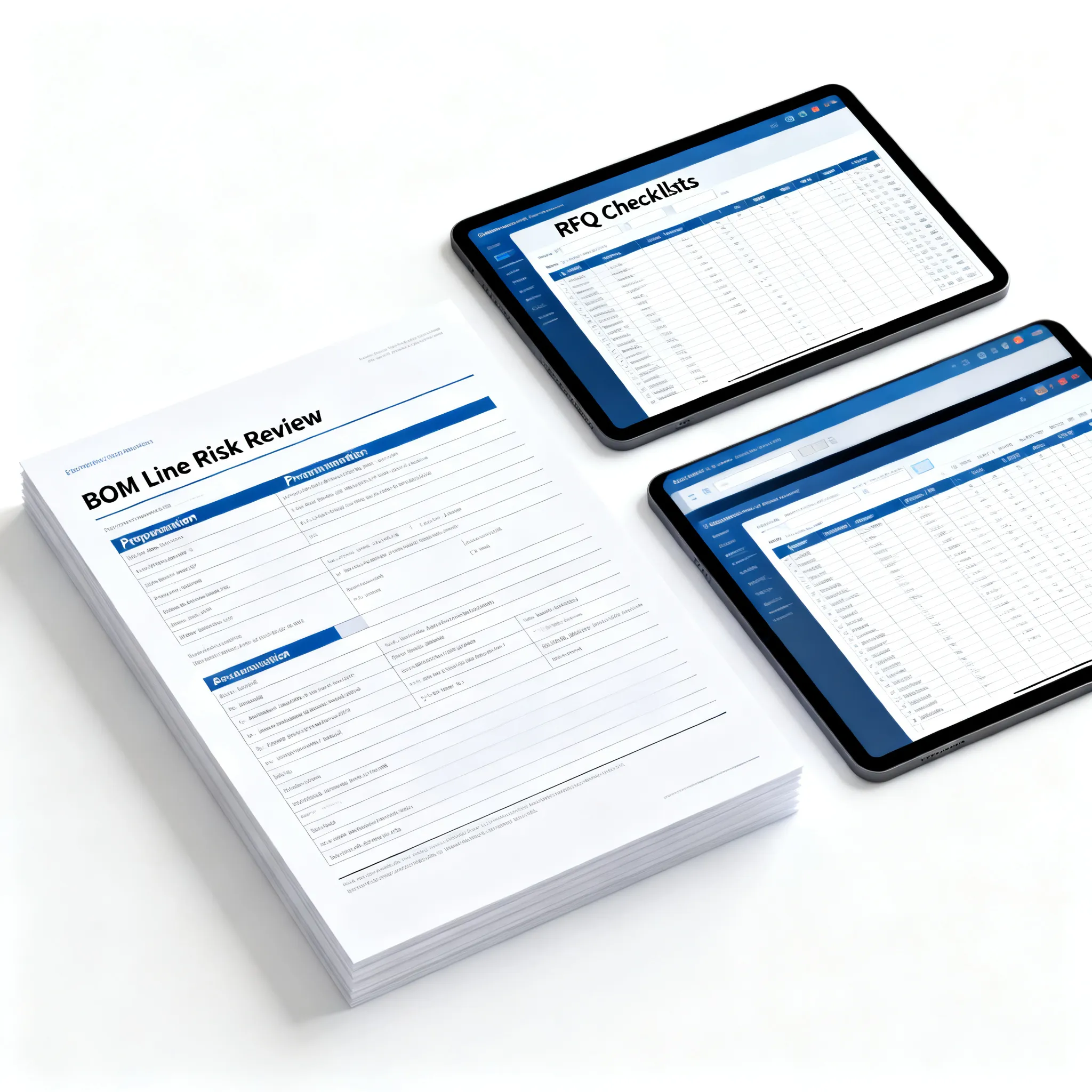
When the supply environment turns allocation‑sensitive, price alone is a weak benchmark. Counterfeit devices can slip into the supply chain during shortages, and poor handling erodes reliability. The following disciplined set of inquiries—designed for both engineers and procurement professionals—reduces the risk of receiving non‑conforming parts. Use them as a checklist in every RFQ you send for the EPM240T100C5N.
- Is the distributor an Intel‑authorized channel partner? Request a current authorization certificate or check Intel’s partner locator. Unauthorized sources may sell returns, refurbished stock, or parts with wiped date codes.
- Can you trace the lot back to an Intel‑authorized shipment? Ask for the full lot history, including the original purchase date and the country of assembly. A gap in traceability is a red flag for grey‑market product.
- What is the date code, and is it consistent across the full quantity? Mixed date codes in a single order suggest consolidation rather than factory‑fresh trays. A range wider than 12 months warrants extra incoming inspection.
- Has the part been stored and handled per MSL‑3 requirements? The 100‑TQFP package is moisture sensitivity level 3. Confirm that the supplier maintained dry‑pack storage and that a re‑bake has been performed if the floor‑life expired, following IPC/JEDEC J-STD-020 guidelines.
- What is the minimum order quantity, and does it match a full‑tray increment? The EPM240T100C5N ships in trays of 90 units. If a vendor offers quantities like 45 or 78, investigate whether those parts were removed from a tray and repackaged—potentially compromising lead coplanarity.
- Will you provide a 90‑day re‑test report for electrical and visual inspections? For quantities above one tray, buyers should require a third‑party test report within the last 90 days covering marking permanency, lead solderability, and functional test on a sample basis.
- Is the supply contingent on a non‑cancellable, non‑returnable (NCNR) order, and what are the cancellation terms? During allocation, many distributors move to NCNR terms. Understand the financial exposure and negotiate a partial return provision for parts that fail incoming inspection.
To structure the response from suppliers, the table below outlines each risk area, the precise information to request, and the verification method that procurement can document internally.
| Risk Category | Supplier Due‑Diligence Question | Verification Method |
|---|---|---|
| Authenticity | Provide Intel‑authorized purchase documentation for this lot. | Cross‑check invoice against Intel partner database. |
| Handling & moisture | Was the part dry‑packed continuously since manufacturing? If floor‑life exceeded, supply bake log per J-STD-033. | Inspect HIC label; request bake temperature/time record. |
| Date code uniformity | Disclose the minimum and maximum date codes across the offered quantity. | Visual inspect 100 % of tubes/trays on receipt; reject mixed‑code lots beyond 24‑month span. |
| Package integrity | Are the leads free of retinning or mechanical damage? Provide 10× optic images. | Perform coplanarity measurement; X‑ray if any sign of rework. |
| Electrical conformance | Supply a functional test report for a random sample of 5 % of the lot, using the Intel test flow or equivalent. | In‑house ATE or third‑party lab within 90 days of shipment. |
| Allocation status | Is the inventory available immediately, or is it tied to a future allocation date? | Request a binding ship‑date confirmation, not a “promise” date. |
Armed with these questions, a buyer can quickly filter out high‑risk offers and document the due diligence required for ISO‑9001 or AS9100 internal audits. Engineers, too, benefit: knowing the supplier’s response helps them decide whether to proceed with a quick turn‑on test or push for a full qualification run.
EPM240T100C5N Supply FAQ: Answers for Engineers and Buyers
Q: Is the EPM240T100C5N still in active production, and where can I find the latest lifecycle status?
A: Intel (formerly Altera) maintains the MAX II family as a mature product line, and the EPM240T100C5N has not been discontinued. Always verify current product change notifications (PCNs) and lifecycle status on Intel’s official product page; authorized distributors will reflect the most recent lead‑time and allocation data.
Q: Can I swap in an industrial‑grade EPM240T100I5N or a faster speed grade if commercial stock is exhausted?
A: Yes, the EPM240T100I5N (‑I, industrial temperature) and EPM240T100C4N (‑C4, 4 ns) use the same 100‑pin TQFP footprint and are functionally identical from a logic perspective. Verify temperature range and timing closure before committing, and note that orderable part numbers and cost may differ. Confirm with your supplier that the alternative grade is not on a separate allocation list.
Q: What alternative CPLDs from other vendors can be considered as second sources?
A: The Xilinx CoolRunner‑II series (e.g., XC2C256‑7VQ100C) and Lattice MachXO2 devices (LCMXO2‑256HC‑4TG100C) are often cited for similar glue‑logic applications, but they are not pin‑compatible. A board respin or adapter is required. Always compare macrocell count, I/O voltage levels, and package size before ordering samples.
Q: What are the most common counterfeit indicators for EPM240T100C5N, and how can we screen incoming parts?
A: Look for inconsistent marking depth, incorrect date‑code fonts, missing Intel corporate logo, and poor lead finish. Cross‑check top markings with known good photos, perform X‑ray inspection if possible, and bake per MSL‑3 requirements (IPC/JEDEC J-STD-020) before reflow. Purchase only from franchised or authorized sources.
Q: What is the typical minimum order quantity (MOQ) for the EPM240T100C5N from authorized distribution?
A: MOQs vary by distributor but commonly start at 90 or 250 pieces for full trays (the TQFP‑100 package ships in trays of 90 units). Partial reels or cut‑tape are not standard; procurement should expect full‑tray quantities when planning spot buys. Non‑standard quantities may indicate repackaging, which increases lead‑coplanarity risk.
Q: How long are current lead times for this part, and what buffer stock strategy is realistic?
A: Lead times can range from 8 weeks for in‑stock allocation to 26+ weeks during fab constraints, as reported by industry analysts (EE Times). A buffer of 6–9 months of demand is prudent for designs that cannot be redesigned quickly. Consider negotiating non‑cancellable orders with authorized partners to secure supply, while requesting partial shipment flexibility.
References & Further Reading
- Intel MAX II CPLD Product Family Page – official specifications, documentation, and lifecycle notices.
- Intel MAX II Device Handbook – detailed electrical and package data.
- EE Times – electronics industry analysis covering lead‑time and allocation trends.
- IPC Standards – IPC/JEDEC J-STD-020 moisture sensitivity classification and J-STD-033 handling guidelines.
- Xilinx CoolRunner-II CPLD Data Sheet – specifications for XC2C256 devices.
- Lattice MachXO2 Product Page – device overview, package options, and ordering information.
- Digi‑Key Electronics – authorized distributor for Intel MAX II devices; MOQ and stock availability verification.
- Mouser Electronics – authorized distributor with real‑time inventory and tray‑quantity purchasing options.
- IC-Online CPLD Category – browse CPLDs and request quotes with flexible MOQs.
Managing supply risk for a mature CPLD like the EPM240T100C5N is about disciplined inquiry, not guesswork. By anchoring your sourcing process in the questions and comparisons laid out above, you can avoid counterfeits, navigate allocation-driven price swings, and keep production lines moving. When you're ready to secure supply or explore alternative devices, put the framework into action: upload your BOM or request a quote through IC-Online. Our team supports mixed‑BOM sourcing with flexible MOQs, and every RFQ is handled with the traceability and verification rigor your design deserves.