Domestic vs Overseas PCB Assemblers: Pros, Cons and Cost Considerations
Choosing between domestic vs overseas PCB assemblers depends on your priorities such as cost, lead time, quality, or risk management. Domestic PCB assemblers offer better local communication and faster lead times, which is ideal if you need quick changes or close oversight.
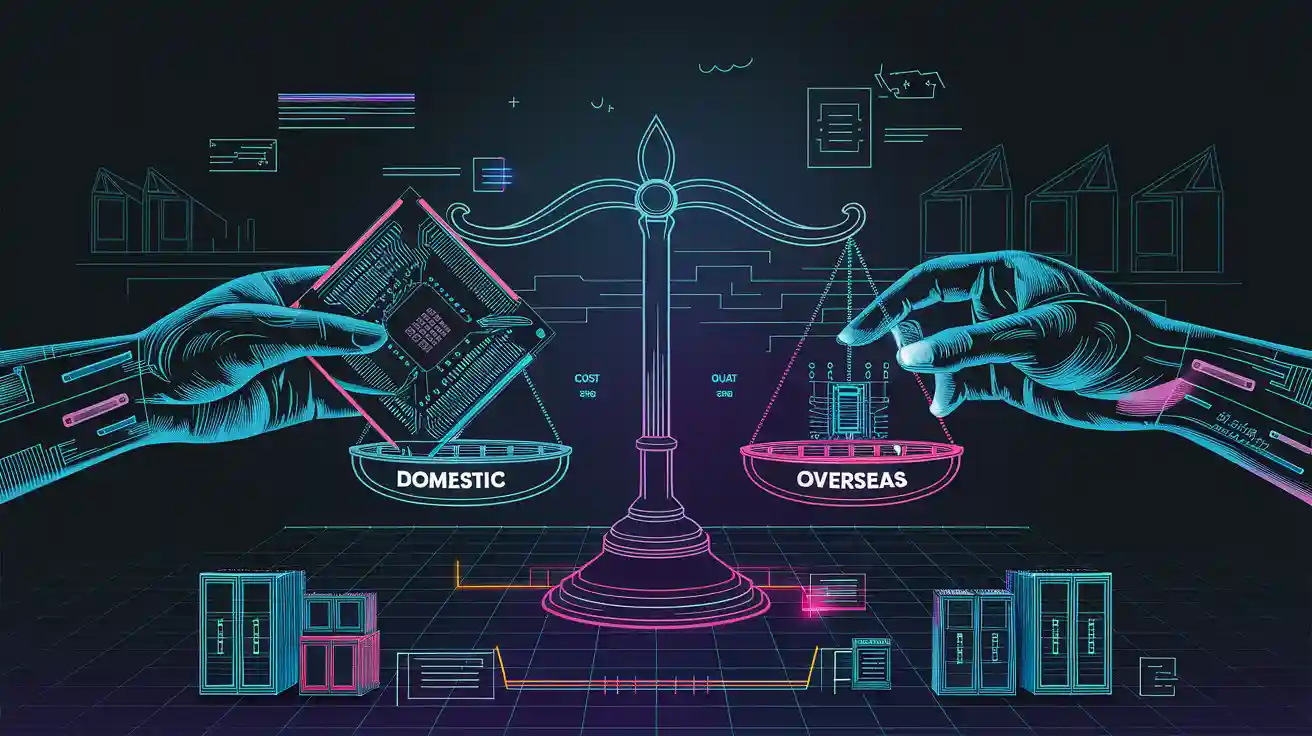
Choosing between domestic vs overseas PCB assemblers depends on your priorities such as cost, lead time, quality, or risk management. Domestic PCB assemblers offer better local communication and faster lead times, which is ideal if you need quick changes or close oversight. On the other hand, overseas PCB assemblers, like those based in China, often provide lower costs and can handle large volume orders. For instance, a product priced at $20 locally might only cost $4 when assembled overseas. However, working with overseas PCB assemblers requires careful risk management, including sharing only essential data. The table below highlights key differences between domestic vs overseas PCB assemblers:
|
Aspect |
Domestic |
Overseas (China) |
|---|---|---|
|
Labor Cost |
Higher |
Lower |
|
Lead Time |
Shorter |
Longer |
|
Risk Management |
Local support |
Data control |
Ultimately, choosing between domestic vs overseas PCB assemblers depends on your project needs—whether you prioritize fast prototyping, high volume production, or strong intellectual property protection. Both domestic and overseas PCB assemblers have unique advantages suited for different scenarios.
Key Takeaways
-
Domestic PCB assemblers work faster. They are easier to talk to. You can watch quality and IP better with them.
-
Overseas PCB assemblers cost less. They can make many boards at once. But they may take longer. There can be more risks too.
-
The total cost is not just the board price. You must think about shipping, testing, fixing, and delays when picking an assembler.
-
Good quality checks and strong certifications help make sure PCB assembly is reliable. This is true for both domestic and overseas.
-
Pick domestic assembly for prototypes, small batches, or strong IP needs. Pick overseas for big orders and saving money.
PCB Assembly Overview
What Is PCB Assembly
PCB assembly means turning a plain printed circuit board into a working device. You begin with a blank pcb. Then, you add parts like resistors, capacitors, and chips. A pcb assembly factory uses machines and workers to put these parts on the board. There are two main ways to attach parts. Surface Mount Technology (SMT) puts small parts on top of the pcb. Through-Hole Technology (THT) puts part leads through holes and solders them underneath.
A normal pcb assembly has several steps:
-
Machines place parts on the board
-
Soldering happens with reflow ovens for SMT or wave soldering for THT
-
Cleaning removes leftover flux
-
A coating is added to protect the board
-
Testing checks the board with special machines and tests
Tip: If you follow Design for Assembly (DFA) and Design for Manufacturability (DFM) rules, you can avoid mistakes and make assembly easier.
A pcb assembly factory can also fix boards by resoldering or changing parts. They clean the boards again before packing them. Industry standards like IPC-A-610 and IPC-J-STD-001 set rules for quality and reliability in pcb assembly services.
Why Location Matters
Where your pcb assembly factory is located can really affect your project. If you pick a local pcb assembly partner, you get faster talks and shipping. You can fix problems quickly and make changes without waiting long. If you use an overseas pcb assembly factory, you might pay less, but shipping takes longer and customs can slow things down.
Shipping time depends on how far away your pcb assembly factory is and how fast the shipping is. Customs checks can also cause delays. Good talks with your pcb assembly services provider help you avoid mistakes and keep your project moving. Location matters for speed and for how easy it is to visit the factory or fix problems in person.
Domestic vs Overseas PCB Assemblers
Domestic Assemblers: Pros
When you pick domestic pcb manufacturing, you get more control. Local companies let you talk to them easily and get quick answers. You can visit the factory and see how things are made. If there is a problem, you can fix it fast. Domestic pcb assembly is quicker, usually taking only 2-4 weeks. This means you get your products sooner. You also get good quality and strong rules to protect your ideas.
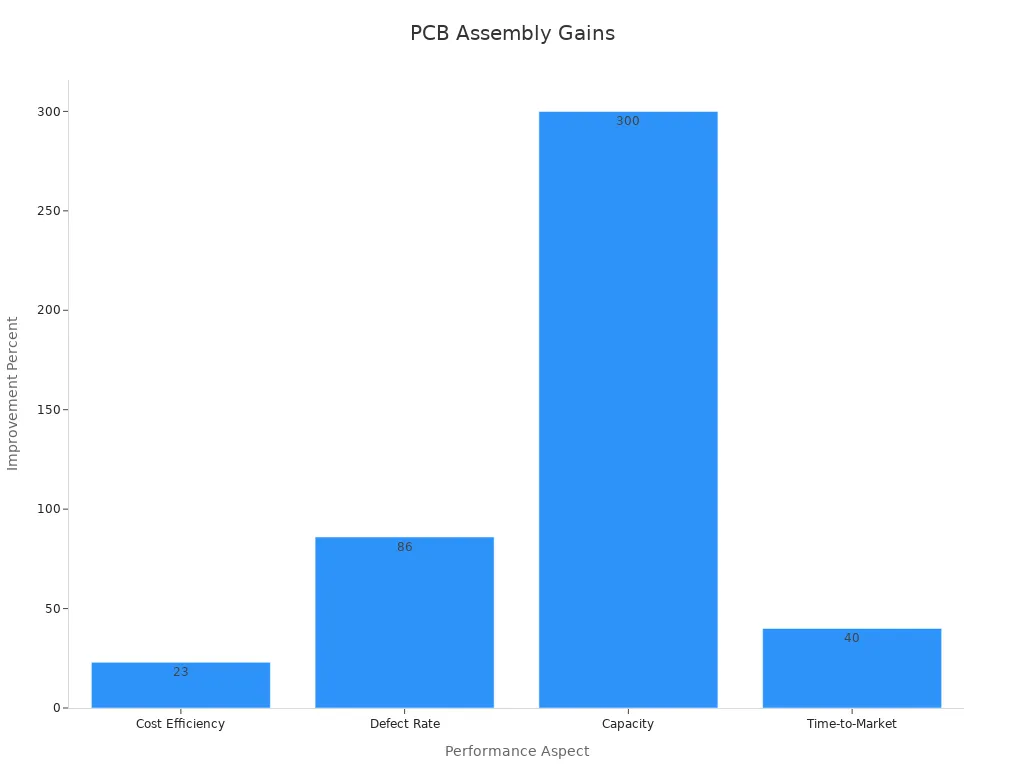
Many local pcb companies use turnkey assembly services. This means they do everything, from getting parts to testing the boards. You do not have to worry about hidden costs. You can save money over time. For example, a company called TechInnovate made their lead time shorter, from 10-12 weeks to 4-5 weeks. They also had fewer mistakes, going from 3.5% to less than 0.5%. Their costs went down by 23%. They got their product to market 40% faster.
You also get these good things:
-
Teams with lots of experience help you make your design better.
-
Good supply chain partners mean you get better prices and parts.
-
Quality checks use certifications like ISO 9001 and IPC standards.
-
Local help makes it easy to rush orders or change designs.
-
You can save more money if you order more boards.
Note: Domestic pcb manufacturing gives you more choices and control. This is great for testing new ideas or when you need fast changes.
Domestic Assemblers: Cons
Domestic manufacturing has some problems you should know about. The price for each board is higher than overseas pcb assembly. Labor costs and strict rules make it cost more. Sometimes, you might wait longer if parts are out of stock or not made anymore. This can slow down your project and make it cost more.
Some common problems in domestic pcb assembly are:
-
Soldering mistakes like cold joints or solder bridges can make boards fail.
-
Parts put too close or in the wrong way make assembly harder.
-
Boards can bend, which can break the pcb and ruin your project.
-
Bad design can cause electrical noise and hurt how the board works.
You might also have trouble if important parts are not available. If parts are not made anymore, they can be expensive and not work well. You may have to change your pcb or find new parts. These problems can make your project cost more and take longer.
Overseas Assemblers: Pros
Overseas pcb assembly, like in China, saves you a lot of money. You pay less for workers, and factories can make lots of boards at once. These companies use new machines and work all day and night. They finish big jobs fast. You can also get many kinds of parts and expert help.
Here are some main benefits:
-
Lower labor costs because of buying in bulk and smart machines.
-
Supply chains that work together help lower shipping and storage costs.
-
Fast SMT lines and machines check boards quickly.
-
Special engineers help with design and finding parts.
-
Overseas pcb assembly companies can make many types and sizes of orders.
-
Big orders get done fast because of good planning.
-
Quality systems and certifications help keep standards high.
Tip: Overseas pcb assembly is best when you need to make a lot of boards and want to save money.
Overseas Assemblers: Cons
Offshore pcb assembly has some risks you need to watch out for. It can be hard to talk to people because of language and time differences. It takes longer, often 8-12 weeks, so your project can be late. You might get more mistakes because you cannot watch the process closely. Quality can change from one company to another, and you have less control over checks and fixes.
Here is a table comparing key differences:
|
Aspect |
Domestic (U.S.) PCB Assemblers |
Overseas (China) PCB Assemblers |
|---|---|---|
|
Intellectual Property Risk |
Strong legal protections, secure environment for trade secrets |
Risk of trade secret theft, improving but enforcement challenges |
|
Communication |
Easier communication, aligned time zones, English language |
Language barriers, time zone differences causing delays |
|
Oversight & Quality Control |
Consistent, rigorous quality control processes |
Improved quality control but more variability among manufacturers |
|
Legal & Regulatory |
Strong IP protection and enforcement |
IP protection improving but enforcement inconsistent |
|
Environmental Regulations |
Strict regulations, cleaner processes, higher costs |
Stricter regulations emerging but enforcement varies |
|
Worker Safety & Labor Laws |
Strict labor laws, OSHA regulations ensuring safety |
Labor laws improving but enforcement varies |
|
Supply Chain Vulnerability |
Lower disruption risk, better visibility and control |
Higher disruption risk due to geopolitical, logistical factors |
Offshore supply chains can have problems from world events, disasters, or worker issues. You might also pay extra for fixing mistakes, fast shipping, or tariffs. Quality checks can be hard, especially with small overseas pcb assembly companies. They may not meet world standards. You also need to protect your ideas, as rules are not always followed.
Callout: If you need to test ideas fast, protect your ideas, or watch the process closely, domestic pcb manufacturing is better. If you want to make lots of boards and save money, overseas pcb assembly is a good choice.
Cost Considerations
Cost Factors
When you think about PCB assembly, you need to know what affects the price. Companies have different ways to set prices. Some charge for each part, some for time and materials, and some give one price for everything. Each way works best for different jobs. Per-part pricing is good for small orders. Turnkey pricing is better for big orders.
You should split the price into smaller parts:
-
Fees for setting up machines and programs
-
Putting parts on the board and soldering
-
Paying workers and technicians
-
Checking and testing the boards
-
Packing and shipping the boards
A normal cost plan has charges for engineering, stencils, cutting boards, SMT pick and place, and through-hole assembly. Materials are the biggest part of the cost, about 60-80%. Labor is about 5-10%. Factory costs add another 3-5%. You can use a simple formula:SMT Assembly Cost = (PCB + Components) + (Setup + Placement + Labor) + Other Costs
Hidden Costs
Sometimes the price looks low, but extra costs can show up. Quality checks like looking at the board, using special cameras, and X-rays all cost more. Testing, like in-circuit and functional tests, makes sure the boards work but adds to the price. DFM checks help stop mistakes before building starts.
|
Hidden Cost Category |
Description |
|---|---|
|
Visual Inspection |
Looks for easy-to-see problems. |
|
AOI & X-ray |
Finds hidden problems in solder and parts. |
|
Functional Testing |
Checks if the board works like it should. |
|
Rework and Repairs |
Fixes boards that do not pass tests. |
|
Project Management |
Pays for planning and making sure quality is good. |
Other extra costs can be fixing boards, special coatings, and shipping. If you need special tests or fast orders, the price can go up quickly.
Shipping and Lead Time
Shipping and how long it takes to get your boards are important for the total price. Domestic assembly is faster and shipping costs less. You get your boards sooner and can fix problems quickly. Overseas assembly takes longer because of distance and customs. Delays can happen, and you might pay more for fast shipping or fixing problems.
For small jobs, domestic assembly can save money because you skip high shipping and extra costs. For big jobs, overseas assembly can be cheaper, but you need to plan for longer waits and possible problems.
Tip: Always check the total cost, not just the price for each board. Think about shipping, wait time, extra costs, and the chance of delays or problems when you decide.
Quality and Risk
Quality Control
You want your PCB assembly to be very good. Quality control starts with picking the right parts and checking them first. Look for companies that follow rules like ISO 9001, ISO 13485, and IPC-A-610. These rules help keep quality high and make sure boards work right.
Many factories use machines like AOI and X-ray to check for problems. These machines find mistakes early and help you save money. People also look at the boards and test them to make sure they work. Certified inspectors check if boards meet all the rules. Quality control steps include things like: 1. Checking your design to see if it is easy to build. 2. Using machines to find problems. 3. Testing how the board works. 4. Keeping records to help fix problems later.
A good assembly partner uses process control methods like SPC to watch quality. IPC rules like IPC-4552A and IPC-6012 set standards for things like plating and testing. Workers should get training often and learn new ways to keep quality high.
IP Protection
It is important to keep your ideas safe in PCB assembly. You can lower risk by working with local partners. Local assembly lets you visit the factory and watch your design. Many companies use patents and trade secrets to protect their technology. You should also use NDAs and contracts with your partners and workers.
Some companies use IP monitoring to watch for new patents and trademarks. Licensing agreements help control who can use your technology. You can send letters to stop others from copying your work. Making your boards close to home helps keep your designs safe. This way, you get better quality control and can fix problems faster.
Timing and Delays
Timing is important in PCB assembly. Delays can happen if parts are missing, designs change, or shipping is slow. You can stop delays by planning ahead and talking to your supplier early. Good communication helps you find problems before they get big.
A real example shows how planning helps. InduControl Electronics talked to suppliers early and used strong quality checks. They made lead times 30% shorter. Their on-time delivery went from 85% to 97%. You can avoid delays by: - Checking your design for easy assembly. - Making sure parts are ready before you start. - Planning for enough space to build boards. - Using clear quality checks. - Talking often with your assembly partner.
Managing timing and delays saves money and helps you deliver good products on time.
Decision Guide
Prototyping and Small Batches
If you are making prototypes or small batches, local manufacturing is fast and flexible. You can get your boards in 5-10 business days. Companies like South-Electronic and JarnisTech follow strong quality rules like ISO9001 and IPC-A-610. You can pick SMT or THT assembly for special or tricky designs. Local partners help you change things quickly and control your supply chain. This is helpful when you need to test ideas or fix problems fast.
|
Production Type |
Volume Range |
Key Features |
Best Fit |
|---|---|---|---|
|
Small, high variety |
Manual, flexible, handles complex designs |
Domestic manufacturing |
|
|
Small Batch / High-Mix |
Small to mid |
Agile, custom requests, mid-production changes |
Domestic manufacturing |
Tip: For prototypes and small batches, local manufacturing helps you save money and get good quality.
High Volume Production
If you need lots of boards, overseas assembly is often better. Big factories use smart machines and check quality with AOI and X-ray. Companies like NextPCB and PCBasic have ISO 9001 and IATF 16949 certifications. These rules help keep quality high for big orders. Overseas lines can make thousands of boards at once, so each board costs less. You also get help with shipping and technical support.
-
Overseas assembly uses machines for mass production.
-
Quality checks include electrical and working tests.
-
Certifications help make sure boards work for cars and other uses.
Note: If you need many boards, overseas assembly is cheaper and has strong quality checks.
Regulatory and IP Needs
You should think about rules and IP when picking an assembly partner. Local manufacturing often meets strict rules like ISO 9001 and AS9100. These certifications show they care about safety and quality. Local partners follow rules like RoHS, which keeps out bad materials. They keep good records and track every part. This helps protect your designs and makes fixing problems easier.
-
Certifications like AS9100 are important for planes and defense.
-
Regular checks keep quality high.
-
Good records and tracking help protect your IP.
Callout: If you need to follow strict rules or keep your ideas safe, local manufacturing is the best choice.
You have to make big choices when picking a PCB assembler. If you pick a domestic company, you get your boards faster. Talking to them is easier and you can check quality better. Overseas factories cost less and can make lots of boards at once. The table below shows how they are different:
|
Factor |
Domestic PCB Assembly |
Overseas PCB Assembly |
|---|---|---|
|
Cost |
Higher per unit |
Lower at high volumes |
|
Lead Time |
2-6 weeks or more |
|
|
Quality Control |
Consistent, transparent |
Can vary |
|
Communication |
Easy, fast feedback |
More challenges |
Tip: Think about what matters most for your project. Do you need things fast, want to save money, or care most about quality? Write down what you need and compare before you decide.
FAQ
What is the main reason to choose a domestic PCB assembler?
You can talk to local companies faster. You have more control over your project. You can visit the factory if you need to. Problems get fixed quickly. Local companies follow strict rules for safety and quality.
How can you protect your design when using overseas assemblers?
You should use NDAs to keep your design safe. Only give the files needed for assembly. Pick partners with good reviews and strong security rules. You can split your design into smaller parts to lower risk.
Does overseas assembly always save you money?
No, it does not always save money. You might pay more for shipping or customs. Fixing mistakes can cost extra. Delays can also make things cost more. Always look at the total cost, not just the board price.
Can you get high quality from overseas PCB assemblers?
-
Yes, many overseas factories use new machines and follow world standards.
-
You should check if they have certifications like ISO 9001.
-
Ask for samples before you order a lot of boards.