The Evolution of PCB Assembly Manufacturers from Manual to Smart Factory Technologies
PCB assembly manufacturers are changing how they work. They are moving from manual work to smart manufacturing. In the pcb industry, this helps meet the need for more accuracy and speed in printed circuit board assembly.
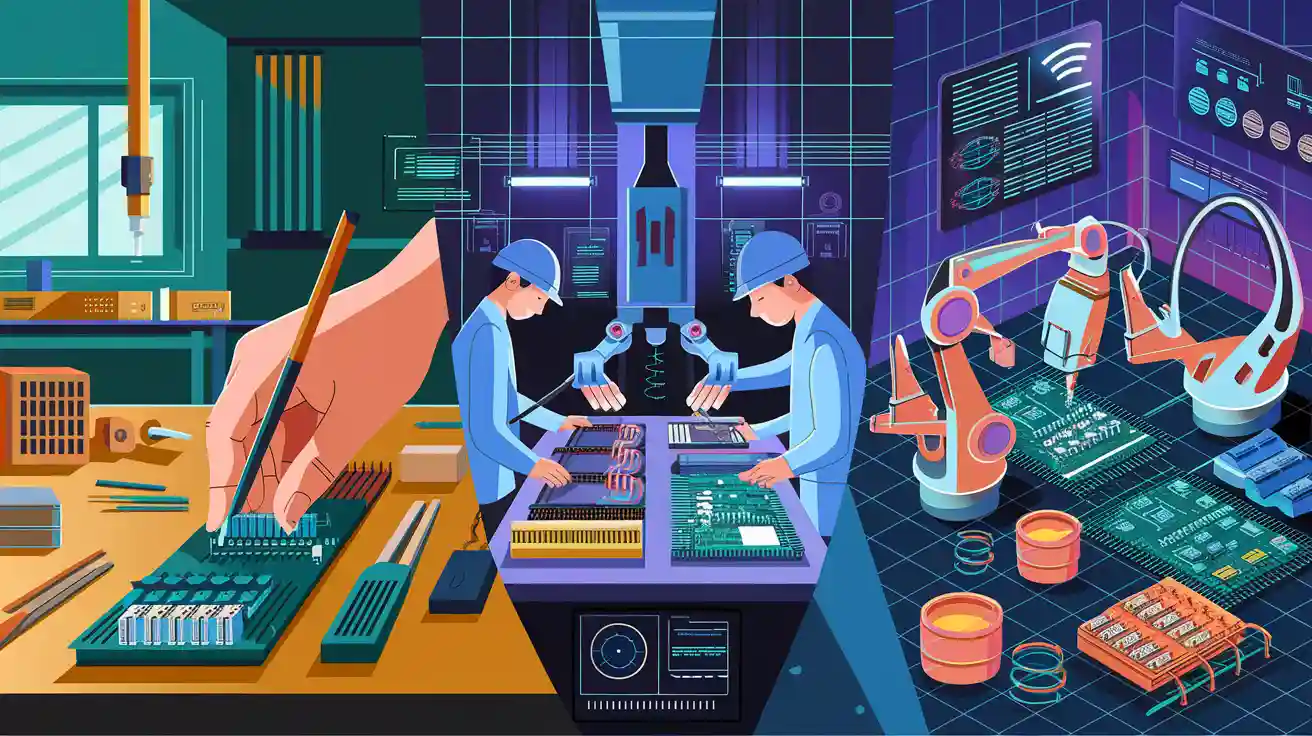
PCB assembly manufacturers are changing how they work. They are moving from manual work to smart manufacturing. In the pcb industry, this helps meet the need for more accuracy and speed in printed circuit board assembly. Automation, AI, and connected systems help pcba processes. They give real-time tracking and can predict when machines need fixing. Recent studies show IoT-driven manufacturing can reduce equipment breakdowns by 69%. It can also lower maintenance costs by 24%. When manufacturers use pcba automation, they work faster and make fewer mistakes. They also create new ideas. These changes are making pcb assembly smarter and more competitive.
Key Takeaways
-
PCB assembly used to be slow and done by hand. Now, smart factories use machines and AI to work faster and better.
-
Automation tools like pick-and-place machines help make things quicker. CAD/CAM software also helps and makes fewer mistakes.
-
Smart manufacturing uses robots, AI, and IIoT to make better products. It also helps save money and lets factories change easily.
-
There are some problems, like high costs to start. There are not enough skilled workers. Factories also need to connect systems and keep data safe.
-
In the future, factories will use better ways to make things. They will use digital twins and care more about the environment. Smart factories around the world will work together.
Industry Evolution
Manual PCB Assembly
At first, people made each pcb board assembly by hand. Workers put parts on printed circuit boards and soldered them one at a time. This job needed skilled workers who paid close attention. Back then, the pcb industry mostly served the military and factories. In 1948, the United States saw that printed circuit board assembly could be used for business. This started big pcb manufacturing. In the 1950s, electronics changed from vacuum tubes to transistors. This made devices smaller and more dependable. These changes helped pcb assembly manufacturers grow.
Note: Manual assembly was slow and could not keep up with the need for more complex electronics.
Early Automation
As technology got better, manufacturers started using machines for pcb board assembly. Machines did jobs like placing and soldering parts over and over. Early automation made products better and more alike. People checked for problems by looking, using X-rays, and using automated optical inspection (AOI). They also did electrical tests like continuity and in-circuit testing to make sure things worked. These steps cut down on mistakes and made more good boards. Data from checks helped improve the process and waste less. Automation let pcb manufacturing grow and change to fit what was needed.
-
Early automation helped by:
-
Making the process more dependable
-
Saving money by wasting less
-
Changing easily for new jobs
Rise of PCB Assembly Manufacturers
Big changes in pcb manufacturing led to more pcb assembly manufacturers. In 1958, integrated circuits were invented. In the 1960s, multilayer pcbs were made in large numbers. These things made boards more packed and complicated. In the 1970s and 1980s, surface mount technology and computer-aided design made work faster and better. Because of this, more companies started making pcbs. Flexible pcbs, high-density interconnect boards, and machines like autoplacers helped the market grow. By the mid-2020s, flexible pcbs will be about one-third of all printed circuit boards. This shows that people want better pcb board assembly and that automation is very important in pcb manufacturing.
|
Period/Year |
Innovation/Event |
Impact/Trend |
|---|---|---|
|
1948 |
PCB recognized commercially in the US |
Start of large-scale PCB commercialization, initially for military use |
|
1950s |
Transition from vacuum tubes to transistors; single-sided and double-sided PCBs developed |
Enabled smaller, more reliable electronics; foundation for PCB industry growth |
|
1958 |
Invention of integrated circuits by Noyce and Kilby |
Microelectronics era begins, increasing PCB importance |
|
1960s |
Multilayer PCBs (4+ layers) mass-produced; plated through-hole technology |
Increased wiring density and complexity |
|
1970s |
Rapid multilayer PCB development with high precision, density, automation |
Adaptation to Moore's Law; manual PCB design still prevalent |
|
1980s |
Introduction of Surface Mount Technology (SMT); advent of CAD software |
Shift from through-hole to SMT; improved design efficiency and manufacturing speed; emergence of quick-turn PCB factories |
|
1990s |
Maturity of PCB industry; innovations like BGA packaging, HDI PCBs, flexible PCBs |
Higher integration and complexity; new packaging and interconnection methods |
|
Early 2000s |
Line width/spacing improvements from 5-6 mils to 3.5-4.5 mils; smaller, more complex PCBs |
Enhanced miniaturization and density |
|
2006 |
Development of Every Layer Interconnect (ELIC) process |
Increased interconnect density and design flexibility |
Automation in PCB Assembly
Pick-and-Place Machines
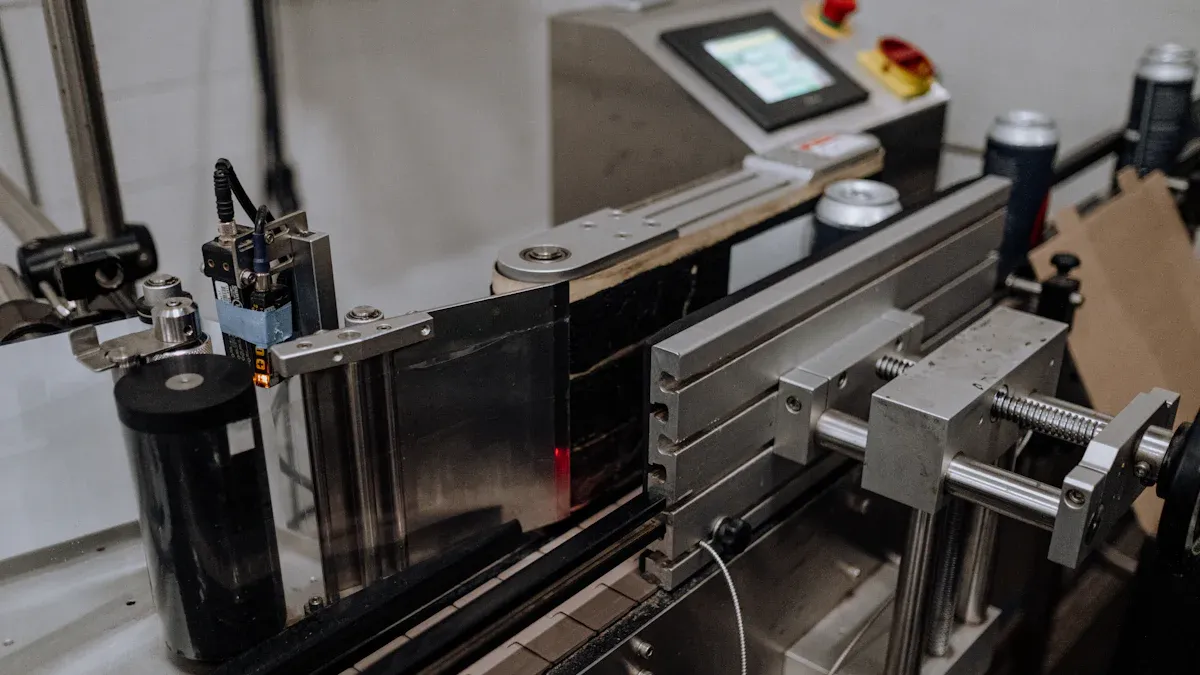
Pick-and-place machines are very important for automation in pcb assembly. These machines use vacuum heads to grab parts and put them on the pcb board assembly. They work fast and are very accurate. Some can place thousands of parts every hour. They have special cameras that check if each part is in the right spot. This helps stop mistakes and makes the boards better.
-
Pick-and-place machines put parts on boards by themselves. This makes assembly faster and lets more boards get made.
-
Cameras help make sure parts go in the right place. This means there are fewer mistakes and better products.
-
These machines work with surface-mount technology. This lets more parts fit on a board and allows for harder pcb board assembly designs.
-
You can program these machines to change jobs quickly. This helps make custom boards and switch between designs without waiting long.
-
AI and machine learning help the machines work smarter. They find the best way to place parts and learn new designs faster.
Pick-and-place machines have made pcb manufacturing faster and cheaper. They take away the need for people to put parts and drill holes by hand. This helps companies keep up with the need for smaller and more detailed pcba.
CAD/CAM Software
CAD and CAM software are very important for automation in pcb assembly. Designers use CAD to make detailed plans for pcb board assembly. CAM software turns these plans into steps for machines to follow. This takes away many jobs people used to do by hand. It also helps stop mistakes.
CAD/CAM software lets people change designs quickly. Manufacturers can update plans and send new steps to machines fast. They do not have to stop making boards for a long time. This helps make custom pcba and short runs easier. The software also helps when moving from single-layer to multilayer boards. As boards get harder, CAD/CAM tools make sure all layers match and connect right.
Note: CAD/CAM software makes designs more accurate, helps change them faster, and supports automation in making modern electronics.
Surface Mount Technology
Surface mount technology, or SMT, is now common in pcb assembly. SMT lets companies put parts right on top of the pcb. They do not have to put them through holes. This lets more parts fit and makes devices smaller and lighter.
SMT works well with machines. Pick-and-place machines can move tiny SMT parts quickly and carefully. This lets companies make hard multilayer pcb board assembly. It also helps make electronics smaller. SMT means less drilling, which saves time and money.
Companies use SMT to make many kinds of pcba. These range from simple gadgets to medical and aerospace devices. Moving to SMT and using machines has helped the pcb industry make faster, better, and more complex products.
Tip: Using automation in pcb assembly, especially with SMT, helps companies keep up with new technology and what customers want.
Smart Manufacturing Technologies
Robotics in PCBA
Robotics are now very important in smart manufacturing for pcba. These machines do the same jobs over and over with speed and care. In many factories, robots move parts and use pick-and-place machines. They also help with soldering jobs. Robotics lower mistakes made by people and make work safer. They let factories run longer without stopping for breaks.
Many companies use robots and automation to work better. Robots can handle tiny and fragile parts that are hard for people. This makes pcb assembly more dependable. Smart factories use robots to keep up with new and harder pcb designs. Robotics help companies change quickly when orders or products change.
Tip: Robotics help factories make more products and keep quality the same.
AI and Data Analytics
Artificial intelligence and data analytics help smart manufacturing 4.0 in pcba. AI looks at lots of data from machines and sensors. These systems find patterns and can warn about problems before they happen. For example, AI can tell workers when a pick-and-place machine needs fixing. This means less time stopped and smoother work.
Data analytics let companies watch every step of making pcba. They can see which machines work best and where mistakes happen. This helps them make better choices and fix problems faster. Artificial intelligence also checks for defects as boards are made. AI systems learn from old data and get better over time.
-
AI and data analytics give:
-
Faster ways to find problems
-
Better product quality
-
Lower costs from fewer errors
-
IIoT Integration
The Industrial Internet of Things, or IIoT, links machines, sensors, and computers in smart factories. IIoT lets devices share data right away across the factory. Each machine sends updates about how it is working and what it is making. This helps companies watch the whole pcba process from start to finish.
IIoT connects tools like pick-and-place machines, ovens, and inspection gear. Workers can see live updates and act fast if something changes. IIoT also helps with fixing machines before they break. Machines send alerts when they need care, which stops breakdowns and saves money.
Note: IIoT is a big part of smart manufacturing 4.0. It helps companies make better choices and work more efficiently.
Automated Inspection
Automated inspection systems have changed how companies check quality in pcba. These systems use cameras, sensors, and software to look for problems on every board. Automated inspection finds small mistakes that people might not see, like tiny soldering errors or parts in the wrong place.
Companies trust automated inspection to make sure each pcb is made right. These systems work fast and never get tired. They give detailed reports and help spot trends in mistakes. Automated inspection makes quality checks quicker and more exact.
|
Inspection Method |
Benefits |
Example Use Case |
|---|---|---|
|
Automated Optical |
Fast, finds visual defects |
Solder joint inspection |
|
X-ray |
Sees hidden faults |
BGA package checking |
|
In-circuit Testing |
Checks electrical connections |
Final board testing |
Automated inspection, along with robotics and AI, gives companies strong tools. They can make high-quality pcba products and waste less.
Automated quality checks make sure every product meets what customers and the industry want.
Benefits for PCB Assembly Manufacturers
Precision and Quality
PCB assembly manufacturers now do work with more accuracy. Machines put parts in the right place every time. Automated inspection systems find even tiny problems. These changes mean there are fewer mistakes and better products. Automation gives the same good results each time. Products are reliable and meet tough industry rules.
Speed and Throughput
Modern factories use fast machines to work quicker. Pick-and-place robots move faster than people can. They put together thousands of parts every hour. This makes production more efficient. Companies can finish big orders in less time. Automation also means shorter wait times for customers. Faster work helps companies stay ahead of others.
Cost and Efficiency
Automation helps save money in many ways. Machines use materials wisely and waste less. Fewer mistakes mean less fixing and less trash. Energy-saving machines lower power bills. These changes make the whole factory work better. Companies spend less on workers and repairs. Automation lets businesses give customers better prices.
Note: Better efficiency means companies make more money and waste less on each pcb.
Flexibility
Smart factories can handle new designs easily. Workers can change machine programs for different pcb layouts. This makes it easy to fill special orders. Manufacturers can switch between products quickly. Flexible systems work for both small and big jobs. Companies can react fast to what customers want.
|
Benefit |
Impact on Manufacturers |
|---|---|
|
Precision |
Fewer defects, better quality |
|
Speed |
Faster delivery, more output |
|
Cost/Efficiency |
Lower expenses, higher profit |
|
Flexibility |
Quick changeovers, adaptability |
Challenges in Smart Manufacturing
Investment Barriers
Smart manufacturing in PCB assembly has many problems. Companies spend a lot to get new systems. They need to buy advanced machines and AI tools. These machines are very expensive. Many factories use imported materials that can run out. If supplies are low, this causes problems. Some companies only buy from a few suppliers. This makes it hard to upgrade and limits what they can pick.
-
When materials like copper are short or cost more, prices go up.
-
Skilled engineers get paid more each year, about 15-20% higher.
-
It takes 2-3 years to train new designers, so companies spend more on people.
-
Technology changes fast, so machines can get old quickly.
Manufacturers use forward contracts or hedging to control price risks. They also try to use different technologies and find new customers to stay strong.
Skills Gap
Automation and smart manufacturing need workers with special skills. There are not enough high-frequency PCB design engineers in the world. About 15,000-20,000 are needed. Companies must spend money on training programs. These programs take years to help. Because of salary competition, it is hard to keep skilled workers. Without enough trained people, factories cannot use new automation tools well.
Note: Having a skilled team is very important for smart manufacturing to work.
System Integration
Factories have to connect many machines and software. This is not easy. Old machines may not work with new automation tools. Companies must update both hardware and software. If systems do not connect, factories lose efficiency. They also cannot track data right away. Good integration helps factories use automation better and improve how they make things.
Data Security
Smart manufacturing uses connected systems and shares data on networks. This can lead to data leaks or cyberattacks. Companies must keep their designs and customer information safe. Strong security systems and updates help protect data. Factories must teach workers to spot threats and follow safety rules.
Protecting data is just as important as making factories work better today.
PCBA Applications
Consumer Electronics
PCBA is very important in consumer electronics. Devices like smartphones and tablets need advanced pcba to work well. These products are getting more popular every year. In 2023, the global PCB market was worth $75.30 billion. Experts think it will grow to $96.45 billion by 2030. This means it will grow about 3.6% each year. Countries like China, Japan, and South Korea make and use the most. Companies there have skilled workers and good factories.
|
Aspect |
Details |
|---|---|
|
Market Size (2023) |
USD 75.30 Billion |
|
Market Size Forecast (2030) |
USD 96.45 Billion |
|
CAGR (2024-2030) |
3.6% |
|
Key Applications |
Consumer Electronics, Computers, Communications |
PCBA helps make devices smaller and smarter. Companies use automation to keep up with demand and quality rules.
Automotive
The automotive industry needs pcba for many car systems. Cars use pcba in engine controls and airbags. They also use it in entertainment screens. Electric and self-driving cars need even more advanced pcba. Reports show that cars help the PCB market grow. Companies want their boards to last because cars face tough conditions.
Automotive pcba must work with shaking, heat, and wetness. Companies test every board to make sure it is safe and works well.
Medical Devices
Medical devices need pcba that is very accurate and reliable. Heart monitors and imaging machines use pcba to work right. Portable health tools also use pcba. The medical field has strict rules for quality and tracking. Automated checks and data help meet these rules. As health technology gets better, more medical devices use pcba.
-
PCBA in medical devices helps with:
-
Watching patients
-
Taking pictures inside the body
-
Portable health tools
-
Aerospace
Aerospace uses the toughest pcba standards. Planes, satellites, and defense systems need pcba for important jobs. These boards must survive very hot and cold places and radiation. Companies use special materials and hard tests to make sure they work. Aerospace often tries new pcba technology first.
|
Application |
Requirement |
|---|---|
|
Aircraft Controls |
High reliability |
|
Satellites |
Radiation resistance |
|
Defense Systems |
Secure and robust design |
PCBA helps new ideas in every industry. Automation in real life lets companies make safe and high-quality products.
Future of PCB Assembly
Advanced Fabrication
Advanced fabrication is changing how companies make printed circuit boards. Additive manufacturing, or 3D printing, builds PCBs one layer at a time. This way, companies waste less and save money. It also lets them make designs that were too hard before. Companies use high-frequency materials for 5G and fast data. These materials help with new communication systems. Automation and robotics make the work more exact and easy to grow. Smart manufacturing uses AI to spot equipment problems early and keep quality high. These changes help pcb manufacturing stay ready for new problems.
Digital Twins
Digital twins are computer models of real machines and how they work. In smart factories, engineers use digital twins to test ideas before changing real machines. This helps find problems early and saves time. AI and live data make digital twins even better. They help companies plan well and avoid big mistakes. Digital twins help make pcb assembly more flexible and quick to change.
Digital twins let teams see what will happen if they change something, without stopping real machines.
Green Manufacturing
Green manufacturing is now very important for many companies. Factories use less energy and recycle more things. Additive manufacturing uses only what is needed, so there is less waste. Smart manufacturing checks energy use and finds ways to save power. Companies pick safer chemicals and try to lower pollution. These steps help the planet and follow new clean rules.
|
Green Practice |
Benefit |
|---|---|
|
Energy monitoring |
Uses less power |
|
Material recycling |
Makes less waste |
|
Safer chemicals |
Safer for workers |
Global Trends
Global trends are changing pcb manufacturing. Companies use smart manufacturing to handle tricky supply chains. AI helps guess what people will need and keeps track of parts. This makes work faster and stops delays. IoT, AI, and 5G make factories need to be quicker and smarter. Industry leaders think smart manufacturing is the best way to stay ahead. They spend money on new tools and train workers to keep up.
-
Advanced fabrication and automation help make new products.
-
Digital twins and AI make planning and quality better.
-
Green manufacturing helps meet world rules for clean work.
-
Smart manufacturing links factories everywhere for better results.
PCB assembly manufacturers used to do everything by hand. Now, they use smart manufacturing to make things better. This change helps them make pcba faster and with higher quality. Companies that use automation can stay ahead of others. They need to learn about new trends and teach workers about new tools. Having a good plan helps them update pcba steps and get ready for the future.
FAQ
What is the main benefit of smart manufacturing in PCB assembly?
Smart manufacturing helps companies work faster and better. Machines put parts on boards quickly. They also check for mistakes right away. This means companies make more boards with fewer errors. It helps them do well against other companies.
How does automation affect PCB assembly costs?
Automation helps companies spend less money. Machines use just the right amount of materials. There are fewer mistakes, so less fixing is needed. Companies save money and can give lower prices to customers.
Why do PCB assembly manufacturers use automated inspection?
Automated inspection finds tiny problems people may not see. Cameras and sensors look at every board. This makes sure each board is good and follows the rules.
What skills do workers need in a smart factory?
Workers need to know about robots and computers. They must learn how to program machines. They also need to solve problems with technology. Training helps them keep up with new tools.
How does green manufacturing help PCB assembly?
Green manufacturing helps by making less trash and saving energy. Factories recycle and use safer chemicals. This keeps the planet safe and follows world rules.
Tip: Companies that use green ways often earn trust from customers and follow strict rules.