Exploring LM317T Voltage Regulators for Adjustable Power Solutions
LM317T voltage regulators let people pick their own output voltages for many electronics projects. These devices work as an adjustable voltage regulator, so engineers can change the power for different needs.
LM317T voltage regulators let people pick their own output voltages for many electronics projects. These devices work as an adjustable voltage regulator, so engineers can change the power for different needs. LM317T voltage regulators are known for being useful and dependable in modern circuits. The LM317T voltage regulator works well, so many people use it when they need flexible voltage control.
Key Takeaways
-
The LM317T voltage regulator lets you pick any output voltage from 1.2V to 37V. This makes it useful for many different projects.
-
It can give a steady current over 1.5A. It also has built-in safety features like overheating and short circuit protection. These keep your circuits safe.
-
You can change the output voltage easily by changing two resistor values. There is a simple formula to help you get the voltage you want.
-
Good heat management, like using a heatsink, helps the LM317T work well. This also stops it from getting too hot and breaking.
-
The LM317T works well for making bench power supplies and battery chargers. It is also good for powering embedded systems with a steady, adjustable voltage.
LM317T Voltage Regulators
Overview
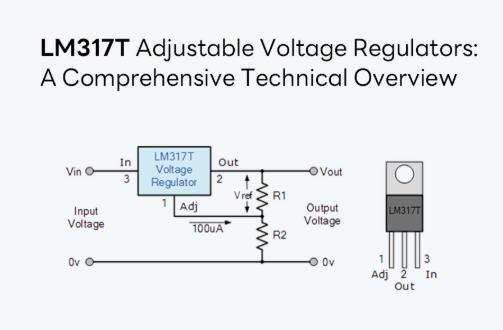
LM317T voltage regulators help set the output voltage in electronics. These regulators have three terminals. The terminals are input, output, and adjustment. This makes them simple to use in many circuits.
Many engineers pick LM317T voltage regulators for their flexibility. Fixed regulators like the LM7805 only give one voltage, such as 5V or 12V. The LM317T voltage regulator lets users choose any voltage in a wide range. This is great for projects that need different voltages.
The LM317T comes in a TO-220 package. This package helps keep the device cool. It also works well for high current uses. The output current can go above 1.5A. This supports power supplies and circuits that need more power.
Note: The LM317T voltage regulators can give from 1.2V to 37V. This wide range lets people power many devices with one regulator.
The LM317T voltage regulators use an internal reference voltage of 1.25V. This reference voltage stays steady. It helps keep the output voltage stable even if the input changes.
Adjustable Voltage Regulator
The LM317T works as an adjustable voltage regulator. Users can set the output voltage by changing two resistors. This makes it easy for beginners and experts to use.
Here is a table that lists the main features and functions of LM317T voltage regulators:
|
Feature |
Description |
|---|---|
|
Output Voltage Range |
1.2V to 37V |
|
Maximum Output Current |
Over 1.5A |
|
Package Type |
TO-220 |
|
Voltage Adjustment |
Set by two external resistors |
|
Internal Reference |
1.25V |
|
Application |
Power supplies, high current applications |
The output voltage depends on the two resistor values. The formula to set the output voltage is:
Vout = 1.25V × (1 + R2/R1)
This formula shows how easy it is to change the output voltage. LM317T voltage regulators help people make custom power supplies for many projects.
Technical Specs
Input and Output Range
The LM317T voltage regulator can use many input and output voltages. It takes input voltages from 3V up to 40V. You can set the output voltage from 1.2V to 37V. This makes it good for powering many devices. The device gives more than 1.5A of current. This helps with both small and big projects.
Dropout voltage is important for any voltage regulator. The LM317T usually has a dropout voltage of about 2V. This means the input voltage must be at least 2V higher than the output voltage you want. For example, if you need 5V out, the input should be at least 7V. The low dropout voltage regulator design helps save energy and make less heat.
Tip: Always check that the input voltage is above the dropout voltage. This helps keep the voltage steady and correct.
The LM317T does well with line regulation and load regulation. Line regulation shows how steady the output is when the input changes. Load regulation shows how steady the output is when the current changes. The LM317T keeps both line and load regulation tight. This helps give precise voltage for sensitive electronics.
Low Dropout Voltage Regulator
The LM317T is a low dropout voltage regulator. This means it works well even if the input and output voltages are close. Many fixed regulators need a bigger dropout voltage. That can waste more power and make more heat. The LM317T’s low dropout voltage regulator design saves energy and keeps it cooler.
Low noise is another good thing about the LM317T. The regulator makes little noise on the output. This is important for audio circuits and sensors. Low noise helps stop unwanted signals from hurting the circuit. Many engineers pick the LM317T for its low noise and steady output.
The device also gives great line regulation and load regulation. These help keep the output voltage steady, even if the input or load changes. The LM317T’s low dropout voltage regulator design, low noise, and strong regulation make it a top pick for many uses.
|
Feature |
LM317T |
Typical Fixed Regulator (e.g., 7805) |
|---|---|---|
|
Dropout Voltage |
~2V |
2V–2.5V |
|
Output Voltage Range |
1.2V–37V |
Fixed (e.g., 5V, 12V) |
|
Line Regulation |
Excellent |
Good |
|
Load Regulation |
Excellent |
Good |
|
Low Noise |
Yes |
Moderate |
Protection Features
The LM317T has built-in protection to keep circuits safe. One important feature is thermal overload protection. If the device gets too hot, it will turn off to stop damage. This helps the regulator and other parts last longer.
Short circuit protection is also important. If the output is shorted, the LM317T limits the current to stop harm. This makes the device reliable in many cases.
The LM317T keeps strong line regulation and load regulation, even under stress. These features help the regulator give precise voltage in real life. The device works well in many temperatures, which makes it more reliable.
Note: The LM317T’s built-in protection, low noise, and strong regulation make it a safe and dependable choice for adjustable power supplies.
Circuit Design
Configuration
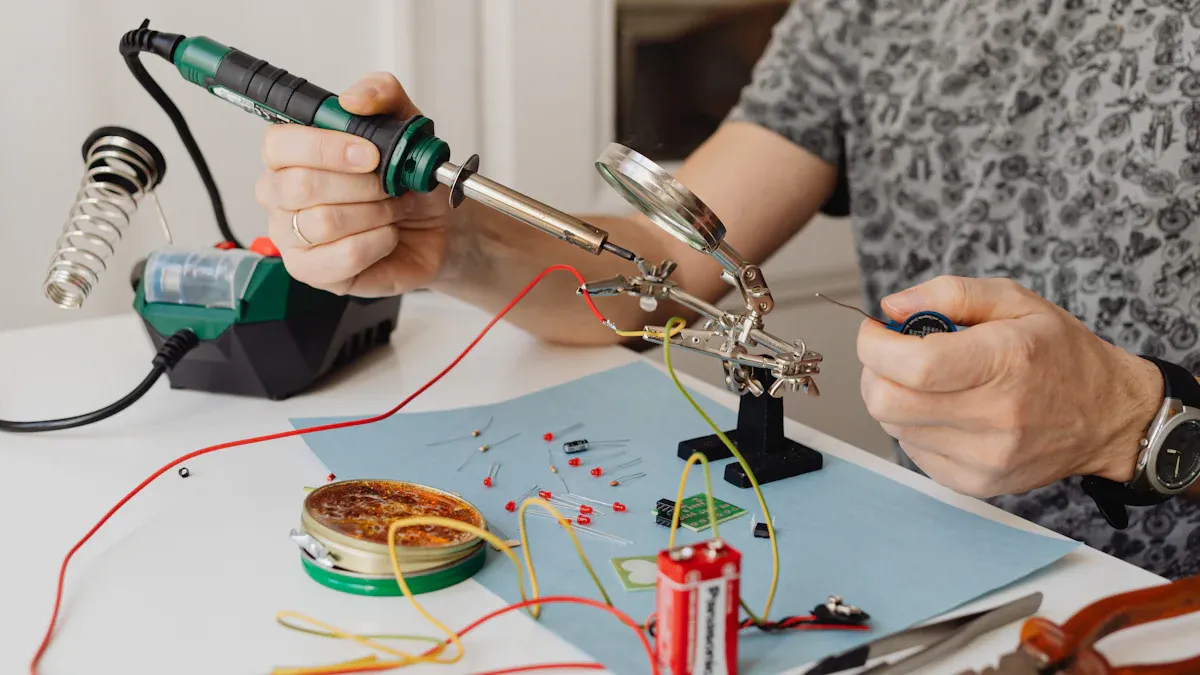
Setting up the LM317T for an adjustable output voltage is simple. The device uses three pins: input, output, and adjust. To build a basic circuit, connect the input pin to the power source. Attach the output pin to the load. The adjust pin connects to a resistor divider. This divider sets the output voltage.
Follow these steps to configure the LM317T:
-
Connect the input pin to a DC voltage source.
-
Attach the output pin to the device or circuit that needs power.
-
Place two resistors, R1 and R2, between the output, adjust, and ground pins.
-
Add a small capacitor (like 0.1µF) near the input and output pins to improve stability.
Tip: Always double-check the pinout before soldering the LM317T into a circuit.
Resistor Calculation
The LM317T uses two resistors to set the output voltage. The formula for voltage adjustment is:
Vout = 1.25V × (1 + R2/R1) + Iadj × R2
Here, Vout is the output voltage. R1 and R2 are the resistor values. Iadj is a small current (usually less than 100µA) and can often be ignored for most calculations. For most designs, use R1 = 240Ω. Adjust R2 to set the desired output voltage.
|
R1 (Ω) |
R2 (Ω) |
Output Voltage (V) |
|---|---|---|
|
240 |
480 |
3.75 |
|
240 |
1200 |
6.5 |
|
240 |
2400 |
13.75 |
Heat Management
The LM317T can get hot when it handles high current or a large voltage drop. Good heat management keeps the regulator safe. Use a heatsink with the TO-220 package to help remove heat. Place the LM317T away from other heat sources. Make sure air can flow around the device.
Note: Calculate power dissipation with the formula:
Power = (Input Voltage - Output Voltage) × Load Current
Keep traces short and thick on the circuit board. This reduces resistance and helps with cooling. Proper layout and heatsinking ensure the LM317T works reliably in any project.
Real Applications
Bench Power Supply
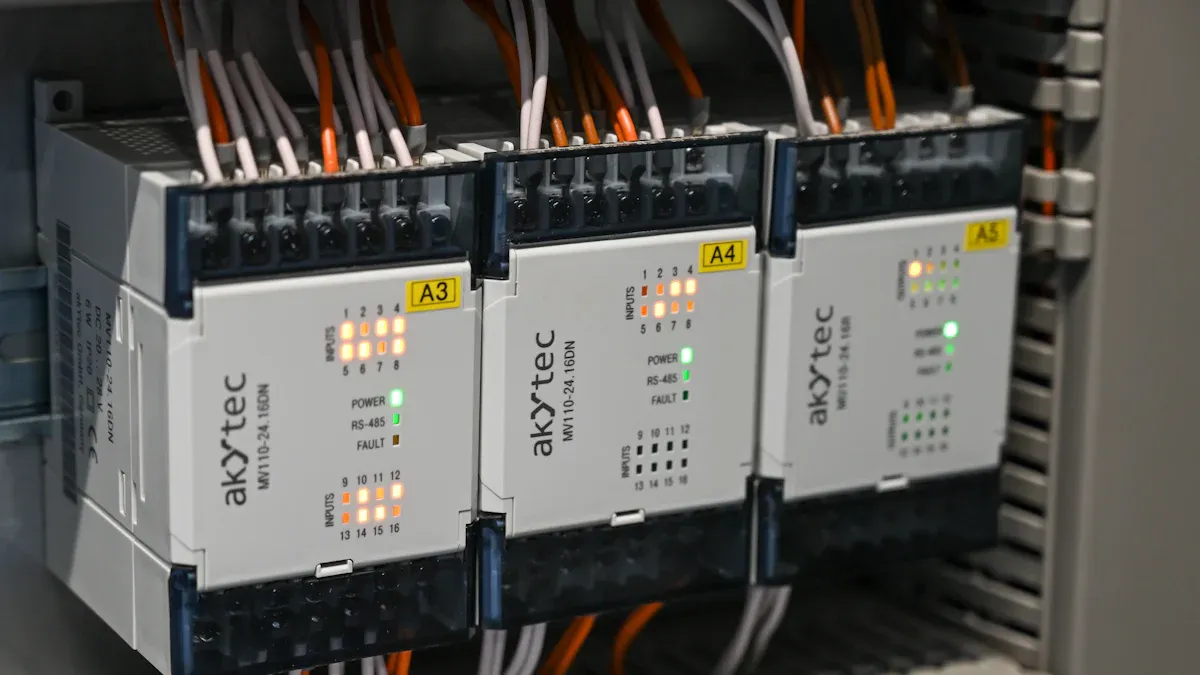
Engineers use the LM317T in lab power supplies. These supplies let people pick the voltage they need. You can test many circuits with one supply. Students and workers use these to check electronics. The LM317T keeps the voltage steady, even if the load changes. Schools and repair shops like these supplies. They are easy to make and work well.
A bench power supply with an LM317T lets people learn and fix things.
Battery Charger
The LM317T is good for battery chargers. It controls the charging voltage for different batteries. Engineers use it to charge batteries in things like flashlights and radios. The adjustable output helps stop overcharging. This keeps the battery safe. Many electronics need safe charging. The LM317T helps make custom chargers for these products.
A simple charger with an LM317T can use a resistor to limit current. This keeps the battery and charger safe. The device’s safety features give extra protection.
Embedded Systems
Designers use the LM317T in embedded systems. It gives steady voltage to microcontrollers and sensors. Many electronics, like smart home gadgets and wearables, use embedded systems. The LM317T helps these products work well by giving the right voltage. Car electronics also use the LM317T. It powers sensors and control units that need special voltages.
The LM317T helps many electronics by giving adjustable and steady power.
Table: Common LM317T Applications
|
Application |
Benefit |
|---|---|
|
Bench Power Supply |
Adjustable voltage for testing |
|
Battery Charger |
Safe charging control |
|
Embedded Systems |
Stable voltage for devices |
Troubleshooting
Common Issues
People sometimes have trouble with the LM317T voltage regulator. These problems can make the circuit work badly or even unsafe. Here are some things that can go wrong:
-
Overheating: The LM317T gets hot if it drops a lot of voltage or gives a lot of current. If there is no heatsink, it might turn off or break.
-
Incorrect Resistor Values: If R1 or R2 are not the right values, the output voltage can be too high or too low. This can hurt things connected to the circuit.
-
Instability or Oscillation: If the right capacitors are missing, the output can be unstable. This can make noise or cause voltage spikes.
-
Poor Soldering or Loose Connections: Bad soldering or loose wires can break the circuit. This makes the circuit work sometimes or not at all.
-
Input Voltage Too Low: If the input voltage is not at least 2V more than the output, the LM317T cannot work right.
⚠️ Tip: Always check your wires and parts before turning on the circuit.
Stability Tips
Engineers can do some things to help the LM317T work better:
-
Use Proper Heatsinking: Put a heatsink on the LM317T if it will get hot. This helps stop overheating.
-
Select Accurate Resistors: Pick resistors for R1 and R2 that are very close to the right value. This keeps the output voltage close to what you want.
-
Add Bypass Capacitors: Put a 0.1µF capacitor near the input and a 1µF capacitor at the output. These help stop noise and keep the voltage steady.
-
Keep Wires Short: Use short and thick wires for input and output. This helps cooling and lowers resistance.
-
Check Input Voltage: Make sure the input voltage is always at least 2V higher than the output.
|
Problem |
Solution |
|---|---|
|
Overheating |
Use a heatsink |
|
Wrong output voltage |
Check resistor values |
|
Instability |
Add input/output capacitors |
|
Poor connections |
Inspect and resolder joints |
|
Low input voltage |
Increase input supply |
✅ Note: Setting up the circuit carefully and checking it often helps the LM317T give safe and steady power.
The LM317T voltage regulator is very helpful for electronics projects. It gives these benefits:
-
You can set the voltage from 1.2V to 37V.
-
It gives steady current up to 1.5A.
-
It has safety features built in.
Many engineers use the LM317T for custom power in different devices. This regulator works in both easy and hard circuits.
📌 The LM317T is still a favorite for adjustable power. You can use it in new projects and trust it. The device is still supported and used in today’s electronics.
FAQ
What is the main use of the LM317T voltage regulator?
The LM317T lets people pick different voltages for circuits. It works in power supplies, battery chargers, and embedded systems. Many engineers like it because it is flexible and dependable.
How does someone adjust the output voltage on an LM317T?
You can change the output voltage by picking different resistors for R1 and R2. The formula is:
Vout = 1.25V × (1 + R2/R1)
This makes it easy to set the voltage you want.
Does the LM317T need a heatsink?
The LM317T may need a heatsink if it gets hot from high current or a big voltage drop. A heatsink helps cool the device and stops it from overheating. Good heat control keeps the device safe.
Can the LM317T protect itself from damage?
The LM317T has built-in protection features. It can shut down if it gets too hot and can limit current. These features help stop damage from heat or short circuits. The device stays safe and works well in many cases.