How PCM Audio Format Delivers High Quality Sound
PCM audio format, or Pulse Code Modulation, delivers high quality sound by preserving uncompressed, accurate digital audio without loss of detail.
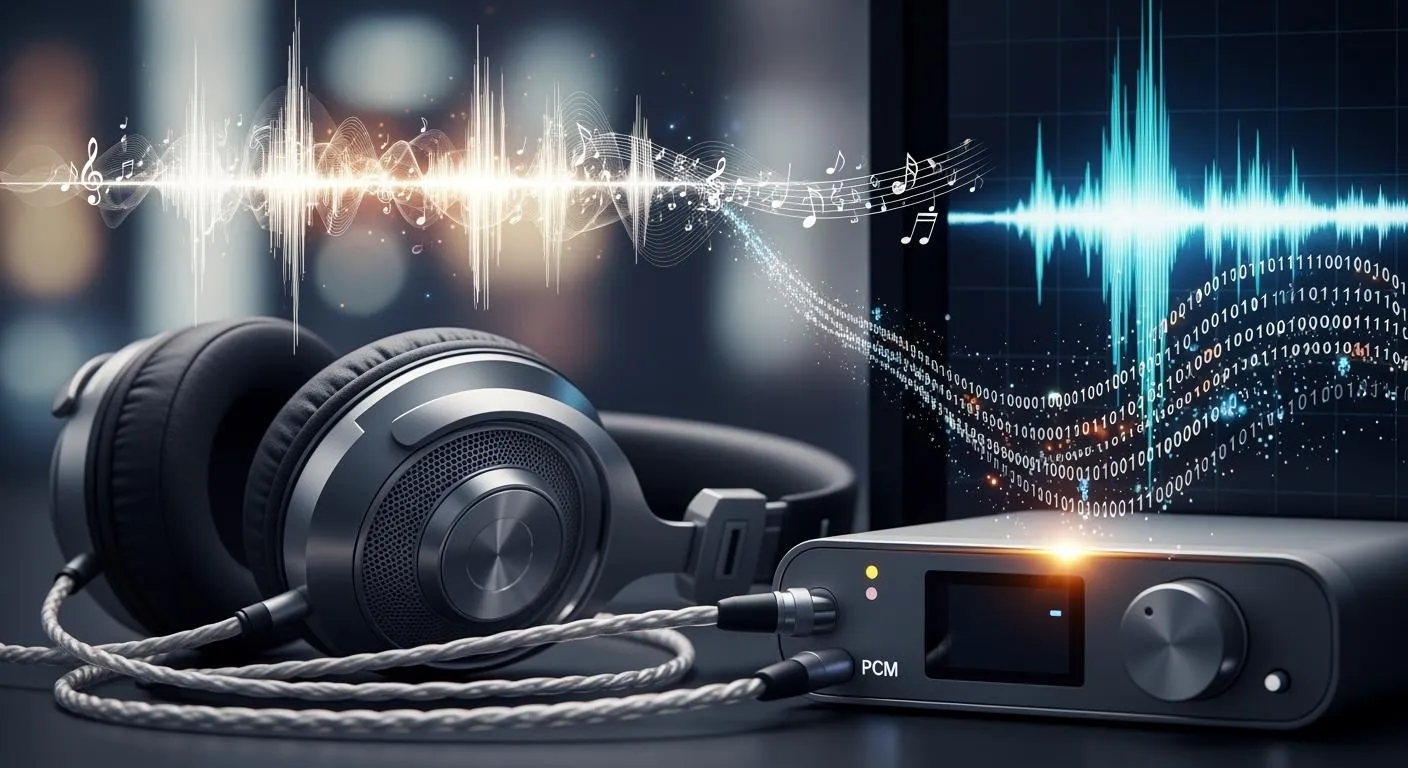
You experience high quality sound with PCM audio format because it preserves the original audio without compression. PCM converts analog signals into digital waveforms by quantizing each sample, which maintains clarity and detail. When you listen to PCM audio, you notice accurate sound reproduction and a wide dynamic range. Devices and services can affect your perception of sound, but PCM’s fidelity often meets or exceeds usual expectations in listener studies. Improvements in the signal chain, such as latency and microphone placement, further enhance your listening experience. If you wonder what is pcm audio format, it stands for Pulse Code Modulation, a method that delivers precise digital audio.
PCM audio format gives you clear and lifelike sound by capturing every nuance of the original signal.
Key Takeaways
- PCM audio format preserves original sound quality by avoiding compression, ensuring you hear every detail.
- Higher bit depth and sample rates in PCM audio enhance dynamic range, allowing for clearer and more expressive sound.
- You can enjoy PCM audio in everyday devices like smartphones and TVs, providing a lifelike listening experience.
- Choosing PCM over compressed formats like MP3 or AAC guarantees superior sound quality for music and movies.
- Professionals prefer PCM audio for its accuracy, making it essential for music production and broadcasting.
What Is PCM Audio Format

PCM Definition
You encounter the term "what is pcm audio format" when you explore digital audio systems. PCM audio stands for Pulse Code Modulation. This method encodes analog audio signals into digital data without compression. You benefit from PCM audio because it preserves the original sound quality, making it ideal for music, movies, and professional recordings.
Pulse code modulation works by sampling an analog signal at regular intervals and quantizing each sample. You receive a discrete digital representation of the original sound. This process ensures that every nuance and detail remains intact. PCM audio is widely used in consumer devices, professional studios, and broadcasting systems.
PCM audio format gives you a clear and lifelike listening experience because it avoids compression and maintains accuracy.
Nova Technology Company (HK) Limited plays a key role in the integrated circuit industry. As a HiSilicon-designated solutions partner, Nova Technology Company (HK) Limited delivers chip-level solutions and system integration for advanced audio applications. You rely on their expertise in linear pulse code modulation and digital signal processing to achieve high performance in consumer electronics, automotive systems, and industrial devices.
How PCM Works
You understand what is pcm audio format better when you see how PCM audio converts analog signals into digital data. The process involves three main steps:
| Step | Description |
|---|---|
| Sampling | The analog audio signal is sampled at regular intervals, creating discrete points from the continuous wave. |
| Quantization | Each sampled point is assigned a value from a finite set of levels, converting it into a digital format. |
| Encoding | The quantized values are encoded into a binary format for digital storage or processing. |
You notice that PCM audio uses a demodulator to read the sampled values after each sampling period. The output signal transitions to the new value based on the sampled data. A reconstruction filter removes high-frequency noise, so the output signal closely resembles the original analog signal.
- PCM audio format avoids compression, so you hear the original sound without loss.
- You benefit from accurate sound reproduction, which is essential for music production and broadcasting.
- PCM audio is the foundation for many digital audio systems, including CDs, Blu-ray discs, and professional recording equipment.
Bit Depth And Sample Rate
You discover that bit depth and sample rate are crucial for understanding what is pcm audio format. These two factors determine the quality and fidelity of PCM audio.
| Application Type | Bit Depth | Sample Rate |
|---|---|---|
| Consumer | 16-bit | 44.1 kHz |
| Professional | 24-bit | 48 kHz, 96 kHz |
Higher sample rates like 176.4 kHz and 192 kHz are used in specialized cases. You often see 96 kHz preferred for its compatibility with professional equipment. The benefits of higher bit depths include greater dynamic range, which means you hear more subtle details and less distortion.
Increasing bit depth lowers the noise floor, so you experience enhanced audio quality and greater headroom.
You realize that higher sample rates capture more audio detail, especially at higher frequencies. When you move from 16-bit to 24-bit PCM audio, the noise floor drops by 48 dB. This improvement gives you a wider dynamic range and clearer sound. PCM audio format lets you enjoy music and recordings with exceptional fidelity.
You now understand what is pcm audio format and why PCM audio stands out in both consumer and professional environments. Pulse code modulation delivers uncompressed, accurate, and high-quality sound. You rely on PCM audio for its ability to reproduce every nuance of the original signal.
Why PCM Is High Quality
Uncompressed Audio
You experience high quality sound with pcm audio because it uses an uncompressed method to store and transmit audio signals. This approach keeps the original sound intact and avoids the loss of detail that often happens with compressed formats. When you listen to pcm audio, you hear the music or voice exactly as it was recorded. Compressed formats can introduce unwanted artifacts that make the sound less dynamic and less clear.
- pcm audio maintains the original audio signal without any loss of fidelity, leading to a clearer and more accurate sound reproduction.
- Compressed audio formats introduce artifacts that can degrade the listening experience, making the sound less dynamic and detailed.
- In tests, listeners found that artifacts were barely noticeable in pcm audio compared to more noticeable artifacts in compressed formats like DD+JOC.
You benefit from uncompressed audio because it preserves every nuance and subtlety. This method gives you a listening experience that feels natural and lifelike.
Accurate Sound Reproduction
You rely on pcm audio for accurate sound reproduction. The method samples the analog signal at regular intervals and converts each sample into a digital value. Quantization and bit depth play a key role in this process. Quantization measures the amplitude of the signal, and bit depth determines how precisely each sample is recorded.
The Redbook CD standard uses 16 bits, which keeps quantization noise at a level that is generally inaudible. Modern systems use 24 bits for even greater accuracy. Proper dither minimizes quantization noise, so you hear the music as close to the original as possible.
You notice that pcm audio delivers sound that matches the original analog source. This accuracy is important for both professional music production and everyday listening. You hear instruments, vocals, and effects with clarity and detail.
Wide Dynamic Range
You enjoy pcm audio because it offers a wide dynamic range. The dynamic range of 16-bit pcm audio is approximately 96 dB. This range allows you to hear everything from the quietest whisper to the loudest orchestral performance without distortion.
- The dynamic range of 16-bit pcm audio is approximately 96 dB, which allows for a range between the quietest and loudest sounds.
- This dynamic range is sufficient to capture sounds from a whisper to the loudest orchestral performance without distortion.
The video illustrates how dynamic range compression affects sound quality, emphasizing that without quiet moments, loud sounds lose their impact. This principle is crucial for both professional music production and consumer listening, as it highlights the importance of preserving natural dynamics in music.
You benefit from wide dynamic range because it keeps the music expressive and powerful. pcm audio lets you hear every detail, from soft passages to dramatic peaks. This feature is essential for professional audio engineers and music lovers who want the best audio quality.
PCM In Everyday Use
Consumer Devices
You interact with pcm audio every day through your favorite devices. Smartphones, televisions, and gaming consoles use pcm audio to deliver clear and accurate sound. This technology supports music streaming, movies, and games, giving you a better listening experience.
- PCM audio codecs ensure high-fidelity audio reproduction.
- They enable seamless interoperability across devices, enhancing your experience.
- Accurate capture, transmission, and playback of sound are crucial for music streaming, gaming, and multimedia consumption.
- Adherence to standards ensures compatibility and low-latency audio streaming, which is essential for professional applications.
When you use digital audio formats in your daily life, you benefit from the lossless nature of pcm audio. You hear music and dialogue as the creators intended, without unwanted noise or distortion.
Professional Audio
You find pcm audio at the heart of professional studios and live sound environments. Audio engineers rely on pcm audio for digital audio recordings because it preserves every detail. This accuracy is vital for mixing, mastering, and archiving music or film soundtracks.
Nova Technology Company (HK) Limited, a HiSilicon-designated solutions partner, provides advanced chip-level solutions and system integration for pcm audio applications. Their expertise supports high-performance consumer electronics, automotive infotainment, and industrial audio systems. You benefit from their innovations in digital signal processing and reliable audio transmission.
Professional audio equipment uses pcm audio to maintain the highest sound quality. You can trust that the sound you hear in the studio matches what you experience during playback.
Streaming And Broadcasting
You enjoy pcm audio when you watch live broadcasts or stream high-quality content. Broadcasters and streaming services use pcm audio for its clarity and reliability. The technical requirements for transmitting pcm audio over networks include:
| Technical Aspect | Details |
|---|---|
| Standards | IEC 60958 (S/PDIF) for digital audio interface; ATSC and DVB standards for broadcast pcm audio |
| Bandwidth Requirements | CD-quality pcm requires ~1.4 Mbps; high-resolution pcm can require 4.6 Mbps or more |
| Network Infrastructure | High bandwidth capacity needed due to uncompressed pcm; traditional internet infrastructure may struggle |
| Network Challenges | Bandwidth limitations and congestion can cause audio dropouts and buffer underruns |
| Quality of Service (QoS) | Traffic prioritization and adaptive bandwidth allocation improve streaming reliability |
| Emerging Technologies | 5G and software-defined networking enhance bandwidth, reduce latency, and improve traffic management |
You notice that streaming services invest in new technologies to deliver pcm audio with minimal delay and maximum quality. This ensures you receive a consistent and enjoyable listening experience, whether you stream music or watch live events.
PCM vs Other Formats

PCM vs MP3 And AAC
You often compare pcm audio with MP3 and AAC when you choose music formats. pcm audio gives you the highest sound quality because it does not compress the original data. MP3 and AAC use lossy compression, which removes some audio information to reduce file size. This process can affect how you hear music, especially at lower bit rates.
- pcm audio keeps all original audio data, so you hear every detail.
- MP3 compresses audio and may lose quality, especially at 128 kbps.
- AAC compresses audio more efficiently than MP3 and sounds better at similar bit rates.
You notice that file size and bitrate also matter. The table below shows how a typical song compares across formats:
| Format | File Size (3-4 min song) | Bitrate | Quality Comparison |
|---|---|---|---|
| WAV | ~30-40 MB | N/A | Perfect audio replication, massive file size |
| MP3 | ~8-10 MB (at 320 kbps) | 320 kbps | Very small file size at medium bitrates, some quality sacrifice |
| AAC | Similar to MP3 | N/A | Better audio quality at lower bitrates, efficient compression |
You choose pcm audio when you want the best sound and do not worry about file size. MP3 and AAC work well for streaming and portable devices.
PCM vs Dolby Digital
You see differences between pcm audio and Dolby Digital when you watch movies or listen to surround sound. pcm audio is uncompressed and delivers raw audio. Dolby Digital compresses audio and supports more channels, like 5.1 surround sound.
| Feature | PCM Audio | Dolby Digital |
|---|---|---|
| Compression | Uncompressed (raw audio) | Compressed |
| Channel Support | Often supports fewer channels | Typically supports 5.1 channels |
You use pcm audio for music production because it keeps the sound pure. Professional studios rely on pcm audio for lossless quality. Dolby Digital works well for home theaters and streaming, where channel support and smaller file sizes matter.
- pcm audio is preferred for music production and professional audio applications.
- You get lossless sound, which is important for editing and mastering.
Sound Quality Differences
You hear the difference between pcm audio and other formats in clarity and detail. Double-blind listening tests show that listeners prefer pcm audio when they can focus on individual speakers. Artifacts in lossy codecs like Dolby Digital Plus are more noticeable. When all speakers play together, the difference between pcm audio and AC-4 becomes less obvious, but pcm audio still offers superior clarity.
You also see differences in frequency response and noise floor. Higher bit depths in pcm audio improve signal-to-noise ratio and reduce noise. The table below shows how processors affect noise floor and SNR:
| Aspect | 24-bit Processor | 32-bit Processor | Comparison with 16-bit Converter |
|---|---|---|---|
| Ideal Noise Floor | 144 dB | 133 dB | Greater than 16-bit noise floor |
| Reduction in Noise Floor | 70-80 dB | 48 dB | Adequate for 24-bit noise floor |
| Signal-to-Noise Ratio (SNR) | < 96 dB | > 96 dB | Improved with higher bit depth |
You choose pcm audio when you want the best possible sound. You hear more detail, less noise, and a wider dynamic range.
Tip: If you want to experience music or movies with the highest fidelity, select pcm audio whenever possible.
You choose PCM audio format for its uncompressed data, accurate sound reproduction, and wide dynamic range. Industry experts recommend PCM for seamless compatibility with modern devices and home theater systems.
- PCM codecs enable high-fidelity sound and support high-resolution formats like FLAC and WAV.
- The PCM audio market continues to grow, driven by demand for better audio quality and integration with wireless streaming.
PCM audio gives you clear, lifelike sound in both professional studios and everyday devices. Consider PCM when you want the best listening experience.
FAQ
What makes PCM audio format different from other formats?
You get uncompressed sound with PCM. This format keeps every detail from the original recording. Other formats, like MP3, use compression and lose some audio information.
Can you use PCM audio on all devices?
Most modern devices support PCM audio. You can play PCM files on computers, smartphones, and home theater systems. Some older devices may not handle high-resolution PCM.
Does PCM audio take up more storage space?
PCM audio files are larger than compressed formats. You need more storage for PCM, but you gain better sound quality. For example, a three-minute PCM song can use up to 30 MB.
Why do professionals prefer PCM audio?
You hear accurate and clear sound with PCM. Professionals use PCM for recording, mixing, and mastering because it preserves every nuance. This helps them produce high-quality music and audio.
Is PCM audio good for streaming?
PCM audio delivers excellent quality, but it needs high bandwidth. Streaming services often use compressed formats to save data. You may find PCM in high-end streaming platforms or live broadcasts.