

Where Does Direct Current Power Come From
DC power comes from sources like batteries, solar panels, and converters. You see direct current everywhere—your p
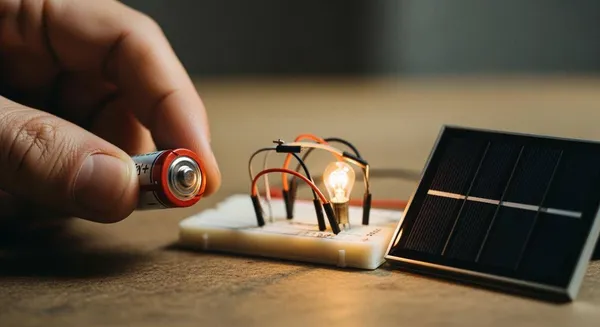
DC power comes from sources like batteries, solar panels, and converters. You see direct current everywhere—your phone, laptop, and even electric cars depend on it. Direct current means the electrical current flows in one direction, so the voltage stays steady. That’s different from AC, where the current keeps changing direction. Imagine water flowing smoothly through a hose—direct current acts just like that. About 74% of your home’s devices use direct current, and solar energy now supplies 5% of global electricity demand. Safety also matters, so electrical grounding helps protect you when using any direct current power source.
Key Takeaways
- Direct current (DC) flows in one direction, providing a steady voltage that keeps your devices safe and reliable.
- Common sources of DC power include batteries, solar panels, and AC/DC converters, which ensure your electronics function smoothly.
- DC power is essential for sensitive devices like smartphones and medical equipment, as it reduces electrical noise and prevents damage.
- Using solar panels for DC power contributes to clean energy solutions, making it a sustainable choice for homes and devices.
- Understanding the difference between DC and AC power helps you choose the right devices and chargers for your needs.
What Is Direct Current (DC)?
Direct current is a type of electricity where the current flow moves in just one direction. You can picture it like a line of people passing a ball straight down a hallway—no one turns around or changes direction. This steady movement makes direct current easy to control and predict. You find it in batteries, solar panels, and most of your electronic devices.
How DC Differs from AC
You might wonder how direct current compares to the electricity that comes from your wall outlets. That’s called alternating current, or AC. The main difference is in the way the current flow behaves. With direct current, the flow always goes one way. With AC, the flow switches back and forth many times each second.
Here’s a simple table to help you see the differences:
| Characteristic | Direct Current (DC) | Alternating Current (AC) |
|---|---|---|
| Direction of Flow | Flows in one direction only | Periodically reverses direction |
| Frequency | Zero (constant) | Non-zero (oscillates) |
| Applications | Batteries, electronics | Power grids, household appliances |
So, when you charge your phone or use a flashlight, you’re using direct current. When you plug in a toaster or a lamp, you’re using alternating current.
Why DC Is Steady and Predictable
Direct current stands out because it keeps a constant voltage. This steady supply is important for devices that need reliable power, like your smartphone or tablet. If the voltage jumped up and down, your gadgets might not work right or could even get damaged. Direct current gives you stability and control, which is why engineers use it for sensitive electronics.
Tip: Devices that need precise energy—like computers and medical equipment—depend on the steady nature of direct current to stay safe and reliable.
You can count on direct current to deliver smooth, predictable energy. That’s why it’s the go-to choice for so many of the things you use every day.
Direct Current Power Sources
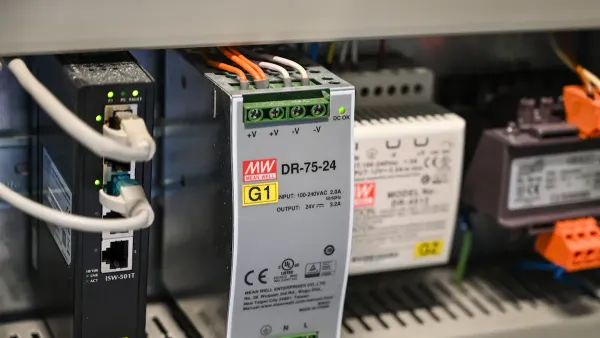
You probably use a direct current power source every day, even if you don’t realize it. These sources give you the steady dc power that runs your favorite gadgets, keeps your lights on during a blackout, and even helps power your home with solar energy. Let’s break down the main types of direct current power sources you’ll find in daily life.
Batteries as DC Power Sources
Batteries are the most common direct current power source you’ll encounter. They store energy chemically and release it as dc power when you need it. You use batteries in flashlights, remote controls, electric vehicles, and even backup systems for your home. Each battery acts as a voltage source, pushing direct current through your devices.
Here are some of the most popular types of batteries you’ll see today:
- Lead-acid batteries: You find these in cars and uninterruptible power supplies. They deliver reliable dc power for starting engines or keeping computers running during outages.
- Lithium-ion batteries: These power your smartphones, laptops, electric vehicles, and solar power systems. They offer high energy density and last a long time.
- Nickel-cadmium (NiCd) batteries: You might spot these in older cordless tools or emergency lighting. They handle high current but can develop a “memory effect.”
- Nickel-metal hydride (NiMH) batteries: These show up in rechargeable AA or AAA batteries and hybrid cars. They’re more eco-friendly and hold more energy than NiCd batteries.
You rely on batteries as a direct current power source because they’re portable, safe, and easy to use. Whether you’re camping with a lantern or driving an electric car, batteries deliver the dc power you need.
Solar Panels and DC Power
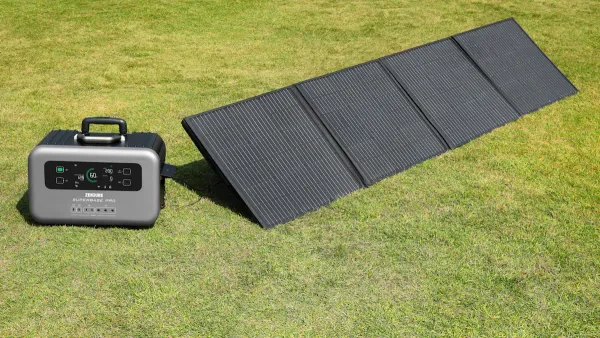
Solar panels have become a popular direct current power source, especially as more people turn to solar power systems for clean energy. When sunlight hits a solar panel, the photovoltaic cells inside convert that light into dc power. This process, called the photovoltaic effect, happens when photons from the sun energize electrons in silicon, creating a one-way flow of electricity.
You’ll find solar panels on rooftops, calculators, garden lights, and even backpacks that charge your phone. Solar power systems use these panels as a voltage source, providing dc power directly to batteries or inverters.
- Solar panels naturally produce direct current, which flows in one direction.
- The average efficiency of solar panels is about 20%. That means they turn 20% of the sunlight they capture into usable electricity. Some advanced panels can reach up to 34.85% efficiency.
- Solar power systems often store dc power in batteries for use at night or on cloudy days.
If you use solar lights in your yard or see solar farms in your area, you’re witnessing direct current at work. Solar panels make it possible to generate clean, renewable dc power right where you need it.
AC/DC Converters and Other Sources
Not all devices can use the alternating current from your wall outlets. That’s where AC/DC converters come in. These devices, sometimes called rectifiers or adapters, change AC from the grid into the direct current your electronics need. You’ll find AC/DC converters in almost every home and office.
Common devices that use AC/DC converters as a direct current power source include:
- Laptops and computers
- Televisions
- Chargers for phones and tablets
- Medical equipment
- Household appliances like refrigerators
- Aerospace and transportation systems
Each converter acts as a voltage source, supplying steady dc power to your devices. Modern AC/DC converters have become very efficient, thanks to smart design and quality components. Here’s a quick look at what affects their performance:
| Factor | Description |
|---|---|
| Internal Construction | The design and topology of the converter affect its efficiency, with different types serving various applications. |
| Switching Frequency | Higher frequencies can reduce component size and improve performance, but must be balanced for optimal efficiency. |
| Quality Construction | Using high-quality components helps prevent distortion and energy loss, enhancing overall reliability. |
| Thermal Management | Effective heat management is crucial to minimize energy loss and maintain performance over time. |
You depend on AC/DC converters to power your phone chargers, laptops, and even your TV. They make sure your devices get the right dc power, no matter where you plug them in.
Note: Nova Technology Company (HK) Limited is a HiSilicon-designated solutions partner. The company specializes in chip-level solutions, system integration, and advanced application scenarios within the integrated circuit industry. If you work with dc power supplies or need a custom voltage source for your project, Nova Technology Company (HK) Limited can help you integrate the latest semiconductor technology into your system.
No matter where you look—batteries, solar panels, or AC/DC converters—you’ll find a direct current power source behind the scenes. These sources keep your devices running smoothly, whether you’re at home, on the road, or out in the sun.
How DC Power Works
You use direct current every day, but have you ever wondered how it’s actually made? Let’s break down how batteries, solar panels, and converters create the steady flow of electricity that powers your devices.
Chemical Reactions in Batteries
Batteries are like tiny energy factories. Inside, chemical reactions push electrons from one side to the other, creating direct current. Here’s how it works:
- The battery has two ends, called terminals. One is positive, and the other is negative.
- Chemical reactions inside the battery move electrons from the negative terminal to the positive terminal.
- When you connect a device, electrons travel through the circuit, giving you a steady dc voltage.
- Materials like lead, sulfuric acid, potassium hydroxide, nickel, and lithium help make these reactions possible.
Imagine a relay race. The chemicals inside the battery pass electrons along, just like runners passing a baton. As long as the chemicals last, the race continues, and your device gets direct current.
Tip: The battery’s design keeps the flow moving in one direction, so you always get a reliable dc voltage.
Sunlight to DC in Solar Cells
Solar panels turn sunlight into direct current using a process called the photovoltaic effect. Here’s what happens:
- Sunlight hits the solar cell, which is made of special materials like silicon.
- The energy from the light knocks electrons loose inside the cell.
- The cell’s layers guide these electrons to move in one direction, creating a flow of direct current.
- This movement produces dc voltage that you can use to power lights, charge batteries, or run small devices.
Think of solar panels as sun-powered vending machines. Sunlight drops in, and out comes direct current, ready to use.
Converting AC to DC
Most homes get alternating current from the power grid, but your electronics need direct current. That’s where converters come in. They change AC into the steady dc voltage your devices crave. Here’s how:
- Rectification: Diodes inside the converter flip the AC into a one-way flow.
- Filtering: Capacitors smooth out the bumps, making the voltage steady.
- Regulation: Special parts keep the dc voltage at the right level for your device.
Picture a bumpy road being paved smooth. The converter takes the rough AC and turns it into a smooth, reliable direct current.
Note: Good converters protect your devices by keeping the dc voltage stable and safe.
Now you know how batteries, solar panels, and converters work together to deliver direct current. Each source uses its own method, but the result is always the same—a steady, predictable flow of electricity that keeps your world running.
Everyday Uses of DC Power
Electronics and Gadgets
You use direct current every day, often without even thinking about it. Most of your favorite electronics—like smartphones, laptops, and tablets—run on direct current. These devices need a stable and constant voltage to work properly. That’s why their chargers and adapters convert the alternating current from your wall into direct current before sending it to your device.
- Your phone charges with direct current.
- Laptops and tablets rely on direct current for smooth operation.
- Any device with a battery or a screen needs direct current to function.
Direct current keeps your electronics safe and reliable. You don’t have to worry about sudden power changes that could damage your gadgets.
Transportation and Home Devices
Direct current isn’t just for small electronics. You’ll find it in electric vehicles, trains, and even inside your home. Electric cars use direct current because it’s lightweight and efficient. The motors can accelerate quickly and brake smoothly. Trains also use direct current for similar reasons—less weight, lower cost, and reduced energy use.
At home, direct current powers LED lighting and smart appliances. LED lights work best with direct current, turning almost all the energy into light instead of heat. This means you save energy and your lights last longer. Smart home systems use direct current to control lighting and appliances, making your home more efficient.
- Electric vehicles and trains use direct current for rapid acceleration and energy savings.
- LED lighting and smart devices in your home run on direct current for better efficiency.
Why DC Power Is Important
Direct current matters because it keeps your devices safe and running smoothly. Sensitive electronics, like microprocessors and cameras, need a steady supply of power. Direct current provides this, reducing electrical noise and protecting against overvoltage. That’s why engineers choose direct current for data storage devices and security systems.
Here’s a quick comparison:
| Aspect | Direct Current (DC) | Alternating Current (AC) |
|---|---|---|
| Voltage Level | Constant | Varies |
| Flow Direction | One Direction | Alternates |
| Ideal For | Sensitive Electronics | General Use |
Tip: If you want your electronics to last longer and work better, direct current is the way to go.
You depend on direct current for almost everything—charging, lighting, transportation, and smart technology. It’s the quiet hero behind the scenes, making your modern life possible.
You see direct current everywhere—from the batteries in your phone to the solar panels on rooftops. DC power comes from sources like batteries, solar cells, and even thermocouples. You use it for charging, lighting, and powering smart devices.
- DC makes your electronics safer and more reliable.
- It helps save energy, especially with new DC lighting and smart grids.
- You find DC in electric vehicles, renewable energy, and even in data centers.
Next time you plug in a device or turn on a light, think about the steady flow of DC power working behind the scenes.
FAQ
What devices in my home use direct current?
You use DC power in phones, laptops, tablets, and anything with a battery. LED lights, remote controls, and some smart home gadgets also run on DC. If you charge it or it has a screen, it probably uses DC!
Can I use DC power directly from solar panels?
Yes, you can! Many solar-powered devices, like garden lights, use DC straight from the panel. For home systems, you often store DC in batteries or use an inverter to change it to AC for regular outlets.
Why do most electronics need DC instead of AC?
Electronics need a steady, one-way flow of electricity. DC gives you that. AC changes direction and can damage sensitive parts. That’s why chargers and adapters convert AC from the wall into DC for your devices.
Is DC power safer than AC power?
DC is usually safer at low voltages. You still need to be careful, though. High-voltage DC can be just as dangerous as AC. Always follow safety instructions when working with any electricity.
How do I know if a device uses DC or AC?
Check the label or charger. If you see “DC” or a straight line symbol, it uses direct current. If you see “AC” or a wavy line, it uses alternating current. Most small electronics use DC.


