Understanding 18 AWG Wire Amp Rating for Safe Electronics
18 AWG wire amp rating ranges from 7 to 10 amps for copper, depending on insulation and installation. Follow guidelines to prevent overheating and hazards.
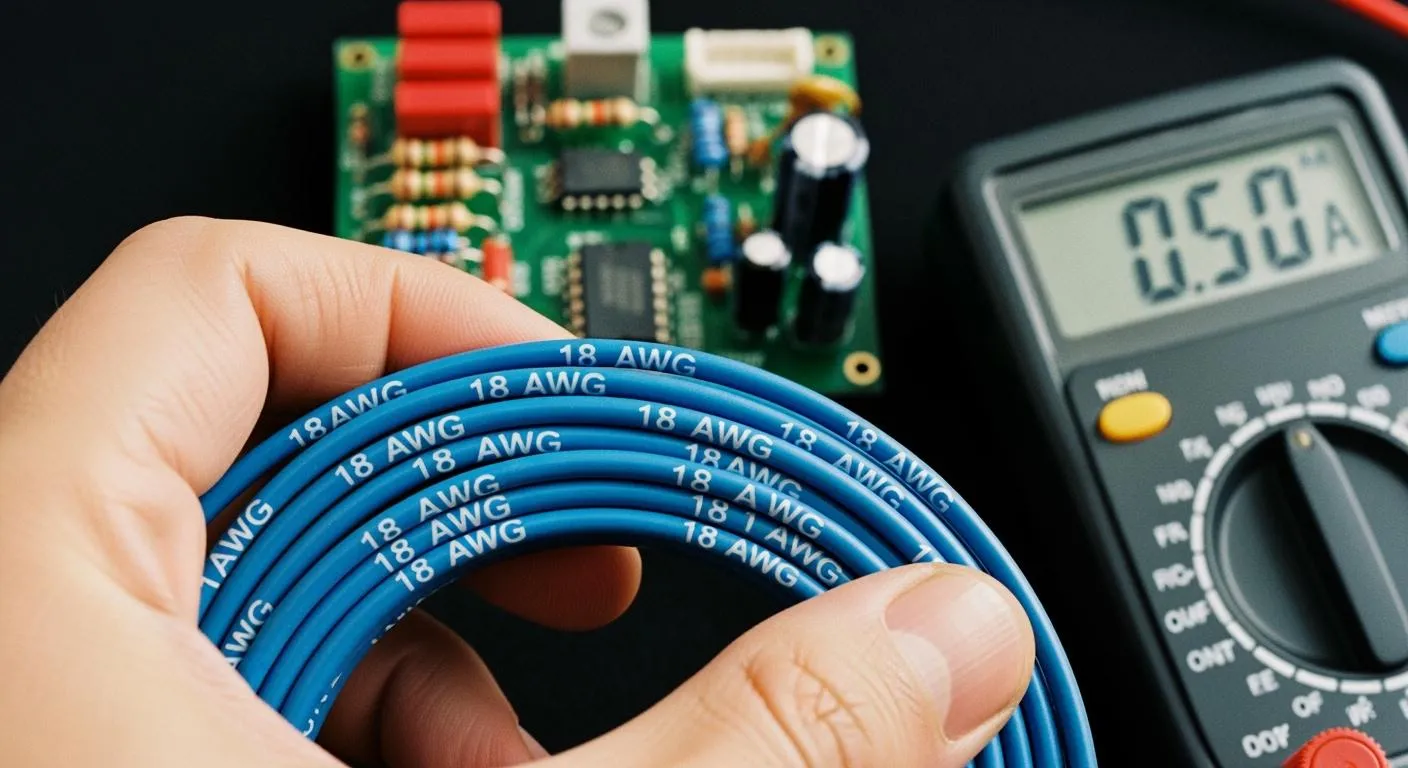
You need to know the 18 awg wire amp rating to keep your electronics safe. Most electrical standards place the ampacity for copper 18 awg wire between 7 and 10 amps. For chassis wiring, you should keep the current at or below 7 amps. If you have good cooling, the wire can handle up to 10 amps. Ampacity matters because it protects against overheating, insulation breakdown, and fire hazards. Always check the copper material and insulation type before using 18 awg wire. You can choose the right awg for your circuit when you understand these factors.
Key Takeaways
- 18 AWG wire can safely carry 7 to 10 amps, depending on insulation and cooling conditions.
- Chassis wiring allows higher ampacity due to better cooling, while power transmission wiring requires lower ampacity.
- Copper 18 AWG wire offers better conductivity and safety compared to aluminum, making it ideal for low-power applications.
- Always match the wire's ampacity to your device's current needs to prevent overheating and fire hazards.
- Check insulation ratings and installation conditions to ensure safe and reliable use of 18 AWG wire.
18 AWG Wire Amp Rating Overview

Common Ampacity Ranges
You need to understand the different ampacity values for 18 awg wire before you select it for your circuits. The ampacity depends on the application and the conditions where you install the wire. The 18 awg wire amp rating changes based on whether you use it for continuous loads or short-term situations. For most residential electrical circuits, the standard limit for continuous use is 5.6 amps. If you use the wire in short-term applications with insulation rated for higher temperatures, the ampacity can reach up to 22 amps.
Here is a table that shows the most common current capacities for 18 awg wire:
| Application Type | Ampacity (A) | Notes |
|---|---|---|
| Continuous | 5.6 | Standard limit for NEC-compliant residential wiring. |
| Short-term (90°C) | 22 | Maximum limit depending on insulation type and installation conditions. |
You see that the ampacity varies greatly. The insulation and temperature rating play a big role. At 60°C, 18 awg wire can carry 14 amps. At 75°C, it can handle 18 amps. At 90°C, it can manage 22 amps. You must check the insulation rating before you use the wire in your circuits.
If you compare 18 awg wire to other sizes, you notice that 16 awg wire can handle about 13-16 amps. This makes it better for higher current applications. 20 awg wire has a lower capacity, so it is not suitable for lighting circuits or other high-power uses. The american wire gauge system helps you choose the right wire for your electrical needs.
Chassis Wiring vs. Power Transmission
You need to know the difference between chassis wiring and power transmission when you select 18 awg wire. Chassis wiring usually allows higher ampacity because the wire has unrestricted cooling. Power transmission wiring has lower ampacity because the wire sits in conduits or raceways with restricted airflow.
The table below shows how ampacity changes based on wiring type and cooling conditions:
| Wiring Type | Ampacity Difference | Cooling Condition |
|---|---|---|
| Chassis Wiring | 15-25% higher | Unrestricted convective cooling |
| Power Transmission | 50-60% of free-air | Restricted airflow in conduit/raceway |
If you use 18 awg wire for chassis wiring, you can run more current through it. The wire stays cooler because air moves freely around it. For power transmission, you must reduce the current because heat builds up in enclosed spaces. Always check the installation conditions before you decide how much current to run through your wire.
Tip: You should never exceed the recommended ampacity for your wire. Overloading can cause overheating and damage to your circuits.
The ampacity of 18 awg wire depends on several factors. These include wire material, insulation type, ambient temperature, wire length, bundling, load type, and regulatory standards. Copper wire has lower resistance and better conductivity than aluminum, so it can carry more current. Different insulation materials have different temperature ratings. Higher ambient temperatures reduce heat dissipation. Longer wires increase resistance and heat buildup. Bundled wires trap heat and lower ampacity. Continuous loads require lower current limits for safety. Electrical codes set maximum ampacity values for each application.
- At 60°C (140°F): 14 amps
- At 75°C (167°F): 18 amps
- At 90°C (194°F): 22 amps
You must consider all these factors when you choose 18 awg wire for your circuits. This helps you keep your electrical systems safe and reliable.
AWG System & Ampacity Basics
What Is 18 AWG?
You often see the term AWG when you work with electrical wire. AWG stands for American Wire Gauge. This system helps you measure the diameter of electrical wire in a standardized way. Here are some key points about the AWG system:
- The American wire gauge system uses a logarithmic scale. As the AWG number increases, the wire diameter gets smaller.
- 18 awg wire has a diameter of about 0.0403 inches (1.024 mm).
- You will find 18 awg wire in many low power applications, such as lighting circuits and small devices.
- The 18 awg wire amp rating usually ranges from 7 to 10 amps, depending on insulation and installation.
- This wire has a resistance of about 0.00651 Ohms per meter, which makes it suitable for low current circuits.
You can see how 18 awg compares to other wire sizes in the table below:
| AWG | Diameter (in.) | Diameter (mm) |
|---|---|---|
| 10 | 0.1280 | 3.251 |
| 12 | 0.1040 | 2.642 |
| 14 | 0.0800 | 2.032 |
| 16 | 0.0640 | 1.626 |
| 18 | 0.0480 | 1.219 |
| 20 | 0.0360 | 0.9144 |
| 22 | 0.0280 | 0.7112 |
| 24 | 0.0220 | 0.5588 |
| 26 | 0.0180 | 0.4572 |
| 28 | 0.0148 | 0.3759 |

How AWG Size Affects Ampacity
The size of your wire affects how much current it can safely carry. Larger wires have lower resistance and can handle more current. Smaller wires have higher resistance and lower ampacity. For example, 18 awg wire can carry about 7 to 10 amps, while 14 awg wire can handle more. You should always match the wire size to the needs of your circuits.
Here is a quick comparison:
| Wire Gauge | Maximum Current (Amps) | Distance (ft) at 3% Voltage Drop |
|---|---|---|
| 18 AWG | 7 A | 35 ft |
| 14 AWG | 7 A | 35 ft (1.3 V drop) |
You can use 18 awg for low-voltage or signal circuits. For high-power circuits, you need a larger wire. Always check the insulation materials and installation conditions. Solid wire and stranded wire may have different uses, but the awg system applies to both. You keep your electrical systems safe when you choose the right wire for the job.
Factors Affecting 18 AWG Wire Ampacity
You need to consider several factors when you choose 18 awg for your electrical projects. The 18 awg wire amp rating depends on the material, insulation, and installation conditions. Each factor changes how much current your wire can handle safely.
Copper vs. Other Materials
Copper plays a key role in the ampacity of 18 awg wire. You get better conductivity and lower resistance with copper wire compared to other materials like aluminum. This means copper wire can carry more current without overheating. Most lighting circuits and electronic devices use copper for this reason. If you use aluminum, you must reduce the ampacity because it heats up faster. Always check the wire material before you install it in your circuits.
Insulation Type & Temperature
Insulation protects your 18 awg wire from heat and damage. The type of insulation and its temperature rating affect how much current the wire can carry. For example, insulation rated at 60°C allows 14 amps, 75°C supports 18 amps, and 90°C lets you use up to 22 amps. You must match the insulation materials to your application. If you use solid wire or stranded wire, the insulation still determines the safe ampacity. Always read the labels on your wire to check the temperature rating and compliance with safety standards.
Note: Manufacturers label 18 awg with certifications like UL and NEC. These labels show that the wire passed flame and voltage tests. Proper labeling ensures your wire meets electrical codes and keeps your circuits safe.
Installation Conditions
How you install 18 awg affects its ampacity. Wires installed in open air cool better than wires bundled together. If you bundle wires or run them in conduits, heat builds up and reduces the safe current. High ambient temperatures also lower the ampacity. You should always check the installation environment before you decide how much current to run through your wire.
- Open air installation allows better cooling and higher ampacity.
- Bundled wires or wires in conduits trap heat and lower ampacity.
- High temperatures around the wire reduce its ability to carry current safely.
You must follow proper installation practices to prevent overheating and protect your electrical systems.
Nova Technology Company (HK) Limited stands out as a HiSilicon-designated solutions partner. The company specializes in chip-level solutions, system integration, and advanced application scenarios in the IC industry. If you work with complex electronic systems, you can rely on Nova Technology Company (HK) Limited for professional support in semiconductor design and integration.
Safe Uses for 18 AWG Wire
Low-Amperage Applications
You can use 18 awg wire in many low-amperage situations. This wire works well in lighting circuits, especially for LED strips and 12V systems in homes. You often find 18 awg in residential wiring for small appliances and electronics. In cars, you use it for relays, fans, and battery-to-switch connections. Many low voltage electronics, such as solar power systems and DIY projects, rely on 18 awg for safe operation. In industrial settings, you see this wire in control and signal wiring, as well as in motor control circuits for small currents. Both solid conductor and stranded wire types are common in these uses.
- Residential lighting circuits (LED strips, 12V systems)
- Small appliances and household electronics
- Automotive relays, fans, and battery connections
- Low voltage electronics and solar power systems
- Industrial control and signal wiring
Matching Wire to Device Current
You must match the current needs of your device to the ampacity of 18 awg wire. If you use too much current, the wire can overheat. The table below helps you choose the right run length for your electrical projects:
| Current (A) | Maximum Run Length (ft) |
|---|---|
| 1 A | ~250 ft |
| 3 A | ~85 ft |
| 5 A | ~50 ft |
| 7 A | ~35 ft |

You can use 18 awg for low-voltage lighting up to 35 feet at 7 amps. Speaker wire for 8-ohm speakers at 100 watts works well under 50 feet. Thermostat and HVAC control wiring usually draws less than 0.5 amps. Automotive signal wiring and PCB interconnects also fit within safe limits. Avoid using 18 awg for 120V or 240V branch circuits, high-wattage lamps, motor surges, or outdoor burial without proper insulation.
Best Practices for Safety
You keep your circuits safe by following key installation guidelines for 18 awg wire:
- Prevent overload by not exceeding the ampacity.
- Make secure connections to avoid loose wires.
- Route wires neatly and avoid sharp bends to protect insulation.
- Use overcurrent protection like fuses or breakers.
- Ensure all circuits are properly grounded.
- Inspect wiring regularly for damage or wear.
Tip: Always follow installation guidelines and check the insulation rating before starting any electrical project. This helps you avoid hazards and keeps your system reliable.
Risks of Exceeding 18 AWG Ampacity

Overheating & Fire Hazards
You put your safety at risk when you exceed the ampacity of 18 awg wire. Carrying more current than the wire rating creates a bottleneck effect. This causes the 18 awg to heat up quickly. When the wire gets too hot, the insulation can melt or burn. You may not notice the damage right away, but repeated overheating weakens the insulation, especially with PVC or thermoplastic jackets. Over time, the insulation becomes brittle. This increases the chance of short circuits or ground faults. In many cases, overheated 18 awg wire has started electrical fires in homes and vehicles. You should always match the wire size to the current in your circuits to prevent these hazards.
Alert: Never use undersized wire for high-current devices. Overheating can happen fast and may lead to fire.
Equipment Damage
When you overload 18 awg wire, you do not just risk fire. You also put your electronics and appliances in danger. Excess current causes the insulation to break down. This process happens slowly if you run too much current for long periods. As the insulation becomes brittle, the wire can short out. Short circuits can damage sensitive electronic parts and even destroy entire devices. You may also see ground faults, which can harm both your equipment and your wiring. Using the correct awg for your circuits helps protect your investments and keeps your electrical system reliable.
Warning Signs
You can spot trouble before it becomes serious if you know what to look for. Watch for these common warning signs that your 18 awg wire is overloaded:
- Tripped circuit breakers: If your breakers trip often, your circuits may be overloaded.
- Flickering lights: Dimming or flickering lights can mean your wire cannot handle the current.
- Hot outlets or switches: Outlets should never feel hot. Heat signals too much current and a possible fire risk.
If you notice any of these signs, stop using the affected circuits and check your wiring. You can prevent damage and keep your home safe by acting quickly.
You protect your electronics and your safety when you respect the amp rating for 18 AWG wire. Insulation can only handle so much heat. If you exceed the amp rating, you risk insulation failure and long-term damage. Properly selected wire will carry current safely for years.
- Insulation only tolerates limited heat.
- Overloading leads to insulation breakdown and fire hazards.
- Correct wire choice ensures reliability.
| Safety Practice | Description |
|---|---|
| Electrical Load (Current Requirement) | Check NEC or IEC tables for ampacity. |
| Voltage Drop | Keep voltage drop below 3% for long runs. |
| Operating System Requirements | Match voltage, temperature, and environment. |
| Installation Environment | Consider vibration, EMI, and outdoor exposure. |
Local electrical codes, such as the NEC, set the maximum safe current for each wire size. These rules keep your installations safe and compliant.
Ignoring ampacity guidelines can cause overheating, insulation damage, and fire risks—especially in bundled wires or hot environments.
Safe wiring keeps your electronics reliable and prevents hazards. Always check charts and codes before you start any project. 🛡️
FAQ
What does “amp rating” mean for 18 AWG wire?
The amp rating tells you the maximum current the wire can safely carry. If you exceed this rating, you risk overheating and damaging your electronics.
Can you use 18 AWG wire for household outlets?
You should not use 18 AWG wire for standard household outlets. Most outlets require at least 14 AWG or 12 AWG wire to handle higher currents safely.
How do you check the insulation rating on 18 AWG wire?
Look for markings on the wire jacket. These show the temperature rating, such as 60°C, 75°C, or 90°C. Higher ratings allow more current.
What happens if you run too much current through 18 AWG wire?
Overloading the wire causes it to heat up. This can melt insulation, damage devices, or even start a fire. Always follow ampacity guidelines.
Is solid or stranded 18 AWG wire better for electronics?
You use solid wire for fixed installations. Stranded wire works better for flexible or moving parts. Both types follow the same ampacity rules.