Achieve BOM Cost Reduction and PPV Control Through RFQ-Driven BOM Upload for OEM and EMS Buyers
BOM and RFQ best practices for electronic component procurement. Upload your BOM or request a quote for mixed lines and flexible MOQ.
Why Your BOM Costs Are 15–25 % Higher Than They Should Be
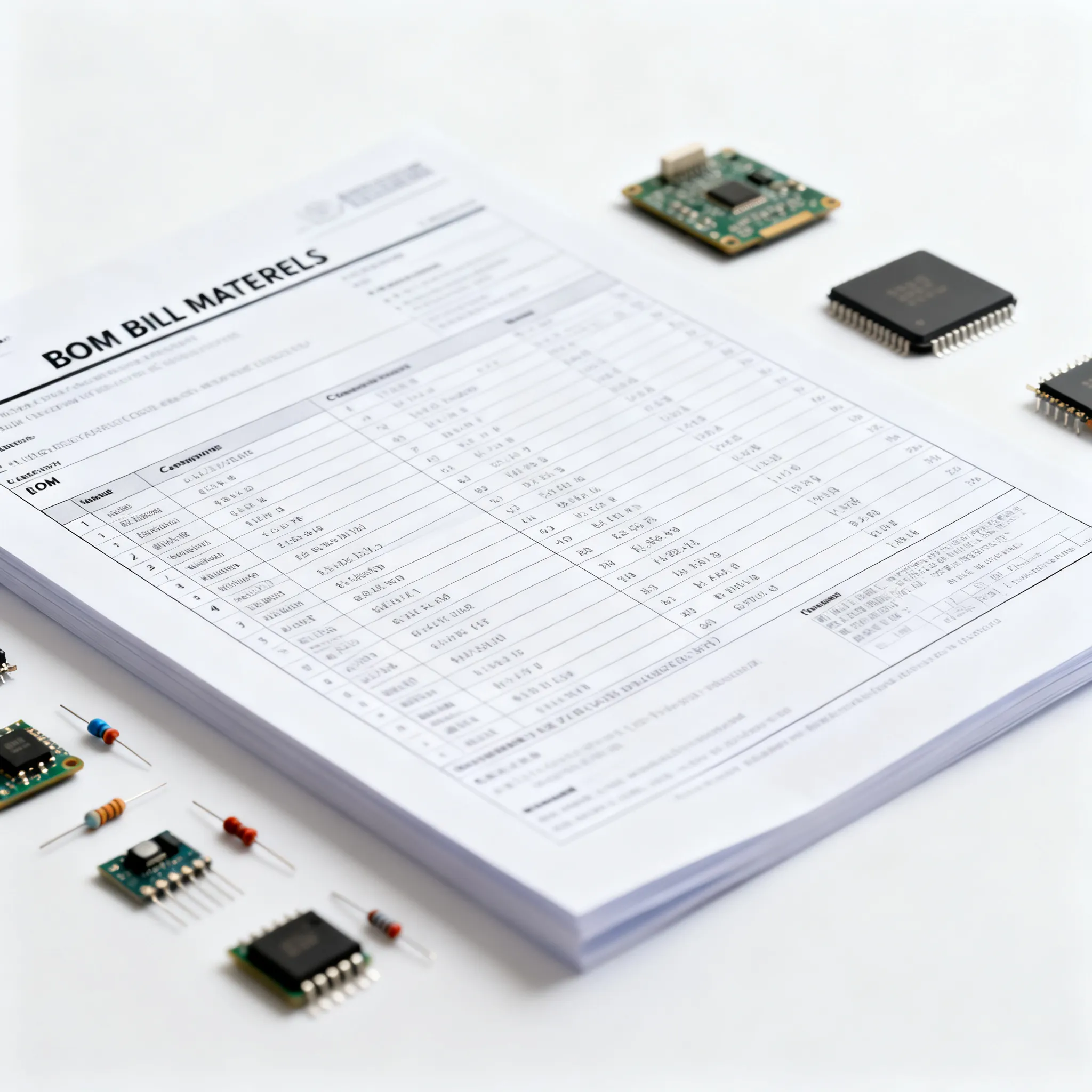
Most electronics buyers sense they are leaving money on the table, but they rarely see how much. An analysis by AGS Devices shows that hidden shortages, undisclosed end‑of‑life (EOL) components, and fragmented visibility inflate the landed cost of a bill of materials by 15–25 %. That premium isn’t caused by a single bad line item; it accumulates line by line every time a buyer re‑acts to a supply surprise instead of forcing competition into the quoting process.
The structural fix is a disciplined RFQ‑driven BOM upload. When an OEM or EMS buyer prepares a fully specified BOM—complete with manufacturer part numbers, approved alternates, packaging preferences, and delivery date targets—and issues that BOM as an RFQ to multiple EMS providers simultaneously, the entire negotiation dynamic shifts. Instead of chasing last‑minute allocation from a handful of trusted suppliers, procurement creates a competitive tension that realigns pricing, exposes obsolete parts early, and surfaces candidates that carry less single‑source risk. A study by IC Online confirms that this single change—a structured BOM upload paired with an open RFQ—transforms cost control from reactive to systematic.
The discipline doesn’t need to wait for a perfect, frozen BOM. Smart teams begin with a preliminary RFQ to authorized distributors and trusted aggregators while the engineering team is still locking down final component selections. That early‑stage workflow, outlined in a sourcing primer by Renova Technology, anchors pricing and real‑world lead‑time expectations before the design becomes inflexible. And if there is one move that delivers the most leverage in 2026, it’s bringing procurement into the design phase. SupplyICs research underlines that engaging procurement before component selections freeze is the single most effective strategy for bending the BOM cost curve today.
The Anatomy of a Cost-Cutting BOM Upload and RFQ Package
A BOM that triggers genuine competition is far more than a list of part numbers. It’s a sourcing instrument, and like any instrument, its accuracy depends on the fields you populate. The most effective RFQ‑driven BOM uploads share a common skeleton: they include historical cost data, forward‑looking lifecycle flags, packaging instructions, and commercial boundary conditions that eliminate guesswork on the supplier’s side.
The IC Online engineering guide for OEM and EMS buyers recommends that every BOM line carry the manufacturer’s full part number, at least one approved alternate, the last purchase price, and a target cost. Lifecycle status—active, not recommended for new design (NRND), or approaching end‑of‑life—must be verified with the manufacturer before the RFQ leaves your desk. Without it, you risk asking suppliers to quote components that will evaporate before production stabilizes.
Equally important is what accompanies the BOM in the RFQ package. A fully assembled RFQ, as described in an Elisa Industriq deep‑dive, leaves nothing ambiguous: commercial terms (quantities, delivery expectations, payment terms), technical data (revisions, drawings, CAD files, compliance certifications), and evaluation criteria that tell bidders exactly how their quotes will be scored. When a supplier knows that cost, lead time, and certification weightings are transparent, the quotes you receive are easier to compare, and the negotiation that follows becomes a conversation about trade‑offs rather than a tug‑of‑war over mystery pricing.
The table below maps the fields that most directly influence purchase price variance (PPV) and landed cost. Not every field is relevant to every commodity, but a BOM that omits the majority of these points surrenders cost control before the first quote arrives.
| BOM / RFQ Field | Direct Cost or PPV Impact | Procurement Best Practice |
|---|---|---|
| Manufacturer part number (MPN) | Eliminates substitution errors that cause rework, line stops, or expedited buys at premium prices. | Use the exact manufacturer MPN; never rely on a generic functional description alone. |
| Approved alternates | Creates sourcing flexibility when the primary MPN is allocation‑constrained, directly limiting spot‑buying surcharges. | List at least one qualified alternate per line; verify pin‑out, package, and firmware compatibility with engineering before quoting. |
| Lifecycle / EOL status | Prevents quoting parts that will be unavailable after a few production runs; avoids last‑time‑buy premiums. | Confirm lifecycle status with the manufacturer or authorized distributor; flag NRND and EOL lines before the RFQ is issued. |
| Last purchase price | Provides a factual anchor that discourages headline inflation; exposes unexplained price drift when compared against new quotes. | Include payed price history for the previous 12 months where available; treat as a reference, not a ceiling. |
| Target cost | Sets a clear expectation that forces suppliers to propose value‑engineered alternatives if they cannot meet the target. | Base targets on a bottom‑up cost model or competitive benchmarks; share transparently to stimulate creative proposals. |
| Packaging preference (tape‑and‑reel, tray, tube) | Mismatches trigger line‑side re‑packaging costs or manual placement surcharges that inflate assembly cost even when the component price looks flat. | Specify exact packaging required for your SMT line; confirm that the supplier can deliver in that format at the quoted volume. |
| Required delivery dates and buffer | Absence of a clear date invites suppliers to quote standard lead times that may not align with production; adding an explicit buffer prevents PPV erosion when schedules slip. | State a required dock date and a maximum acceptable buffer; use the RFQ to verify allocation‑backed lead time with the supplier. |
| Quote evaluation criteria | Signals that cost alone won’t win; encourages suppliers to compete on risk reduction, quality certifications, and delivery assurance, tightening total cost variance. | Publish weighting (e.g., cost 40 %, lead time 30 %, quality certs 20 %, risk 10 %) in the RFQ package so bidders align their offers accordingly. |
| Compliance and certification requirements | Missing certifications discovered after order placement can force supplier changes or re‑inspection, both of which widen PPV. | Attach a compliance checklist to the RFQ; require current certificates up‑front to avoid post‑award surprises. |
| Commercial terms (Incoterms, payment) | Generic terms may carry hidden freight, duty, or insurance costs that show up as overhead, not line‑item PPV. | Define Incoterms, payment milestones, and currency boundaries explicitly; compare quotes on a total landed cost basis. |
Tip: When the BOM contains high‑mix, low‑volume parts, pay special attention to the packaging field. A single line specified as “tube” when your placement equipment expects tape‑and‑reel can wipe out the savings you negotiated on the component itself. Always confirm the packaging format during the RFQ stage, not after the PO is cut.
Traditional Spot Buying vs. RFQ-Driven BOM Sourcing: A Procurement Playbook
For many buying teams, spot purchasing feels inevitable—an allotted risk of doing business in an allocation‑sensitive market. But the cost of that habit shows up not just in higher unit prices but in a purchase price variance metric that refuses to stabilize. Spot buying runs on urgency: the supplier holds the leverage, visibility into alternatives is thin, and the buyer accepts a price that clears the immediate shortage rather than a price that reflects competitive value.
An RFQ‑driven approach flips that asymmetry. By uploading a fully specified BOM and inviting multiple EMS providers, authorized distributors, and qualified aggregators to quote simultaneously, you turn supply uncertainty into structured competition. The table below contrasts the two operating models across the dimensions that matter most for cost control and PPV management.
| Comparison Metric | Traditional Spot Buying | RFQ-Driven BOM Sourcing | Selection Criteria & Failure Boundary |
|---|---|---|---|
| Price visibility | Opaque; buyer sees only the quotes they actively solicit, often from just one or two familiar suppliers. | Multi‑source RFQ forces price discovery; buyers can compare multiple quotes against a cost baseline. | Without a clean BOM containing target costs and alternates, RFQ visibility remains theoretical. Failing to include lifecycle data undermines the baseline. |
| Cost variance control | Wide swings because each purchase is a fresh negotiation; buyers often pay the “availability premium.” | Narrower PPV; users of structured RFQ processes typically achieve 5–15% total BOM cost reduction within two to three quarters (IC Online DE PPV data). | PPV narrows only if you track it monthly against a documented baseline. The process breaks if you skip the baseline step. |
| Supplier leverage | Low; each spot buy looks like a one‑time inconvenience to the supplier, who has little incentive to sharpen pricing. | Higher; a BOM‑level RFQ signals a recurring opportunity, encouraging suppliers to offer forward‑looking pricing and buffer concessions. | Leverage depends on credible volume forecasts. Promising unrealistic volumes in the RFQ destroys trust and backfires during execution. |
| Lead‑time risk | Lead time is accepted as quoted; no contractual protection if it stretches. | Suppliers are asked to hold price‑validity windows and commit to allocation‑backed lead times; buffers are negotiated explicitly. | Never state a numeric lead‑time range as fact; instead, require suppliers to confirm allocation‑backed lead time via the RFQ. Good practice is to ask for lead‑time validity tied to the quote. |
| Quote comparison effort | Manual, error‑prone; each quote arrives in a different format and commercial structure. | Quotes can be scored with a weighted evaluation matrix shared in the RFQ; commercial terms are normalized by the package structure (Elisa Industriq RFQ process). | The scoring matrix must be built before the RFQ goes out. Changing criteria after quotes arrive erodes supplier confidence and future participation. |
| PPV tracking rigor | Often absent; variance is discovered after the fact when the invoice arrives. | A cost baseline—derived from a current supplier quote—is established at RFQ launch, and PPV is tracked monthly against that baseline (IC Online FR baseline method). | Baseline must include lead‑time buffer costs; otherwise the PPV metric hides schedule‑driven premiums. Re‑baseline only when the design changes significantly. |
| Response to market moves | Reactive; component price increases are absorbed until the next quarterly review. | Proactive; organizations with real‑time cost visibility reduce annual component cost escalation by 3–7% compared to quarterly reviews (SupplyICs data). | Real‑time feeds require a data pipeline from distributor APIs or pricing portals; manual spreadsheet updates defeat the visibility advantage. |
Key Takeaway: The jump from spot buying to RFQ‑driven sourcing is not about adopting a tool—it’s about adopting a cadence. A quarterly RFQ cycle, anchored by a clean BOM, forces the market to re‑price your volume regularly and gives you the data to prove whether PPV is under control or drifting.
From Baseline to PPV Control: Steps That Narrow Cost Variances in Two Quarters
Shrinking purchase price variance doesn’t require a six‑figure digital transformation. For most OEM and EMS buyers, the fastest gains come from five procedural moves that can be implemented within a single quarter and start showing measurable PPV tightening by the second quarter. The sequence matters, and skipping any step weakens the feedback loop.
- Capture a current‑supplier quote as your cost baseline. A baseline is not a budget; it’s a snapshot of what you are paying today for the exact MPN and packaging configuration. Use the most recent purchase order or a formal quote from your incumbent supplier. Document it line by line in the BOM. This baseline becomes the reference point against which every future PPV calculation is made (IC Online FR PPV tracking).
- Upload a clean BOM that includes target prices and lifecycle flags. For every line, populate manufacturer MPN, approved alternates, lifecycle status (verified with the manufacturer or authorized distributor), and a target price grounded in either the baseline or a recent bottom‑up estimate. The target price is the number you want the market to meet or beat; the lifecycle flag stops you from pursuing parts that will be obsolete before the production run ends.
- Issue the same RFQ package to multiple qualified EMS partners—with explicit lead‑time validity requirements. Do not send the BOM to one partner and wait. Simultaneous distribution creates competitive tension. Within the RFQ, require that each quote include an allocation‑backed lead‑time commitment and a price‑validity window. Without these, suppliers can hedge against market moves at your expense.
- Compare quotes using a weighted scorecard, not line‑item spreadsheets. Define scoring weights in the RFQ (e.g., total landed cost 40 %, lead‑time reliability 30 %, quality certifications 20 %, single‑source risk 10 %). Apply the scorecard consistently. The lowest unit price often carries the highest supply risk, and a scorecard makes those trade‑offs visible to your stakeholders.
- Lock in the agreement and track PPV monthly against the baseline. Once an award is made, capture the agreed pricing as a new baseline record and track variance monthly. When a line drifts beyond the negotiated validity window, document the reason—market movement, EOL re‑classification, or spec change—and decide whether to re‑quote that line selectively. Monthly tracking prevents the slow accumulation of small variances that, left unchecked, become a material cost overrun by the end of the quarter.
For teams managing high‑mix, high‑complexity electronics—industrial controls, medical devices, aerospace sub‑assemblies—the overhead of manually executing this five‑step loop across hundreds of lines becomes a bottleneck. This is where purpose‑built RFQ software earns its place. The Elisa Industriq aerospace quoting guide advises selecting systems that connect BOM management, PCB costing, supplier databases, and sourcing risk in one controlled workflow. When a BOM change cascades into a re‑costing and a refreshed RFQ with one click, the cadence can shift from quarterly to monthly without overwhelming the buying team.
The table below summarizes the practical actions that keep PPV on a short leash—and the trade‑offs you should accept when you choose each one.
| Action | When to Use | Trade‑off |
|---|---|---|
| Build a cost baseline from a current supplier quote | At the start of every RFQ cycle, and whenever a major BOM revision occurs. | A baseline is only as strong as its currency; using six‑month‑old data allows PPV to drift undetected. Requires clerical discipline. |
| Embed lifecycle status in the BOM upload | Before any RFQ that covers a production run of 12 months or more. | Lifecycle data changes. You must re‑check status for long‑validity RFQs, or you risk quoting parts that will be EOL before delivery completes. |
| Mandate allocation‑backed lead‑time commitments in the RFQ | When production schedules carry contractual penalties for delay. | Some suppliers will decline to commit, narrowing your bid pool. You may need to accept a shorter price‑validity window to get the commitment. |
| Use a weighted scorecard for quote evaluation | For any BOM that mixes high‑risk (single‑source) and commodity lines. | Builds internal alignment but adds up‑front work to define and agree on weights. Without scoring, lowest price often wins by default, embedding supply fragility. |
| Select RFQ software that integrates BOM, costing, and supplier risk | When the BOM exceeds ~200 lines or alternates span multiple geography/supplier combinations. | Software adoption requires process change; tool chaos adds latency. Pick a platform that mirrors your actual RFQ workflow, not the other way around. |
| Track PPV monthly and re‑quote selectively | Continuous; should become a standing KPI for the procurement function. | Frequent micro‑quotations can strain supplier relationships if not handled transparently. Bundle low‑variance lines and re‑quote only those that drift beyond thresholds. |
Note: Ignoring EOL flags and skipping approved alternates in the BOM upload are the two most common—and costly—mistakes experienced teams still make. An EOL part quoted in good faith by a distributor will come back with a valid quote, but the price will be inflated by last‑time‑buy dynamics, and the availability window will be finite. Treat alternates as insurance, not overhead.
RFQ-Driven BOM Cost Reduction: Questions Senior Buyers Ask
The mechanics of an RFQ‑driven BOM upload are straightforward; the nuance emerges when procurement leaders press on the real‑world behaviors that determine whether the process actually controls PPV. Below are the questions that surface after the first few cycles, answered with the data and frameworks that experienced teams rely on.
- Q: What’s a realistic PPV improvement after switching to a structured RFQ and BOM upload process?
-
Users routinely achieve a 5–15% reduction in total BOM cost and a meaningful tightening of PPV variance within two to three quarters, depending on part complexity and volume. This range is drawn from IC Online’s OEM/EMS case data. The improvement is not instantaneous—it builds as each RFQ cycle uncovers better alternates, squeezes out hidden availability premiums, and establishes a competitive baseline that the organization can track and defend.
- Q: How do I build a cost baseline that actually helps control PPV?
-
Start with the latest supplier quote—not the last invoice, which may include freight or one‑time adjustments. Make this quote the line‑by‑line reference point in your BOM upload and begin tracking monthly PPV against it immediately. The IC Online FR baseline method recommends embedding explicit lead‑time buffer requirements in the RFQ and negotiating a price‑validity window for each line. When the market moves, the validity window tells you whether the variance is a legitimate pass‑through or an unearned margin grab.
- Q: What are the three most critical fields to include in a BOM upload before sending an RFQ?
-
Manufacturer part number—always accompanied by at least one approved alternate—lifecycle/EOL status, and target price or last purchase price. Without lifecycle data, you could be soliciting quotes for components that will disappear before your production order closes, wasting procurement capacity and introducing false baselines. The alternate provides a safety valve when the primary MPN is allocation‑constrained; the target price gives the market a reference point to undercut or explain why it cannot.
- Q: Can real-time cost visibility alone reduce annual component cost escalation?
-
Yes. Organizations that maintain live cost feeds—whether through distributor APIs or integrated RFQ platforms—reduce annual component cost escalation by 3–7% compared to peers that rely on quarterly spreadsheet reviews, as reported by SupplyICs. The mechanism is simple: you see price movements when they happen rather than three months later, giving you time to re‑quote, qualify an alternate, or lock in a forward‑looking agreement before the increase hardens across the market.
- Q: How should I evaluate EMS quotes when the RFQ isn’t a simple price comparison?
-
Publish evaluation criteria in the RFQ itself—cost, lead time, quality certifications, and supply risk are the four pillars that most teams use. Assign numerical weights and apply a consistent scorecard to every bid. The lowest price often masks excessive single‑source exposure or unrealistic lead‑time assumptions. Systems that connect BOM management, costing, and supplier risk, as described in the Elisa Industriq RFQ deep‑dive, can automate the scoring and surface the bid that optimizes total cost of ownership, not just unit price.
- Q: Is there a danger in locking in BOM costs too early if design changes are still possible?
-
Absolutely. Engaging procurement during the design phase is the single most effective cost strategy for 2026, but pricing should remain conditional until the BOM is frozen. Use the RFQ to solicit forward‑looking quotes with defined price‑validity windows, and include a clause that permits re‑quoting if quantities change by more than, say, 20% or if a major spec alteration is introduced. This protects both the buyer—who avoids anchoring on a price that no longer reflects the final BOM—and the supplier, who is insulated from quoting firm on a moving target.
Tip: For mixed BOMs that span semiconductors, passives, interconnects, and electromechanical parts, don’t expect a single EMS to be cost‑optimal on every line. A disciplined RFQ process may reveal that splitting the BOM across two or three specialized partners yields a lower total landed cost than any single award. Let the RFQ data guide that conversation, not internal assumptions.
References & Further Reading
- BOM Cost Reduction and PPV Management: How BOM Upload and RFQ Packaging Improve OEM/EMS Procurement | IC Online
- How OEM EMS Buyers Can Reduce BOM Costs and Improve PPV Using BOM Upload and RFQ | Engineering Guide | IC Online
- Electronic Components Sourcing: From Supply Chain to Cost Control | Renova Technology
- What Are the Real Strategies for Reducing BOM Costs in Electronics Without Compromising Quality? | SupplyICs
- RFQ Process: What Happens After a BOM Hits Your Inbox | Elisa Industriq
- How to Choose RFQ and Quoting Software for Aerospace Electronics Manufacturers | Elisa Industriq
Every cost‑cutting journey starts with a single BOM upload. If you are ready to see what a competitive RFQ can do for your component spend, upload your BOM and request a quote through IC-Online. Our platform handles mixed BOMs, flexible MOQs, and connects you directly to the suppliers who can bring your parts list to life—without guessing about allocation or availability.