Understanding Battery AG3 and Circuit Behavior
Battery AG3 offers stable voltage and low resistance, ensuring reliable circuit performance and longer device life in precision electronics.
You rely on the battery ag3 to keep your devices running smoothly. Its stable 1.5V output makes a big difference in how a circuit performs, especially when you use precision equipment. The ag3 stands out because it maintains consistent voltage until nearly depleted, unlike other button cell batteries that drop quickly. This stability helps prevent malfunctions and ensures accurate results. Understanding how chemical energy in a battery converts to electrical energy gives you better control over device functionality. You need this knowledge when working with small electronic circuits.
Key Takeaways
- The AG3 battery provides a stable 1.5V output, ensuring consistent performance in devices like watches and medical equipment.
- Low internal resistance in the AG3 battery helps maintain voltage, preventing drops that can affect device functionality.
- Always check for short circuits in your circuits to avoid overheating and potential damage to the AG3 battery.
- Choose the AG3 battery for devices requiring long-lasting power and stable voltage, especially in precision applications.
- Regularly test your AG3 battery with a multimeter to ensure it operates effectively and replace it if the voltage drops below 1.2V.
Battery AG3 Basics

AG3 Chemical Properties
You often see the ag3 in small electronic devices because of its reliable chemistry. This battery uses silver oxide as its main chemical component. Silver oxide batteries stand out for their high energy density and stable discharge curve. You get a steady flow of power, which is important for devices that need precise and consistent performance. The chemical reaction inside the ag3 converts stored chemical energy into electrical energy, making it a dependable choice for many applications.
Nova Technology Company (HK) Limited plays a key role in the integrated circuit industry. As a HiSilicon-designated solutions partner, this company specializes in chip-level solutions and system integration. You find their expertise valuable when working with advanced ICs in consumer electronics, medical devices, and smart systems. Their focus on semiconductor technology ensures that devices powered by batteries like the ag3 operate efficiently and reliably.
AG3 Voltage and Output
You depend on the ag3 for its stable voltage output. Under standard load conditions, the typical voltage output for this battery is 1.5V. This steady voltage helps maintain circuit stability and prevents sudden drops in device performance. Devices that require accurate readings or consistent operation benefit from this feature.
Common applications for the ag3 include:
- Watches and clocks, where accurate timekeeping is essential.
- Calculators and thermometers, which need stable power for precise results.
- Medical devices, such as glucose meters and pulse oximeters, to ensure reliable health monitoring.
- Toys and LED accessories, which require efficient and long-lasting power.
- Laser pointers and remote controls, where consistent performance matters.
You see the battery ag3 used in these devices because it delivers the right balance of size, power, and reliability. When you choose the ag3 for your circuit, you ensure that your device runs smoothly and meets the demands of modern electronics.
AG3 and Circuit Performance
Internal Resistance in Circuits
You need to understand how internal resistance shapes the way a circuit works. Every battery, including the ag3, has some internal resistance. This resistance comes from the materials inside the battery and the way they interact. When you connect the battery to a circuit, the internal resistance acts like a tiny resistor inside the battery itself.
If you use a battery with high internal resistance, you will notice that the voltage drops more when the circuit draws a lot of current. For example, if you power a small LED with the ag3, the light stays bright because the internal resistance is low. If you try to power a motor, the voltage might drop, and the motor may run slowly or not at all. You can see this effect in the following table:
| Load Type | Current Draw | Voltage Drop (Low Resistance) | Voltage Drop (High Resistance) |
|---|---|---|---|
| LED | Low | Minimal | Noticeable |
| Small Motor | High | Moderate | Significant |
You should always consider internal resistance when designing a circuit. Low internal resistance in the ag3 helps your devices run smoothly and keeps voltage drops small, even when the circuit needs more current.
Voltage Stability in AG3 Circuits
You rely on the ag3 for its steady voltage output. This stability is important for circuits that need precise and consistent performance. Silver oxide batteries, such as the ag3, keep their voltage stable throughout most of their discharge cycle. This means your device will work at the same level until the battery is almost empty.
- The ag3 delivers a voltage of about 1.55V and a capacity between 38 and 45mAh.
- The battery maintains a stable voltage, which is especially useful for precision instruments.
- Devices like medical thermometers, digital watches, and calculators benefit from this stability.
- Alkaline batteries often show voltage drops under heavy use, but the ag3 handles varying current demands well.
Tip: When you use the ag3 in a circuit that measures or controls something important, you get more reliable results because the voltage does not change much during use.
You can test this by using an ag3 in a digital thermometer. The readings stay accurate until the battery is nearly empty. If you used a battery with less stable voltage, the readings might drift or become unreliable.
AG3 Short Circuit Current
You must also think about short circuit current when working with the ag3. Short circuit current is the maximum current that flows when you connect the battery’s positive and negative terminals directly together with almost no resistance in between. This situation is dangerous and can damage both the battery and the circuit.
The ag3 has a low internal resistance, so it can deliver a high short circuit current for a brief moment. If you accidentally short the battery, the current can heat up the battery quickly. This heat can cause the battery to leak or even burst. You should always design your circuit to avoid short circuits.
Here is what happens in a short circuit:
- The internal resistance limits the maximum current, but only slightly.
- The battery tries to deliver as much current as possible.
- The voltage across the circuit drops quickly because the battery cannot keep up with the demand.
- The battery heats up, which can cause permanent damage.
You can prevent problems by making sure your circuit does not allow a direct connection between the battery terminals. Always check your wiring and use protective components, such as resistors or fuses, to keep the short circuit current under control.
Note: If you notice your device getting hot or the battery draining very fast, check for a possible short circuit in your circuit.
By understanding internal resistance, voltage stability, and short circuit current, you can design safer and more reliable circuits with the ag3. You will see better performance and longer battery life in your devices.
AG3 Circuit Examples

AG3 LED Circuit Example
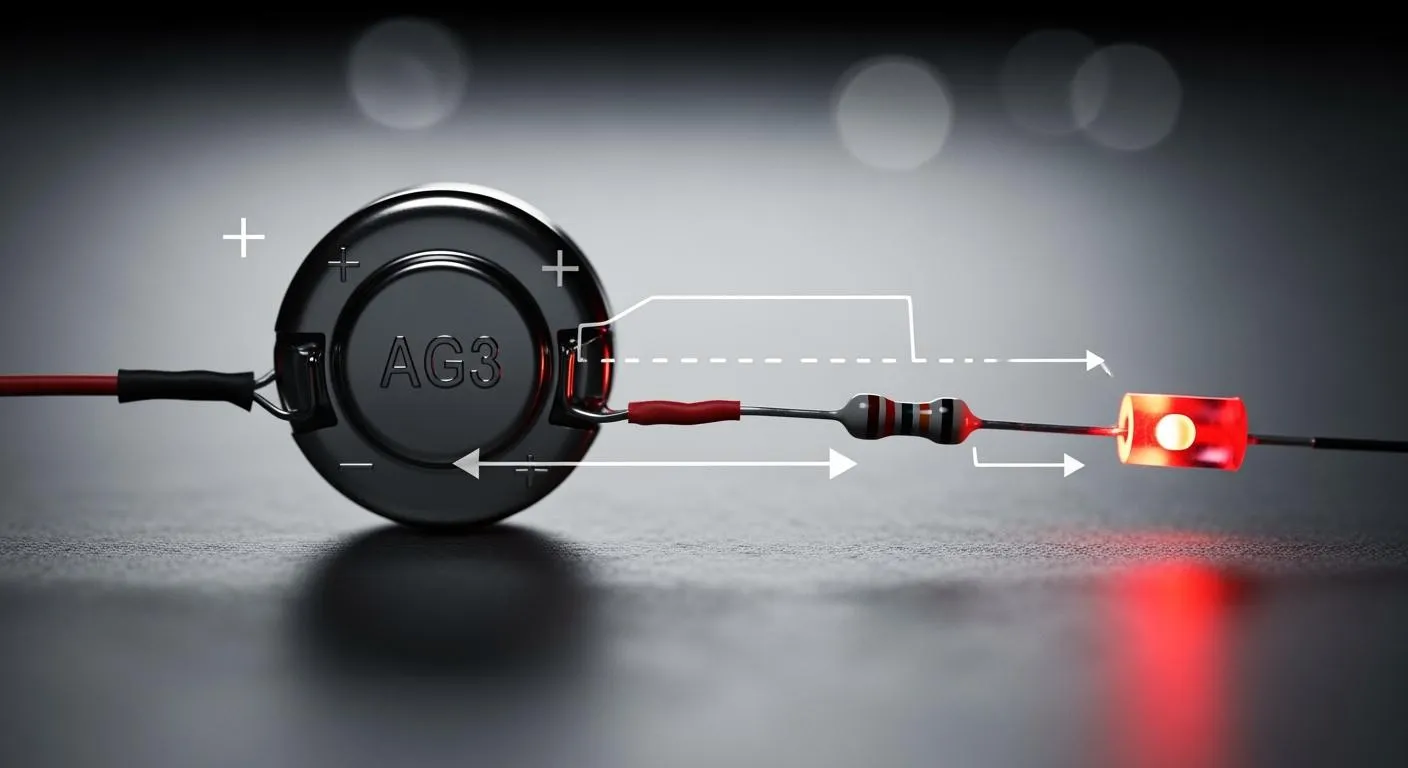
You can build a simple LED circuit using the battery ag3. The stable voltage output of 1.5V ensures that your LED maintains consistent brightness. When you connect the ag3 to an LED, you see steady light without flickering or dimming. This efficiency helps your LED last longer and perform better.
Here is a basic LED circuit diagram:
[AG3 Battery] --- [Resistor] --- [LED] --- [Wire] --- [AG3 Battery]
Tip: Use a resistor to limit the current. This protects the LED and prevents the battery from draining too quickly.
The ag3 provides steady current, so your LED circuit works reliably. You can use this setup in small toys, indicators, or wearable devices.
AG3 in Remote Control Circuits
You often find the ag3 in remote control circuits for small devices. The battery delivers a stable voltage of 1.5V, which is essential for reliable signal transmission. The compact size of the ag3 fits slim remote control designs.
- AG3 batteries provide a stable voltage output of 1.5V, which is essential for devices like remote controls.
- They are commonly used in small devices, ensuring reliable signal transmission.
- The compact size of AG3 batteries makes them suitable for slim remote control designs.
The consistent voltage prevents rapid drops, so your remote control works without interruptions. The long shelf life of the ag3 makes it ideal for devices used intermittently. You get quick and reliable performance in laser pointers and other small electronics.
Troubleshooting AG3 Circuits
You may face issues when your circuit stops working or the battery drains faster than expected. Start by checking the battery voltage with a multimeter. If the voltage is below 1.5V, replace the battery. Inspect the circuit for loose wires or poor connections. Look for signs of corrosion or damage near the battery terminals.
| Problem | Possible Cause | Solution |
|---|---|---|
| LED not lighting | Dead battery | Replace battery |
| Remote not responding | Loose connection | Secure wires |
| Fast battery drain | Short circuit | Check wiring |
Note: If your device gets hot or the battery drains quickly, check for a short circuit. Always use protective components like resistors to prevent damage.
You can solve most circuit problems by following these steps. The ag3 helps your devices run smoothly when you maintain your circuit and use the battery correctly.
AG3 vs LR41 Battery
LR41 Battery Overview
You often see the lr41 battery in small electronic devices. This battery uses alkaline chemistry and delivers a voltage of 1.5V. The lr41 battery is popular because it fits compact spaces and provides steady power for short periods. You find the application of lr41 battery in digital thermometers, laser pointers, and small toys. The lr41 battery offers a capacity between 25 and 32mAh, which works well for devices with low current needs. You can rely on the lr41 battery for quick replacements and easy availability.
| Feature | AG3 | LR41 Battery |
|---|---|---|
| Chemistry | Silver Oxide | Alkaline |
| Voltage | 1.5V | 1.5V |
| Capacity | 38-45mAh | 25-32mAh |
| Common Use | Watches, remotes | Thermometers, toys |
AG3 and LR41 Compatibility
You may wonder if you can use the lr41 battery in place of the ag3. Both batteries share the same size and voltage, so you can often swap them in many devices. The lr41 battery fits most circuits designed for the ag3. However, the ag3 provides a higher capacity and more stable voltage. If your circuit needs long-lasting power or precise performance, you should choose the ag3. For the application of lr41 battery in simple circuits, you get reliable results, but you may notice shorter battery life.
Note: Always check your device manual before switching batteries. Some sensitive circuits may require the stable output of the ag3.
Choosing Between AG3 and LR41
You need to decide which battery works best for your circuit. If you use a device that needs steady voltage and longer operation, the battery ag3 is the better choice. The ag3 supports circuits in watches, medical devices, and remote controls. If you want a quick and affordable option, the lr41 battery works well for the application of lr41 battery in toys, thermometers, and small gadgets. You should consider the current draw and how often you use the device. The lr41 battery gives you flexibility for many circuits, but the ag3 delivers better performance for demanding applications.
Tip: For critical devices, always select the battery with higher capacity and stable voltage to avoid circuit issues.
Using AG3 in Real Devices
Selecting the Right AG3 Battery
You need to choose the right ag3 battery for your device to get the best real performance. Start by checking the device specifications. Look for the recommended voltage and capacity. The ag3 battery gives you a stable 1.5V output, which supports circuit stability. Compare the ag3 battery to an alkaline button cell. The ag3 battery offers higher capacity and lower resistance. This means your circuit will run longer and deliver more consistent results.
When you select a battery, pay attention to resistance. Low resistance helps your circuit avoid voltage drops. You should also check the battery expiration date. Fresh batteries provide better actual performance. Use testing tools like a multimeter to measure voltage and resistance. This helps you confirm the battery meets your needs.
Tip: Always use batteries from trusted brands. Quality batteries reduce the risk of circuit failure and improve real performance.
Maximizing AG3 Battery Life
You can extend the life of your ag3 battery by following simple steps. Avoid leaving your device on when not in use. High resistance in the circuit wastes energy and shortens battery life. Choose components with low resistance to maximize efficiency. Perform regular testing to check battery voltage and resistance. This helps you spot problems early.
Short circuit testing is important. If you notice fast battery drain, check for short circuits in your device. Short circuit testing protects your battery and keeps your circuit safe. Store alkaline button cell batteries in a cool, dry place. Heat and moisture increase resistance and reduce battery life.
Here is a quick checklist for maximizing battery life:
- Turn off devices when not needed.
- Use low resistance components.
- Perform regular testing.
- Check for short circuits with short circuit testing.
- Store batteries properly.
| Action | Effect on Battery Life |
|---|---|
| Low resistance parts | Longer life |
| Regular testing | Early problem detection |
| Proper storage | Maintains performance |
You get better actual performance and real performance from your ag3 battery when you follow these steps. Your circuit will run smoothly and your alkaline button cell batteries will last longer.
You now see how the AG3 battery’s stable voltage and low internal resistance help your circuits work better. These features keep your devices running smoothly and prevent sudden drops in performance. When you choose between AG3 and LR41, check your device’s needs for power and stability. Always use quality batteries and test your circuits for safety. Apply what you learned to build reliable projects and solve real-world problems with confidence.
FAQ
What devices use AG3 batteries?
You find AG3 batteries in watches, calculators, medical devices, laser pointers, and small toys. These batteries fit compact spaces and deliver steady power for precision electronics.
Can you recharge an AG3 battery?
You cannot recharge AG3 batteries. These are single-use, non-rechargeable cells. Trying to recharge them can cause leaks or damage.
How do you test if an AG3 battery still works?
Use a multimeter to check the voltage. A healthy AG3 battery shows close to 1.5V. If the voltage drops below 1.2V, you should replace it.
Is AG3 safe for children’s toys?
You can use AG3 batteries in toys, but always secure the battery compartment. Small batteries pose a choking hazard if swallowed.
What happens if you short-circuit an AG3 battery?
A short circuit causes the battery to heat up quickly. This can lead to leaks or even bursting. Always check your wiring and use protective components.